
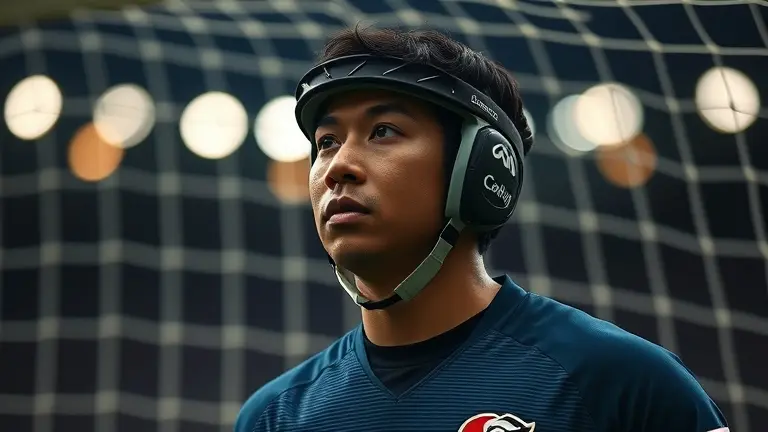
When the spotlight intensified on the pitch during the 2026 FIFA World Cup, all eyes turned to Japan’s goalkeeper, Zion Suzuki. Following a grueling and spectacular 2-2 draw against the Netherlands on June 14, the 23-year-old solidified his reputation not just as a defensive anchor, but as a fascinating bridge between cultures. Born in Newark, New Jersey, to a Ghanaian father and a Japanese mother, Suzuki’s path to the Japanese national team has captivated American fans, who see in him a unique reflection of the globalized nature of modern sport.
However, the narrative of his dual-national heritage often overshadows the immense psychological fortitude required to perform at this level. To guard the goal against the world’s most clinical strikers in a tournament held in your own birthplace is an exercise in extreme mental discipline. Zion Suzuki is more than just a statistical standout; he is a testament to the cognitive preparation required to handle the crushing weight of expectation, transforming the pressure of the international stage into a canvas for elite performance.
The Newark Native at the Heart of Japan’s World Cup Campaign

The narrative surrounding Zion Suzuki has transcended typical sports reporting, evolving into a compelling story of modern identity. Born in Newark, New Jersey, the 23-year-old japan goalkeeper occupies a unique position in the 2026 FIFA World Cup. His journey from a childhood in the United States to becoming the primary japan goalie is not merely a geographic anomaly; it is a testament to the increasingly global nature of professional football. With a Ghanaian father and a Japanese mother, Suzuki embodies a multicultural heritage that resonates deeply with an international audience, particularly those tracking the diaspora of talent in North America.
Bridging Cultures on the Global Stage
Suzuki’s development reflects a convergence of diverse footballing philosophies. His professional maturation—spanning his time in the J.League to his current venture at Parma—has been defined by an ability to navigate different cultural expectations. For the suzuki goalkeeper, representing Japan in a tournament hosted by his birth country adds a layer of personal poignancy that few players experience. This “global citizen” narrative is characterized by several key factors:
- Multicultural Upbringing: His background allows him to bridge different locker room dynamics, fostering a resilient mindset that is essential for the high-pressure environment of international play.
- Adaptability: Having lived in both the U.S. and Japan, he possesses a rare adaptability that aids in his tactical understanding, allowing him to absorb varied training methods from both Western and Asian academies.
- The World Cup Spotlight: His performance during the intense 2-2 draw against the Netherlands highlighted his poise under pressure, proving that his selection as a foundational piece of Japan’s defensive unit was well-merited.
Ultimately, Zion Suzuki represents the next generation of athletes whose identities are defined by their wide-ranging experiences rather than a single flag. His presence as a suzuki playing in the U.S. serves as a powerful reminder of how migration and cultural integration continue to reshape the competitive landscape of world-class soccer.
Analyzing the Netherlands Performance: A Keeper Under Pressure

The June 14, 2026, group stage showdown against the Netherlands served as a definitive trial by fire for Zion Suzuki. As Japan’s starting goalkeeper, Suzuki faced a relentless Dutch offensive that demanded constant vigilance and rapid decision-making. The 2-2 draw highlighted his technical evolution, particularly his ability to manage high-stress set pieces against European powerhouses. Throughout the match, Suzuki demonstrated exceptional reflexes, most notably in the 68th minute when he parried a blistering long-range effort that threatened to shift the momentum entirely in favor of the Oranje.
Tactical Breakdown and Decision-Making
His performance underscored the maturity he has gained while playing at Parma, balancing traditional Japanese discipline with a modern, proactive approach to goalkeeping. Key tactical elements observed during the match included:
- Command of the Area: Suzuki’s positioning during dangerous corner kicks was calculated, effectively neutralising aerial threats by narrowing shooting angles early.
- Distribution Under Pressure: Despite the high press from the Dutch forwards, the Japan goalie maintained composure, opting for short, low-risk passes to initiate counter-attacks rather than panicking under duress.
- Shot-Stopping Consistency: He recorded critical saves that stabilized the backline, proving that his development has reached a level where he can command the defensive unit during moments of extreme volatility.
Beyond the raw statistics, the psychological component of Suzuki’s performance cannot be overstated. Playing in a North American venue—the same continent where he was born—added a unique layer of pressure, yet he remained unflappable. This composure is a hallmark of his rising status as a premier Japan goalkeeper. By effectively anchoring the defense against a side as clinical as the Netherlands, Suzuki proved that his dual-national background and international experience provide him with a distinct tactical edge, allowing him to adapt to varying styles of play under the most intense scrutiny of the 2026 FIFA World Cup.
Bridging Cultures: The Global Identity of Zion Suzuki

The rise of Zion Suzuki represents a significant cultural shift in modern soccer, resonating deeply with a generation of fans who view identity as fluid rather than fixed. Born in Newark, New Jersey, to a Ghanaian father and a Japanese mother, the Japan goalkeeper occupies a unique space in the professional game. This “global citizen” narrative is more than a footnote; it informs his approach to the pitch. Unlike domestic-trained goalkeepers who may experience a singular cultural influence, Suzuki’s path has required him to synthesize diverse communication styles and tactical philosophies, allowing him to adapt seamlessly whether playing in Europe or for the national team.
The Tactical Advantage of a Global Perspective
His ability to process complex information under the high-pressure environment of the 2026 FIFA World Cup suggests that his multicultural background fosters heightened adaptability. On the pitch, this manifests in several key ways:
- Advanced Communication: Suzuki frequently demonstrates an ability to orchestrate his backline with a composure that transcends language barriers, a skill honed by his navigation of different footballing cultures.
- Tactical Versatility: Having experience in various defensive systems—from the structured discipline of the J.League to the dynamic demands of European football at Parma—he exhibits a technical range that traditional, locally-developed goalies may lack.
- Resilience and Adaptability: The mental fortitude required to represent Japan as a dual-national in a U.S.-hosted tournament highlights his unique professional maturity.
Evidence suggests that this broader worldview allows him to handle the intense media scrutiny—from social media discourse to international press—with an analytical focus. By decoupling his identity from traditional expectations, the Suzuki goalkeeper is redefining what it means to be a modern international star, proving that a global origin story can be a competitive asset in the quest for elite performance.
The Future of Japanese Goalkeeping: Rising Expectations

The emergence of Zion Suzuki marks a pivotal shift in the trajectory of the Japanese national team. For decades, the “goalkeeper problem” was a recurring narrative in Japanese football circles, but Suzuki has effectively dismantled that stigma. As a japan goalkeeper honing his craft in Europe with Parma, his tactical maturity and physical presence have elevated expectations for the position. Following the high-stakes 2-2 draw against the Netherlands in the 2026 World Cup, analysts are no longer discussing whether he can compete at the highest level, but rather how he will anchor Japan’s defense for the next decade.
Navigating Pressure and Identity
Suzuki’s journey is defined by more than just his athleticism; he carries the unique mantle of a global citizen in a sport that is increasingly interconnected. Born in Newark to a Ghanaian father and a Japanese mother, his presence in the North American-hosted tournament has turned him into a symbol of modern, multicultural Japan. Managing the intense scrutiny of Japanese fans—who often demand perfection—alongside the curiosity of American onlookers, requires a rare degree of mental fortitude.
Key factors influencing his career development include:
- International Experience: His tenure in Serie A provides him with the elite-level tactical exposure necessary to command a defensive line against world-class strikers.
- Dual-National Representation: As a prominent suzuki goalkeeper, he is becoming a trailblazer for other dual-national athletes, proving that cultural hybridity is a massive asset in high-pressure sports environments.
- Pipeline Impact: His success is influencing how the J.League develops prospects, shifting the focus toward modern, proactive keepers who excel in distribution and high-line systems.
Ultimately, the future of the japan goalie position rests on Suzuki’s ability to maintain consistency under global pressure. If he continues to evolve, he will not only secure his spot as a legendary figure in Japanese sports history but also open the door for a new generation of diverse talent to represent the rising sun on the global stage.
Master Your Own Mental Arena
Zion Suzuki’s journey is more than a story of heritage; it is a masterclass in psychological resilience. As he navigates the high-pressure environment of the 2026 FIFA World Cup, his ability to stay composed between the sticks serves as a reminder that peak performance is as much about the mind as it is about physical reflexes. The pressure of playing on a global stage, especially in one’s birthplace, requires a level of focus that few ever truly achieve.
Maintaining that elite “flow state”—where distractions vanish and reaction times sharpen—is the secret weapon of the world’s most successful athletes. You don’t need to be a professional goalkeeper to benefit from the same cognitive clarity that Suzuki uses to guard the net. Through the neuroscience-backed method of The Brain Song, you can train your mind to eliminate mental fog and enhance your ability to focus under extreme stress, effectively mirroring the cognitive discipline of a top-tier international competitor.
Whether you are tackling high-stakes challenges in your professional life or striving to improve your daily cognitive performance, achieving that Zen-like mental state is now within your reach. It is time to bridge the gap between potential and peak execution by investing in the architecture of your own mind.
 Discover how to sharpen your own mental focus and cognitive resilience, just like those who perform on the world’s biggest stages, with The Brain Song.Transform My Mental Focus Today!