
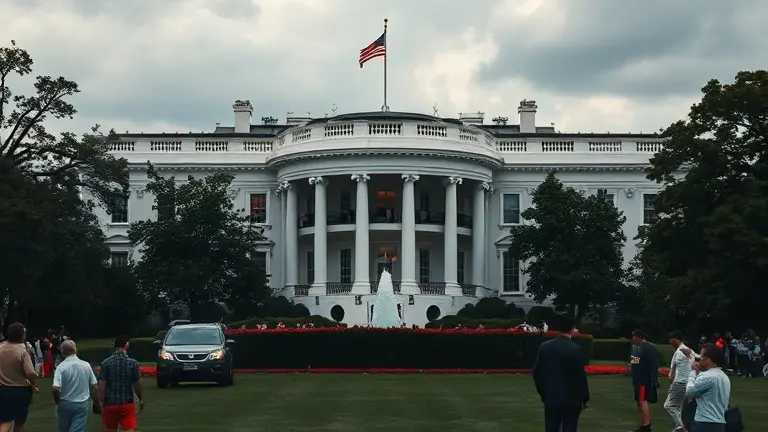
On June 14, 2026, the South Lawn of the White House will undergo a transformation never before seen in American history. As the site of the controversial UFC Freedom 250, the executive residence is playing host to a massive, custom-engineered arena known as ‘the Claw.’ Tied to both the nation’s 250th anniversary and President Donald Trump’s 80th birthday, the event has sparked a firestorm of debate, pitting sports entertainment enthusiasts against those alarmed by the precedent of using federal property for such a high-intensity spectacle. With legal challenges failing to halt construction, all eyes are now on the logistical hurdles of the setup and the looming threat of Washington DC weather, which could turn this historic event into a logistical nightmare.
For those asking when is the UFC fight at the White House, the countdown is officially on, but the question of whether the event will face a weather delay remains the primary concern for organizers and fans alike. This article cuts through the partisan noise to examine the engineering marvel of the temporary stadium, the legal clash that nearly derailed the project, and a real-time guide for navigating the event. Whether you are a die-hard fan waiting for the main card or a political observer tracking the cultural impact of this unprecedented use of the White House lawn, here is your essential guide to the most polarizing sports event of the decade.
UFC Freedom 250: The South Lawn Spectacle Explained
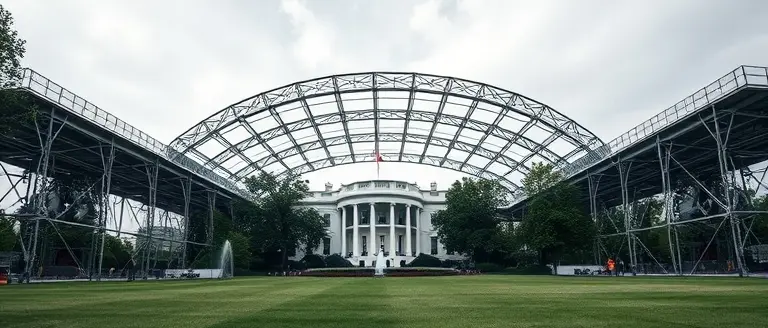
The UFC Freedom 250 event represents one of the most unconventional uses of executive property in American history. Scheduled for June 14, 2026, on the White House lawn, the event serves a dual purpose: acting as the flagship spectacle for the United States’ 250th-anniversary celebrations while simultaneously marking President Donald Trump’s 80th birthday. By transforming the historic South Lawn into a high-octane sporting arena, the administration has positioned this fight card as a symbol of modern American cultural identity, though the decision remains deeply divisive among political analysts and civil preservationists.
The Engineering of “The Claw”
Central to the logistical controversy is the construction of a massive, temporary arena colloquially referred to as “the Claw.” This structural feat was necessitated by the need to house thousands of attendees and the high-tech, multi-angle broadcast infrastructure required for a global UFC 250 pay-per-view event. Engineers had to ensure the temporary stadium could withstand the high-traffic demands of the fight night while adhering to strict structural integrity standards, a task made more difficult by the sensitive nature of the White House grounds.
Navigating Legal and Public Scrutiny
The path to this event has been far from smooth. Numerous legal challenges attempted to block construction, citing potential damage to federal property and the inappropriate politicization of a national landmark. While these injunctions ultimately failed, the backlash reflects a broader societal debate regarding the “norm-defying” nature of the current administration.
Key aspects of the event include:
- A Historic Milestone: Integration of the fight card into the official U.S. 250th-anniversary commemorations.
- Operational Challenges: Significant logistical pressure regarding security and the controversial temporary stadium footprint.
- Public Sentiment: A stark divide between die-hard MMA fans awaiting the Topuria vs. Gaethje matchups and critics viewing the event as “Idiocracy-style” political theater.
As the date approaches, all eyes remain fixed on the Washington DC weather. Given the outdoor nature of the arena, potential thunderstorms pose a legitimate threat, creating a real-time “disruption” watch for fans concerned about a last-minute weather delay. Whether viewed as a patriotic celebration or a political overreach, UFC Freedom 250 is undeniably a landmark moment in the intersection of American sports and politics.
Legal Battles and ‘The Claw’: Why the Arena Nearly Never Happened
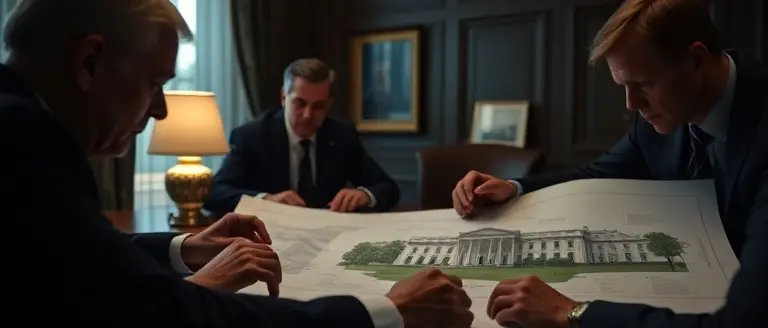
The path to UFC Freedom 250 was paved with more than just concrete and steel; it was mired in a series of unprecedented legal challenges that threatened to derail the event entirely. The core of the controversy centers on the construction of a massive, temporary modular arena—internally referred to by contractors as “The Claw”—on the historic White House lawn. Activist groups and historic preservation societies filed multiple emergency injunctions in federal court, arguing that the heavy machinery and high-decibel environment posed an existential threat to the integrity of the protected federal grounds. Plaintiffs specifically cited the potential for structural damage to the South Lawn’s subsurface irrigation and the violation of federal statutes designed to preserve the aesthetic and historic sanctity of the President’s residence.
Judicial Rationale and the Green Light
The judicial response to these petitions reflected a narrow interpretation of executive privilege and property management. Ultimately, the courts ruled in favor of the administration, citing the following key arguments that allowed UFC 250 to move forward:
- Executive Authority: The court determined that the President maintains broad discretion over the use of the White House grounds for state functions, including those designated as cultural milestones for the nation’s 250th anniversary.
- Mitigation Protocols: Government engineers presented comprehensive “ground-protection” plans, including specialized decking and weight-distribution mats designed to protect the subterranean soil and historic tree roots.
- Lack of Irreparable Harm: The presiding judges concluded that the potential “aesthetic interference” described by plaintiffs did not constitute the “irreparable harm” necessary to grant a preliminary injunction.
Despite the legal victory, the proceedings highlighted a deep-seated cultural rift regarding the UFC White House concept. While sports fans celebrated the defiance of traditional protocols, critics view the installation as a dangerous precedent. The intense scrutiny, however, did little to dampen the logistical momentum, and the facility stands as a testament to the sheer scale of the Washington DC production. As the event approaches, the focus has shifted from the legality of the arena to the unpredictable Washington DC weather, which remains the final, unlitigated variable that could force a delay.
Weather Watch: Survival Guide for UFC Freedom 250
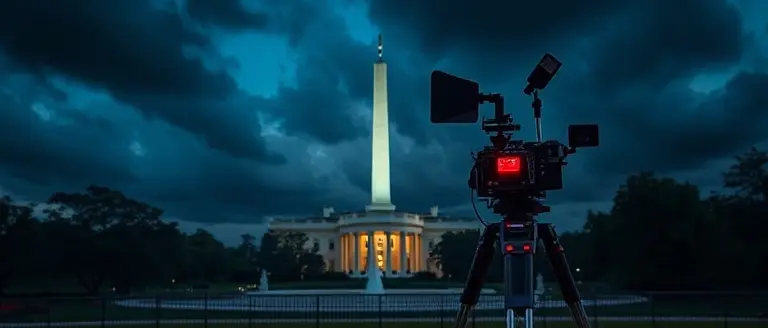
The logistical complexity of hosting UFC Freedom 250 on the White House South Lawn has been compounded by volatile local meteorology. As the event approaches, attendees and fans are closely monitoring Washington DC weather patterns, as summer in the capital is notorious for rapid-onset heat indices and sudden, violent thunderstorms. Given the open-air design of the custom-built “Claw” arena, weather remains the single greatest threat to the broadcast schedule and the safety of the fighters. Meteorologists have signaled a high probability of convective activity during the event window, leading to significant anxiety regarding a potential weather delay.
Emergency Protocols and Live Event Contingency
To mitigate these risks, the event organizers have implemented a multi-tiered safety protocol designed to transition operations rapidly if conditions deteriorate. Should the National Weather Service issue a severe thunderstorm or lightning watch for the District of Columbia, the following measures are in place to manage the UFC White House schedule:
- Lightning Thresholds: Automated lightning detection systems are active within a 10-mile radius of the White House. Any strike within this perimeter will trigger an immediate suspension of proceedings for a minimum of 30 minutes.
- Arena Evacuation: In the event of high wind speeds—a critical concern for the structure’s temporary rigging—the “Claw” will be cleared, with spectators and staff directed to designated reinforced secure zones on the White House grounds.
- Fight Card Adjustment: If a weather delay extends beyond 90 minutes, the commission has indicated that the preliminary bouts may be truncated or reordered to prioritize the marquee matchups for the prime-time live stream.
Fans planning to attend should prioritize hydration and lightweight, moisture-wicking gear, as the humidity in DC can be as taxing as the potential for rain. While organizers remain optimistic that the spectacle will proceed as planned, staying tuned to official social media channels for real-time updates regarding the UFC 250 timeline is essential for all ticket holders.
A Political Stage: Why the Administration Chose the UFC
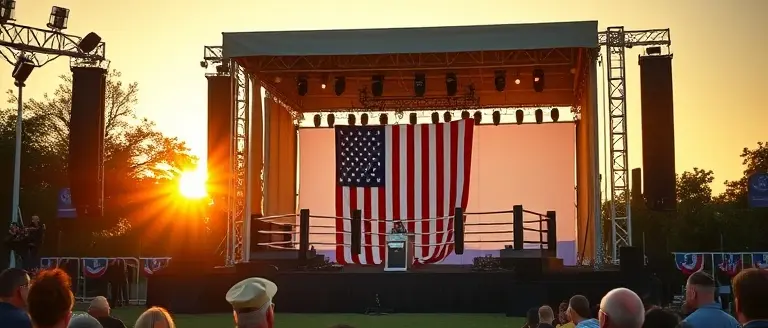
The decision to host UFC Freedom 250 on the South Lawn is far from a traditional anniversary celebration. As the nation marks its 250th anniversary, the administration has pivoted away from conventional gala events, opting instead for a display of raw athleticism and cultural populist appeal. By transforming the executive grounds into a combat sports arena, the administration is intentionally blurring the lines between state ceremony and commercial entertainment. This “norm-defying” strategy is designed to appeal directly to the demographic base that helped define the modern political landscape, framing the fight card—headlined by high-stakes matchups like Topuria vs. Gaethje—as a quintessential American spectacle.
Strategic Branding and Political Messaging
Aligning the White House with the UFC brand serves as a calculated move to capture a younger, highly engaged voter demographic. Critics and supporters alike observe that this is not merely an athletic contest but a piece of political theater meant to project strength and modernization. Key factors driving this choice include:
- Populist Appeal: By prioritizing a sport associated with “grit” and “freedom,” the event seeks to break from the perceived elitism of past 250th-anniversary commemorations.
- Media Dominance: Choosing a high-octane UFC 250 format ensures maximum social media penetration and global interest, effectively overshadowing traditional, quieter festivities.
- The “Claw” Precedent: The construction of the massive, controversial temporary stadium structure establishes a new precedent for the private or commercial use of executive property, signaling that no space is too sacred for high-profile public branding.
This pivot has sparked intense debate regarding the preservation of historic sites and the appropriate use of taxpayer-funded spaces. While some argue that this evolution reflects a modern, accessible presidency, others fear it marks the beginning of an era where the executive mansion is increasingly utilized as a backdrop for reality-style spectacle rather than traditional diplomacy or civic history.
Mastering the Architecture of Ambition
The construction of the ‘Claw’ on the White House South Lawn stands as a testament to what happens when sheer engineering audacity meets high-stakes political spectacle. Whether you view the UFC Freedom 250 as a landmark cultural milestone or an unprecedented disruption of historic grounds, the sheer technical complexity of erecting a massive, temporary arena in such a constrained space cannot be ignored. It serves as a reminder that the difference between structural triumph and catastrophic failure often lies in the precision of the planning phase.
Just as the engineers behind this historic arena had to navigate logistical nightmares and weather-induced anxiety to ensure every joint held firm, any ambitious DIY project demands the same level of structural integrity. If you have ever been fascinated by how these complex temporary structures come together, you understand that success isn’t about guessing—it is about having the right blueprints. This is exactly where the professional-grade precision of Ted’s Woodworking bridges the gap for the everyday builder.
By leveraging expert-verified plans, you eliminate the trial-and-error pitfalls that stall most major projects, ensuring your builds are as structurally sound as they are impressive. Don’t leave your craftsmanship to chance when you can achieve professional results with the right foundation. Whether you are building a backyard deck or just curious about the structural mastery behind the ‘Claw,’ explore how you can master your own DIY projects with the technical precision of Ted’s Woodworking.
 Whether you are building a backyard deck or just curious about the structural mastery behind the ‘Claw,’ explore how you can master your own DIY projects with the technical precision of Ted’s Woodworking.Get Instant Access to Professional Blueprints Now!