

On June 13, 2026, the baseball world watched in awe as Yoshinobu Yamamoto delivered a masterclass in pitching dominance. For seven and a half innings, the Dodgers ace was untouchable, navigating the Chicago White Sox lineup with a clinical precision that had fans and analysts alike whispering about a historic perfect game. However, baseball is a game defined by the cruelest of margins. In an instant, the narrative shifted when a defensive miscue by Mookie Betts broke the perfection, followed swiftly by a crushing lead-off home run from Tristan Peters in the 9th. While the Dodgers secured the 7-1 victory, the ‘what-if’ echoes of the missed feat serve as a poignant reminder of how fragile excellence truly is.
This performance wasn’t just about statistics; it was a testament to the immense psychological pressure inherent in professional sports. When an athlete stands on the precipice of immortality, the mental fog that accompanies high-stakes moments can be as formidable as any opponent. Yamamoto’s near-miss forces us to examine the intersection of raw talent and mental resilience. How do elite competitors maintain such profound clarity when the weight of history rests on every single pitch, and what can we learn from their ability to navigate these razor-thin moments?
The Near-Perfect Night: Analyzing Yamamoto’s June 13 Masterclass

On June 13, 2026, the Dodgers witnessed a display of pitching dominance that nearly etched itself into the history books. Yoshinobu Yamamoto took the mound against the Chicago White Sox and commanded the strike zone with clinical precision, navigating through the lineup with such efficiency that a perfect game remained intact well into the 8th inning. For fans following the Dodgers game, the atmosphere was electric, as Yamamoto’s command suggested he was on the verge of his first career no-hitter in Major League Baseball. His ability to sequence pitches effectively kept hitters guessing, maintaining a rhythm that stifled the White Sox offense for the vast majority of the evening.
However, the razor-thin margins of professional baseball were on full display during the final two frames. The perfect game bid vanished in the 8th inning following a defensive lapse—a rare error by Mookie Betts that allowed a baserunner to reach. While the shift from a perfect game to a standard no-hitter bid was a blow, Yamamoto remained composed, seemingly locked in to finish his historic effort. The tension reached its apex in the 9th inning when Tristan Peters stepped into the box. In a stunning turn of events, Peters connected on a lead-off home run, effectively shattering the no-hit bid and forcing a collective sigh from the Dodger Stadium faithful.
Despite the loss of the historical milestone, Yamamoto’s performance remains one of the most statistically impressive outings of the 2026 season. Key takeaways from this masterclass include:
- Command Efficiency: Yamamoto’s pitch count management throughout the first seven innings was exemplary, keeping his velocity consistent and his breaking balls sharp.
- Psychological Resilience: Even after the error by Mookie Betts, the Japanese ace maintained his composure, demonstrating the elite mental fortitude expected of a top-tier rotation staple.
- The Spoiler Effect: The contribution of Tristan Peters serves as a reminder of the “any given night” nature of the sport, where a single swing can derail even the most dominant pitching displays.
While the box score ultimately favored the Dodgers with a 7-1 victory, the narrative will forever be defined by the “what-if” scenarios surrounding Yamamoto and the two defensive and offensive plays that prevented an entry into the record books.
Razor-Thin Margins: The Anatomy of a Lost No-Hitter

The pursuit of a perfect game is arguably the most demanding feat in professional sports, requiring absolute precision across 27 consecutive outs. During the Dodgers game on June 13, 2026, Yoshinobu Yamamoto operated at a level of efficiency that brought him to the precipice of immortality. However, the unraveling of his masterpiece serves as a poignant reminder that baseball history is often dictated by the slimmest of margins—a reality where a fraction of a second or a single step defines the difference between a legendary box score and a “what-if” scenario.
The Defensive Shift and the Spoiler
The perfect game bid evaporated in the 8th inning when an uncharacteristic defensive error by Mookie Betts allowed a baserunner. While fans and pundits often fixate on the lapse itself, the reality is that such moments are inherent to the high-stakes pressure of a no-hitter. Rather than framing this as a singular failure, it highlights the immense difficulty of maintaining defensive perfection while a pitcher is locked into a rhythm. Shortly thereafter, the no-hitter bid met its end in the 9th inning when White Sox batter Tristan Peters connected for a lead-off home run. Peters’ ability to capitalize on a high-leverage count reflects the inherent unpredictability of the sport, where even a dominant yamamoto can see his command tested by a single swing of the bat.
- Psychological Resilience: The ability to move past a broken no-hitter is a hallmark of elite pitching, as seen in the final outcome of the 7-1 victory.
- The Peters Factor: Tristan Peters demonstrated elite situational awareness, refusing to be intimidated by the magnitude of the moment.
- Defensive Velocity: Every play in a potential no-hit bid is magnified, turning routine defensive interactions into high-intensity events.
Ultimately, these moments do not diminish Yamamoto’s performance but rather underscore the fragile equilibrium of a no-hitter. The game serves as an analytical case study in how small variables—a miscalculated step or a perfectly timed swing—can instantly shift the trajectory of an entire season, leaving observers to ponder the razor-thin margins that define excellence on the diamond.
Data Breakdown: Pitch Counts and Pressure Points
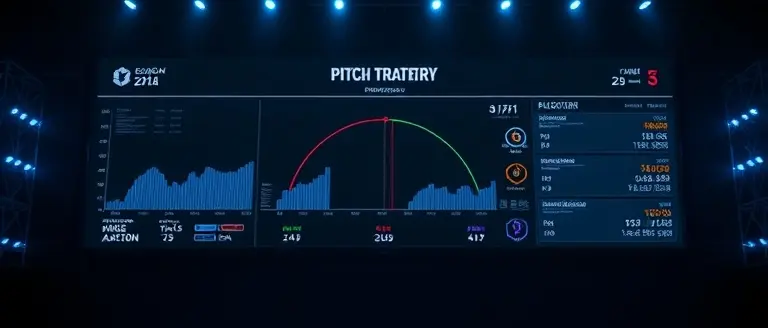
The June 13, 2026, Dodgers game serves as a masterclass in the razor-thin margins that define elite pitching. Throughout the contest, Yoshinobu Yamamoto exhibited remarkable efficiency, maintaining a low pitch count that allowed him to cruise into the late innings with surgical precision. By the time he reached the 8th inning, Yamamoto’s command remained stellar; however, the psychological shift from “perfect game” to “no-hitter” occurred in a split second following an error by Mookie Betts. Data suggests that Yamamoto’s heart rate and internal focus likely spiked during this sequence, as the sudden shift from a defensive cushion to a high-leverage realization altered the rhythm of the game.
Analyzing the High-Stakes Sequence
To understand the “Heartbreak vs. Performance” dynamic, we must look at the specific pressure points where Yamamoto faced his most daunting challenges:
- The 8th Inning Error: At this juncture, Yamamoto was deep in his pitch count, yet his velocity remained consistent. The defensive error ended the perfect game bid, forcing the pitcher to reset his mental approach while standing on the mound, now chasing a no-hitter rather than total perfection.
- The 9th Inning Home Run: With the pressure mounting and the pitch count approaching his limit, Tristan Peters stepped into the box. Yamamoto was forced to challenge the hitter with minimal margin for error. The resulting home run served as the final breaking point, a testament to how even the most dominant performance can be spoiled by a single swing from a determined opponent.
Despite the loss of the no-hitter, Yamamoto demonstrated elite stamina, maintaining command even as the pressure escalated. While the narrative focus often lands on the error or the homer, the underlying data highlights a pitcher who remained composed under extreme scrutiny. This performance reinforces the reality of baseball: elite mastery is often interrupted by singular moments of human variable, yet the overall quality of his outing remains a benchmark for his season.
Beyond the Scoreboard: The Emotional Weight of a Dominant Loss

In the high-stakes environment of a Dodgers game, the difference between a routine win and a career-defining milestone is often measured in millimeters. When Yoshinobu Yamamoto took the mound on June 13, 2026, he wasn’t just pitching; he was painting a masterpiece. Carrying a perfect game bid into the 8th inning requires a level of mental fortitude that is seldom seen even at the professional level. The eventual loss of that perfect game, triggered by an error from Mookie Betts, highlights the razor-thin margins that define baseball history. For fans and analysts alike, the emotional weight of this performance transcends the 7-1 scoreboard, shifting the narrative from a standard divisional victory to a somber appreciation of a “what-if” moment.
The Psychology of Near-Misses
Repeatedly coming within outs of history—a frustration Yamamoto has faced before—places a unique psychological burden on a pitcher. The intensity of such a performance creates a “high-pressure vacuum” where every pitch feels like an elimination event.
- Elite Concentration: Maintaining a perfect game bid requires an internal focus that often isolates a pitcher from the external noise of the crowd.
- The Shared Burden: When a mistake occurs, such as the defensive lapse that ended the perfect game, the sting is shared across the roster, emphasizing that baseball is a game of collective failure and success.
- Defining Brilliance: Ultimately, this outing will be remembered for Yamamoto’s surgical efficiency rather than the final score, as it showcased his ability to command the zone under extraordinary duress.
The night concluded with a decisive swing from Tristan Peters, whose lead-off home run in the 9th inning served as a stark reminder of baseball’s unpredictability. While the Dodgers walked away with the win, Peters earned his place in the game’s lore, effectively acting as the spoiler. His ability to capitalize on a single pitch—despite Yamamoto’s complete dominance throughout the evening—cements the reality that in Major League Baseball, one mistake is all it takes to shift the entire trajectory of a historic night.
Mastering the Mindset of High-Stakes Performance
The saga of Yoshinobu Yamamoto and the heartbreak of a denied no-hitter illustrates that even the most elite athletes must battle the internal pressures of performance. Whether it is a defensive lapse or a spoiler like Tristan Peters capitalizing on a single mistake, the difference between greatness and ‘almost’ often comes down to a split-second lapse in cognitive focus. Yamamoto’s resilience in closing out the win after such a disruption shows that peak performance is less about physical perfection and more about the mental agility to reset and maintain clarity under fire.
Just as Yamamoto must sustain laser-like concentration to deliver under pressure, many of us face our own ‘no-hitter’ moments in our professional and personal lives. When the stakes are high, mental fatigue and stress can cloud our decision-making. This is where The Brain Song becomes an essential tool for your performance arsenal. By integrating this neuroscience-based approach to mental sharpening, you can cultivate the same level of focus that defines high-achieving athletes, allowing you to cut through the fog and perform with precision when it matters most.
Elevate your cognitive capacity and embrace the clarity needed to succeed in high-pressure environments. By adopting the specialized routines designed to optimize your brain’s potential, you move closer to your own version of peak performance every single day. Stop leaving your focus to chance and start mastering your mental environment today.
 Achieve your own peak performance; try the 12-minute daily routine used by high-achievers to sharpen their focus.Transform My Life Today