

The football world stopped in its tracks as the official team sheet for Brazil’s World Cup opener against Morocco was revealed. In a move that defied conventional wisdom and sent social media into a frenzy, Igor Thiago was named to start as the spearhead of the Brazilian attack. While veteran strikers were expected to anchor the 4-2-3-1 formation, the technical staff opted for the Brentford powerhouse, a decision that signals a major tactical shift in the Seleção’s approach. This isn’t just a selection; it’s a calculated attempt to marry Thiago’s domestic prolificacy with the creative dynamism of stars like Vini Jr.
By prioritizing Thiago’s movement patterns over established reputation, Brazil is betting on a high-intensity, vertical style of play to break down a disciplined Moroccan defense. Analysts are already drawing comparisons to his potential transfer value, with clubs like Aston Villa monitoring his performance closely. But to truly understand why this selection is a masterstroke—or a massive gamble—we must look beyond the surprise. This is an expert scouting analysis into how Igor Thiago serves as the tactical keystone, bridging the gap between midfield control and the lethal final third precision required on the world stage.
The Strategic Shock: Why Igor Thiago Started Against Morocco

The selection of Igor Thiago in the starting XI for the Brazil national football team vs Morocco national football team Group C clash sent shockwaves through the global football community. While seasoned veterans were expected to lead the line, the coaching staff opted for the Brentford striker, a move rooted in a calculated tactical adjustment rather than sentimental hierarchy. After netting 25 goals in a prolific 2025/2026 domestic campaign, Thiago has proven he possesses the physical profile required to disrupt disciplined defensive blocks, an attribute currently prioritized by Brazil’s technical staff.
Tactical Rationale and Physicality
The decision to start Thiago serves a specific purpose in breaking down robust defensive structures like those favored by Morocco. Unlike traditional, smaller Brazilian forwards, Thiago offers:
- Physical Presence: His ability to hold up play under pressure allows Vini Jr and other creative midfielders to rotate and exploit spaces in the final third.
- High-Intensity Pressing: Thiago’s work rate aligns with a modern high-pressing 4-2-3-1 system, designed to unsettle opponents during defensive transitions.
- Aerial Utility: By providing a distinct target man, Thiago forces opposing defenders to commit, thereby creating pockets of space for technical players to operate.
This strategic pivot also serves to mitigate the influence of key Moroccan playmakers like Ismael Saibari, as Thiago’s presence forces the North African side to sit deeper and remain cautious of direct vertical balls. While critics point to his limited international experience—only four caps prior to this fixture—the coaching staff clearly values his current form and Premier League-tested resilience over past pedigree. Whether this selection pays off long-term depends on how effectively he coordinates with the rest of the attacking line, but for now, his inclusion signifies a clear shift in how the Seleção intends to navigate the physical demands of this World Cup.
Tactical Breakdown: How Thiago Complements the Seleção Frontline
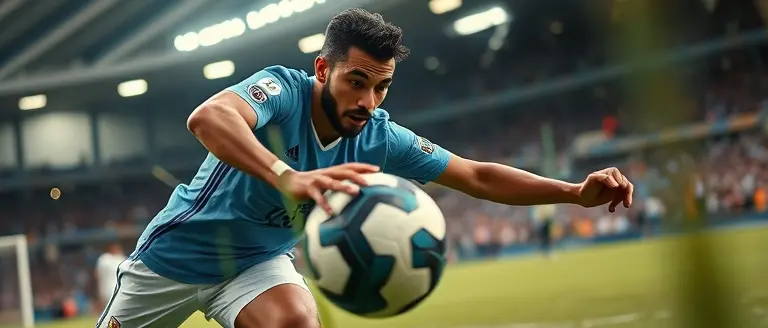
The inclusion of Igor Thiago in the starting XI for the Brazil national football team against the Morocco national football team represents a deliberate shift toward a more structured, physical attacking framework. Unlike the fluid, position-swapping forwards traditionally favored by Brazil, Thiago operates as a prototypical focal point. His role in the 4-2-3-1 formation is to act as a physical pivot, facilitating hold-up play that allows creative catalysts like Vini Jr to exploit the vacated half-spaces. By pinning opposition center-backs deep, Thiago creates the necessary vertical stretch that prevents Morocco’s defensive block from collapsing onto the wings, effectively granting Vinicius the isolation scenarios he requires to operate at peak efficiency.
Synergy and Tactical Fit
Thiago’s 25-goal domestic campaign with Brentford highlighted his efficiency in transition and aerial dominance, attributes often missing from more nimble Brazilian strikers. His tactical profile offers several advantages:
- Defensive Distraction: Thiago’s willingness to challenge physically forces defenders into tight marking, which creates room for advanced midfielders and wide forwards to penetrate.
- Pivot Utility: He acts as a link-up player, dropping slightly deeper to distribute to onrushing attackers, a role that complements the playmaking tendencies of peers like Fabinho in the transition phase.
- Tactical Versatility: His presence allows the coaching staff to move away from purely technical, “Joga Bonito” setups toward a more European-style tactical rigor, providing a robust solution against disciplined defensive sides like Morocco.
While critics question his lack of international caps, the data suggests that Thiago’s movement patterns—specifically his lateral drifts to the channels—are designed to draw markers away from Vini Jr. If he can successfully occupy the space between the midfield and the defensive line, he transforms the Seleção’s frontline into a multi-dimensional threat. This strategic choice is less about replacing traditional flair and more about providing a functional bridge that maximizes the individual brilliance of the squad’s established stars during this high-stakes World Cup match.
From Brentford to the World Stage: Assessing the Premier League Influence

The meteoric rise of Igor Thiago from a standout performer at Brentford to a starter for the Brazil national football team is grounded in cold, hard data. His prolific 25-goal domestic campaign in the 2025/2026 Premier League season was not merely a product of clinical finishing, but a testament to his ability to thrive within the most physically demanding league in world football. By operating consistently against top-tier defensive blocks, Thiago developed the tactical awareness and spatial intelligence required to navigate the high-stakes environment of the 2026 FIFA World Cup.
Tactical Versatility and Physicality
Thiago’s transition to the international stage is defined by his adaptation to the English game’s relentless intensity. Unlike traditional forwards who rely solely on technical flair, Thiago offers a unique profile:
- Elite Aerial Threat: His dominance in the air during set-piece scenarios at the club level provided Brazil with a necessary target man, a departure from the smaller, more mobile strikers often favored in the past.
- Defensive Work Rate: The Premier League’s emphasis on high-pressing systems means Thiago is accustomed to acting as the first line of defense, a crucial component in the 4-2-3-1 formation currently deployed by Brazil.
- Conversion Efficiency: His goal-per-shot ratio outperformed many established international veterans, signaling to the coaching staff that he possesses the composure needed to capitalize on limited opportunities against organized defenses like that of the Morocco national football team.
Evidence suggests that his experience in the Premier League—a league defined by defensive rigor—prepared him specifically for the physicality of modern tournament football. While stars like Vini Jr provide the creative spark from the flanks, Thiago’s ability to hold up the ball and engage physical center-backs serves as the essential anchor for the attack. His inclusion is not just a reward for domestic success; it is a calculated decision to bring Premier League-honed intensity to the global stage, ensuring Brazil has a focal point capable of sustaining pressure during intense match scenarios.
Defining the Future: Can Thiago Sustain the Starting Spot?

The unexpected elevation of Igor Thiago to the starting lineup for the Brazil national football team raises immediate questions regarding whether this tactical gamble is a specialized response to Morocco or a fundamental shift in the Seleção’s offensive philosophy. While veteran strikers have long occupied the central role, Thiago’s clinical 25-goal campaign for Brentford offers a specific profile—high-intensity pressing and physical durability—that aligns with modern, high-tempo football. If Thiago can successfully replicate his Premier League output on the international stage, his inclusion may signal a move toward a more disciplined, work-rate-heavy front line that better complements the creative freedom of Vini Jr.
Tactical Integration and Long-Term Viability
For Thiago to cement his position, he must prove he is more than a one-match solution against the tactical nuances of teams like Morocco. His ability to link play while occupying central defenders creates crucial space for wide attackers, a role that distinguishes him from traditional target men.
Key metrics for evaluating his future status include:
- Off-the-ball Movement: His ability to pull defenders out of position to create lanes for Vini Jr. and his supporting midfielders.
- Efficiency Under Pressure: Maintaining composure during the high-stakes environment of the 2026 FIFA World Cup as opposed to domestic league matches.
- Tactical Versatility: Demonstrating effectiveness against both low-block defensive setups and high-pressing opponents like those Brazil may face in the knockout rounds.
Should he falter, the coaching staff will face intense scrutiny regarding the exclusion of more experienced squad members. However, if Thiago’s synergy with the squad persists, it could necessitate a permanent transition in the national team’s tactical framework, placing him at the center of Brazil’s quest for a sixth World Cup title. His performance serves as a litmus test for the technical staff’s commitment to rewarding current form over historical pedigree.
Mastering the Tactical Mindset
Igor Thiago’s inclusion is a testament to the fact that at the elite level, physical prowess must be matched by instantaneous mental processing. Whether it’s Thiago executing a split-second run behind the defensive line or a tactical analyst dissecting the interplay between him, Ismael Saibari, and the Brazilian midfield, the requirement for absolute focus is identical. The chaos of a World Cup pitch requires players—and those who follow their every move—to be locked into a state of peak cognitive clarity.
Just as Thiago must maintain hyper-awareness to thrive in this high-stakes 4-2-3-1 formation, your ability to analyze complex sporting scenarios depends entirely on your mental sharpness. If you want to process the game with the same granular precision as a professional scout, you need to fuel your brain with the right support. This is where The Brain Song bridges the gap, providing the cognitive optimization required to stay focused when the match demands your undivided attention and analytical depth.
By enhancing your mental acuity, you transform from a casual spectator into an expert observer, capable of seeing the tactical patterns others miss. Don’t just watch the game—experience it with the clarity of a pro. Unlock your peak potential today and elevate your understanding of the beautiful game.
 Unlock your peak cognitive potential and analyze the game with expert precision; learn how to sharpen your focus here.Yes, I Want This Now!