
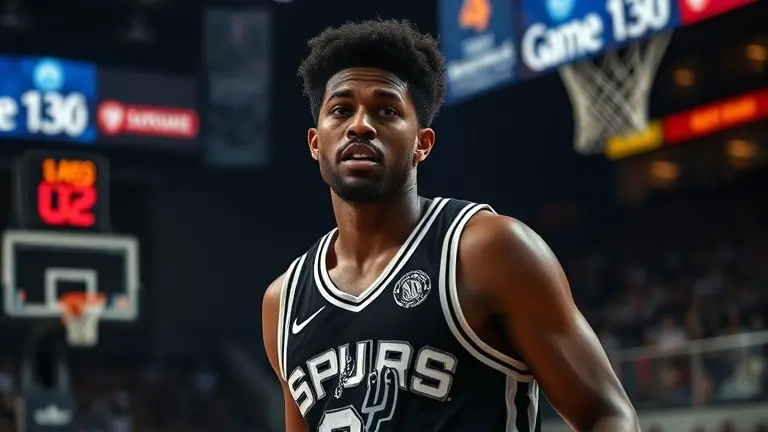
The echoes of the buzzer at the 2026 NBA Finals Game 4 still reverberate, punctuated by the image of De’Aaron Fox’s contested layup blocked by OG Anunoby. While the narrative has been dominated by the dramatic 29-point comeback and the ensuing ‘blame game’ over that final possession, the reality is far more nuanced. Behind every high-stakes decision in the NBA lies a complex intersection of split-second tactical execution, immense physical fatigue, and the suffocating pressure of a championship atmosphere. Rather than focusing on the singular outcome, we must dissect the mechanics of a play where inches determined destiny and how the Spurs’ high-pressure environment is testing the limits of professional-grade mental endurance.
As the Spurs look toward a pivotal Game 5, the focus shifts from the ‘what-if’ to the ‘what’s next.’ Analyzing this moment requires moving beyond the surface-level critique to understand how top-tier athletes maintain cognitive clarity when the margin for error effectively vanishes. The challenge of overcoming a monumental momentum shift, coupled with the unconventional pressure of restricted ticket sales creating a fortress-like home environment, demands an unparalleled level of mental fortitude that separates legends from the rest of the league.
Analyzing the Game 4 Heartbreak: The Block That Shifted the Finals Narrative
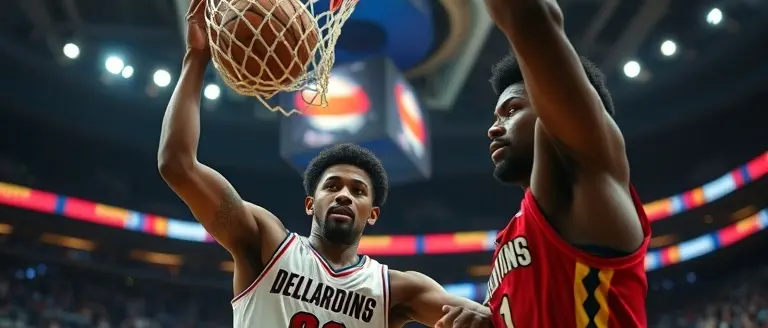
The final seconds of Game 4 between the San Antonio Spurs and the New York Knicks will long be studied as a pivotal inflection point in the 2026 NBA Finals. With the Spurs clinging to a one-point lead, De’Aaron Fox received the inbound pass, attacking the rim with his characteristic speed. However, the sequence culminated in a high-stakes defensive stand by OG Anunoby, whose recovery and subsequent block sealed a 107-106 victory for the Knicks. While the initial reaction from fans focused on the perceived miss by Fox, the NBA’s post-game officiating report provided clarity, officially classifying the play as a “clean and legal” defensive effort. By reviewing the tape, it is evident that Anunoby utilized a perfect verticality approach, contesting the ball at its apex without creating illegal contact, leaving no room for a whistle in the waning moments.
Tactical Shifts and Momentum Changes
The gravity of this play extends far beyond a single box score entry. The Knicks’ successful completion of a 29-point comeback represents one of the most significant psychological shifts in recent playoff history. This outcome has forced a recalibration of the Spurs’ tactical approach heading into Game 5. Several key factors contributed to this momentum swing:
- Defensive Pressure: The Knicks shifted their defensive scheme in the second half, opting for aggressive switches that neutralized the Spurs’ perimeter spacing.
- The Psychological Factor: Managing the fallout from a blown lead is a critical component of the Spurs’ preparation. Coach-led adjustments are now focused on maintaining composure under the heightened pressure of a tied series.
- Venue Dynamics: With the Spurs implementing strict ticket restrictions to prevent a “Knicks takeover,” the atmosphere at the Frost Bank Center is expected to be a hostile environment, further intensifying the pressure on both teams to perform.
As the series shifts back to San Antonio, the focus for De’Aaron Fox and the Spurs remains on their ability to execute in high-leverage situations. Analysts note that while the Game 4 result was jarring, the tactical blueprint for a Spurs victory remains intact; the team must now address the defensive lapses that allowed the Knicks’ massive scoring run while finding secondary playmaking options to mitigate the defensive attention currently focused on their star guards.
Tactical Breakdown: The Defensive Scheme That Stifled the Spurs’ Late-Game Execution
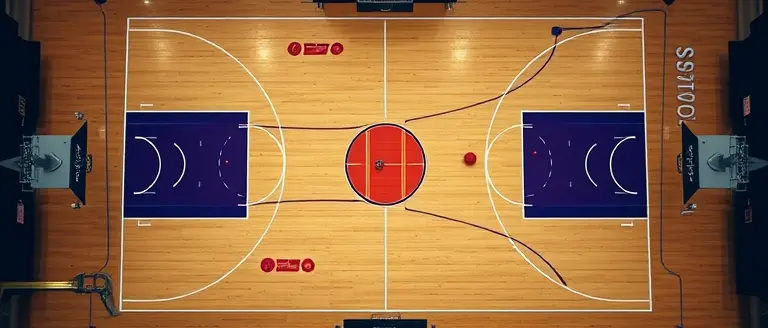
The final moments of Game 4 showcased a masterclass in high-pressure defensive adjustment by the New York Knicks. Throughout the second half, the Knicks shifted from a standard drop coverage—which De’Aaron Fox successfully exploited early in the game—to an aggressive “blitz and recover” scheme. By doubling Fox off the pick-and-roll, the Knicks effectively forced the ball out of his hands, testing the decision-making of the Spurs’ secondary playmakers and disrupting the team’s offensive rhythm.
The Anatomy of the Final Stop
The defining sequence, featuring the pivotal block by OG Anunoby, was not a result of a singular player error but rather a sophisticated defensive rotation. As Fox drove to the lane, the Knicks utilized a “stunt and recover” technique from the weak-side corner. This forced Fox to account for two defenders simultaneously, shrinking the floor and limiting his passing windows. Key tactical adjustments included:
- Aggressive Hedges: Knicks bigs moved higher toward the perimeter to challenge Fox’s rhythm, preventing him from gaining momentum toward the rim.
- Secondary Rim Protection: By sagging off non-shooting threats, the Knicks maintained a “wall” in the paint, ensuring that any penetration by Fox required him to navigate through multiple layers of contact.
- Forced Efficiency Shifts: By funneling Fox toward his non-dominant side and utilizing Anunoby’s length, New York forced the Spurs into a high-difficulty layup rather than an open mid-range jumper or kick-out pass.
The NBA’s official verification confirmed that Anunoby’s contest was a clean, legal block, highlighting the success of the Knicks’ defensive discipline. For Fox, the play serves as a case study in how elite defenses can neutralize a star guard by condensing space and forcing the ball toward help-side defenders. This tactical chess match proved that in the 2026 NBA Finals, defensive versatility remains the ultimate equalizer against high-octane offensive players. As the series shifts to Game 5, the Spurs must now find ways to counter these congested lanes if they hope to regain their offensive flow.
The Road to Redemption: What Game 5 Means for De’Aaron Fox’s Legacy
The narrative surrounding De’Aaron Fox following the Game 4 heartbreak has been dominated by the singular image of his blocked layup, but history suggests that the most defining moments for elite point guards are often forged in the immediate aftermath of such high-profile failures. In the annals of the NBA Finals, resilience is the metric that separates stars from legends. Fox now faces a critical inflection point: he must channel the intense public scrutiny into a calculated, aggressive performance in Game 5. Historically, elite floor generals who experience late-game postseason misses often see a significant uptick in efficiency and defensive intensity in the subsequent matchup, driven by a hyper-focused approach to film study and decision-making.
Analyzing the Bounce-Back Potential
Statistical trends from the 2026 postseason indicate that Fox thrives when the stakes are at their zenith, particularly in environments where he is forced to silence a hostile crowd. To orchestrate a successful bounce-back in Game 5, he will need to leverage the following elements:
- Tactical Adjustments: Shifting from isolation-heavy drives to high-screen sets that exploit the Knicks’ perimeter rotation, thereby mitigating the risk of rim protection from OG Anunoby.
- Psychological Equilibrium: Maintaining composure under the pressure of a 29-point blown lead requires a reset in mental discipline, a trait Fox has demonstrated throughout his career as a leader for the San Antonio Spurs.
- Playmaking Versatility: Utilizing his elite transition speed to force defensive cross-matches early in the shot clock, preventing the Knicks from settling into their structured defensive shell.
The “redemption arc” for Fox is not merely about personal vindication; it is a vital component of the Spurs’ tactical recovery. With the series momentum currently favoring New York, Fox’s ability to dominate the rhythm of Game 5 will dictate whether the Spurs can reclaim their command of the Finals. Evidence suggests that his capacity to absorb criticism and recalibrate his offensive approach is among the best in the league, positioning him to silence critics and secure a legacy-defining victory on the road.
The ‘Fan Takeover’ Controversy: Contextualizing the Spurs’ Ticket Policy
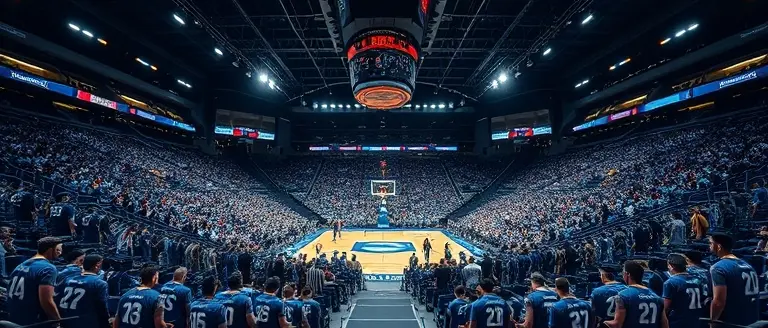
Beyond the on-court heroics of players like De’Aaron Fox and the tactical friction of the 2026 NBA Finals, the series has been defined by a secondary theater of operations: the seating bowl. The San Antonio Spurs’ decision to impose strict regional restrictions on ticket sales—effectively barring out-of-state buyers—has sparked a fiery debate regarding the sanctity of home-court advantage versus the commercial realities of professional sports. While the front office framed this move as a necessary measure to prevent a “Knicks fan takeover,” critics argue that such policies undermine the democratic nature of the Finals experience, turning a premier sporting event into an exclusionary environment.
Strategic Necessity or Institutional Panic?
The optics of limiting fan access suggest that the Spurs’ organization is grappling with immense pressure following their Game 4 collapse. By restricting access, the team hopes to cultivate a fervent, localized atmosphere to prevent the emotional momentum from shifting toward the visiting New York Knicks. However, analysts point out that these restrictions often have diminishing returns:
- Atmospheric Pressure: Creating a “fortress” environment can inadvertently increase the psychological burden on players like De’Aaron Fox, who may feel that anything less than a dominant victory will be perceived as a failure by a curated home crowd.
- Secondary Market Volatility: These restrictions have historically led to an explosion in resale prices, potentially pricing out loyal, local season-ticket holders and creating a sterile environment dominated by corporate entities rather than die-hard fans.
- Competitive Integrity: While teams are well within their rights to manage inventory, doing so during a Finals series signals an organizational vulnerability, suggesting that the team lacks the confidence to withstand opposing fan bases in a neutral atmosphere.
Whether this policy serves as a masterstroke of crowd control or a sign of mental fatigue remains a point of contention. As the series shifts back to San Antonio, the focus will undoubtedly return to the hardwood, but the ticket controversy remains a poignant reminder of how high the stakes have become in this championship clash.
Mastering the Mind Under Championship Pressure
The aftermath of Game 4 serves as a stark reminder that professional basketball at the highest level is as much a mental battle as it is a physical one. As we analyze the tactical breakdown and the sheer psychological weight De’Aaron Fox and the Spurs are navigating, it becomes clear that success in these defining moments requires more than just raw talent; it demands extreme cognitive optimization. The ability to remain composed, process defensive schemes under duress, and execute with precision during the final seconds is a skill refined through rigorous mental preparation.
This is where the principles of elite performance meet innovation. Just as top-tier athletes rely on specialized techniques to sustain focus during high-stress scenarios, you can bridge the gap between human limitation and peak potential. The Brain Song is designed to replicate that sense of mental clarity, providing the cognitive endurance necessary to clear the ‘fog’ of high-stakes environments—whether you are competing on the hardwood or navigating your own daily challenges.
By incorporating this tool into your routine, you are essentially adopting the mindset of a professional performer, prioritizing the mental sharpening required to navigate any adversity. It is not just about managing fatigue; it is about cultivating a state of readiness that allows you to perform with ‘clutch’ consistency when it matters most. Take the first step toward mastering your focus and elevating your decision-making capacity today.
 Unlock your own ‘clutch’ potential and sharpen your mental focus by incorporating The Brain Song into your daily routine.Sharpen My Focus Now!