
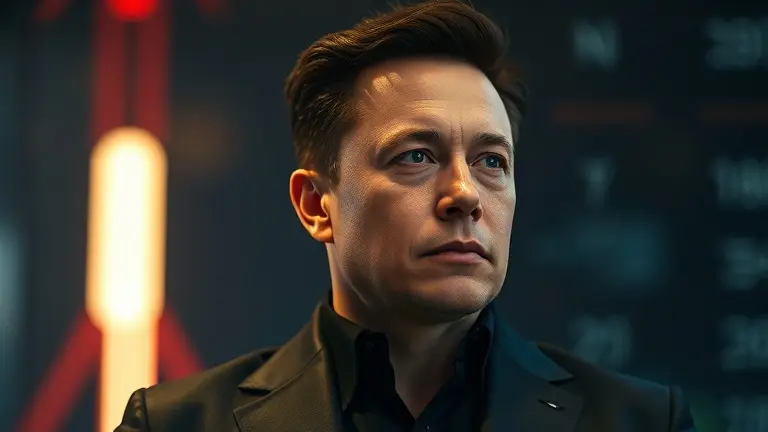
Elon Musk’s net worth has officially shattered the $1 trillion ceiling, a historic milestone triggered by the meteoric SpaceX IPO on June 12, 2026. As the SPCX stock ticker lights up trading screens worldwide, retail investors are scrambling to understand if the company’s $1.7 trillion valuation is a gateway to long-term wealth or an overhyped bubble waiting to burst. While the media remains fixated on the ‘first trillionaire’ narrative, savvy investors know that the real story lies beneath the headlines, buried in the complex financial realities of space exploration and infrastructure.
The surge in search interest for ‘SPCX stock price’ highlights an unprecedented level of market fervor, but history proves that high-volatility debuts demand a cool head and rigorous due diligence. Whether you are a newcomer captivated by the SpaceX mission or a veteran investor analyzing Musk’s diversified portfolio, one truth remains: the greatest risk is not the market, but the emotional fatigue that clouds your judgment. In an era of non-stop financial updates, your ability to distill signal from noise is the ultimate competitive advantage.
The Trillion-Dollar Milestone: Analyzing the SpaceX IPO Impact
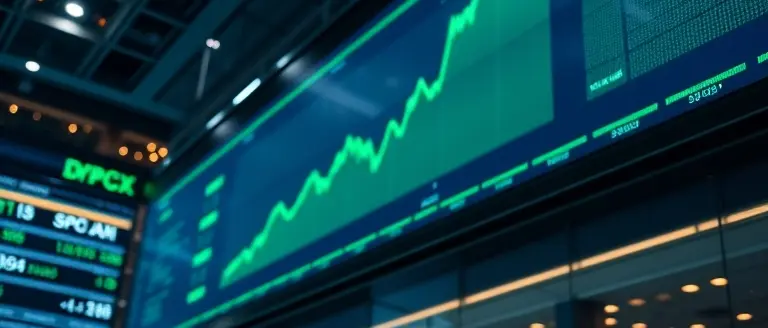
The financial landscape shifted irrevocably on Friday, June 12, 2026, as SpaceX (SPCX) made its highly anticipated debut on the Nasdaq. Initially priced at $135 per share, the stock experienced immediate, high-volume buying pressure, driving the SPCX stock price to surge beyond $150 in the first hours of trading. This historic market entry not only solidified the company’s position as a titan of the aerospace industry but also served as the primary catalyst for Elon Musk officially crossing the $1 trillion net worth threshold. By capturing the value of its Starlink constellation and deep-space mission contracts, the IPO propelled Musk to become the world’s first trillionaire, a feat that has dominated global financial headlines and redefined personal wealth metrics.
Market Dynamics and Valuation
The market’s reaction to the SpaceX ticker reflects an aggressive investor appetite for space-age technology. With a total market valuation eclipsing $1.7 trillion, the company has effectively bypassed traditional aerospace benchmarks, aligning itself more closely with the valuation models of global tech giants. However, the rapid 11% to 20% price appreciation during the debut has sparked a necessary debate among analysts regarding long-term sustainability.
Key takeaways from the SPCX stock price action include:
- Valuation Scalability: Investors are clearly pricing in future revenue from interplanetary logistics rather than just current satellite internet subscriptions.
- Portfolio Synergy: The milestone underscores how Elon Musk utilizes his diversified holdings—Tesla, Neuralink, and now the publicly traded SpaceX—to create a self-reinforcing ecosystem of capital and innovation.
- Retail Sentiment: The intense search volume for the SpaceX ticker suggests that retail interest is currently the primary driver of the stock’s early volatility, potentially decoupling the price from fundamental institutional valuation models.
While the “trillionaire” narrative provides the initial hook, the broader implication remains the shift in how capital markets value private-to-public space ventures. For current stakeholders and prospective retail buyers, the challenge lies in distinguishing between the immediate IPO fervor and the long-term feasibility of a company operating in such high-risk, high-capital-intensity environments.
Beyond the Hype: Is SpaceX Stock a Sustainable Buy?
The historic IPO of SpaceX (SPCX) on June 12, 2026, has fundamentally altered the investment landscape, catapulting Elon Musk to a record-breaking net worth exceeding $1 trillion. However, for the retail investor, the SPCX stock price surge from an initial $135 to over $150 necessitates a sober look at long-term viability versus speculative fervor. While the $1.7 trillion valuation reflects the company’s dominance in reusable launch vehicles and Starlink’s connectivity revolution, financial analysts remain divided. Unlike mature aerospace incumbents, SpaceX is defined by massive, ongoing capital expenditures required for deep-space exploration and orbital infrastructure, making traditional price-to-earnings (P/E) metrics difficult to apply.
Analyzing Valuation and Market Risks
The current SpaceX ticker performance mirrors the “mania” often seen in high-growth tech debuts, yet investors should evaluate several critical factors before adding the stock to a portfolio:
- Capital Expenditure Intensity: Unlike software-as-a-service companies, SpaceX requires constant, multi-billion dollar reinvestment into hardware. Investors must determine if Starlink’s recurring revenue can sufficiently offset these costs to justify a trillion-dollar market cap.
- Comparison to Incumbents: When contrasting SPCX stock with legacy aerospace giants, the current valuation implies a growth narrative that assumes near-perfect execution of Mars colonization timelines and satellite constellation scaling.
- Diversification Impacts: Because a significant portion of Elon Musk’s net worth is tied to his broader portfolio—including Tesla and Neuralink—the volatility in one segment can influence investor sentiment across his entire ecosystem, creating ripple effects for the SPCX stock price.
Ultimately, buying into a company at the peak of its IPO “hype” phase poses significant downside risk. While SpaceX’s technological moat is undisputed, the current market pricing arguably bakes in years of future success, leaving little room for operational setbacks. Retail investors should view the stock through a long-term lens, acknowledging that the path to sustainable growth will likely be characterized by high volatility rather than linear, uninterrupted gains.
Comparative Valuation: SpaceX vs. Global Tech and Aerospace Titans

The June 12, 2026, IPO that pushed Elon Musk’s net worth past the $1 trillion milestone has fundamentally altered the landscape of public markets. With a debut valuation exceeding $1.7 trillion, SpaceX now commands a market capitalization that dwarfs legacy aerospace titans. To put this into perspective, the combined market values of Boeing and Lockheed Martin—historically the gatekeepers of American aerospace—do not come close to the valuation currently commanded by the SPCX stock price. Investors are effectively paying a massive “innovation premium,” betting that SpaceX’s transition from a launch provider to a vertically integrated deep-tech conglomerate justifies a price-to-earnings ratio that far outpaces traditional defense contractors.
Unlike traditional aerospace firms that operate primarily on government contracts and slow-cycle manufacturing, SpaceX occupies a hybrid niche. It operates as both a mission-critical infrastructure provider and a high-frequency service provider through its Starlink division. Market analysts note that this dual-revenue structure is why investors are treating the SpaceX ticker more like a mega-cap technology stock than a legacy aerospace manufacturer. Key factors driving this premium valuation include:
- Vertical Integration: By manufacturing its own engines, avionics, and launch vehicles, SpaceX exerts a level of cost control that Boeing simply cannot replicate under its current outsourcing model.
- Starlink Synergy: The recurring revenue from global satellite internet service provides a buffer that traditional aerospace companies, which are largely dependent on the volatility of military and commercial flight orders, do not possess.
- The Musk Factor: The massive surge in Elon Musk’s net worth is inextricably linked to the market’s belief that his diversified portfolio—Tesla, Neuralink, and SpaceX—creates an ecosystem of cross-pollinating technological superiority.
While the $1.7 trillion valuation invites scrutiny regarding sustainability, the market is pricing in a future where SpaceX controls the orbital economy. For retail investors watching the SPCX stock price closely, this comparison highlights a critical reality: SpaceX is not being valued based on its past aerospace performance, but on its projected dominance as a digital-industrial hybrid. As experts continue to debate the long-term viability of these numbers, the disparity between SpaceX and its competitors remains one of the most significant metrics in modern financial history.
Retail Investor Guide: Navigating High-Volatility IPOs

The historic debut of SpaceX (SPCX) on the Nasdaq has triggered massive market interest, with many retail investors eager to participate in the momentum that helped propel Elon Musk to a historic $1 trillion net worth. However, entering a stock immediately following a high-profile IPO requires a disciplined approach to risk management. When a ticker surges over 20% on its first day, retail participants often fall victim to FOMO (Fear of Missing Out), which can lead to purchasing shares at an inflated premium. Financial experts caution that these initial trading windows are characterized by extreme volatility as institutional players and early-stage venture capitalists adjust their positions, often creating a “pop and drop” scenario that can catch inexperienced traders off guard.
Essential Strategies for IPO Participation
To navigate the volatility surrounding the SPCX stock price, retail investors should consider the following foundational principles before allocating capital:
- Dollar-Cost Averaging (DCA): Rather than committing your entire investment budget during the opening week, consider scaling into your position over several months. This helps mitigate the impact of buying at a temporary price peak.
- Understanding Lock-up Periods: Be aware of the standard IPO lock-up period, which typically prevents company insiders and early investors from selling their shares for a set duration. When these periods expire, a surge in supply can often put downward pressure on the spacex stock price.
- Evaluate Long-Term Valuation: While the media focus remains on the “trillionaire” milestone, retail investors should prioritize fundamental analysis of the spacex ticker—examining cash flow, government contracts, and the sustainability of its launch cadence—rather than relying on short-term price action.
- Avoid Emotional Trading: High-visibility stocks are prone to “hype cycles.” If the excitement surrounding Elon Musk’s net worth exceeds the underlying business metrics, consider waiting for a pullback or consolidation phase before establishing a long-term position.
By focusing on a disciplined, data-driven strategy, you can better manage the risks associated with volatile tech IPOs while avoiding the common pitfalls of chasing unsustainable daily fluctuations. Always remember that for an investment to be viable, the price you pay today must align with the long-term growth trajectory of the enterprise.
Mastering Your Mind for the SpaceX Era
The SpaceX IPO has reshaped the financial landscape, cementing Elon Musk’s position as the world’s first trillionaire and creating a historic market shift. However, as the initial euphoria fades, the reality of managing a $1.7T valuation in a volatile sector remains. Successful long-term investing isn’t about chasing the buzz of the SPCX stock price; it’s about maintaining the discipline to analyze, evaluate, and act based on cold, hard data rather than the prevailing market noise.
As you dive into complex SEC filings and valuation models, remember that your most valuable asset isn’t just your capital—it’s the clarity of your own mind. Navigating the volatility of a high-stakes IPO demands a level of focus that few investors possess. Without cognitive resilience, even the most promising opportunity can become a source of stress and poor decision-making.
To gain an analytical edge, you need to optimize your cognitive performance. The Brain Song is designed to sharpen your mental clarity, helping you filter out the hype and maintain the sharp, logical mindset necessary to evaluate high-stakes opportunities with precision. Don’t let decision fatigue dictate your financial future; invest in your ability to think clearly before you invest in the market.
 Before you commit your capital to the SpaceX IPO, prepare your most important asset for the volatility ahead: sharpen your focus and reduce decision fatigue with The Brain Song.Sharpen My Investment Edge Today