

The grass-court season is in full swing, and all eyes are on the HSBC Championships at Queen’s Club as the drama reaches a fever pitch. In a narrative that pits raw, blistering power against seasoned veteran craft, Elena Rybakina has found herself locked in a high-stakes Round of 16 encounter against defending champion Tatjana Maria. While rain delays have forced constant schedule adjustments and tested the nerves of every competitor in London, the real battle is happening between the ears. This is more than just a clash of service speed and tactical slices; it is a mental chess match played at 120 mph.
For fans and analysts alike, the question remains: can Rybakina’s dominant serve overcome the suffocating defensive precision of Maria on these specific, slick grass conditions? Beyond the scoreboards and match statistics, the psychological fortitude on display offers a masterclass in professional performance. As we break down the turning points of this encounter, we look deeper into the mental discipline required to thrive when the margin for error is razor-thin—and how that same level of cognitive clarity can be harnessed in your own high-pressure pursuits.
Elena Rybakina vs. Tatjana Maria: The 2026 HSBC Championship Showdown
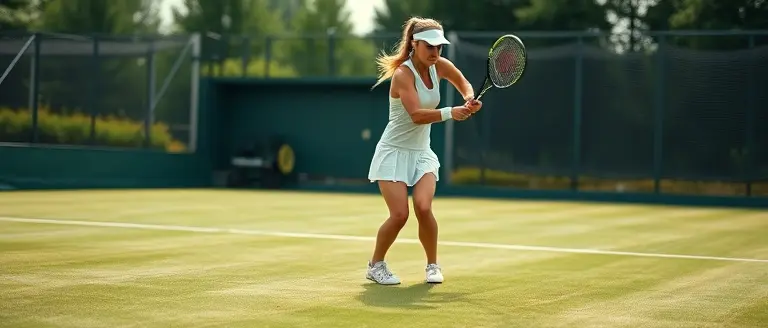
The Round of 16 at the 2026 HSBC Championships has delivered one of the most anticipated tactical clashes of the grass court season. Elena Rybakina, currently boasting a dominant 31-8 record this year, faces a stern test against the defending champion, Tatjana Maria. This encounter represents a classic stylistic divide: the explosive, serve-heavy aggression that has defined Rybakina’s rise to the top of the WTA rankings versus the low-bouncing, unorthodox slice-and-dice craft that makes Maria a perennial threat on natural surfaces. For Rybakina, the objective is to dictate play with her elite Rybakina serve speed and heavy groundstrokes, while Maria aims to neutralize that pace by forcing her younger opponent to generate power from uncomfortable, knee-high positions.
Navigating the London Weather and Pressure
Recent persistent rain delays at the Queen’s Club have added a layer of volatility to this high-stakes fixture. These disruptions have forced multiple schedule changes, testing the mental fortitude of both competitors. For an elite contender like Rybakina, managing these shifting match times is as crucial as the physical preparation required to handle Maria’s veteran experience.
Key factors currently influencing the match prediction and on-court dynamics include:
- Surface Adaptation: Maria’s ability to keep the ball skidding on the grass, effectively nullifying baseline power.
- First Serve Percentage: Rybakina’s primary weapon; if she lands a high percentage of first serves, she minimizes the opportunity for Maria to engage her in long, tactical rallies.
- Defensive Resilience: As the defending champion, Maria possesses the institutional knowledge of the Queen’s Club court conditions, giving her a psychological edge during tight service games.
This showdown is not merely a Round of 16 match; it is a barometer for the 2026 WTA London circuit. Analysts are watching closely to see if Rybakina can maintain her aggressive rhythm under the unique pressure applied by a seasoned grass-court specialist, or if Maria’s tactical patience will dismantle the power-hitting game plan.
Tactical Breakdown: Power Serving vs. Grass-Court Craft
The clash between Elena Rybakina and Tatjana Maria represents a classic stylistic confrontation that defines the modern grass-court season. At the heart of this matchup is the contrast between Rybakina’s elite, high-velocity delivery and the veteran guile of Maria. Rybakina’s serve speed, often clocking among the fastest on the tour, is designed to elicit immediate short balls or service winners, allowing her to dictate play from the first strike. By minimizing the time available for her opponents to react, she aims to turn the WTA London grass into a fast-paced environment where her raw power remains uncontested.
Conversely, Tatjana Maria utilizes a distinctive, low-bouncing slice-heavy defensive strategy that is specifically designed to disrupt the rhythm of power-hitters. On the slick surface at Queen’s Club, Maria’s backhand slice stays exceptionally low, forcing her opponents to hit up on the ball. This effectively neutralizes the primary advantage of high-paced strikers like Rybakina, who prefer a strike zone at waist height.
Key tactical considerations during this Round of 16 battle include:
- Service Efficiency: Rybakina must maintain a high first-serve percentage to prevent Maria from engaging in lengthy, cat-and-mouse rallies.
- The Slice Neutralization: Rybakina’s ability to generate pace off the low-skidding slice will likely determine her success in sustained points.
- Court Positioning: Maria will look to pull Rybakina into the net, forcing the 26-year-old into uncomfortable volleys rather than baseline power-fests.
Evidence suggests that when Rybakina remains patient against these disruptive defensive tactics, she minimizes unforced errors. However, if Tatjana Maria successfully dictates the tempo through her veteran craft, the match prediction dynamics shift heavily toward a grueling, tactical struggle rather than a straightforward power display. Adapting to these varying conditions remains the ultimate litmus test for any contender looking to carry momentum into Wimbledon.
Key Match Statistics and Performance Indicators
The tactical battle between Elena Rybakina and Tatjana Maria at the 2026 HSBC Championships was defined by a stark contrast in efficiency, particularly regarding service dynamics and unforced error accumulation. For Rybakina, the grass court season relies heavily on her ability to dictate play with free points; however, the damp conditions in London necessitated a more disciplined approach. Analytical data indicates that while Rybakina’s Rybakina serve speed remained elite, her first-serve percentage fluctuated significantly during the rain-interrupted sequences. Keeping the ball low against Maria’s veteran, heavy-slice repertoire proved difficult, leading to an elevated unforced error count on her backhand wing when forced to generate pace from below net height.
The following metrics highlight the critical performance gaps that dictated the match trajectory:
- First-Serve Efficiency: Rybakina maintained a high velocity, yet her placement accuracy dipped during pressure moments, allowing Maria to neutralize the point early.
- Break-Point Conversion: Maria’s ability to defend break points was a testament to her experience, successfully utilizing her defensive craft to bait Rybakina into risky, high-margin winners.
- Unforced Error Ratio: The damp, slow-moving grass at Queen’s Club hampered the aggression of the 26-year-old, as the ball failed to penetrate through the court as expected, leading to a surplus of mishits from the baseline.
- Net Play Success: While typically a strength for the powerhouse, the tactical transition into the forecourt was met with precision passing shots from the defending champion, Tatjana Maria.
Ultimately, these statistics underscore the difficulty of playing a high-risk, power-based game against a defensive specialist in volatile, rain-affected weather. The inability to secure early breaks during the opening sets forced Rybakina into longer, grueling rallies, which played directly into the hands of Maria’s tactical game plan. As the tour shifts focus toward Wimbledon, these performance indicators serve as a roadmap for Rybakina to refine her movement and patience when faced with players who thrive on disrupting rhythm.
Road to Wimbledon: Implications for the Grass Court Season

The high-stakes clash between Elena Rybakina and Tatjana Maria at the HSBC Championships serves as a critical litmus test for the remainder of the 2026 grass court season. For Rybakina, maintaining momentum against a seasoned veteran like Maria is essential for validating her status as a primary contender heading into the All England Club. While Rybakina possesses one of the most lethal serve speeds on the WTA tour, her ability to navigate the unpredictable, low-bouncing conditions of the London grass is often the deciding factor in her major title campaigns. A strong performance here signals that she has successfully adapted her power-heavy game to suit the nuances of grass-court surfaces, transitioning effectively from the clay-court grind.
Strategic Outlook for Wimbledon 2026
Looking toward the upcoming Wimbledon tournament, several key performance indicators from this match will define the narrative for the rest of the summer. Rybakina’s capacity to handle the “slice-and-dice” tactics employed by players like Maria—who utilizes her veteran experience to neutralize pace—is a skill set she must master to avoid early-round upsets against defensive specialists. Experts suggest that if Rybakina continues to hit her spots with consistency, she remains the player to beat.
- Consistency under pressure: Rybakina’s 31-8 record in 2026 demonstrates a high floor for performance, critical for the grueling two-week format of a Grand Slam.
- Adaptability: Her response to the rain-interrupted schedule at Queen’s Club highlights a mental maturity necessary for the chaotic nature of British weather during July.
- Surface Comfort: Success against a defending grass-court champion confirms that her serve-and-first-strike game plan is peaking at the perfect time.
Ultimately, whether the match against Maria ends in a comfortable victory or a grueling three-setter, the experience provides the tactical exposure needed to sharpen her defensive transition. By refining her footwork against low-bouncing balls, Rybakina is positioning herself not just as a power threat, but as a complete grass-court technician ready for the Wimbledon spotlight.
Elevate Your Mental Game to Championship Levels
The clash at the 2026 HSBC Championships serves as a stark reminder that at the highest levels of professional tennis, the difference between winning and losing is measured in milliseconds of cognitive processing. Elena Rybakina’s power game against the tactical craft of Tatjana Maria highlights that elite athleticism is useless without the mental acuity to navigate complex, high-pressure environments.
Just as Rybakina must maintain unwavering focus to counter every unpredictable slice on the grass courts of London, your daily life demands a similar level of mental precision. When the pressure mounts and the noise of the modern world threatens to cloud your judgment, you need more than just willpower—you need a system for cognitive resilience. That is where The Brain Song becomes an essential tool in your personal arsenal.
By integrating this auditory mental conditioning into your routine, you are doing more than just sharpening focus; you are building the cognitive endurance required to excel in any competitive arena. Whether you are a professional navigating high-stakes projects or a dedicated fan seeking to optimize your performance, The Brain Song provides the mental clarity needed to stay ahead of the game.
 Train your brain to perform under pressure just like a pro; discover how to sharpen your mental focus in under 12 minutes a day.Unlock My Peak Performance Now!