
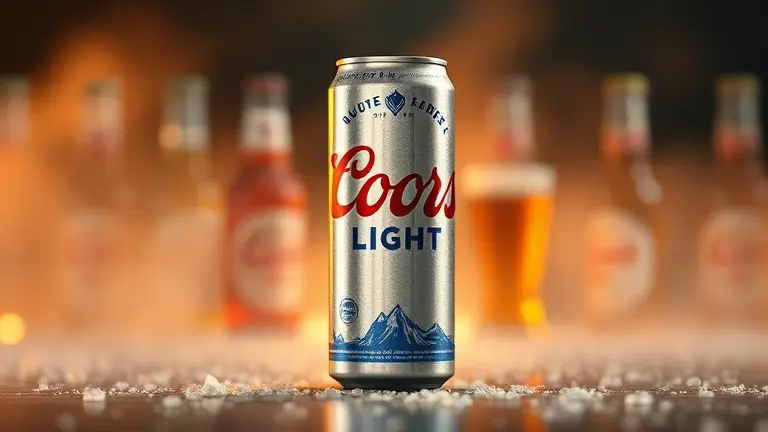
In the high-stakes world of consumer goods, the line between innovation and mere optics is often razor-thin. Recently, the industry has seen renewed buzz surrounding the Coors TallerBoy—a branding play that exemplifies the “big-beer” strategy of leveraging physical packaging tweaks to capture market mindshare. While trade publications have dissected this trend as a quintessential beer marketing gimmick, it highlights a much broader psychological truth: manufacturers understand that, in a saturated market, a slight change in form factor can trigger a psychological perception of value, even if the underlying product remains identical to its predecessors.
However, beneath the surface of these branding maneuvers lies a fascinating case study in the intersection of design and consumer behavior. By contrasting the superficial engineering of the “TallerBoy” with the rigors of authentic physical construction, we begin to see where true value is created. This analysis moves past the industry buzz to explore why, in an era of mass-produced gimmicks, there is a profound necessity to return to the fundamentals of technical precision, structural intent, and the mastery of physical design.
The Coors TallerBoy: Dissecting a Marketing Legacy

The Coors TallerBoy represents a strategic intersection of nomenclature and packaging psychology that has remained a fixture in industry discourse for years. By playing on the industry-standard “tallboy”—the ubiquitous 16-ounce or 19.2-ounce can format—Coors Light utilized the clever slogan, “As the cheers get longer, Coors Light makes the can taller.” This branding effort was never intended to be a fleeting social media phenomenon; rather, it serves as a masterclass in how legacy brands maintain market relevance through subtle, physical product differentiation. As highlighted in June 2026 industry reports, such as those from Beer Connoisseur, the TallerBoy persists as a touchstone for how large-scale breweries leverage packaging narratives to sustain consumer interest in an era dominated by craft beer innovation.
The Psychology of Packaging Gimmicks
While some critics historically dismissed the campaign as a “pointless beer marketing gimmick,” industry analysts argue that the TallerBoy serves a deeper purpose. By reclaiming the vocabulary of the beer aisle, Coors successfully reinforced its identity as a convenient, high-volume alternative to smaller-batch competitors. This tactic relies on the consumer’s perception of “more” being inherently better, effectively using the container’s physical dimensions to communicate value without necessitating a shift in the liquid itself.
Key takeaways regarding this branding strategy include:
- Linguistic Rebranding: Transforming a generic industry term like “tallboy” into a branded asset creates immediate mental associations with the product.
- Consistency Over Virality: Unlike short-lived internet trends, this campaign represents a persistent institutional strategy aimed at dominating physical shelf space.
- Defensive Marketing: By focusing on the can size, the brand creates a competitive narrative that shifts the focus away from the complexity of craft brewing to the reliable utility of macro-lager consumption.
Ultimately, the TallerBoy remains a defining case study in beer marketing, illustrating that even in a saturated market, a slight pivot in messaging—coupled with a tangible change in physical presentation—can keep a legacy brand centered in professional and enthusiast conversations.
Packaging as Strategy: The Economics of the Tallboy Format

The evolution of beer packaging, exemplified by the Coors TallerBoy campaign, serves as a masterclass in psychological marketing within the macro-beer sector. By manipulating the physical dimensions of the container, brands move beyond simple utility to create a visual distinction on crowded retail shelves. While critics often label these initiatives as a mere beer marketing gimmick, the strategy serves a dual purpose: it signals a modern identity to the consumer while optimizing the volume-to-price ratio in a way that feels like a value proposition. The “TallerBoy” nomenclature subtly repositions a standard beverage as a premium or exclusive experience, leveraging the elongated silhouette to suggest a greater abundance of liquid without necessarily increasing the total product weight significantly.
Psychological Anchoring and Retail Differentiation
In a saturated market where brand loyalty is increasingly fragmented by the growth of craft beer, major domestic producers utilize packaging geometry to command attention. The economics of this strategy rely heavily on consumer perception of value:
- Shelf Impact: Verticality creates a “tower effect” on store shelves, making the product appear more substantial compared to standard 12-ounce cans.
- Pricing Perception: Consumers frequently associate larger-looking packaging with a better price-per-ounce ratio, effectively masking potential margin increases.
- Convenience Framing: The single-serve tall format aligns with “grab-and-go” consumer behaviors, positioning the product for immediate consumption rather than long-term fridge storage.
Evidence suggests that these design choices act as a critical touchpoint for brand differentiation. While craft brewers have historically utilized the tallboy format for its technical benefits—such as reduced surface-to-volume ratios which can impact carbonation stability—macro-brands like Coors have successfully repurposed the format as a lifestyle statement. By focusing on the “taller” aspect of the branding, the company creates a memorable, albeit polarizing, marketing anchor that ensures the product remains a part of the broader industry conversation, effectively bridging the gap between historical heritage and modern retail trends.
Macro-Beer vs. Craft: A Tale of Two Marketing Philosophies
The emergence of the Coors TallerBoy serves as a quintessential case study in the divergence between mass-market macro-beer strategy and the ethos of the craft beer industry. While the craft movement prioritizes the “liquid first” approach—emphasizing unique hops, complex flavor profiles, and seasonal innovation—macro-brands like Coors often lean into gimmick-forward marketing. By iterating on the traditional tallboy can format, big beer companies aim to secure shelf presence and leverage consumer psychology, banking on the familiarity and accessibility that large-scale distribution affords.
Divergent Strategies in Beverage Branding
The marketing philosophies between these two sectors have drifted so significantly that they often seem to be speaking different languages. For the macro-brewer, the goal is consistent volume through ubiquity. The TallerBoy campaign reflects an attempt to refresh a legacy product without altering the liquid itself, betting on the visual novelty of the packaging to trigger impulse purchases. In contrast, the craft sector avoids such gimmicks, fearing that they undermine the perceived authenticity of the brand.
Consider the primary drivers behind these distinct market approaches:
- Macro-Beer Philosophy: Focuses on brand longevity, supply chain efficiency, and aggressive retail placement. Marketing efforts, such as the Coors TallerBoy, rely on “shout-from-the-shelf” tactics to differentiate products in a crowded, homogenous cooler.
- Craft Beer Philosophy: Centers on the “story of the pour.” Craft breweries prioritize transparency regarding ingredients, brewing processes, and regional identity, often eschewing gimmicks for community engagement.
- Value Proposition: While big beer markets accessibility and “cold” refreshment, craft beer markets experience, discovery, and artisan craftsmanship.
As industry analysts have noted, this divide reflects a fundamental shift in consumer demand. While casual drinkers may be swayed by the novelty of a taller container, the growing demographic of craft enthusiasts seeks depth and narrative. Ultimately, the industry remains split between those who view packaging as the final frontier of marketing and those who believe the only enduring brand equity is found at the bottom of the glass.
The Lifecycle of the Industry Gimmick

The Coors TallerBoy campaign serves as a quintessential case study in the longevity of beer industry marketing tactics. While consumers might view such initiatives as minor packaging adjustments, trade publications like Beer Connoisseur frequently revisit these strategies to analyze their impact on supply chain psychology. The “gimmick” in this context is rarely designed to revolutionize the drinking experience; rather, it acts as a B2B engagement tool intended to maintain brand visibility among distributors, wholesalers, and retail buyers who are perpetually inundated with new product launches.
Why Gimmicks Dominate Trade Discourse
Industry analysts note that even when a campaign like the TallerBoy fails to achieve viral status with the general public, its persistence in trade news is intentional. Marketing strategies centered on physical container dimensions—a play on the standard tallboy can format—provide a tangible talking point for sales representatives. The cycle of an industry gimmick typically follows a predictable trajectory:
- Trade Awareness: Initial announcements generate internal excitement and provide sales teams with a “new” feature to pitch to retail partners.
- Shelf-Space Negotiation: Retailers are more likely to allocate prime cooler real estate to products that feature refreshed, eye-catching, or “gimmicky” packaging.
- Persistence in Trade Media: As seen in recurring mentions throughout 2026, industry news outlets keep these campaigns in the spotlight to contrast them against the more product-focused narratives of the craft beer movement.
By leveraging these tropes, major brewing conglomerates ensure that their brands remain the “default” choice in high-volume settings. The TallerBoy is less a consumer-facing revolution and more an example of persistent brand messaging designed to occupy mental real estate within the highly competitive beer distribution ecosystem. Ultimately, these strategies prove that for major players, the conversation around the product is often just as valuable as the product itself.
Beyond the Gimmick: Mastering Precision in Your Next Project
The “Coors TallerBoy” serves as a masterclass in how modern industry prioritizes visual optics and packaging gimmicks over fundamental product innovation. While these marketing maneuvers are designed to capture temporary consumer attention through slight physical adjustments, they ultimately offer little in terms of real-world value or structural integrity. When you strip away the branding, you are left with the same liquid in a slightly altered form factor—an exercise in aesthetics that ignores the core challenge of functional design.
True mastery, however, is not found in the superficial shifts of mass-market packaging, but in the deliberate, technical precision required to build something that lasts. Just as we analyze the mechanics behind beer form factors, we must recognize that real craftsmanship requires the same level of analytical rigor. Whether you are working with wood, steel, or design schematics, avoiding the “shortcut” mentality of big-brand marketing is essential for achieving professional-grade results.
If you prefer substance over surface-level gimmicks, it is time to pivot toward blueprints that demand technical excellence. Ted’s Woodworking provides the professional, verified plans necessary to execute complex physical designs with absolute certainty. By trading marketing optics for verified structural accuracy, you ensure that every project you undertake is defined by its quality rather than its presentation. Step into the world of genuine craftsmanship and eliminate the guesswork from your build process today.
 For those who prefer substance over surface-level gimmicks, discover how to build with absolute technical certainty using these expert-verified blueprints.Master My Craftsmanship Now