
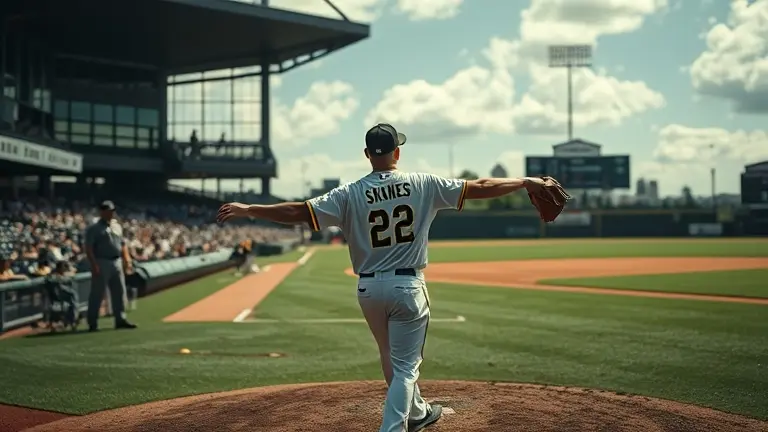
The 2026 MLB season has placed Paul Skenes, the reigning NL Cy Young titan, at a complex crossroads. As he prepares for a high-stakes showdown against Shohei Ohtani and the Los Angeles Dodgers, the narrative surrounding the Pirates’ ace has shifted from untouchable dominance to a battle against a mounting performance slump, marked by 15 runs allowed over his last four starts. Yet, amidst the analytical scrutiny and the pressure of a “Cy Young defense,” a different, humanizing story has emerged: an impromptu, viral visit to a Pittsburgh-area Little League practice that has captivated fans and offered a glimpse into the pitcher’s off-field perspective.
This dichotomy of the “Ace in Crisis” versus the “Local Hero” is more than just a media sidebar; it represents a critical developmental pivot point for one of baseball’s brightest stars. While the data-driven segment of the fanbase dissects his mechanics, the true key to Skenes’ resurgence may lie in the same mental recalibration he sought on the diamonds of Pittsburgh’s suburbs. By bridging the gap between elite physical preparation and the often-overlooked necessity of cognitive clarity, Skenes is demonstrating that even the most dominant athletes must learn to master the mental game before they can reclaim their reign on the mound.
Paul Skenes: Navigating the Intersection of a High-Stakes Slump and Community Heroics

For the reigning NL Cy Young winner, the 2026 season has evolved into a masterclass in professional equilibrium. Paul Skenes currently finds himself at a unique juncture: on one side of the ledger, his performance on the mound has hit a rare, statistically rocky stretch. After allowing 15 runs across 20 innings in his last four starts, analysts are pointing toward a noticeable velocity downtick and mechanical inconsistencies as the primary drivers of his recent struggles. This statistical dip has naturally triggered anxiety among Pirates fans, particularly as the team looks to maintain rotation stability heading into the high-pressure summer months.
However, the narrative surrounding the young phenom is far from one-dimensional. In a moment of genuine human connection that has gone viral, Skenes recently staged an impromptu, heartwarming appearance at a local Pittsburgh-area Little League practice. The response—characterized by disbelief and overwhelming gratitude from the community—has served as an essential counter-narrative to his on-field performance. By stepping away from the film room and into the community, Skenes has demonstrated a level of maturity that often eludes young superstars facing their first major professional hurdles.
The Litmus Test: Performance vs. Public Presence
The contrast between his recent struggles and this community-driven PR success provides a vital look at the psychological demands of the modern MLB superstar. The upcoming clash against the Los Angeles Dodgers and Shohei Ohtani will serve as the ultimate litmus test for his resilience.
- Technical Adjustment: The coaching staff is closely monitoring his release point and pitch sequencing to recapture the dominant form that defined his Cy Young campaign.
- Mental Reset: Fans and experts alike are framing the Little League visit as a necessary “mental reset,” highlighting Skenes’ ability to ground himself despite the intense spotlight of being the face of a franchise.
- Strategic Outlook: Whether he can translate this off-field perspective into a technical turnaround against an elite Dodgers lineup will define the next chapter of his 2026 trajectory.
As the baseball world turns its attention to this pivotal week, the conversation remains focused on whether Skenes can channel the energy of his community engagement into a professional resurgence, proving that his elite status is built on more than just high-velocity heat.
The Analytics Behind the Slump: What the Data Says About Skenes’ Recent Outings

The recent performance dip for Paul Skenes has been uncharacteristically sharp, with 15 runs surrendered over his last 20 innings. While the reigning NL Cy Young winner remains a dominant force, advanced metrics reveal a subtle convergence of physical and tactical challenges. Data from his most recent outings indicates a slight, though noticeable, downtick in average fastball velocity—dropping from his season-high tier to a slightly more manageable range. This dip, while marginal, has provided professional hitters with the fractional extra time needed to square up his heater, turning what were previously swing-and-miss offerings into high-contact foul balls and line drives.
Analyzing the ‘Splinker’ and Sequencing Trends
The efficacy of Skenes’ signature “splinker” has also faced scrutiny as league-wide scouting reports evolve. Evidence suggests that hitters are becoming more disciplined in their approach, specifically sitting on the pitch when Skenes enters favorable counts. Key mechanical observations include:
- Velocity Variance: A consistent 1-1.5 mph decrease in fastball velocity, which impacts the tunnel effect he previously utilized to disguise his off-speed repertoire.
- Sequencing Predictability: There is a growing concern that his high-leverage pitch selection has become slightly more predictable, allowing seasoned veterans to anticipate the splinker earlier in the count.
- Spin Efficiency: Slight fluctuations in active spin rates on his breaking pitches have resulted in less late-break movement, making the balls flatter and more accessible for aggressive lineups.
These indicators are not signs of a permanent decline, but rather a standard developmental hurdle for a pitcher navigating their first full season of “ace” status. As the Pirates rotation looks to stabilize, Skenes must focus on varying his pitch sequencing and sharpening the release point consistency of his secondary pitches. By adjusting his approach against elite hitters like those in the Los Angeles Dodgers lineup, Skenes has the opportunity to turn this current analytical challenge into a critical refinement period for his long-term professional development.
The Ultimate Test: Skenes vs. Ohtani and the Dodgers

The upcoming Tuesday night clash between the Pittsburgh Pirates and the Los Angeles Dodgers represents more than just a regular-season contest; it is a marquee showdown between two of the most influential figures in baseball. For Paul Skenes, the reigning NL Cy Young winner, this start arrives at a pivotal juncture. Having allowed 15 runs over his last 20 innings, Skenes is currently navigating his first significant professional adversity. Facing a powerhouse Dodgers lineup, headlined by the perennial MVP threat Shohei Ohtani, forces an immediate evaluation of Skenes’ ability to refine his mechanics under immense pressure.
Tactical Adjustments and The Ohtani Factor
Analytics from recent outings suggest a slight velocity downtick that has made his high-heat profile more manageable for opposing hitters. Against a disciplined hitting unit like Los Angeles, Skenes must rely on pitch sequencing rather than raw power to neutralize threats. The matchup against Shohei Ohtani will likely serve as the game’s defining subplot, testing the young ace’s poise and tactical flexibility.
Key performance indicators to watch during this high-stakes meeting include:
- First-pitch strike percentage: Essential for keeping the Dodgers’ aggressive hitters out of favorable counts.
- Slider command: Skenes must locate his breaking ball away from the heart of the zone to avoid the damage seen in his recent four-start slump.
- Mental composure: Following his widely-praised community outreach in Pittsburgh, the “human-interest” pressure is at an all-time high, making his internal focus against Ohtani a fascinating case study in elite-level performance psychology.
For Pirates fans, this game is a referendum on rotation stability as the club looks to secure a postseason trajectory. Whether Skenes triumphs or struggles, the narrative surrounding this game will undoubtedly shape the conversation for the remainder of the 2026 season.
Stability in the Rotation: Looking Beyond the Current Performance Hurdle
While the recent stretch of 15 runs allowed over 20 innings has understandably caused concern among Pittsburgh faithful, it is essential to contextualize these struggles within the broader framework of a developing elite arm. Paul Skenes is not merely a pitcher navigating a slump; he is a foundational asset for the Pirates. In the landscape of Major League Baseball, even the most dominant aces encounter periods of mechanical fatigue and scouting adjustments as the league gathers more data on their secondary pitches. History proves that young pitchers often face these “adjustment phases,” which serve as critical developmental gateways rather than indicators of permanent decline.
The Pirates’ rotation stability relies heavily on the long-term health and rhythm of their frontline starter. By framing this period as a necessary hurdle in his professional maturation, the organization shifts the focus from immediate box-score results to sustainable growth. Skenes’ ability to remain a cornerstone player depends on his capacity to recalibrate his delivery and pitch sequencing—a process that often involves subtle physical adjustments to address the observed velocity downtick.
Key Factors for Long-Term Rotation Health
To ensure continued competitive performance, the team and Skenes are focusing on several technical and psychological pillars:
- Mechanical Efficiency: Simplifying his delivery to reduce stress on his arm after the high workload of his Cy Young-caliber debut season.
- Adaptation to Scouting: Diversifying his pitch mix to keep high-powered offenses like the Los Angeles Dodgers off-balance during high-stakes matchups.
- Mental Resilience: Balancing the immense pressure of his professional ceiling with the community-focused perspective evidenced by his recent, widely-praised public appearances.
Ultimately, viewing Skenes as a long-term investment provides a more accurate lens than reactionary performance metrics. As the Pirates look toward the second half of the season, their ability to remain competitive hinges on Skenes finding his footing. His recent off-field engagement indicates a grounded mindset, which is often a precursor to finding comfort back on the mound. The organization remains confident that this current volatility is a temporary byproduct of his rapid ascent to the top of the league hierarchy.
The Path to Cognitive Dominance
As Paul Skenes heads into his pivotal start against the Dodgers, it becomes clear that his path back to dominance is not just about refining his fastball command or adjusting his breaking ball release point. It is about clearing the mental fog that inevitably accompanies a high-stakes slump. Just as Skenes used his time with local youth players to strip away the pressure and rediscover the joy of the game, elite performers across all disciplines are now looking for systematic ways to recalibrate their focus and sharpen their cognitive resilience under the glare of the spotlight.
This is where The Brain Song becomes an essential tool for any high-performer. By utilizing science-backed auditory stimulation to banish performance-draining fatigue, this neuro-performance accelerator helps you achieve the same clarity required to execute at the highest level of professional sports. Whether you are battling your own professional “slump” or simply striving to maintain mental precision in a high-pressure environment, The Brain Song provides the cognitive edge needed to turn developmental hurdles into breakthrough performances.
Reclaiming your focus is not just a luxury; it is the fundamental difference between surviving a crisis and dominating it. By integrating this auditory performance methodology into your daily routine, you can bridge the gap between technical intent and peak execution, much like an ace pitcher finding his rhythm again.
 Reclaim your mental edge and sharpen your focus like a pro—experience the science of auditory performance enhancement here.Transform My Life Today