
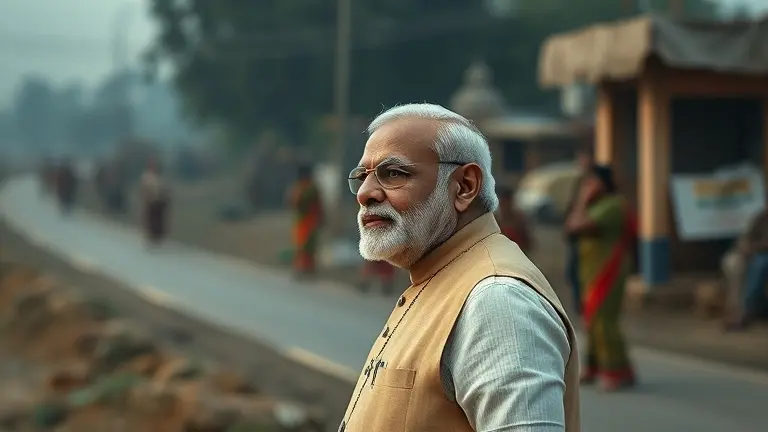
On June 9, 2026, India finds itself at a historical crossroads, defined by two seismic shifts that will dictate its trajectory for the remainder of the century. As Prime Minister Narendra Modi marks his tenure as the nation’s longest-serving leader, the country simultaneously confronts a demographic milestone that was once considered a distant projection: the fertility rate has plummeted to 1.9, officially falling below replacement levels. This dual reality—a landmark of political longevity intersecting with the onset of an aging workforce—signals the end of India’s traditional demographic dividend and the dawn of a complex, high-stakes era of socioeconomic adaptation.
While international observers fixate on the political legacy of a transformed nation and the persistent friction on the global stage, a more quiet, structural transformation is unfolding within the country’s economic bedrock. As the population begins its transition toward maturity, the focus of national policy and individual effort must shift from sheer quantity of labor to the quality of human capital. To understand the future of the world’s most populous nation, we must move beyond the headlines and analyze how this demographic contraction will challenge—and ultimately redefine—the cognitive demands of a workforce operating in a rapidly digitizing, high-pressure economy.
India at a Crossroads: A Nation Defined by Historic Shifts
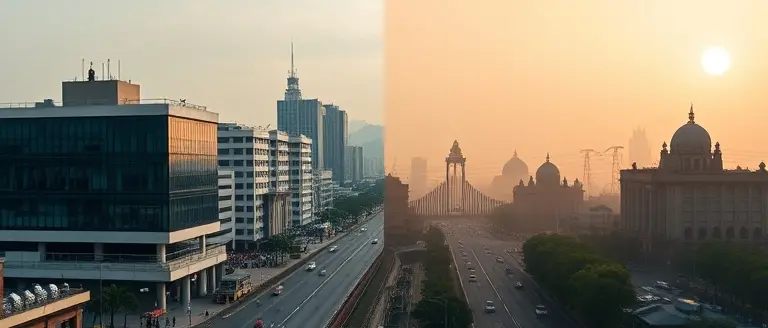
June 9, 2026, marks a watershed moment in the history of the world’s most populous nation, as India finds itself navigating the intersection of unprecedented political stability and profound demographic transition. On this day, Prime Minister Narendra Modi officially becomes the longest-serving Prime Minister in the country’s history. This political milestone represents a period of significant centralized leadership, during which the nation has aggressively pursued infrastructure development, digital transformation, and increased global geopolitical influence. As the administration reflects on its legacy, the narrative is punctuated by widespread national pride and a renewed focus on India’s rising stature within the international order, including persistent diplomatic friction at the United Nations regarding regional stability.
However, beneath the veneer of political endurance lies a transformative challenge that is reshaping the country’s future: the official confirmation that the India fertility rate has dropped to 1.9. By falling below the replacement level of 2.1, India enters a new epoch, officially exiting the era of rapid population expansion that defined its early 21st-century economic projections. This India demographic crisis—a term now trending across analytical circles—has sparked an intense national debate regarding the long-term sustainability of the current growth model. The shift suggests that the “demographic dividend” may be reaching its maturation point, necessitating a pivot toward policies that prioritize human capital, social safety nets, and productivity enhancement over sheer labor volume.
The Converging Pressures of 2026
The collision of these two events creates a complex socio-economic landscape that policy experts are scrambling to parse:
- Political Legacy vs. Structural Reality: While the PM’s tenure has been marked by economic growth, the aging workforce now looms as a primary fiscal concern for the remainder of the decade.
- The Post-Demographic Dividend: With fertility rates dipping to 1.9, the focus is shifting from poverty alleviation through population expansion to managing the social costs of an aging society.
- Economic Resilience: Future stability will likely depend on the government’s ability to modernize labor markets to offset the narrowing base of the demographic pyramid.
As India moves forward, the synergy—or friction—between long-term political leadership and emerging demographic constraints will define the country’s trajectory for the next generation. The nation is no longer simply managing growth; it is now architecting its adaptation to a post-population-boom reality.
Modi’s Tenure: Economic Growth and Political Longevity
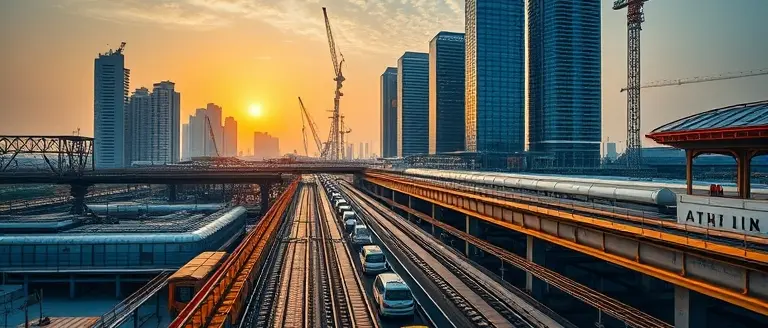
The milestone of Narendra Modi becoming India’s longest-serving Prime Minister marks a defining chapter in the nation’s contemporary history. His governance model has been characterized by a centralized push toward infrastructure development, digitization, and a distinct pivot toward “Make in India” initiatives aimed at establishing the country as a global manufacturing hub. By prioritizing capital expenditure in transportation, digital connectivity, and energy sectors, the current administration has sought to catalyze domestic growth while attracting substantial Foreign Direct Investment (FDI). Analysts often point to the formalization of the economy and the expansion of the digital payment ecosystem as foundational pillars that have maintained economic resilience during his extended tenure.
Strategic Infrastructure and Global Positioning
The policy framework under the current leadership has centered on leveraging India’s massive domestic market to exert influence on the global stage. This era of political longevity has allowed for the continuity of long-term projects that historically struggled with bureaucratic delays. Key outcomes of this focused approach include:
- Infrastructure Scaling: Massive investment in national highways, railways, and airport modernization, which has significantly improved logistics efficiency.
- Digital Transformation: The rapid adoption of the India Stack, facilitating financial inclusion for millions and creating a scalable model for a digital-first economy.
- Global Geopolitical Assertiveness: A shift toward multi-alignment in foreign policy, elevating the nation’s status in forums like the G20 and leveraging strategic partnerships to bolster domestic industrial growth.
However, as the nation celebrates this unprecedented duration of political stability, the intersection between this growth-oriented model and emerging social realities remains a subject of intense scrutiny. While the administration’s policies have fostered substantial economic expansion, they now face the challenge of reconciling this trajectory with a shifting demographic landscape. The transition from a youthful population to one facing a declining India fertility rate—now below the replacement level at 1.9—places the legacy of this economic framework at a critical juncture. The sustainability of this growth model will depend on how successfully the government navigates the move from a high-growth, high-fertility phase to a more mature, post-demographic dividend economy.
Analyzing the India Demographic Crisis: Beyond the 1.9 Fertility Rate

The recent confirmation that India’s fertility rate has dipped to 1.9 marks a pivotal turning point in the nation’s socio-economic trajectory. Falling below the replacement level of 2.1, this decline signals the end of the traditional “demographic dividend” that has fueled the country’s rapid industrial expansion over the last decade. While policymakers celebrate the economic gains achieved during the tenure of the current administration, the reality of an aging workforce creates a complex demographic crisis that requires immediate strategic intervention. As the population growth rate stabilizes, the focus must shift from sheer volume to high-value human capital development.
The Shift from Dividend to Dependency
The transition from a youthful surplus to a maturing society introduces structural risks to the economy. Without a proactive strategy, India faces several long-term hurdles:
- Workforce Contraction: A smaller cohort of younger workers will eventually be tasked with supporting an expanding elderly population, potentially straining social security and healthcare systems.
- Labor Shortages: Industries dependent on abundant, low-cost labor may face increased wage inflation, necessitating a rapid pivot toward automation and high-tech manufacturing.
- Social Policy Adjustments: There is an urgent need to reconsider pension frameworks, healthcare accessibility, and reproductive health policies to sustain the economic stability earned during the record-breaking tenure of the country’s longest-serving Prime Minister.
To navigate this “post-demographic dividend” era, evidence suggests that India must invest heavily in productivity-enhancing technologies and female labor force participation. Relying on past demographic patterns is no longer a viable path for sustained growth. The current discourse highlights that maintaining economic momentum will require a nuanced balance between celebrating political milestones and implementing the rigorous, often difficult, social reforms necessary to manage an aging nation. Addressing this India demographic crisis now is essential to ensuring that the prosperity achieved today does not vanish as the nation’s age profile shifts over the coming decades.
Geopolitical Stability and Regional Friction

The geopolitical landscape surrounding India has entered a complex phase, defined by a confluence of long-standing regional friction and shifting domestic priorities. As the nation grapples with a transition toward a post-demographic dividend era, its foreign policy at the United Nations reflects a dual mandate: asserting global leadership while containing localized threats. The ongoing diplomatic tensions regarding India-Pakistan relations have reached a critical juncture, exacerbated by the need for New Delhi to project stability to foreign investors as its internal fertility rate dips below the 1.9 replacement level.
The Link Between Demographics and Foreign Policy
The intersection of an aging population and regional security is becoming a core tenet of current strategic planning. Evidence suggests that a shrinking workforce will necessitate higher investments in automation and capital-intensive infrastructure, limiting the fiscal flexibility previously available for extensive military posture. Consequently, India’s diplomatic strategy is moving toward:
- Multilateral Insulation: Leveraging international forums to isolate provocations without necessitating direct, resource-heavy escalation.
- Strategic Economic Integration: Positioning the domestic market as indispensable to global supply chains to increase the “cost of instability” for regional rivals.
- Capacity Preservation: Prioritizing internal stability to ensure that the economic trajectory achieved during the tenure of the longest-serving Prime Minister remains on an upward, albeit slowing, trajectory.
This shift indicates that while India remains committed to its security stance, its negotiation strength is increasingly tethered to the sustainability of its internal economic engine. As the nation faces a potential demographic crisis, the pressure to maintain a frictionless border environment is paramount. Analysts note that a stable neighborhood is no longer just a security preference but a functional requirement for India to manage the socio-economic transitions required by its evolving population structure. By framing regional issues through the lens of long-term economic resilience, New Delhi aims to sustain its global influence even as its domestic population profile matures.
Navigating the Future of Human Potential
As India stands at this critical juncture, the convergence of record-breaking political tenure and profound demographic shifts necessitates a new paradigm for national growth. The transition into a post-demographic dividend era is not merely a policy hurdle; it is a fundamental call for the nation’s workforce to optimize productivity, adaptability, and intellectual resilience in the face of an aging population. Successfully steering through these uncharted waters will require individuals to maintain peak mental clarity as they navigate an increasingly complex economic landscape.
This is where personal cognitive sovereignty becomes a national asset. Just as policy must adapt to demographic realities, your own performance must evolve to meet the demands of a high-pressure economy. The Brain Song offers a sophisticated, neuroscience-based approach to cognitive maintenance, designed to sharpen focus and enhance mental endurance. By integrating advanced auditory stimulation into your routine, you are not just managing your work; you are proactively refining your brain’s capacity to process information and sustain performance in an era where agility is the most valuable commodity.
The challenges of tomorrow are already being built today. By investing in your cognitive resilience, you align your personal growth with the broader necessity for a sharp, capable workforce. Now is the time to bridge the gap between systemic ambition and individual execution.
 Optimize your cognitive performance for the challenges of tomorrow—explore how simple auditory stimulation can sharpen your focus today.Yes, I Want to Sharpen My Focus Now!