
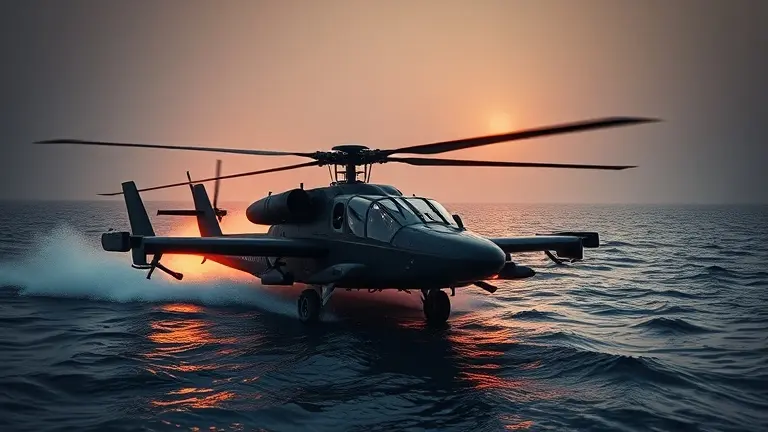
On June 9, 2026, the Strait of Hormuz became the theater for a historic military turning point. When a U.S. Apache helicopter was shot down in a tense geopolitical environment, the immediate response did not come from traditional search-and-rescue teams, but from the Saronic Corsair—an autonomous surface vessel. This mission marked the first-ever combat rescue performed by a sea-based drone, fundamentally altering our understanding of how unmanned systems function in active conflict zones.
While global defense analysts scramble to assess the implications of an Iran helicopter incident turned rescue-milestone, the broader story lies in the technology itself. Unlike remotely operated boats that require constant human input, the Saronic Corsair represents a leap in autonomous maritime capabilities. By examining how these vessels operate with surgical precision, we gain insight into the future of military automation—a world where the difference between mission success and failure is determined by the absolute accuracy of the underlying engineering.
The Strait of Hormuz Incident: Apache Helicopter Downed and the First Autonomous Rescue
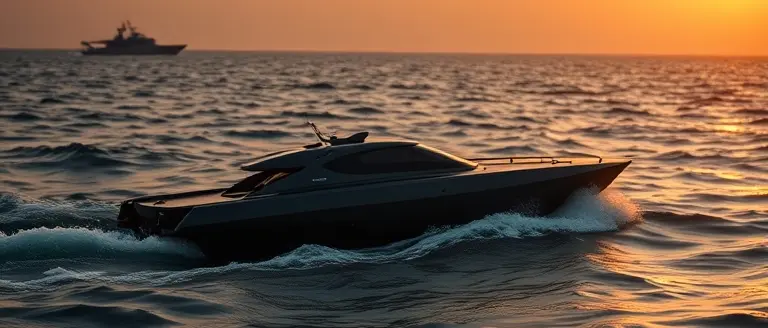
On June 9, 2026, a critical military engagement unfolded in the volatile waters of the Strait of Hormuz, resulting in the loss of a U.S. Apache helicopter. While reports confirm the aircraft was downed during a routine patrol, the incident has served as a catalyst for a historic shift in military search-and-rescue (SAR) operations. As regional tensions remain elevated, the immediate aftermath of the helicopter shot down brought the focus toward the rapid response capabilities of the U.S. Navy and affiliated autonomous assets.
The Role of the Saronic Corsair
In a landmark technological breakthrough, the extraction of the downed aircrew was facilitated by the Saronic Corsair, an autonomous surface vessel (USV) engineered by the Austin-based firm, Saronic. Unlike traditional remotely operated vehicles that require constant human input, this drone boat utilized advanced onboard intelligence to navigate the contested maritime chokepoint autonomously. Key aspects of this mission included:
- Autonomous Navigation: The Corsair effectively bypassed traditional signal jamming risks associated with the Iran helicopter theater, utilizing decentralized pathfinding.
- Rapid Crew Extraction: By reaching the survivors ahead of manned naval assets, the vessel minimized the crew’s exposure time in hostile waters.
- Proof of Concept: This mission represents the first-ever combat rescue performed by a sea-based drone, validating years of investment in unmanned naval platforms.
This event has fundamentally altered the discourse regarding geopolitical security in the Persian Gulf. Defense analysts suggest that the deployment of the Apache helicopter in such high-risk zones necessitates a new generation of support assets that can operate independently of vulnerable communication links. As the U.S. military continues its investigation into the circumstances surrounding the crash, the success of the Saronic Corsair has solidified the role of AI-driven, autonomous maritime vessels as a cornerstone of future combat rescue strategies.
Saronic Corsair: Defining the Future of Autonomous Sea-Based Rescue
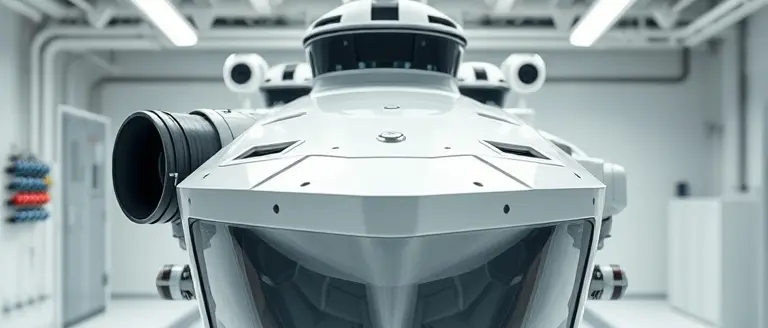
The successful extraction of downed aircrew following the Apache helicopter incident in the Strait of Hormuz marks a watershed moment in maritime defense technology. Unlike traditional remotely operated vehicles (ROVs) that require constant, low-latency satellite links and human pilot input to navigate complex environments, the Saronic Corsair utilizes advanced autonomous navigation systems. This capability allows the platform to operate effectively in contested waters where electromagnetic interference or active jamming might otherwise sever communication with a remote operator. By leveraging decentralized edge computing, the Corsair processes sensor data—ranging from high-resolution thermal imaging to radar telemetry—directly onboard to make real-time decisions, significantly reducing the “loop” time required to react to dynamic battlefield threats.
Autonomous Capability vs. Remote Operation
The distinction between the Corsair’s autonomous architecture and standard remotely operated boats is critical to understanding how this mission was achieved. While ROVs are essentially extensions of their operators, the Corsair acts as an intelligent agent. Key differences include:
- Edge Computing Advantage: The vessel utilizes localized processing to identify potential hazards and targets, meaning it does not rely on a constant stream of raw data back to a command center.
- Adaptive Pathfinding: In high-stakes scenarios like a helicopter shot down near hostile territory, the Corsair can autonomously adjust its course to avoid obstacles or threats while optimizing the trajectory for a rapid rescue.
- Resilience to Denied Environments: Because it is designed to operate without continuous human-in-the-loop control, the Corsair maintains its mission integrity even when GPS or communication signals are degraded, a scenario frequently associated with regional Iran helicopter and naval tensions.
This leap in autonomy effectively transforms the rescue paradigm. Instead of exposing large surface ships—which are easily detected by coastal surveillance—to the risk of becoming a target in the Persian Gulf, the military can deploy compact, autonomous assets capable of executing precise recovery maneuvers. As investigations continue into the crash, the Corsair’s performance serves as a powerful validation of autonomous surface vehicles (USVs) as indispensable tools for modern, high-intensity combat SAR operations.
Military Evolution: Why Autonomous USVs are Replacing Conventional Assets
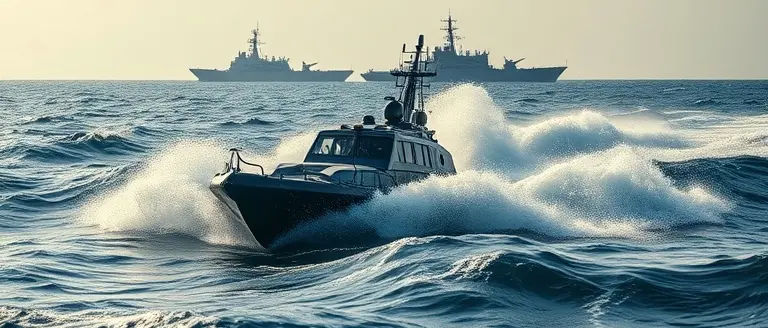
The recent incident involving a downed apache helicopter near the Strait of Hormuz has accelerated the transition from traditional search-and-rescue (SAR) protocols to a reliance on unmanned surface vehicles (USVs). For decades, recovering aircrews in contested waters required deploying manned vessels, which inherently placed additional human operators in the crosshairs of an iran helicopter threat or shore-based missile batteries. The successful extraction of the downed crew by a Saronic Corsair marks a pivotal shift in this tactical paradigm, proving that autonomous platforms can effectively penetrate “denied areas” where conventional surface assets would be deemed too high-risk to commit.
Tactical Advantages in High-Stakes Environments
Unlike traditional remotely operated vehicles (ROVs) that require a constant, vulnerable data link to a human pilot, the Saronic Corsair utilizes advanced edge computing to make real-time navigational and rescue decisions. This autonomy is crucial in environments characterized by electromagnetic interference or active jamming. By removing the need for a persistent, bandwidth-heavy connection, the USV can operate with a level of stealth and resilience that was previously impossible.
The military utility of this technology extends far beyond simple retrieval. Commanders now have a force-multiplier that changes the calculus for mission planning:
- Risk Mitigation: Autonomous assets neutralize the threat of human casualties during the initial “golden hour” of a rescue.
- Operational Flexibility: USVs can loiter in high-threat zones for extended periods, providing persistent monitoring that manned crews cannot sustain due to physical fatigue and safety constraints.
- Signature Management: Smaller, unmanned craft possess a significantly lower radar cross-section, making them harder to detect by hostile forces compared to large-scale naval rescue vessels.
This evolution signifies that the helicopter shot down in the Persian Gulf may be remembered as the catalyst for a permanent change in how the U.S. military approaches personnel recovery. As autonomous technology continues to mature, the integration of vessels like those developed by the Austin-based Saronic firm will likely become the standard for navigating complex, high-risk geopolitical hotspots.
The Geopolitical Ripple Effect: Tensions in the Persian Gulf
The June 9, 2026, incident involving an Apache helicopter near the Strait of Hormuz has served as a flashpoint, significantly elevating regional volatility. While military authorities continue to investigate the circumstances under which the craft was allegedly a helicopter shot down, the deployment of the Saronic Corsair marks a profound shift in how the United States projects power and secures its personnel in contested maritime environments. By successfully executing a combat rescue, the U.S. Navy has demonstrated that unmanned surface vessels (USVs) are no longer mere experimental tools but are now frontline assets capable of mitigating the risks traditionally posed to human rescue teams in hostile territory.
Escalation Risks and Strategic Recalibration
The integration of autonomous systems in such a sensitive theater introduces complex variables for regional adversaries, specifically regarding an Iran helicopter response or broader maritime containment strategies. When an autonomous boat maneuvers through a contested zone, it challenges traditional “rules of engagement,” as adversaries must now account for machines that operate without a human pilot onboard. This evolution in warfare brings several critical considerations to the forefront:
- Shift in Deterrence: The ability to conduct search-and-rescue (SAR) operations autonomously reduces the human-hostage leverage previously held by local actors.
- Perception of Asymmetry: Adversaries may perceive the deployment of the Saronic Corsair as a provocative technological escalation, potentially leading to increased surveillance or kinetic interference with autonomous assets.
- New Maritime Protocols: Global naval powers are now forced to integrate USV behavior into standard security protocols, as the line between reconnaissance and active combat support becomes increasingly blurred.
As tensions simmer, the success of this mission suggests that the U.S. will likely accelerate the transition toward a more unmanned, autonomous-led maritime strategy in the Persian Gulf. This move is designed to ensure operational continuity despite geopolitical friction, though it inevitably forces global rivals to rethink their own asymmetric warfare doctrines in response to these advanced robotic capabilities.
The Engineering Standard Behind Autonomous Success
The successful rescue of the downed Apache crew by the Saronic Corsair in the Strait of Hormuz is more than a tactical milestone; it is a testament to the power of precision engineering. By removing the variable of human error in high-risk maritime recovery, autonomous systems have set a new benchmark for operational reliability. This event proves that when life is on the line, there is no substitute for systems that function exactly as designed, built upon a foundation of exact, verified logic.
Just as the Saronic Corsair relies on foolproof engineering to navigate the high-stakes environment of the Persian Gulf, achieving excellence in any complex mechanical field requires moving beyond amateur guesswork to verified, high-precision standards. Whether you are analyzing naval architecture or seeking to master your own workshop projects, the principle remains identical: results are only as good as the blueprints you follow.
For those fascinated by the precision engineering behind the Saronic mission, discover how you can apply the same rigorous, expert-tested standards to your own high-level projects. By eliminating the ‘vague blueprint’ problem, you can execute complex builds with the same technical certainty required for mission-critical hardware.
 For those fascinated by the precision engineering behind the Saronic mission, discover how you can apply the same rigorous, expert-tested standards to your own high-level projects here.Yes, I Want Technical Precision Now!