

The 79th Annual Tony Awards at Radio City Music Hall delivered a seismic shift in the Broadway landscape, shattering conventions as Schmigadoon! took home the crown for Best New Musical. In a ceremony marked by the gravity of the Death of a Salesman revival and the triumphant return of Ragtime—highlighted by Joshua Henry’s powerhouse performance as Best Leading Actor—the industry’s choice to honor a self-referential parody marks a defining moment. This victory is more than just a trophy; it represents a tectonic shift toward the ‘Meta-Musical Era,’ where audiences and critics alike are championing works that deconstruct the very medium they inhabit.
By pitting the comedic sharpness of Schmigadoon! against the traditional prestige of Death of a Salesman, the 2026 Tonys have forced a conversation about what defines ‘great’ theater today. As we analyze this intersection of satire and legacy, it becomes clear that modern Broadway requires more than just appreciation—it demands a heightened level of cognitive engagement to untangle the intricate layers of homage and critique that define these award-winning performances.
Schmigadoon! Takes Top Honors: Highlights from the 79th Tony Awards
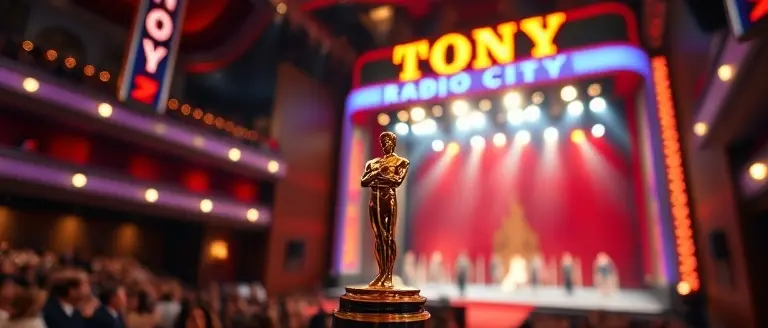
The 79th Annual Tony Awards, held on June 7, 2026, at the historic Radio City Music Hall, delivered a night of unprecedented narrative contrasts. Hosted by Pink, whose high-energy presence brought a fresh vitality to the ceremony, the evening became defined by the intersection of satire and classic drama. The most discussed result of the night was the crowning of Schmigadoon! as the winner of the Tony Award for Best New Musical. By securing this victory, the show—a brilliant Schmigadoon Broadway adaptation that parodies the very tropes of the medium—has effectively shifted the industry’s trajectory, proving that audiences are increasingly eager for meta-theatrical storytelling.
While the levity of the musical adaptation captured headlines, the evening was equally defined by the gravity of dramatic theater. The critically acclaimed revival of Arthur Miller’s Death of a Salesman dominated the play categories, securing six wins, including the prestigious Best Play Revival. This juxtaposition between the comedic self-awareness of the musical winner and the stark, traditional power of the play revival highlights the diverse landscape of modern theater.
Key Highlights and Notable Wins
The 2026 Tony ceremony was a watershed moment for several artists and productions, reflecting both legacy prestige and emerging trends:
- Joshua Henry’s Triumph: Adding to the momentum of the evening, Joshua Henry secured the Tony for Best Leading Actor in a Musical for his tour-de-force performance in the revival of Ragtime.
- The Ragtime Revival: The production of Ragtime took home the award for Best Musical Revival, underscoring a strong appetite for sweeping, historical narratives that complement the more experimental nature of newer works.
- Broad Recognition: Beyond the primary categories, the Schmigadoon! chorus was celebrated with an ACCA Award for Outstanding Broadway Chorus, solidifying its status as an ensemble-driven powerhouse.
As we look toward the potential Tony Award winners 2026 legacy, the night serves as evidence that Broadway is entering a complex, multi-faceted era. Industry analysts suggest that the success of these distinct works—ranging from the satirical to the somber—indicates a healthy, evolving ecosystem that rewards both technical mastery and subversive creativity.
Joshua Henry’s Commanding Performance in Ragtime
The 79th Annual Tony Award winners 2026 ceremony served as a coronation for Joshua Henry, whose powerhouse portrayal in the revival of Ragtime rightfully secured him the award for Best Leading Actor in a Musical. Amidst a season dominated by the meta-theatrical satire of Schmigadoon, Henry’s performance stood out as a masterclass in emotional gravity and technical precision. Voters were clearly moved by his ability to anchor such a complex, historically dense narrative, cementing his reputation as one of the most formidable talents on the modern stage. His win provides a necessary counterweight to the evening’s lighter tone, proving that Broadway audiences still crave the raw, transformative power of traditional musical theater craft.
Why Henry’s Win Defined the Season
Industry analysts point to several specific factors that contributed to Henry’s resounding victory. His performance in Ragtime was not merely a display of vocal prowess, but a nuanced exploration of character depth that demanded the audience’s full immersion. Key elements of his success included:
- Emotional Range: Henry navigated the evolving socio-political landscape of the play with a vulnerability that resonated deeply with voters, transcending the script’s historical roots to speak to contemporary audiences.
- Commanding Stage Presence: Much like the high-stakes performances seen in Death of a Salesman, Henry carried the production on his shoulders, demonstrating a level of discipline that has become his signature.
- Theatrical Versatility: By balancing his role in Ragtime alongside the evolving landscape of the 2026 season—which included the experimental rise of Schmigadoon broadway—Henry proved his ability to remain a traditional powerhouse in an era increasingly defined by self-referential humor.
As the industry reflects on the 2026 Tony honors, Joshua Henry stands as the definitive anchor of the season. His achievement signals a continued respect for classic, actor-driven musical theater, even as the medium evolves to embrace bolder, more subversive narratives.
The Meta-Musical Era: Why Schmigadoon! Resonates Now
The historic win for Schmigadoon! at the 2026 Tony Awards represents a seismic shift in how modern audiences engage with live theater. By clinching the title of Best New Musical, this production confirms that the “Meta-Musical” has moved from the fringes of experimental performance to the center of the Broadway stage. Unlike traditional narratives that demand total suspension of disbelief, Schmigadoon! succeeds by holding a mirror up to the industry, inviting spectators to laugh at the very tropes that defined the Golden Age of musicals. This self-referential humor creates an immediate rapport with modern theatergoers who are increasingly drawn to content that acknowledges its own artifice.
The success of this parody-driven production highlights a growing appetite for deconstructionist storytelling. While the 2026 season saw a traditional triumph with the revival of Death of a Salesman—which earned six awards, including Best Play Revival—the industry proved it can simultaneously honor high-stakes, somber drama and lighthearted, subversive critique. The contrast between these two victors is telling:
- Subversive Satire: Schmigadoon! proves that parody can carry as much emotional and critical weight as serious prose by honoring the history of the form while critiquing its excesses.
- Dramatic Depth: The sustained success of Death of a Salesman reaffirms the enduring power of Arthur Miller’s classic, showing that audiences still crave the raw, humanistic intensity of traditional theater.
- The Industry Standard: With standout talents like Cole Escola influencing the comedic landscape and performers like Joshua Henry dominating the marquee after his win for Best Leading Actor in a Musical in Ragtime, the “meta” influence is clearly elevating the technical and performance standards across the board.
Ultimately, the rise of the meta-musical is not a rejection of tradition, but an evolution of it. By blending rigorous technical discipline—exemplified by the award-winning chorus of Schmigadoon!—with a cynical, post-modern wit, Broadway is successfully bridging the gap between nostalgic reverence and contemporary critique. This balanced landscape suggests that the future of the Schmigadoon! Broadway movement is secure, promising a new era where theater feels both more self-aware and more inclusive than ever before.
Balancing Comedy and Drama: The 2026 Awards Landscape
The 79th Annual Tony Awards presented a fascinating dichotomy that reflects the shifting tastes of contemporary audiences. By crowning Schmigadoon! as the Best New Musical while simultaneously bestowing six awards upon the revival of Arthur Miller’s Death of a Salesman, the Tony voters signaled a dual appetite for both meta-theatrical satire and profound, classical weight. The victory of Schmigadoon!—a show that functions as an affectionate parody of Broadway tropes—indicates that the industry is no longer afraid to laugh at its own history. Meanwhile, the critical acclaim for Death of a Salesman proves that the American theater-goer still possesses a deep, enduring demand for intense, character-driven dramas that examine the fragility of the human condition.
A New Era of Theatrical Preferences
This year’s landscape highlights a clear divide in how we consume live performance in 2026. The success of Schmigadoon! and the emergence of stars like Cole Escola on the scene suggest that audiences are increasingly drawn to “meta-musicals”—productions that acknowledge their own artifice while delivering high-caliber entertainment. The specific trends from this year’s ceremony include:
- Escapism through Satire: The critical and commercial success of Schmigadoon! validates the “meta-musical” format as a legitimate, award-winning vehicle, moving beyond mere spoof into sophisticated narrative commentary.
- Classical Resonance: Despite the trend toward lighter, self-aware content, the sweeping victory of Death of a Salesman confirms that canonical works remain the gold standard for dramatic prestige and technical mastery.
- Performance Excellence: The industry continues to reward transformative acting, exemplified by Joshua Henry, whose win for Best Leading Actor in a Musical for the Ragtime revival reminds us that technical prowess and emotional depth are the pillars of the Broadway experience.
Ultimately, the 2026 awards suggest that the theater is successfully balancing two distinct modes of storytelling. Whether it is the biting, self-referential wit of a show like Schmigadoon! or the haunting, traditional gravitas of a classic revival, today’s theater-goers are demanding a diverse range of artistic experiences. This equilibrium ensures that Broadway remains a dynamic, evolving space that honors its past while eagerly embracing the future.
Sharpen Your Focus for the Future of Theater
The triumph of Schmigadoon! confirms that we are living in a golden age of intellectual, meta-theatrical storytelling. To truly appreciate the rapid-fire references, tonal shifts, and complex narratives that define the current Broadway landscape, you need more than just a ticket—you need total mental clarity. The ability to parse these multifaceted layers is what separates the casual viewer from the true theater connoisseur.
Just as the creators of Schmigadoon! demand a sharp, attentive audience to catch every clever Broadway trope, your own capacity to parse such complex art depends on sustained mental performance. This is where The Brain Song becomes your essential analytical edge. By clearing the fog and enhancing your cognitive stamina, this tool ensures you don’t just watch the performance, but deeply understand every nuance and subtextual layer on stage.
Whether you are dissecting the technical brilliance of Joshua Henry’s performance or analyzing the satirical genius of a meta-musical, The Brain Song provides the mental fuel necessary to stay ahead of the curtain call. Don’t let mental fatigue dim your theatrical experience; optimize your focus to catch every brilliant detail that the critics are raving about.
 Optimize your focus for your next deep-dive into Broadway’s finest, and try the 12-minute audio routine that helps you catch every detail.Yes, I Want This Now!