
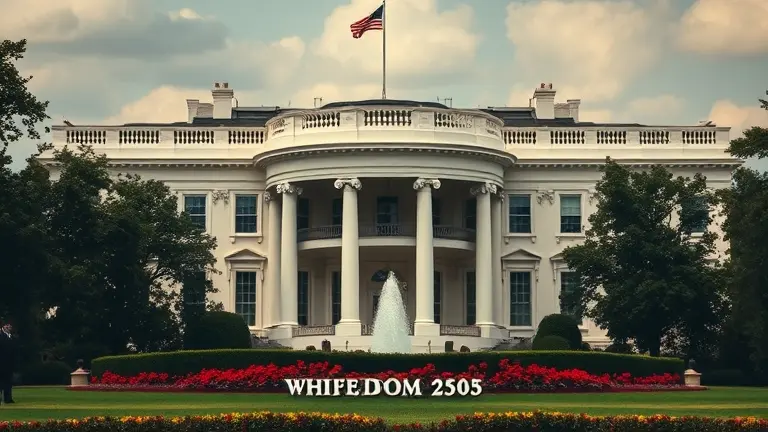
On June 7, 2026, the political and sports worlds collided in a federal courtroom as the ‘Public Integrity Project’ filed a high-stakes lawsuit seeking to halt the proposed ‘UFC Freedom 250’ event. Scheduled to take place on the White House South Lawn, the event is intended to commemorate both President Donald Trump’s 80th birthday and the nation’s 250th anniversary. However, the legal challenge has ignited a firestorm of controversy, questioning the ethics of commercializing federal property and the propriety of high-priced ‘pay-to-play’ VIP packages reportedly reaching $1.5 million. While the Department of the Interior maintains that the lawsuit is a ‘baseless’ and ‘obstructionist’ effort, the move has forced a broader conversation regarding presidential venue usage and the boundaries of executive authority.
At the heart of the dispute lies the complex intersection of federal land statutes, including National Park Service (NPS) regulations and the Antideficiency Act. As the nation watches to see if the octagon will actually be built on the historic grounds of the Executive Mansion, the logistical and legal scrutiny has reached a fever pitch. This debate goes beyond mere headlines; it touches upon the fundamental necessity for rigorous planning, clear documentation, and strict adherence to established protocols—principles that hold true whether you are navigating the complex legal landscape of a White House event or executing your own high-stakes personal projects.
The Public Integrity Project Lawsuit: Challenging ‘UFC Freedom 250’
On June 7, 2026, a federal lawsuit initiated by the watchdog group Public Integrity Project sent shockwaves through the sports and political landscapes. The litigation specifically targets the high-profile UFC Freedom 250 event, which is currently scheduled to take place on the White House South Lawn on June 14, 2026. Designed to coincide with President Donald Trump’s 80th birthday and the United States’ 250th anniversary, the event has transitioned from a celebratory spectacle into a major legal standoff. The core of the UFC White House lawsuit rests on the assertion that hosting a commercial, for-profit sports event on federal property violates long-standing National Park Service (NPS) regulations regarding the use of public grounds.
Key Allegations and Legal Arguments
The Public Integrity Project contends that the administration has overstepped its legal bounds, alleging that the event constitutes a misuse of federal property for private enrichment. Central to their argument are several specific points of contention:
- Violation of Public Trust: The lawsuit claims the event commercializes sacred civic space, setting a dangerous precedent for the use of the White House grounds.
- Ethics and Profit: Plaintiffs have highlighted reports suggesting VIP packages are being sold for between $1 million and $1.5 million, raising questions about “pay-to-play” ethics and the potential for illegal personal gain.
- Administrative Overreach: The suit seeks an emergency injunction to block the event, citing the Antideficiency Act and potential unauthorized expenditures of taxpayer resources to facilitate the logistical needs of a professional fight card.
In response to these claims, the Department of the Interior issued a swift, public dismissal, characterizing the legal action as “obstructionist” and “baseless.” Government representatives maintain that the event falls within the scope of presidential authority to utilize the grounds for symbolic national milestones. As the June 14 date approaches, legal observers remain divided on whether the courts will intervene or if the Department of the Interior’s defense will effectively neutralize the injunction attempt. The outcome of this case could redefine the boundaries of executive power and the commercialization of the Executive Mansion.
Legal Scrutiny: Analyzing the Statutes Behind the Challenge

The UFC White House lawsuit filed by the Public Integrity Project centers on the intersection of administrative law and the preservation of federal property. At the core of the legal challenge is the alleged violation of National Park Service (NPS) regulations, which govern the use of the White House grounds, a site managed as a unit of the National Park System. The plaintiffs argue that the “UFC Freedom 250” event, characterized by its commercial nature and high-priced VIP packages, fails to meet the stringent criteria required for a special use permit. Historically, permits for the South Lawn are reserved for events that align with the site’s public character, historical significance, or civic engagement, rather than private, for-profit sporting entertainment.
Key Statutory Arguments
The legal filing leverages several specific arguments to challenge the viability of the June 14, 2026, event:
- NPS Permitting Standards: The lawsuit contends that the event violates regulatory mandates that prohibit the commercial exploitation of public lands, asserting that the commercial intent behind selling tickets—reportedly priced between $1 million and $1.5 million—is incompatible with the maintenance of federal grounds.
- The Antideficiency Act: Legal analysts are scrutinizing whether federal personnel or resources would be improperly diverted to support a private corporate entity. Under the Antideficiency Act, federal agencies are generally prohibited from spending funds in excess of appropriations or using federal resources for purposes not specifically authorized by law. The plaintiffs claim that the security and logistics required for a large-scale UFC event exceed standard presidential event costs, effectively creating an unauthorized subsidy.
- Public Trust Doctrine: Beyond specific statutes, the challenge invokes the broader principle of the public trust, arguing that transforming the executive residence into a venue for a private, ticketed sports event undermines the integrity of the White House as a national symbol.
While the Department of the Interior maintains that the lawsuit is “baseless,” the outcome will hinge on whether the court determines that the executive branch has the authority to bypass standard land-use restrictions in favor of promotional spectacles. By framing this as a matter of misuse of federal property, the lawsuit forces a judicial review of the boundaries between presidential discretion and statutory limitations. If the plaintiffs prevail, it could set a significant legal precedent regarding the commercialization of the White House, potentially restricting future administrations from leveraging the property for profit-driven initiatives.
Financial Integrity and the VIP Ticket Controversy

The UFC White House lawsuit has brought intense scrutiny to the financial architecture of “UFC Freedom 250,” specifically regarding reports of premium “VIP experience” packages priced between $1 million and $1.5 million. While the Public Integrity Project alleges these figures represent a clear instance of “pay-to-play” politics, the administration has maintained that private sponsorships are essential to offsetting the costs of large-scale commemorative events. Legal analysts note that if these VIP tiers involve direct payments to the presidential campaign or associated entities rather than authorized event production costs, it could trigger significant investigations regarding the Antideficiency Act and federal ethics regulations governing the use of the executive grounds for profit-generating commercial activities.
Administrative Concerns and Commercialization
Beyond the raw pricing, the integration of professional sports branding with the executive office raises critical questions regarding the commingling of private enterprise and public service. The legal filing argues that hosting a commercial sporting event on federal property constitutes an unprecedented violation of National Park Service (NPS) venue protocols. Key areas of concern currently being debated by legal experts include:
- Conflict of Interest: Potential for private donors to gain proximity to the executive branch through luxury ticket tiers, violating standard ethics requirements for high-level political events.
- Transparency Gaps: Lack of clear documentation regarding how revenue generated from VIP ticket packages is allocated, specifically whether funds flow into the federal treasury or private organizational pockets.
- Property Misuse: The precedent set by allowing a corporate entity to monetize the South Lawn, which critics claim shifts the function of the property from a symbol of American democracy to a commercialized stadium.
While the Department of the Interior describes the watchdog group’s efforts as “baseless,” the lack of disclosure regarding the financial ties between the UFC promotion and the birthday gala remains a central point of contention. As the June 14, 2026 date approaches, the judiciary must determine whether these VIP ticket controversies constitute a breach of public trust or are merely an evolution of modern campaign-style event management.
Precedent vs. Modern Spectacle: Political Events at the White House
Historically, the White House has served as a venue for state dinners, holiday traditions, and ceremonial honors, all of which align with the executive branch’s role in public diplomacy and cultural engagement. Events like the annual Easter Egg Roll or July 4th concerts are deeply rooted in established protocols that prioritize public accessibility and national tradition. However, the proposed UFC Freedom 250 event represents a seismic shift in how the executive grounds are utilized. By transitioning from ceremonial tradition to a high-octane sports-entertainment production, the current administration is testing the boundaries of administrative norms and the traditional purpose of federal property.
The legal tension surrounding the UFC White House lawsuit highlights a growing concern over the commercialization of presidential space. Critics, including the Public Integrity Project, argue that this event deviates from established precedents, potentially violating National Park Service (NPS) regulations regarding the use of federal lands for private, profit-driven ventures. While the White House has hosted athletes for receptions, it has never before functioned as a combat sports arena, particularly one associated with exclusive VIP pricing structures reaching up to $1.5 million.
Key Differences in Venue Usage
To understand the gravity of the controversy, one must distinguish between traditional administrative hosting and modern spectacle:
- Public Access vs. Exclusive Entry: Traditional events emphasize broad public participation, whereas the proposed UFC event is structured around premium, high-cost corporate hospitality.
- Ceremonial Purpose: Historically, sports teams visit the White House to be honored; this event proposes turning the lawn into a commercial broadcast platform.
- Revenue Generation: The lawsuit underscores concerns regarding the misuse of federal property to generate personal or campaign-related enrichment, a departure from the non-commercial nature of past presidential celebrations.
Ultimately, this case forces a national debate on whether the White House is a living museum of American history or a potential venue for commercialized entertainment, leaving the courts to decide if the “Freedom 250” event crosses an ethical line.
The Cost of Cutting Corners: Lessons in Precision
The legal firestorm surrounding UFC Freedom 250 serves as a stark reminder that when ambition outpaces meticulous planning, the structural and ethical integrity of the entire project is called into question. Whether it involves organizing a presidential-scale event or tackling a demanding DIY project in your home workshop, the consequences of poor preparation are significant. The allegations of logistical chaos surrounding this event underscore a universal truth: success is not found in improvisation, but in the adherence to verified, professional-grade blueprints that leave nothing to chance.
Just as the organizers of this event face scrutiny over their planning failures, your own ambitious building projects deserve a higher standard of technical certainty. You can bypass the frustration of trial-and-error by relying on the same level of precision that every world-class construction requires. By utilizing high-quality, workshop-tested plans, you eliminate the risk of structural failure and ensure that your craftsmanship meets the highest possible standards, turning your vision into a reality with absolute clarity and ease.
Our collection of over 16,000 professional plans offers exactly the kind of rigorous preparation needed to build with total confidence, regardless of your skill level. When you choose to build with proven, verified documentation, you are choosing the professional path to excellence. Do not leave your next project to guesswork; secure the comprehensive library that ensures precision, safety, and guaranteed results today.
 Just as legal challenges demand accuracy, your own projects deserve the same level of precision; secure your comprehensive library of over 16,000 workshop-tested plans today to build with absolute confidence.Yes, I Want This Now!