

The 2-1 result in the USA vs Germany friendly at Soldier Field has left USMNT supporters with more questions than answers. While the atmosphere in Chicago was electric, the tactical reality on the pitch exposed critical gaps in defensive transition and positioning that cannot be ignored as the countdown to the 2026 World Cup intensifies. This wasn’t merely a contest of athletic speed; it was a sophisticated chess match where Germany’s clinical exploitation of the US defensive line provided a sobering blueprint for the challenges our national team will face on the global stage.
To truly understand why the USMNT faltered, we must move beyond the final scoreline and examine the granular data: the failed press, the gaps in the midfield pivot, and the breakdown in defensive communication. Decoding these complex tactical layers requires more than just passion; it demands a high level of analytical focus. As we dissect the heat maps and possession statistics from this high-profile encounter, it becomes clear that the difference between tactical success and failure lies in the sharpness of the decision-making process—both for the players on the field and for the fans watching from the stands.
The Soldier Field Benchmark: Analyzing the USMNT vs. Germany Send-Off

The June 6, 2026, usa vs germany friendly at Soldier Field served as far more than a routine exhibition; it functioned as the definitive “send-off” for the USMNT before the high-stakes pressure of the World Cup. While the 2-1 scoreline favored the visitors, the match provided a high-fidelity diagnostic of the American squad’s current tactical ceiling. Facing a perennial global powerhouse like Germany, the United States utilized this fixture to test their structural integrity against elite transitional play and disciplined pressing—elements that often serve as the difference between early-round exits and tournament deep runs.
A Litmus Test for Tactical Cohesion
This usa germany clash was explicitly curated to stress-test the defensive communication and attacking patterns under extreme duress. By squaring off against a side of Germany’s caliber, the USMNT coaching staff sought to identify specific vulnerabilities that would otherwise remain hidden against weaker regional opponents. Key takeaways from the match include:
- Defensive Resilience: The US backline faced immense pressure, revealing both moments of individual brilliance and collective lapses in transition defense that require immediate refinement.
- Midfield Dynamics: The ability of the usa soccer midfield to retain possession under Germany’s high-press provided critical data on the squad’s composure and decision-making speed.
- Tactical Versatility: The coaching staff tested multiple high-intensity formations, indicating a willingness to pivot strategies when trailing against superior international talent.
The 2-1 loss acts as a sobering reality check, proving that while the us vs germany narrative highlights the massive strides made by the U.S. program, there is a distinct gap in game-management maturity. For fans and analysts alike, the match serves as a crucial blueprint. The insights gained from this Chicago showdown regarding transition defense and final-third efficiency will likely dictate the final roster selection and the tactical foundation for the team’s upcoming World Cup campaign.
Defensive Vulnerabilities: Where the U.S. Backline Faltered
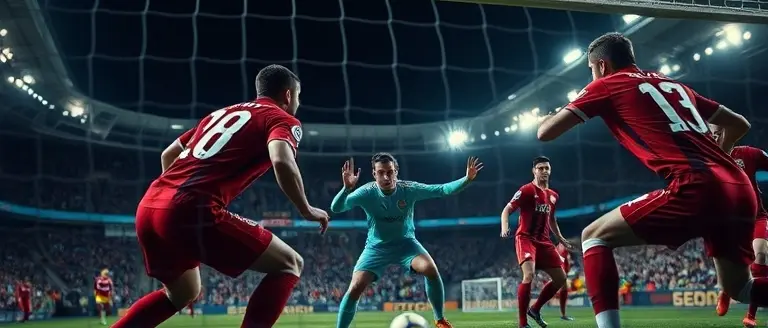
The 2-1 defeat in the USA vs Germany friendly at Soldier Field provided a sobering reality check regarding the structural integrity of the USMNT defensive unit. While the squad displayed flashes of intensity, the two goals conceded exposed critical gaps in defensive transition and a susceptibility to high-press traps. When analyzing the heat maps and defensive coverage charts from the match, it becomes evident that Germany exploited the “half-spaces”—the dangerous areas located between the American fullbacks and center-backs. During rapid counter-attacks, these channels became vulnerable whenever the U.S. fullbacks pushed high into the attacking third, failing to recover quickly enough against Germany’s swift vertical passing.
Systematic Breakdowns in Transition
The primary concern stemming from this usa germany clash was the lack of cohesion when shifting from an aggressive high press to a compact defensive shape.
- Isolated Center-Backs: Whenever the U.S. press was bypassed, the two center-backs were frequently left exposed in one-on-one situations, lacking immediate support from the midfield pivot.
- Over-Commitment on Flanks: Germany’s tactical blueprint relied on dragging US defenders wide, forcing them out of position, and then ruthlessly exploiting the vacated central corridors.
- Recovery Pace: Evidence suggests that the speed of Germany’s transition often caught the usa soccer backline flat-footed, highlighting a need for improved communication during defensive resets.
Moving forward toward the 2026 World Cup, this match serves as a necessary diagnostic tool. The us vs germany result reinforces the argument that the U.S. coaching staff must refine the defensive trigger points. To succeed against world-class opposition, the team must prioritize horizontal compactness and ensure that the midfield unit provides a more robust screen for the backline. Relying on individual defensive heroics will not suffice; the tactical discipline shown by Germany suggests that future opponents will continue to probe these specific defensive vulnerabilities until the USMNT establishes a more resilient structural foundation.
Attacking Patterns and Transition Play: Lessons from the Counter-Attack
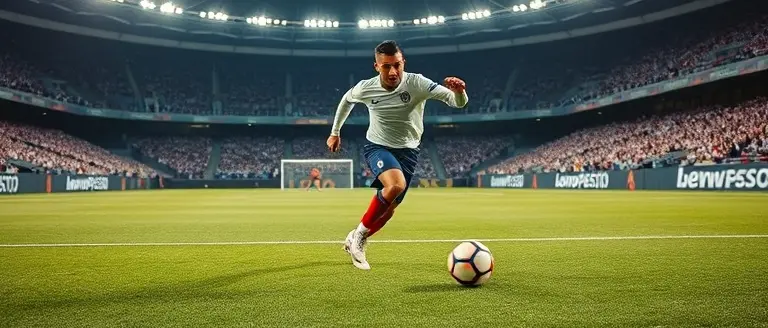
The USA vs Germany friendly at Soldier Field provided a stark reality check regarding the USMNT‘s attacking architecture against world-class opposition. While the team showed flashes of high-intensity pressing, the transition play revealed significant gaps in tactical maturity. During the match, the U.S. struggled to pivot effectively from defensive blocks into cohesive attacks, often relying on individual brilliance rather than structured build-up play. When possession was regained, the tendency to force vertical passes too early against Germany’s disciplined defensive shape often led to avoidable turnovers, leaving the U.S. vulnerable to the very counter-attacks they were attempting to orchestrate.
Refining Final Third Efficiency
To succeed in the 2026 World Cup, the USMNT must address its lack of clinical decision-making in the final third. The 2-1 defeat highlighted several critical areas for improvement:
- Tempo Modulation: The team frequently maintained a one-speed approach, making it easy for German defenders to anticipate passing lanes and close down space.
- Over-reliance on the Flanks: By funneling attacks predominantly through the wide channels, the U.S. became predictable. Increasing central creativity—specifically through the half-spaces—is essential to breaking down organized European blocks.
- Decision-Making Under Pressure: Evidence suggests that under intense German pressure, players struggled to identify the “extra pass,” opting for low-percentage shots that failed to challenge the goalkeeper.
Ultimately, this USA Germany clash serves as a blueprint for the challenges ahead. Moving forward, the coaching staff must emphasize patience in the build-up phase and more sophisticated off-the-ball movement. Against elite international defenses, speed of transition alone is insufficient; the U.S. needs the tactical nuance to manipulate defensive structures, ensuring that every turnover converted into possession results in a high-quality scoring chance rather than a stalled offensive opportunity. Improving this balance is the primary prerequisite for the USMNT to be considered a genuine contender on the global stage.
Blueprint for 2026: Preparing for World Cup Realities

The 2-1 result in the USA vs Germany friendly at Soldier Field serves as more than just a box score; it acts as a diagnostic tool for the USMNT ahead of the 2026 World Cup. While the loss was disappointing for the home crowd, it provided a necessary litmus test against a world-class European giant. To convert these findings into tournament success, the coaching staff must prioritize tactical discipline and roster depth. The match exposed specific defensive lapses in transition—a common issue when playing high-pressing teams—that must be mitigated before facing elite international competition.
Tactical Adjustments for Tournament Success
To evolve from competitive participants to legitimate contenders, the USA soccer setup needs to refine its approach to high-stakes matches. Evidence suggests that the team often struggles with composure during the middle-third transition against elite opponents. Key takeaways for the squad’s development include:
- Defensive Compactness: Establishing a lower block when under sustained pressure to prevent the quick counter-attacks that defined the German victory.
- Rotational Depth: Utilizing upcoming international windows to test fringe players, ensuring that the drop-off in talent remains minimal when starters require rest.
- Psychological Resilience: Maintaining tactical structure even after conceding, as the 2026 World Cup environment will provide little room for individual or collective lapses.
The Germany vs USA matchup highlighted that individual brilliance is insufficient; collective structural integrity is the true blueprint for success. By studying the heat maps and possession metrics from this fixture, the coaching staff can pinpoint exactly where the team’s shape was breached. Moving forward, the focus must shift from experimental lineups toward cementing a “tournament-ready” core that thrives under the pressure of the us vs germany intensity. If the USMNT can transform these tactical failures into concrete structural improvements, this friendly will be remembered as the pivotal turning point of their 2026 journey.
Decoding the Tactical Blueprint for 2026
The 2-1 defeat to Germany at Soldier Field was more than just a friendly; it was a high-stakes diagnostic report on the USMNT’s readiness for the World Cup. Our analysis reveals that while the technical ability is present, the structural discipline required to neutralize elite, world-class movement remains the team’s primary hurdle. Bridging this gap demands that we, as observers, look beyond the final score and dissect the defensive vulnerabilities and attacking transitions that defined those ninety minutes.
Just as the USMNT coaching staff must rely on split-second, elite cognitive processing to adjust defensive formations against top-tier opponents, fans need superior mental clarity to truly decode these intricate tactical patterns. If you find yourself struggling to keep up with the complexity of heat maps and evolving sports metrics, your brain may be craving the same cognitive optimization that elite athletes prioritize. This is where The Brain Song becomes essential.
By leveraging a science-backed protocol to enhance brain-derived neurotrophic factor (BDNF), you can sharpen your focus and transform from a casual spectator into a high-level tactical analyst. Much like the US players training for peak physical execution, you can now train your cognitive performance to ensure you never miss the subtle nuances that determine a match’s outcome. It is time to move past surface-level observations and achieve the mental sharpness required to understand the modern game at an elite level.
 Optimize your analytical edge and master the complexities of the USMNT tactical breakdown with The Brain Song’s 12-minute daily routine.Yes, I Want This Now!