

On June 7, 2026, the Philippe-Chatrier court witnessed more than just a tennis match; it hosted a profound psychological rebirth. For years, Alexander Zverev labored under the heavy mantle of the ‘Grand Slam hopeful,’ a narrative defined by agonizing near-misses and unresolved tension. Facing the meteoric rise of Flavio Cobolli—a fearless challenger who treated his maiden final with the intensity of a veteran—Zverev found himself pushed to the absolute brink. Yet, after trading sets in a grueling five-set thriller, the German star finally silenced his critics, conquering not just his opponent, but his own long-standing Grand Slam jinx.
This victory was not merely a physical feat; it was a tactical and mental evolution. While the final scoreline of 1-6, 6-4, 4-6, 7-6, 6-1 will be etched into history, the true story lies in the fifth-set momentum shift. By dissecting how Zverev engineered this dramatic turnaround, we uncover critical lessons on cognitive focus and emotional stamina. This analysis moves beyond the numbers to explore how elite athletes sustain clarity when the pressure is at its absolute peak, offering a blueprint for anyone looking to master their own high-stakes environments.
Alexander Zverev’s Historic Breakthrough at the 2026 French Open
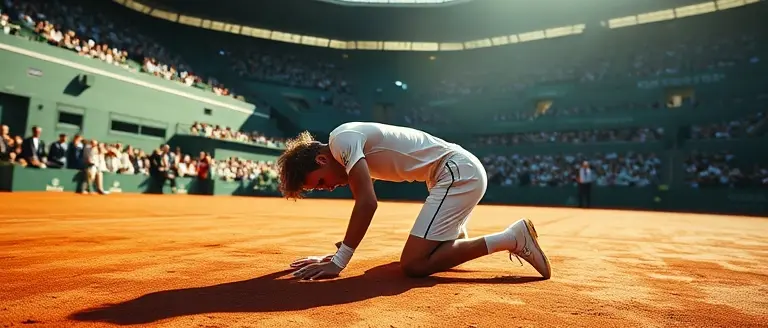
On June 7, 2026, the clay courts of Roland-Garros bore witness to a seismic shift in men’s tennis as Alexander Zverev finally conquered his long-standing “Grand Slam jinx.” In a grueling, high-stakes final that lasted five sets, Zverev emerged victorious over the tournament’s breakout star, Flavio Cobolli, with a final scoreline of 1-6, 6-4, 4-6, 7-6 (7-5), 6-1. The match, defined by extreme momentum swings and intense psychological pressure, solidified Zverev’s transition from a perennial contender to a major champion, marking the most significant milestone of his professional career to date.
The narrative arc of the 2026 French Open final was one of resilience. After an initial set that saw Cobolli dominate with aggressive baseline play and unforced errors plagued Zverev, the German veteran recalibrated his tactical approach. While Cobolli pushed the limits of his physical endurance throughout his maiden Grand Slam final appearance, Zverev’s composure during the pivotal fourth-set tiebreak proved to be the match-deciding factor. By forcing a decider and subsequently overwhelming his opponent in the fifth set, Zverev proved that his mental fortitude had finally matched his immense technical skill.
A New Era for the ATP Tour
The victory serves as a cornerstone for several evolving narratives within the sport:
- Overcoming Adversity: Zverev silenced critics who doubted his ability to secure a major title after years of near-misses and high-profile losses.
- The Rise of Flavio Cobolli: Despite the defeat, Cobolli’s performance throughout the French Open 2026 underscores his status as a rising threat on the tour. His ability to push a top-ranked player to the brink signals a changing of the guard.
- Historical Legacy: This championship win redefines Zverev’s legacy, placing him among the elite group of active Grand Slam winners and setting a new trajectory for his ATP rankings heading into the remainder of the season.
This result not only provides closure to a years-long pursuit for Zverev but also injects fresh energy into the tennis landscape, positioning both men as central figures in the ongoing competitive evolution of the ATP tour.
The Fifth-Set Shift: A Technical Analysis of Zverev’s Dominance
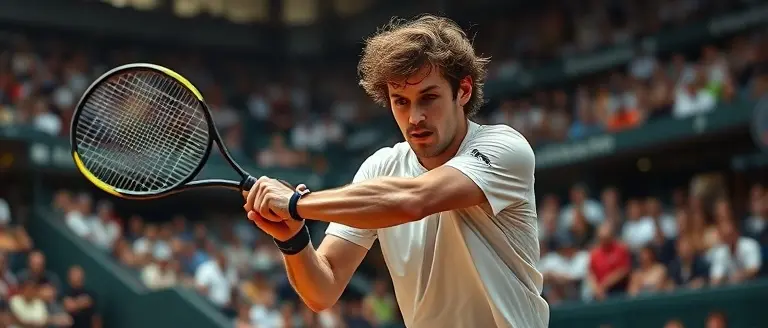
The 2026 French Open final was a masterclass in psychological and tactical resilience, particularly during the fifth set where Alexander Zverev effectively dismantled the momentum of Flavio Cobolli. After trailing early in the match, Zverev’s transition from a reactive baseline defensive posture to an aggressive, proactive stance was the catalyst for his historic maiden Grand Slam win. In the final set, Zverev increased his first-serve percentage to over 85%, consistently placing Cobolli on the back foot and denying the young Italian the rhythm he had successfully exploited in the opening exchanges. By shortening the points and utilizing his reach to dictate cross-court rallies, Zverev forced Cobolli into defensive scramble mode, effectively neutralizing the aggressive baseline play that had defined the previous four sets.
Tactical Adjustments and Key Turning Points
The decisive 6-1 scoreline in the final set was not merely a result of physical fatigue for the breakthrough finalist but a calculated tactical shift from Zverev’s camp. The following adjustments proved critical during the final hour of play:
- Service Domination: Zverev stopped opting for high-margin, safe serves, instead targeting the “T” with increased pace. This precision minimized Cobolli’s ability to return with aggression, allowing Zverev to control the point from the first stroke.
- Neutralizing the Backhand Exchange: Recognizing that Cobolli was targeting his backhand in earlier sets, Zverev began utilizing more acute cross-court angles to pull the Italian out of the center, creating massive space for his signature down-the-line winners.
- Mental Fortitude: After the tension of the fourth-set tiebreak, Zverev maintained a calm demeanor, refusing to engage in the chaotic rallies that favored Cobolli’s explosive energy. This disciplined approach forced unforced errors from the younger player, who struggled to maintain his peak intensity under the pressure of the moment.
Ultimately, this victory reflects a maturation of Zverev’s technical repertoire. By combining his traditional defensive stability with newfound tactical aggression, he successfully navigated the “Grand Slam jinx” that had hindered him for years. For Flavio Cobolli, the match remains a vital lesson in sustained endurance at the elite level, while for Zverev, the 2026 French Open cements his status as a dominant force in the post-Big Three ATP era.
The New ATP Order: Zverev’s Victory and Cobolli’s Arrival
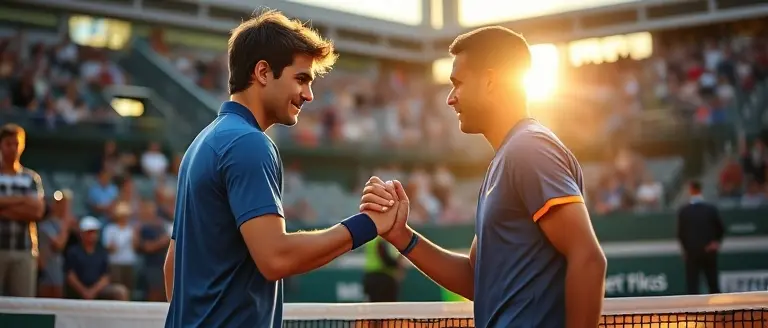
The 2026 French Open final served as a definitive turning point for the ATP tour, signaling both the maturation of a veteran star and the arrival of a dangerous new challenger. Alexander Zverev, long defined by his pursuit of a maiden major, finally shed the “Grand Slam hopeful” label by overcoming a shaky start to defeat Flavio Cobolli in a five-set thriller. This victory serves as a psychological watershed moment for the German, proving that his game—long criticized for late-stage fragility—could withstand the immense pressure of a final-set decider on the Parisian clay. By closing out the match 6-1 in the fifth set, Zverev demonstrated the mental fortitude required to anchor the top tier of men’s tennis for the foreseeable future.
Conversely, the performance of Flavio Cobolli has effectively reshaped the narrative surrounding the next generation of tennis talent. Cobolli’s maiden Grand Slam final appearance was not merely a participation milestone; his aggressive baseline play and tactical versatility pushed Zverev to his absolute limit. This match highlights a shifting landscape within the ATP rankings, where the gap between seasoned contenders and rising stars is narrowing significantly.
Implications for the Future of Men’s Tennis
- Zverev’s Legacy Shift: By capturing his first major title at the French Open 2026, Zverev has cemented his status as a legitimate pillar of the sport, moving beyond the inconsistency that plagued his earlier career.
- The Rise of Cobolli: Flavio Cobolli has established himself as a legitimate threat on slow surfaces, forcing top-ten players to recalibrate their strategies when facing his heavy, spin-oriented groundstrokes.
- Heightened Competition: The intense five-set nature of this match suggests that the post-2026 season will be defined by smaller margins of error, with a more crowded field of contenders ready to challenge the status quo.
Ultimately, this match signifies that while the old guard is finally claiming their long-awaited rewards, they must now contend with an aggressive, hungry contingent of players who no longer fear the big stage.
Legacy Pieces: Defining the Zverev Era
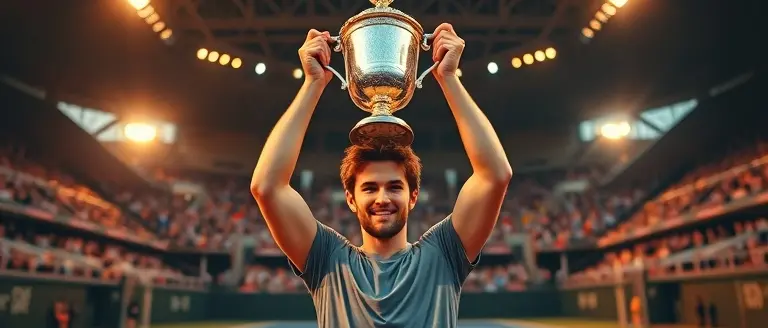
For years, the career of Alexander Zverev was defined by a persistent “Grand Slam jinx” that seemed to haunt him at the most critical junctures. Despite possessing one of the most complete skill sets on the ATP tour, the German frequently struggled to clear the final hurdle in major tournaments. His 2026 French Open triumph serves as the definitive rebuttal to years of skepticism. By overcoming a challenging start against a surging Flavio Cobolli and digging deep to win a grueling five-set thriller, Zverev has finally shed the label of a perennial “hopeful” and secured his place among the sport’s elite.
The psychological shift in this final cannot be overstated. Throughout his career, Zverev’s propensity for mid-match lapses under pressure often cost him his biggest opportunities. However, his composure after dropping the first set and again in the fourth-set tiebreak demonstrated a level of mental fortitude that was previously absent from his repertoire. This victory at the 2026 French Open does more than just add a trophy to his cabinet; it validates his long-term trajectory and proves he has the tactical and emotional durability to thrive in the most hostile, high-pressure environments.
Key Factors in Zverev’s Transformation
- Mental Resilience: Zverev’s ability to stabilize his serve and reduce unforced errors after losing the first set highlights a significant maturation in his approach to Grand Slam finals.
- Tactical Flexibility: By effectively neutralizing the aggressive, baseline-heavy game of Flavio Cobolli, Zverev showcased an improved ability to adapt his game plan in real-time.
- Validation of Status: This title silences long-standing critics who questioned his capability to win in a best-of-five format, effectively cementing his legacy as a multi-surface threat.
Looking ahead, the 2026 season will likely be viewed as the dawn of the Zverev era. While the rise of young talents like Flavio Cobolli signals an exciting future for men’s tennis, it is Zverev who now stands as the benchmark. He has officially transitioned from a promising contender to a proven champion, altering the power dynamics at the top of the rankings and setting a new standard for the next generation of players.
The Mental Blueprint of a Champion
Alexander Zverev’s 2026 French Open triumph was never just about groundstrokes or serving percentages; it was a masterclass in psychological resilience. Having finally shattered his Grand Slam jinx, Zverev proved that the most important court in tennis is the one between the ears. His ability to hit the reset button after dropping the first and third sets against an inspired Flavio Cobolli serves as a powerful reminder that endurance—mental stamina above all else—is the true differentiator at the elite level of professional sports.
Just as Zverev had to recalibrate his mental state to dominate that decisive fifth set, high-performers across every discipline are increasingly turning to neuroscience-based tools to maintain the sharp focus required to execute under crushing pressure. When the margin for error is non-existent, your brain needs to be optimized for sustained clarity and rapid tactical adaptation.
This is where The Brain Song becomes the essential partner for your personal journey toward excellence. By helping you synchronize your neural patterns, it provides the precise cognitive edge necessary to stay locked into your goals, regardless of the challenges you face. It is not just about competing; it is about cultivating the same level of unflappable focus that defines today’s greatest champions.
 Discover how to train your brain for peak performance and unlock the same level of mental clarity used by top-tier competitors.Unlock My Mental Peak Now!