
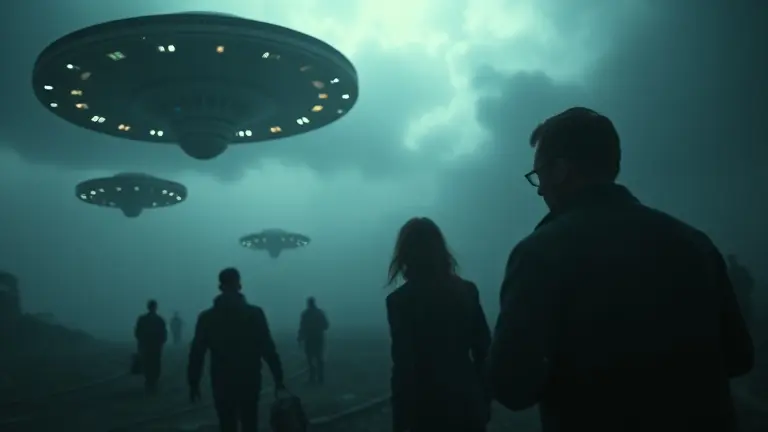
The cinematic world is currently reeling from the electrifying trailer release of Steven Spielberg’s latest sci-fi masterpiece, Disclosure Day. Set for a highly anticipated theatrical premiere on June 12, 2026, the film is already dominating global discourse, blending the director’s signature visual grandeur with a chilling, realistic exploration of government conspiracies surrounding Unidentified Aerial Phenomena (UAP). Starring Emily Blunt, Josh O’Connor, and Eve Hewson, the film promises more than just spectacle; it serves as a mirrors to our own society’s desperate, ongoing hunt for the truth about extraterrestrial life.
Yet, Disclosure Day represents a profound cultural intersection that extends far beyond the screen. With Emily Blunt taking a bold, public stance against the encroachment of AI in performance and the narrative threading real-world political anxieties into its fictional core, this is a cinematic puzzle designed to challenge the status quo. As we track the ‘Road to Release,’ it becomes clear that this film demands more from its audience than passive viewing—it requires an analytical mind capable of connecting the dots between modern lore and the masterfully layered narrative Spielberg has constructed.
Disclosure Day: Everything We Know About Spielberg’s Alien Conspiracy Thriller
The anticipation surrounding the disclosure movie, officially titled Disclosure Day, has reached a fever pitch as we approach its June 12, 2026, theatrical release. Directed by the legendary Steven Spielberg, this sci-fi thriller marks his return to the extraterrestrial genre, grounding high-stakes cosmic mystery in the gritty reality of modern government conspiracies. The recent release of the “Full Disclosure” trailer and featurette has sent shockwaves through social media, with fans praising the film’s tense, atmospheric scale. During a recent appearance on The Today Show, Spielberg confirmed that the narrative is designed to reflect the growing public fascination with UAP (Unidentified Aerial Phenomena) discourse, aiming to bridge the gap between speculative fiction and current geopolitical anxieties.
A Powerhouse Cast and Production Stance
The film’s gravity is anchored by a stellar ensemble cast, featuring Emily Blunt, Josh O’Connor, and Eve Hewson. Beyond the onscreen talent, the production has garnered significant industry attention due to Emily Blunt’s vocal opposition to the use of AI in filmmaking. Her commitment to traditional, human-centric performance methods has become a viral talking point, adding a layer of ethical integrity to the film’s narrative about government transparency and the risks of unchecked technological advancement.
Key details regarding the project include:
- Director: Steven Spielberg, master of the alien-thriller genre.
- Thematic Focus: Deep-dive into systemic government secrecy and UAP phenomena.
- Release Date: The highly anticipated wide theatrical premiere is set for June 12, 2026.
- Industry Stance: Strong push for authentic, non-AI-assisted performances led by the principal cast.
By combining the “Spielberg factor”—a signature blend of wonder and dread—with a grounded, contemporary political thriller premise, Disclosure Day is positioned to be one of the most significant cinematic events of the decade. As the “road to release” continues, the film serves as both a high-octane blockbuster and a reflection of our collective desire for truth in an age of misinformation.
Beyond Fiction: The Real-World UAP Phenomenon Behind the Plot

The anticipation surrounding the upcoming disclosure movie—officially titled Disclosure Day—is not merely a product of Hollywood star power; it is deeply rooted in the current cultural zeitgeist regarding Unidentified Aerial Phenomena (UAP). By aligning his narrative with the modern push for governmental transparency, director Steven Spielberg taps into a genuine, ongoing dialogue between the public and federal institutions. Unlike traditional alien invasion films, Disclosure Day mirrors the real-world frustration felt by citizens and researchers who argue that government agencies have withheld definitive information regarding non-human intelligence for decades. The film serves as a high-stakes cinematic reflection of the actual legislative hearings and whistleblower testimonies that have dominated news cycles, making the “disclosure” element feel more like a procedural thriller than science fiction.
The Intersection of Lore and Legislation
The narrative beats revealed in the latest trailers suggest that the film explores the mechanics of institutional secrecy. This thematic choice is significant because it mirrors several key pillars of the real-world disclosure movement:
- Governmental Secrecy: The plot highlights the disconnect between public curiosity and the “classified” nature of unexplained phenomena.
- Whistleblower Dynamics: Much like real-world accounts, characters in the film risk their careers to expose the truth about extraterrestrial interactions.
- The “Spielberg Factor”: By returning to his roots in extraterrestrial storytelling, Spielberg grounds speculative anxiety in a sophisticated, grounded reality that forces viewers to question what they read in the headlines.
This creative decision to anchor the disclosure narrative in political realism allows the film to resonate with a broader audience. As public interest in UAP continues to grow, Disclosure Day acts as a cultural mirror, heightening the conversation about what constitutes “official” truth. By examining these government conspiracies through a lens of human fallibility rather than just spectacle, the film positions itself as a timely commentary on the digital age’s struggle for transparency, cementing its status as one of the most significant releases of 2026.
The Human Element: Emily Blunt’s Stance Against AI in Cinema

Beyond the high-stakes narrative of the disclosure movie Disclosure Day, a significant real-world conversation has emerged regarding the production process itself. Lead actress Emily Blunt has become a vocal advocate for the preservation of human-centric filmmaking, taking a firm stance against the integration of AI-generated performances in the movie. During recent press junkets, including her appearance on The Today Show, Blunt emphasized that the emotional weight of a film—particularly one centered on complex governmental conspiracies—requires the nuanced intuition of a human actor that current generative technology simply cannot replicate. Her insistence that the production team avoid synthetic performance enhancement has transformed Disclosure Day into a beacon for those advocating for artistic integrity in the age of rapid technological disruption.
Blunt’s refusal to lean on digital augmentations adds a layer of meta-commentary to the film. As the plot explores the struggle for truth in a world of institutional cover-ups, the production’s commitment to “raw” acting mirrors the film’s thematic pursuit of authenticity. By rejecting artificial shortcuts, the team behind this disclosure project is grounding the sci-fi spectacle in a tangible, relatable reality. This approach has resonated deeply with both critics and audiences, particularly as the industry navigates the ethical implications of digital replicas.
Key facets of Blunt’s position and its impact on the project include:
- Artistic Accountability: The actress has argued that performance is a sacred dialogue between actor and audience, which is disrupted by the intervention of algorithms.
- Technological Resistance: Her contract reportedly mandates that no generative AI be used to modify her facial expressions or voice, ensuring her performance remains entirely her own.
- Cultural Alignment: This stance has bolstered the film’s credibility, positioning Disclosure Day as a prestige production that values human labor over cost-cutting automation.
Ultimately, this creative choice serves as a powerful reminder that while the disclosure theme may focus on extraterrestrial unknowns, the most pressing debates in cinema remain firmly rooted in how we value human craft in an increasingly automated world.
What to Watch For: Decoding the ‘Full Disclosure’ Lore
The anticipation surrounding the disclosure movie, officially titled Disclosure Day, is driven by a masterclass in psychological suspense that hints at a return to Steven Spielberg’s roots in extraterrestrial storytelling. The “Full Disclosure” featurette provides more than just a glimpse into the production; it functions as a roadmap for the narrative’s complex layers. As fans dissect the footage, it becomes clear that the film is not merely a high-stakes thriller but a commentary on the modern public’s obsession with UAP (Unidentified Aerial Phenomena) and the systemic secrecy surrounding them.
Key Narrative Pillars to Monitor
To prepare for the June 12, 2026, premiere, viewers should pay close attention to several recurring visual and thematic motifs found in the promotional materials:
- The Documentation Motif: Note how the trailer focuses on physical, analog records—classified files, redacted photos, and radio signals—suggesting a narrative conflict between historical truth and digital manipulation.
- The Anti-AI Subtext: Emily Blunt’s vocal opposition to AI in film production appears to have bled into the character’s struggle. Watch for scenes that emphasize human intuition versus simulated algorithmic intelligence, a central conflict in the film’s lore.
- Governmental Opacity: Spielberg centers the plot on the friction between clandestine bureaucracy and civilian discovery, mirroring contemporary debates regarding real-world government transparency.
This disclosure narrative succeeds by grounding its supernatural premise in the tension of a political procedural. Unlike Spielberg’s earlier, more sentimental alien encounters, Disclosure Day utilizes a grounded, almost paranoid aesthetic. The “Full Disclosure” featurette subtly suggests that the extraterrestrial presence is not just an arrival, but an ongoing reality that humanity has been conditioned to ignore. By analyzing the interplay between Emily Blunt’s character and the shadowy organizations she investigates, audiences can begin to piece together the film’s central mystery before the theatrical release. Watching for these environmental storytelling clues will provide a richer understanding of the film’s ambitious attempt to bridge the gap between sci-fi entertainment and the cultural discourse on extraterrestrial contact.
Mastering the Intricacies of the Spielberg Conspiracy
As we peel back the dense layers of government secrecy and the intricate lore woven into Disclosure Day, it is easy to see why this film is poised to redefine the sci-fi thriller genre. Spielberg has crafted a narrative that demands total engagement; missing a single detail could mean losing the thread of the entire conspiracy. However, in our high-distraction world, many viewers find themselves battling mental fatigue when trying to deconstruct such rapid-fire cinematic information.
As we dissect the dense layers of government conspiracy and intricate lore in Disclosure Day, many viewers find themselves needing to sharpen their own focus to keep up with Spielberg’s complex narrative puzzle. This is where The Brain Song becomes an essential tool for the dedicated cinephile. By enhancing your cognitive clarity and focus, The Brain Song ensures you can absorb every nuanced line of dialogue and hidden visual cue without the fog of mental exhaustion.
Don’t just watch the biggest movie of 2026—analyze it with the sharpest focus possible. Positioned for the viewer who refuses to miss a single detail in the film’s political subtext, our formula provides the analytical edge required to truly master the Disclosure Day experience. Prepare your mind for the full reveal and unlock the mental precision that separates a casual fan from a true lore expert.
 Prepare your mind for the full Disclosure—unlock peak analytical focus for your next movie deep-dive with The Brain Song.Transform My Cognitive Focus Today!