
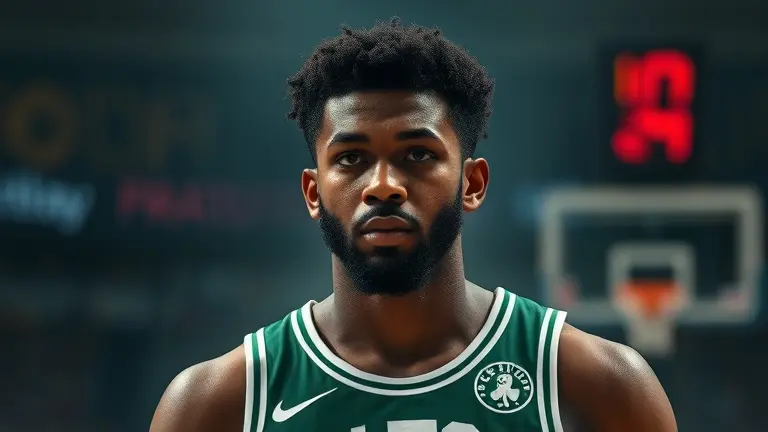
Jaylen Brown is currently operating in a league of his own, and it has nothing to do with the hardwood. As the Boston Celtics forward celebrates his selection to the 2025-26 All-NBA Second Team—a well-deserved recognition for his stellar 28.7 point-per-game season—the sports world is fixated on something far more provocative: his relentless, public challenge to media titan Stephen A. Smith. By bypassing the traditional sports media machine, Brown has transformed his public image from a superstar athlete into a sovereign voice, effectively turning a professional feud into a defining moment of the NBA’s new media landscape.
This friction between his undeniable on-court statistics and the volatility of his off-court media war creates a fascinating dichotomy. While casual observers may see only the drama, the true story lies in how modern athletes are mastering the art of the narrative bypass. Brown isn’t just playing basketball at an elite level; he is navigating the modern attention economy with a cold, calculated precision that refuses to let the noise of the mainstream media dictate his legacy. Understanding this shift is essential for anyone aiming to maintain focus and peak performance in an environment defined by constant external pressure.
,slug:
The Duality of Jaylen Brown: Elite Production Meets Public Confrontation
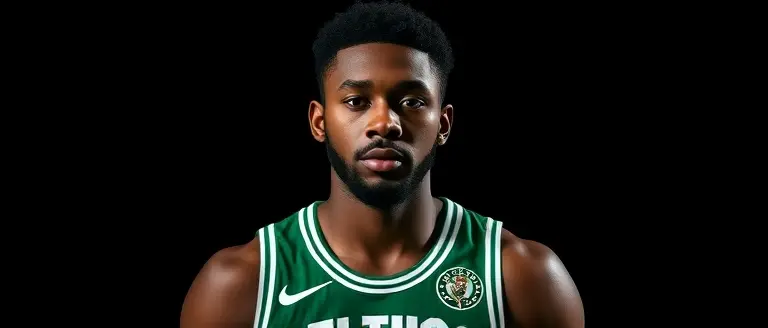
The 2025-26 NBA season has solidified Jaylen Brown as a top-tier superstar, yet the discourse surrounding the Boston Celtics forward has shifted from pure box-score analysis to a broader debate on athlete agency. Brown’s inclusion on the All-NBA Second Team serves as the objective validation of his career-best campaign, during which he logged an impressive 28.7 points, 6.9 rebounds, and 5.1 assists per game. Despite these elite metrics, the conversation has been hijacked by his confrontational stance toward traditional media, most notably his public invitation for a live debate with Stephen A. Smith. This collision between his on-court dominance and off-court friction highlights a growing trend of players bypassing mainstream media gatekeepers to curate their own narratives.
Navigating the New Era of Athlete-Media Relations
Brown’s “not surprised” reaction to his All-NBA status reflects a player who is no longer content to let others define his ceiling. By directly challenging prominent media figures, he is signaling that the era of the passive, media-compliant superstar is waning. This approach carries significant implications for how fans and analysts interpret his public persona:
- Empowerment through Direct Channels: By leveraging social media to engage in high-drama discourse, Brown retains control over his message, effectively silencing critics who rely on traditional, top-down media critique.
- Performance vs. Personality: While his 28.7 PPG proves his value as an elite athlete, the viral nature of his feud with Smith draws a different, arguably more engaged, pop-culture audience.
- Shifting Power Dynamics: The decision to contest perceived slights from the media demonstrates a calculated, bold refusal to accept standard industry labels, forcing a more complex understanding of what it means to be a “professional” in the modern sports landscape.
Evidence suggests that this duality—balancing peak athletic performance with assertive cultural commentary—is the new standard for the modern NBA elite. Brown is not merely playing basketball; he is actively reshaping the relationship between the athlete and the observer.
The 28.7 PPG Statement: Elevating the Standards of Elite Play

The 2025-26 season has been nothing short of a masterclass in individual evolution for Jaylen Brown. By posting a career-high 28.7 points per game, complemented by 6.9 rebounds and 5.1 assists, Brown has effectively moved beyond the “All-Star” label to solidify his standing as a legitimate MVP-caliber force. This statistical output is not merely a collection of data points; it serves as the foundation for his current leverage. In the modern NBA, elite production acts as the primary currency for influence, providing players the “social capital” necessary to challenge traditional media gatekeepers without jeopardizing their reputation. Brown’s performance metrics prove that his on-court value is insulated from the volatility of his off-court public discourse.
Decoding the Statistical Leap
To understand why Brown feels empowered to issue public challenges to figures like Stephen A. Smith, one must analyze the efficiency behind his volume scoring. His game has matured into a multi-faceted offensive weapon that commands defensive attention, granting him the autonomy to control his own narrative. Key factors in his elite 2026 campaign include:
- Shot Creation and Efficiency: Brown has demonstrated a refined ability to operate in isolation, reducing his reliance on system-based scoring to become a primary initiator.
- Playmaking Growth: Averaging over five assists per game indicates a higher basketball IQ and an improved capacity to punish defensive double-teams.
- High-Stakes Reliability: His consistent production against top-tier defensive rotations has validated his selection to the All-NBA Second Team.
By separating his undeniable work ethic and output from the noise of the media landscape, Brown has successfully pivoted toward a strategy of self-sovereignty. Because his box scores are indisputably elite, he no longer requires the validation of mainstream sports pundits to maintain his status. This dynamic marks a significant departure from previous eras, signaling that today’s superstars, fueled by their own high-level play, are increasingly comfortable bypassing the middleman to address criticism head-on.
Challenging the Gatekeepers: A New Era of Athlete-Media Relations
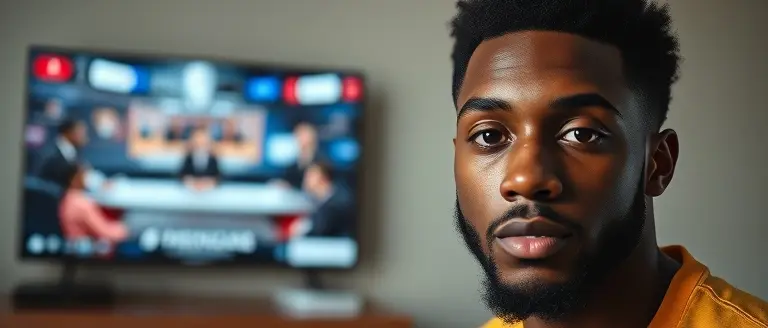
The recent public confrontation between Jaylen Brown and sports media personality Stephen A. Smith is far more than a high-profile personality clash; it serves as a definitive case study in the evolving power dynamic within the NBA. By bypassing traditional journalistic filters and issuing a direct, live-debate challenge, Brown is signaling a fundamental departure from the era where athletes remained passive subjects of media punditry. This shift underscores a broader trend: modern NBA stars are increasingly leveraging their own massive digital platforms to deconstruct and refute narratives that they feel do not accurately represent their on-court contributions or professional integrity.
The Shift Toward Athlete-Owned Narratives
This transition is driven by the realization that athletes no longer require intermediaries to reach their audience. Brown’s reaction to his 2025-26 All-NBA Second Team selection—marked by a notable “not surprised” sentiment regarding his exclusion from the First Team—demonstrates a player confident in his own data-backed value. By challenging a veteran gatekeeper like Smith, Brown is effectively:
- Asserting Intellectual Autonomy: Refusing to accept the subjective rankings of traditional media as the ultimate authority on his career success.
- Direct Engagement: Using social media as a real-time auditorium to debate analysts, forcing a higher level of accountability from media figures who previously operated with minimal pushback.
- Controlling the Message: Ensuring that his 28.7 points per game and individual accolades are viewed through his own lens rather than through the sometimes reductive lens of legacy sports media.
Ultimately, this friction highlights a growing tension between those who analyze the game and those who dominate it. As Jaylen Brown continues to solidify his status as an elite contributor for the Boston Celtics, his willingness to confront the media status quo suggests that the “shut up and dribble” era is firmly in the rearview mirror. Athletes are now active participants in the discourse surrounding their own legacies, and the era of the unchallenged pundit is nearing its end.
Beyond the Hot Take: The Strategic Utility of Public Discord

The recent public discord between Jaylen Brown and high-profile media figures like Stephen A. Smith is far from a mere temperamental outburst; it is a calculated disruption of the traditional sports media ecosystem. By publicly challenging pundits to live debates, Brown is actively dismantling the archaic “hot take” culture that often reduces elite athletes to one-dimensional subjects for critique. His “not surprised” attitude toward his All-NBA Second Team snub signals a shift in power dynamics, where the athlete—not the media gatekeeper—now controls the narrative arc of their own career. This strategy forces journalists to engage with Brown as an intellectual equal, effectively shrinking the traditional distance between the locker room and the analyst’s desk.
Redefining the Athlete-Media Relationship
This evolution in NBA athlete-media relations centers on the idea of direct communication. Instead of adhering to the standard post-game press conference script, Brown utilizes social media to bypass institutional filters. This shift has several strategic implications for the modern superstar:
- Autonomy of Narrative: Brown removes the intermediary, ensuring that his perspective on his career-best season is not filtered through the biased lens of television pundits.
- Engagement Metrics: By igniting high-drama discourse, he drives massive organic engagement, keeping his personal brand trending long after the buzzer sounds.
- Intellectual Agency: Demanding a live, unscripted debate moves the conversation away from surface-level critiques and toward substantive analysis, a domain where Brown clearly feels confident competing.
Ultimately, Brown’s confrontational posture is a defensive tool meant to preserve his marketability and reputation. By calling out the flaws in sports journalism, he forces a standard of accountability that rarely existed in previous eras. Whether this creates long-term friction or fosters a more balanced industry, it is clear that Jaylen Brown is setting a new precedent for how stars manage their public identity in the digital age. This is not just a feud; it is a power move that mirrors his elite on-court performance of 28.7 points per game.
Mastering the Silence Within the Noise
Jaylen Brown’s 2026 campaign proves that the modern NBA superstar is no longer defined solely by box scores, but by the ability to control the narrative. While his All-NBA selection validates his elite production on the court, his public standoff with Stephen A. Smith serves as a masterclass in bypassing traditional media gatekeepers. Brown understands what many miss: in an era of constant, high-volume scrutiny, the loudest voice isn’t always the most influential—the most controlled one is.
Maintaining this level of composure under the white-hot spotlight of professional sports isn’t just a matter of grit; it requires a systematic approach to cognitive discipline. The pressure that Brown navigates on a global stage is mirrored in our own lives, where the constant barrage of digital noise threatens to derail our focus and decision-making. To compete at your highest potential, you need more than just effort; you need the mental clarity to filter out the distractions that hold you back from your own personal championship.
This is where The Brain Song becomes your competitive advantage. Designed as an auditory tool for performance optimization, it helps you tune out the chaos and lock in on your objectives with unwavering precision. Just as Brown uses his focus to dominate the paint, you can harness this neuroscience-based solution to reclaim your mental bandwidth and operate with elite-level clarity in every high-stakes situation. Don’t let the noise define your output; start training your mind for the intensity of your own goals today.
 Unlock the same focus required of an elite athlete by integrating The Brain Song into your daily routine.Yes, I Want This Now!