
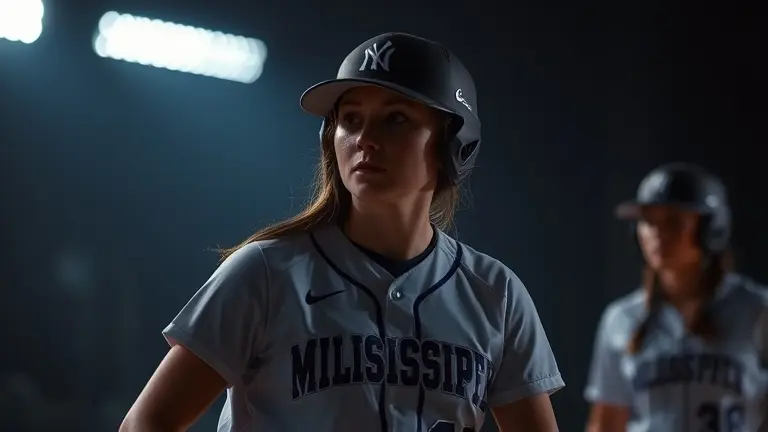
The 2026 Women’s College World Series (WCWS) landscape has been permanently altered. While fans expected the familiar blue-bloods of college softball to dominate the final bracket in Oklahoma City, the historic surge of Mississippi State has sent shockwaves through the sport. Their unexpected triumph over the powerhouse Oklahoma Sooners in the softball super regionals was more than a statistical anomaly; it was a testament to a complete culture shift and a rigorous, tactical evolution in coaching philosophy that caught the entire NCAA off-guard.
As we analyze the fallout of this Cinderella run, it becomes clear that the difference-maker wasn’t just physical talent—it was a superior display of composure. In high-stakes moments where lesser programs succumbed to the pressure of the moment, Mississippi State operated with a psychological intensity that neutralized their opponent’s strengths. This article explores how that elite mental state defines the new era of college softball and what it reveals about the essential nature of focus in championship-level performance.
The Road to OKC: Mississippi State’s Historic WCWS Breakthrough

The 2026 NCAA Division I Softball Tournament has reached a fever pitch as the final programs secure their tickets to the Women’s College World Series (WCWS) in Oklahoma City. While traditional powers expected to navigate the softball super regionals with ease, the landscape of collegiate softball has been fundamentally altered by one of the most significant upsets in tournament history. The narrative of the 2026 postseason is now defined by the unexpected rise of Mississippi State, whose grit and tactical execution have shattered the long-standing “blue-blood” dominance that has characterized the sport for years.
A New Paradigm in Collegiate Softball
Mississippi State’s path to the WCWS was paved by a defensive masterclass that neutralized the potent offense of the Oklahoma Sooners. The shutout performance delivered by pitcher Delainey Everett in the clinching game served as a catalyst for a broader shift in how mid-tier programs approach high-stakes elimination rounds. Analysts point to several factors contributing to this breakthrough:
- Elite Defensive Discipline: The team prioritized high-percentage plays and situational awareness, effectively stifling Oklahoma’s aggressive baserunning.
- Strategic Coaching Adjustments: The Mississippi State softball coach implemented a high-intensity, low-risk philosophy that forced the opposition into uncharacteristic errors.
- Momentum and Culture: Building on sustained confidence throughout the season, the roster displayed a level of poise typically reserved for perennial championship contenders.
This historic run serves as a wake-up call for the broader recruiting landscape. As programs look toward the Women’s College World Series 2026, the success of the Bulldogs proves that established hierarchy can be challenged through superior preparation and team-first execution. The tournament trajectory is now wide open, shifting focus toward how future college softball cycles might prioritize defensive depth and analytical coaching strategies to mirror this successful blueprint. Whether this marks a permanent disruption or a singular anomaly, one thing is certain: the road to the national title has never been more unpredictable.
Defensive Masterclass: How Mississippi State Neutralized the Sooners

The historic ascent of Mississippi State to the Women’s College World Series was not merely a product of luck; it was the result of a masterclass in tactical discipline. During the softball super regionals, the Bulldogs effectively dismantled the high-octane Oklahoma Sooners offense by executing a sophisticated defensive scheme that relied on pitch sequencing and aggressive situational positioning. By forcing the Sooners into uncomfortable counts, the Mississippi State pitching staff—anchored by Delainey Everett’s shutout performance—neutralized the power threats that have historically defined Oklahoma’s dominance in college softball.
Strategic Battery Adjustments
The success of the Bulldogs largely stemmed from the chemistry between their battery. Rather than challenging Oklahoma’s hitters with high-velocity heat, the staff utilized a “nibble-and-chase” strategy. By working the corners and keeping the ball off the plate, they induced soft contact and high fly-ball outs. This approach forced the Sooners to expand their zone, preventing them from driving the ball into the gaps. Key defensive adjustments included:
- Vertical Pitch Sequencing: Utilizing a tight changeup-to-riseball transition to disrupt the timing of Oklahoma’s aggressive swing mechanics.
- Targeted Defensive Shifts: Adjusting infield depth based on the specific count to minimize ground-ball hits through the middle, effectively cutting off the Sooners’ bread-and-butter lanes.
- High-Pressure Communication: The Mississippi State softball coach utilized frequent mound visits to reset the defense, ensuring that runners in scoring position did not rattle the infielders.
This disciplined defensive posture serves as a blueprint for the WCWS 2026 field. By neutralizing the most explosive lineup in the country, Mississippi State has demonstrated that sophisticated scouting and unwavering commitment to a defensive system can overcome even the most formidable “blue-blood” programs. This tactical shift is currently reshaping expectations for how mid-tier programs can compete for the ultimate trophy in Oklahoma City.
Cultural Transformation: The Engine Behind the Mississippi State Program

The historic ascension of Mississippi State to the Women’s College World Series (WCWS) is far from a statistical anomaly; it is the direct result of a calculated internal overhaul. For years, the program operated on the periphery of the college softball elite, often struggling to bridge the gap between competitive conference play and postseason consistency. The current coaching staff prioritized a total cultural reset, shifting the focus from individual talent metrics to a collective, high-pressure defensive identity. This transformation was clearly on display during the softball super regionals, where the team’s mental fortitude allowed them to neutralize a powerhouse offense that has historically dominated the sport.
Defining the New Standard
The leadership team at Mississippi State implemented a “fearless-first” philosophy, which was instrumental in dismantling the aura of invincibility surrounding teams like Oklahoma. Key components of this cultural shift included:
- Elite Defensive Accountability: Coaches fostered a locker room environment where the expectation for defensive precision exceeded the pursuit of home runs, leading to the shutout performance by pitcher Delainey Everett.
- Resilience Training: By simulating high-leverage scenarios throughout the fall season, the program developed the poise necessary to thrive under the bright lights of the 2026 NCAA Division I Softball Tournament.
- Recruitment Strategy: The coaching staff pivoted to target multi-sport athletes who possess high “softball IQ” and a competitive edge, rather than relying solely on traditional rankings.
This cultural shift has successfully repositioned Mississippi State as a legitimate national contender. By prioritizing psychological conditioning alongside mechanical adjustments, the Mississippi State softball coach and their staff have created a sustainable model for success. This momentum not only impacts the current WCWS bracket but sets a precedent for how non-traditional programs can challenge the established “blue-blood” hierarchy in future seasons. The program has proven that when talent meets a cohesive, unwavering team mentality, even the most formidable dynasties can be overcome.
Shifting Power Dynamics: Is the Era of Oklahoma’s Absolute Dominance Ending?

The 2026 NCAA Division I Softball Tournament has provided the most compelling evidence yet that the iron grip held by traditional “blue-blood” programs is beginning to loosen. For years, the road to the Women’s College World Series (WCWS) in Oklahoma City was viewed as a formality for a select few programs. However, the historic success of Mississippi State, capped by a brilliant shutout performance against the perennial powerhouse Oklahoma Sooners, signals a transformative era for college softball. This upset was not a fluke; it was the result of sophisticated defensive game-planning and a tactical shift that neutralized one of the most potent offenses in the sport’s history.
The Rise of Parity and Tactical Evolution
The success of programs like Mississippi State suggests that the gap between elite contenders and the rest of the field is narrowing rapidly. As coaching staffs across the country integrate advanced data analytics and specialized pitching development, the predictability of the softball super regionals is eroding. Key factors driving this shift include:
- Elite Pitching Depth: Teams are no longer relying on a singular ace; they are building deep, specialized bullpens capable of adapting to high-pressure environments.
- Defensive Versatility: The tactical blueprint used to silence Oklahoma—focusing on high-spin pitching and precise defensive positioning—is becoming the industry standard.
- Recruiting Democratization: Non-traditional programs are increasingly successful in attracting top-tier talent, fueled by competitive NIL packages and a desire to build legacy at up-and-coming universities.
While the Sooners remain a benchmark for excellence, the 2026 tournament bracket serves as a clear warning that institutional prestige alone is no longer enough to secure a spot in the finals. The broader competitive balance of the WCWS is shifting toward a model where preparation, grit, and specialized strategy outweigh historical standing. For fans and analysts, this evolution ensures that the future of the sport will be defined by parity, making every pitch in the tournament more unpredictable and captivating than in previous seasons.
The Cognitive Edge Behind Championship Greatness
The Mississippi State softball team’s historic run to the 2026 Women’s College World Series serves as a masterclass in psychological resilience. Beyond the tactical shifts and defensive adjustments, it was the unwavering mental clarity in the face of a dynasty that truly defined their breakthrough. When the pressure was at its absolute peak, they played not with panic, but with the surgical precision of an optimized mind. This ability to remain present and execute under fire is the defining characteristic of every elite champion, whether they are on the diamond or navigating the complexities of a high-stakes professional career.
Just as the Bulldogs relied on a refined, laser-focused mindset to dismantle a powerhouse opponent, peak performance in your own high-pressure environment requires an optimized, clutter-free brain. If you have been searching for that hidden variable—the ability to eliminate mental fog and achieve game-day concentration at will—The Brain Song offers the cognitive edge you need. By fostering the same level of mental discipline and neurological sharpness that elite athletes rely on, this tool ensures you are always ready to perform at your absolute best.
Ready to master your own focus and operate with championship-level clarity? The path to your next personal victory starts with the right preparation. Unlock your peak mental performance and gain the competitive edge by incorporating this neuroscience-based focus routine into your daily preparation.
 Unlock your peak mental performance and gain the competitive edge by incorporating this neuroscience-based focus routine into your daily preparation.Yes, I Want This Now!