
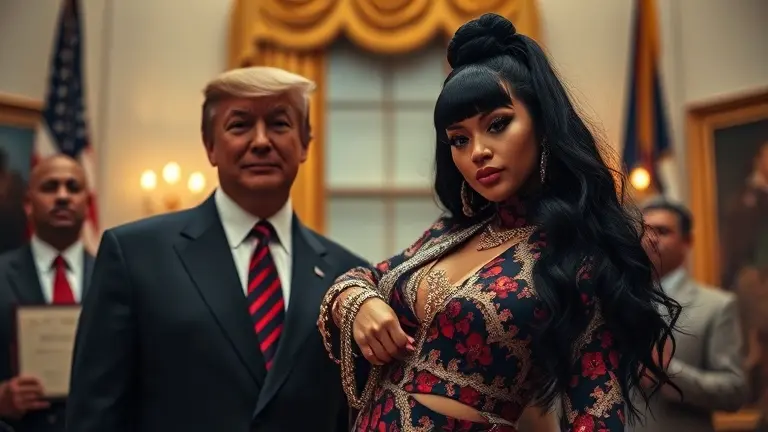
In the high-stakes theater of global entertainment, few figures have commanded as much cultural capital as Nicki Minaj. Yet, as of May 2026, the artist once celebrated for her unparalleled lyricism and pop-culture dominance has pivoted into a role far more volatile: that of a political lightning rod. Her recent alignment with the MAGA movement and a high-profile visit to the Oval Office have transformed her public identity, shifting the discourse from streaming records to presidential optics. This transition is not merely a personal choice; it represents a seismic shift in how modern celebrity brands intersect with polarized political landscapes, forcing fans and analysts alike to reconsider the legacy of an artist who now navigates a minefield of alleged sabotage, deep-seated feuds, and intense media scrutiny.
Understanding this evolution requires more than just skimming headlines or tracking social media sentiment. It demands a forensic approach to separating the authentic artistic legacy of the ‘Queen of Rap’ from her calculated pivot into the role of a political influencer. As the lines between celebrity culture and political activism continue to blur, the burden falls on the audience to discern the difference between strategic branding and genuine ideological change. This article cuts through the noise, providing a dual-track analysis of how Minaj is leveraging long-standing industry narratives to redefine her relevance in an era where attention is the ultimate currency.
The Strategic Shift: Decoding Nicki Minaj’s Political Realignment
The evolution of Nicki Minaj from a global hip-hop icon to a central figure in the MAGA movement has marked one of the most unexpected pivots in modern celebrity culture. By May 2026, the rhetoric surrounding her public persona had shifted from music charts to policy debates, culminating in a highly publicized visit to the Oval Office on May 17. This meeting with Donald Trump solidified a transition that many fans and industry analysts had observed growing throughout the early months of the year. Central to this realignment is her vocal rejection of establishment figures, specifically her pointed criticisms of Gavin Newsom, which she has leveraged to frame her transition as a rejection of perceived institutional failure rather than a conventional partisan choice.
Analyzing the Narrative and Debunking Myths
The intensity of the media scrutiny surrounding her political alignment has fueled significant speculation, much of which has lacked a factual foundation. As the discourse reached a fever pitch in mid-May 2026, various outlets—including AOL and Yahoo—explicitly debunked persistent rumors suggesting that the artist’s political engagement was motivated by a desire for a presidential pardon. By examining the timeline of her public statements, it becomes clear that her shift is framed more through the lens of individualistic empowerment and grievance against industry peers, such as Jay-Z, than through legal maneuvering.
Key factors driving this political metamorphosis include:
- The “Anti-Establishment” Framework: Minaj has frequently characterized her political pivot as an act of defiance against those she labels as “saboteurs” within the music industry.
- Economic Populism: Her public support for Trump appears anchored in a critique of California’s political leadership, specifically targeting policies championed by Governor Newsom.
- Separation of Legacy and Brand: While streaming numbers for hits like ‘Starships’ remain steady, the rapper’s current role as a political influencer represents a deliberate break from her previous neutral public image.
By navigating these complex narratives, it is evident that Nicki Minaj is attempting to redefine her cultural footprint. Whether this strategy will alienate her core demographic or successfully bridge her legacy with a new political audience remains the most significant question for the remainder of the 2026 election cycle.
Brand Economics: Quantifying the Impact of Political Polarization

The transition of Nicki Minaj from a global pop icon to an outspoken proponent of the MAGA movement represents a high-stakes evolution in celebrity branding. For established artists, entering the political fray often creates a “polarization tax,” where the alienation of a core, progressive-leaning fanbase is weighed against the acquisition of a new, politically motivated audience. Evidence suggests that while her streaming numbers for legacy hits like “Starships” remain resilient—largely immune to current political discourse—the long-term impact on her brand equity remains volatile. By aligning herself with Donald Trump and challenging establishment figures, Minaj is effectively shifting her business model from broad-market pop appeal to a niche, high-engagement political influencer framework.
Analyzing the Shift in Market Positioning
The business implications of this pivot are multifaceted, impacting everything from corporate sponsorships to fan demographic loyalty:
- Corporate Risk Profiles: Major brands are traditionally risk-averse; political volatility often leads to a reduction in high-value endorsement opportunities as companies seek to avoid entanglement in polarized rhetoric.
- Demographic Fragmentation: While her social media metrics show a surge in engagement from conservative-leaning demographics, there is an observable cooling effect within urban, liberal-leaning cohorts that historically served as her primary market.
- The Sabotage Narrative: By leveraging narratives regarding Jay-Z and industry “sabotage,” Minaj is reframing her career obstacles through a populist lens. This strategy serves to galvanize a loyal base of supporters who perceive her exclusion from mainstream accolades as evidence of systemic corruption, effectively insulating her brand from conventional critical reception.
Whether this political mobilization serves as a sustainable business model or a temporary disruption to her legacy is yet to be determined. Current data indicates that while her cultural imprint is undergoing a radical realignment, her ability to maintain relevance by dominating the news cycle remains unmatched. For Minaj, the “Nicki” brand is no longer just about music; it has become a platform for ideological discourse, transforming her from a traditional recording artist into a formidable political force.
Weaponizing the Narrative: Feuds as Political Theater

In recent months, Nicki Minaj has increasingly framed her professional hurdles through the lens of institutional persecution. By pivoting toward a vocal alignment with Donald Trump and the MAGA movement, she has effectively repositioned long-standing industry tensions—specifically those involving Jay-Z and Cardi B—as symptoms of a broader “establishment” conspiracy. This rhetorical strategy serves a dual purpose: it paints her political shift not as a departure from her core identity, but as a reactionary act of defiance against a music industry she claims has sought to “sabotage” her career. By characterizing her rivals as enforcers of a status quo that excludes her, she transforms personal industry grievances into a populist rallying cry that resonates with her newfound political base.
The Mechanics of the “Sabotage” Narrative
The assertion that she is being targeted by industry giants is a core component of her current brand evolution. However, independent observers note that these claims lack empirical evidence. Analyzing the utility of these narratives reveals a calculated attempt to align her brand with anti-establishment sentiment:
- Framing Defiance: By explicitly contrasting her current political stance with the alleged hostility of peers like Jay-Z, Minaj effectively solidifies her position as an “outsider” within the hip-hop elite.
- Consolidating Fanbase Loyalty: This narrative structure encourages her fanbase to view any criticism of her political alignment as a form of industry-backed suppression rather than legitimate debate.
- Distraction from Policy: By keeping the focus on high-profile feuds, the artist maintains a high level of media engagement that often obfuscates the complexities of her actual political platform.
While rumors regarding a “Met Gala Peace Treaty” briefly dominated social media, the persistence of these conflict-oriented narratives suggests that the tension between Minaj and her peers is being leveraged intentionally. Whether this strategy ultimately harms her legacy or cements her role as a formidable political influencer remains to be seen, yet it is clear that for Nicki Minaj, industry feuds are no longer just professional disputes—they are essential tools in her political theater.
Artistic Legacy vs. Political Influencer: The Path Forward

The evolution of Nicki Minaj from a global hip-hop icon to a central figure in the 2026 political landscape represents a high-stakes pivot that challenges the traditional boundaries of celebrity influence. As she leans into the MAGA movement and public advocacy for Donald Trump, the rapper is navigating a precarious transition. While her musical catalog—anchored by hits like “Starships”—remains a cornerstone of pop culture, her recent foray into political discourse has created a palpable tension between her artistic achievements and her emerging role as a polarizing political influencer.
Balancing Brand Equity and Political Polarization
The risk of artistic dilution is significant. Historically, artists who alienate large swaths of their core demographic face measurable shifts in listener engagement. For Minaj, the challenge lies in maintaining her status as a genre-defining powerhouse while simultaneously operating as a political operative. This transition places her within a growing cohort of US celebrities who are leveraging their massive social platforms to reshape political narratives, yet she remains unique in her approach to public feuds and institutional criticism.
Key factors defining this new chapter include:
- The “Industry Sabotage” Narrative: By frequently framing her political alignment as a response to alleged institutional opposition, such as her publicized critiques of Jay-Z, she creates a unified, albeit controversial, brand identity.
- Demographic Re-alignment: Evidence suggests that while some legacy fans may be alienated, Minaj is simultaneously cultivating a new, highly mobilized audience that prioritizes political stance over traditional musical output.
- Cultural Legacy at Risk: The long-term impact on her streaming numbers versus her political influence remains an open question, as her brand increasingly pivots away from pure entertainment toward ideological advocacy.
Ultimately, the path forward for Nicki Minaj requires a delicate balancing act. Whether this shift towards a permanent role in the political sphere will reinforce her cultural relevance or diminish her standing as an artist depends on how she navigates the volatile 2026 electoral climate. Her ability to distinguish her professional legacy from her political persona will be the defining metric of her career over the next decade.
Navigating the Truth in an Era of Digital Noise
The transformation of Nicki Minaj’s public persona is a masterclass in modern narrative management, reflecting the broader volatility of our political discourse. By framing her transition through the lens of industry grievances and systemic opposition, she has effectively redirected the conversation from musical innovation to ideological warfare. Whether this shift will solidify a new, dedicated power base or permanently fracture her core demographic remains a critical question for analysts and marketers alike. In a media cycle defined by rapid-fire reactions, discerning the difference between strategic positioning and organic change has become the greatest challenge for any observer.
In an era of relentless media manipulation and constant information overload, maintaining the mental clarity to discern fact from fiction is essential. Just as one must tune out the noise to analyze a brand’s evolution, we must tune our internal cognitive frequencies to focus on the raw data. This is where The Brain Song becomes an indispensable tool for the modern researcher. By enhancing focus and combating the mental fatigue caused by constant digital scrutiny, this cognitive supplement provides the sharpness required to synthesize complex, conflicting narratives objectively. It is the natural companion for anyone determined to see beyond the tabloid headlines and reach the core of the issue.
Don’t let the fog of media polarization cloud your judgment. To master complex narratives, you must first master your own cognitive output. Achieve the mental clarity required to master complex narratives; discover how to optimize your focus and combat cognitive decline today.
 Achieve the mental clarity required to master complex narratives; discover how to optimize your focus and combat cognitive decline today.Yes, I Want This Now!