
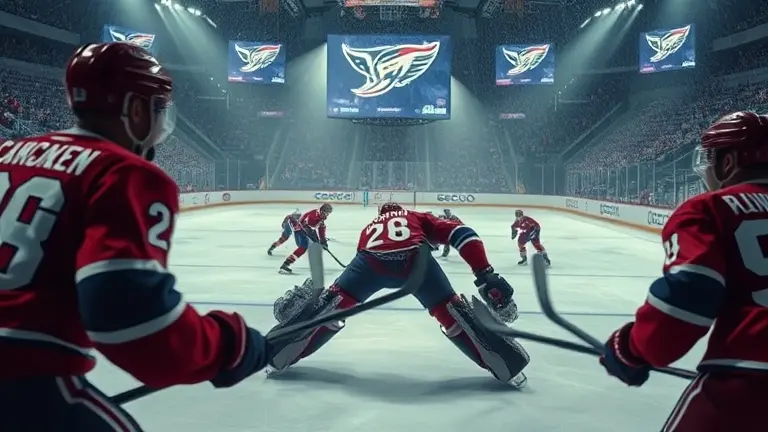
The 2026 NHL Eastern Conference Finals have ignited with a narrative-defining collision: the Montreal Canadiens versus the Carolina Hurricanes. While the betting world is currently preoccupied with odds and gambling margins, the true story of this series is far more complex. We are witnessing a clash of philosophies—the Hurricanes’ high-pressure, well-rested juggernaut against a Montreal squad that has built an entire postseason identity on creating doubt and defying expectations, bolstered by a clean sweep in their regular-season meetings. The tension is palpable, not just in the arena, but in the chess match occurring behind the benches.
To understand the trajectory of this series, we must move beyond the basic surface-level statistics. It is a battle of durability, mental fortitude, and tactical adaptation. As the Canadiens attempt to sustain their momentum against a Hurricanes team that has had the luxury of rest, fans and analysts alike are being forced to decode a level of tactical depth that is often lost in the noise of standard sports coverage. Deciphering these high-stakes patterns requires more than casual interest; it requires an intense level of focus and a clear, analytical mind capable of processing every shift as a pivotal moment in history.
The 2026 Eastern Conference Finals: Canadiens vs. Hurricanes Set the Stage

The collision between the Montreal Canadiens and the Carolina Hurricanes in the 2026 Eastern Conference Finals marks a fascinating intersection of contrasting postseason journeys. As the puck dropped for Game 1 on May 21, 2026, the atmosphere was thick with the weight of expectation. On one side stands Carolina, a juggernaut that enjoyed a lengthy period of rest since May 9, allowing them to refine their high-pressure, puck-possession style. On the other, Montreal arrives as a battle-tested unit, having navigated a grueling path through the bracket. This clash is defined less by the numbers on a betting slip and more by the psychological battle between a team rested and ready to execute versus an opponent fueled by the momentum of a hard-fought playoff run.
The Tactical Narrative: Momentum Versus Rest
The storyline of this series hinges on whether Montreal can replicate their regular-season dominance over the Hurricanes. Having swept Carolina 3-0 during the regular season, the Canadiens possess the unique blueprint required to frustrate a high-octane team. This tactical success has injected a sense of “doubt” into the Carolina locker room, forcing the Hurricanes to prove their rested roster can adjust to a team that has already dismantled their preferred flow of play. Key elements defining this initial narrative include:
- The Rest Factor: Carolina’s extended hiatus could either result in surgical precision or dangerous “rust” against a Montreal team currently playing at the peak of their conditioning.
- Tactical Familiarity: Montreal’s ability to neutralize Carolina’s speed has created a narrative of an underdog that knows exactly how to expose the Hurricanes’ defensive vulnerabilities.
- Pressure Management: The Hurricanes must reconcile their status as favorites with the reality of Montreal’s recent success, potentially shifting the mental edge toward the visitors.
As the series unfolds, the contrast in preparation will be the ultimate test of coaching adaptability. While the media remains fixated on betting spreads, the true story is found in the trenches: can Carolina’s elite structure overwhelm the grit and confidence of a Montreal squad that refuses to play by the statistical script?
Tactical Breakdown: High-Pressure Carolina vs. The Canadiens’ Disruptive Style

The 2026 NHL Eastern Conference Finals matchup between the Montreal Canadiens and the Carolina Hurricanes presents one of the most fascinating tactical clashes of the postseason. On one side, Carolina operates a sophisticated, high-volume forechecking system designed to suffocate opponents in the neutral zone and force turnovers deep in the offensive end. Their philosophy relies on constant motion and aggressive pinches from defensemen, creating a relentless cycle that wears down opposing blueliners. For Carolina, the challenge remains maintaining this pace against a Montreal squad that thrives on unpredictability and structural disruption.
Disruptive Play and Transitional Efficiency
Montreal’s success in the Canadiens vs Hurricanes series hinges on their ability to counter Carolina’s pressure with a disciplined defensive shell and lethal transition bursts. During their regular-season sweep of the Hurricanes, Montreal effectively utilized a “bend-but-don’t-break” defensive formation that crowded the slot and forced Carolina’s shooters to the perimeter. By baiting the Hurricanes into over-committing, Montreal turned defensive stops into quick-strike counter-attacks. Key tactical elements Montreal uses to maintain this advantage include:
- Gap Control: Keeping defensive pairings tight to limit the space Carolina’s playmakers have to maneuver through the neutral zone.
- Transition Speed: Utilizing high-end skating ability to exploit the gaps left by Carolina’s aggressive, pinching defensemen.
- Systemic Doubt: Forcing Carolina to abandon their aggressive posture, thereby stripping the Hurricanes of their identity and forcing them into a slower, half-court game.
Ultimately, the series will be decided by whether Carolina can adjust their schematic approach to avoid the transition traps that fueled Montreal’s success. While the Hurricanes enter the series as the statistical favorite, the Canadiens possess the unique tactical versatility to dismantle structured systems. If Montreal can consistently break the initial forecheck, the narrative of this series could shift rapidly away from the Hurricanes’ expected dominance toward a gritty, upset-minded path for the Canadiens.
The Rest vs. Rust Factor: Analyzing the Playoff Path
The 2026 Eastern Conference Finals matchup between the Canadiens vs. Hurricanes presents a classic sports dilemma: the advantage of physical recovery versus the benefits of sustained competitive rhythm. The Carolina Hurricanes enter this series following a significant layoff, having not played a competitive game since May 9. This period of dormancy allows for the healing of minor injuries and refined tactical planning, yet it carries the inherent risk of “rust”—a potential loss of timing, intensity, and game-speed conditioning that often takes teams time to recover during high-stakes postseason play.
In stark contrast, the Montreal Canadiens arrive at this stage battle-tested, having navigated a more demanding and truncated path to reach the Conference Finals. This sustained intensity has kept the Canadiens in a “playoff mindset,” where defensive structures and special teams are likely sharpened by recent, high-pressure environments. While fatigue is a legitimate concern for Montreal, the psychological momentum of their current form—bolstered by a 3-0 regular-season sweep against Carolina—suggests that rhythm may outweigh the benefits of an extended break.
Tactical Implications of the Layoff
Coaching staffs for both clubs must navigate these physical discrepancies with calculated adjustments:
- Hurricanes’ Strategy: Carolina’s primary challenge is simulating game speed during practice. Their coaching staff likely focused on high-intensity, small-area drills to keep the roster conditioned for the fast-paced, high-pressure system that characterizes their style.
- Canadiens’ Strategy: For Montreal, the focus shifts toward recovery and workload management. By optimizing recovery protocols between game days, they aim to preserve the “battle-tested” chemistry that has defined their postseason run without succumbing to cumulative exhaustion.
The interplay between these two distinct preparation paths will likely dictate the outcome of Game 1. While historical data often favors the well-rested team in long series, the Canadiens vs. Hurricanes narrative highlights that in the modern NHL, the ability to maintain composure under consistent fire is an asset that cannot be replicated on the practice ice.
Building a Legacy: The 2026 Playoff Narratives

The 2026 Eastern Conference Finals between the Canadiens vs Hurricanes represents far more than a statistical battle; it is a clash of two distinct philosophies forged through vastly different postseason paths. For the Carolina Hurricanes, this series is the culmination of a high-pressure, elite-tier construction designed for sustained dominance. Having benefited from a lengthy layoff since May 9, the Hurricanes enter the arena with a refreshed roster, yet they face the psychological challenge of maintaining rhythm against an opponent that is operating at a peak “battle-tested” cadence. This contrast defines the human element of the series: can a team stay sharp without live-game intensity, or will the momentum of a hot club overwhelm their structural advantages?
Defining Moments and Leadership
The narrative tension is anchored by the resilience shown by key players on both benches. The Montreal Canadiens have utilized a “doubt-defying” mentality throughout these playoffs, turning the perceived underdog status into a cohesive team identity. Their journey to the ECF has been defined by grit and the ability to exploit defensive lapses, a trait they perfected during their regular-season sweep of Carolina.
Key themes influencing this series include:
- The Rest vs. Rust Debate: Whether Carolina’s extended recovery period provides a physical edge or if it leaves them vulnerable to Montreal’s aggressive, high-tempo forecheck.
- Character Under Pressure: How veteran leaders on both sides manage the emotional volatility inherent in a conference final, where every shift can dictate the trajectory of a legacy.
- Tactical Adaptation: The evolution of the Canadiens’ system under extreme duress, proving they are capable of neutralizing Carolina’s high-pressure playing style regardless of the analytical favorability.
Ultimately, these players are competing for more than just a spot in the Stanley Cup Final; they are cementing their professional legacies. For the Canadiens, this run is about validating their collective chemistry against elite talent, while for the Hurricanes, it is about proving that their superior regular-season efficiency translates to championship-level composure when the stakes are at their highest.
Elevate Your Analytical Edge on the Ice
As the Montreal Canadiens and Carolina Hurricanes trade tactical blows in this 2026 Eastern Conference Finals showdown, the difference between a championship run and an early exit lies in the details. While the betting markets obsess over point spreads, the true story is written in the coaching adjustments, the neutral-zone transitions, and the relentless mental endurance required to maintain focus throughout a high-stakes series.
Just as the Canadiens must channel unwavering mental discipline to neutralize a fresh Hurricanes roster, truly grasping the intricacies of this chess match requires a sharp, unclouded mind. To keep up with the complex patterns of elite playoff hockey, you need more than just stats; you need cognitive clarity. This is where The Brain Song becomes your essential companion. By acting as a mental warm-up, it helps you strip away the noise of the game, allowing you to process deep strategies and historical context without falling victim to the dreaded mid-series brain fog.
Don’t just watch the game—master the narrative. By integrating this 12-minute focus routine into your pre-game ritual, you ensure that you are as mentally prepared for the puck drop as the athletes on the ice. Elevate your analytical perspective and see the game with total clarity.
 Unlock your full analytical potential: Start your 12-minute daily focus routine before the next game puck drop.Sharpen My Analytical Focus Today!