

Jim Cramer’s recent declarations regarding a tectonic shift in the 2026 market landscape have sent ripples through the retail investing community. With his blunt warnings that today’s environment is “more punishing than 1999,” Cramer is aggressively steering investors away from traditional software rallies, labeling them as transient short-covering traps, and pushing instead for a deep rotation into the semiconductor and AI infrastructure sectors.
But is this rotation backed by hard data, or is it another case of high-level thematic speculation? In this analytical deep-dive, we move past the headlines to perform a rigorous sanity check on Cramer’s latest tech calls. By comparing his sector rotation strategy against objective technical breadth data, we will determine if his recommendations are a blueprint for success or a cognitive minefield that could lead retail investors into a trap of their own making.
Jim Cramer’s 2026 Market Forecast: The Shift from Software to Infrastructure
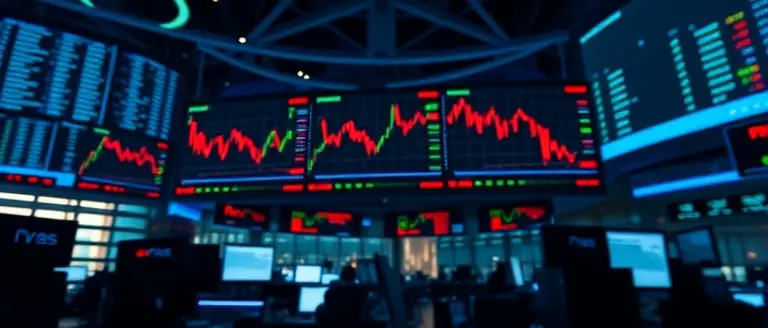
As of May 2026, Jim Cramer’s 2026 market forecast has shifted focus toward a structural realignment of the technology sector. During recent episodes of Mad Money, Cramer has argued that the era of software dominance is rapidly waning, replaced by a new market cycle defined by AI infrastructure and semiconductor stocks. According to Cramer, these hardware-centric companies now serve as the essential foundation of the modern digital economy, making them the primary drivers for long-term growth as the market moves away from the traditional, high-multiple software model.
Navigating a “More Punishing” Environment
Cramer has issued a stark warning to investors, characterizing the current financial climate as “more punishing than 1999.” This comparison underscores the heightened volatility and the unforgiving nature of the 2026 trading landscape. Unlike the speculative fervor of the late 90s, Cramer suggests that today’s market is particularly dangerous for those betting on legacy tech models. Key concerns driving his recent commentary include:
- Software Rally Skepticism: Cramer warns that recent upward movements in software valuations are largely driven by short-covering rather than fundamental business improvements or sustained earnings growth.
- The Rotation Thesis: He advocates for a strategic rotation into physical hardware and chip manufacturing, which he views as having more tangible utility in the current AI-heavy environment.
- Selective Caution: Even with high-growth names like ARM, Cramer has maintained a tempered approach, advising retail investors to avoid chasing premarket jumps that may lack structural, long-term support.
By prioritizing infrastructure over abstract software services, Cramer is pushing for a defensive yet growth-oriented stance. Investors looking to align with his tech sector rotation 2026 strategy should remain wary of the distinction between genuine fundamental strength and the temporary, technical rallies that Cramer identifies as the primary trap for retail capital in this volatile market cycle.
Data-Driven Reality Check: Semiconductors vs. Software Performance

Evaluating the Market Rotation Narrative
As the Jim Cramer 2026 market forecast gains traction, investors must look beyond the television commentary to evaluate the actual performance of the tech sector rotation 2026. Cramer’s aggressive stance favoring semiconductor and AI infrastructure over traditional software suggests a fundamental shift in market leadership. To determine if this strategy holds water, we compared the year-to-date trajectory of hardware-focused indices against broader software benchmarks. Evidence suggests that while semiconductors currently command higher valuation premiums, their earnings growth trajectory is significantly more sensitive to supply chain volatility and capital expenditure cycles than the subscription-based, recurring revenue models typical of the software sector.
Metrics of Performance and Volatility
When conducting a Cramer software rally analysis, one must scrutinize the divergence in P/E ratios and earnings growth. Current market data reveals a clear dichotomy:
- Valuation Compression: While software stocks have seen recent rallies, these are frequently characterized as short-covering maneuvers rather than fundamental expansions, consistent with Cramer’s warnings.
- Earnings Momentum: Semiconductor entities remain the primary beneficiaries of high-intensity AI infrastructure spending, which has bolstered their EPS growth figures compared to the stagnant performance seen in many enterprise software applications.
- Volatility Profiles: Investors should note that the “punishing” nature of the market mentioned by Cramer is reflected in the beta coefficients of semiconductor stocks, which currently trade at a higher volatility threshold than their software counterparts.
While Cramer argues for a “new era” dominated by hardware, the reality for retail investors is that this rotation necessitates a higher tolerance for drawdown. The data indicates that while semiconductor leadership is supported by capital inflow, the software sector remains a critical defensive anchor. Investors should remain wary of adopting a binary approach; instead, they should weigh the tangible earnings growth of hardware firms against the historical stability of mature software assets before reallocating their portfolios.
Analyzing the 2026 Tech Sector Rotation: Is Software Really a Trap?

Recent market commentary from Jim Cramer has sparked significant debate regarding the viability of the software sector in the current fiscal year. As part of a broader Jim Cramer 2026 market forecast, the host of Mad Money has positioned semiconductors as the “new era” leaders, suggesting that the current tech sector rotation 2026 favors capital-intensive hardware and AI infrastructure over traditional Software-as-a-Service (SaaS) models. Cramer’s assertion that the market is “more punishing than 1999” serves as a warning to retail investors that recent software rallies may be driven by technical short-covering rather than long-term fundamental expansion. However, a rigorous Cramer software rally analysis requires a look at whether this dismissal of software is premature or if it reflects a genuine shift in economic utility.
Fundamental Divergence: AI Infrastructure vs. SaaS
To determine if software is truly a trap, investors must distinguish between cyclical volatility and structural decline. While semiconductors currently benefit from explosive demand for AI compute, enterprise software companies remain the primary beneficiaries of the “application layer” of the artificial intelligence boom.
Consider the following points when evaluating this sector rotation:
- Infrastructure Dominance: Semiconductors are currently capturing the bulk of CAPEX spending, which historically precedes a massive surge in software productivity tools.
- Valuation Compression: Many enterprise software firms are currently trading at discounted multiples, potentially offering long-term value that Cramer’s short-term focus might overlook.
- Short-Covering Risks: Evidence suggests that some recent software gains were indeed prompted by institutional short-covering, validating Cramer’s caution regarding price-to-earnings sustainability in the immediate term.
Ultimately, while the shift toward hardware is rooted in current earnings data, labeling software as a “trap” may ignore the cyclical nature of tech investments. Investors should approach this rotation with a balanced perspective, recognizing that while the semiconductor sector is the clear leader today, the underlying demand for software efficiency remains a permanent feature of the modern enterprise economy.
Navigating Volatility: How to Approach Cramer’s Predictive Accuracy
In the current 2026 market environment, retail investors often find themselves caught in the crossfire of rapid sector rotations. Jim Cramer’s recent assertions regarding a fundamental shift from software to semiconductor dominance have triggered significant debate. While his influence on retail sentiment remains undeniable, relying on high-level market commentary as a singular source of truth is a recipe for portfolio risk. When assessing Jim Cramer’s 2026 market forecast, investors must distinguish between thematic narratives and actionable entry or exit signals. The “punishing” nature of this cycle suggests that impulsive moves—driven by the fear of missing out on a touted trend—often lead to poor performance, especially when software rallies appear tethered to short-covering rather than long-term value.
Strategies for Objective Market Analysis
To mitigate the risks associated with market volatility, investors should treat commentary as one data point in a comprehensive risk-management framework. Adopting a systematic approach ensures that you are not blindly following the herd. Consider these strategies to evaluate sector-specific claims:
- Correlation Tracking: Utilize technical breadth data to verify if sector rotations, such as the move toward AI infrastructure, are supported by broad market participation or if they are concentrated in a handful of overextended stocks.
- Fundamental Sanity Checks: Before acting on a Cramer software rally analysis, independently review earnings revisions and revenue growth sustainability. If sentiment contradicts the balance sheet, prioritize the financial data.
- Diversification Protocols: Never allow a single analyst’s thematic recommendation to dictate your entire tech sector allocation. Maintain strict stop-loss orders and position sizing to protect against the heightened volatility Cramer describes.
Ultimately, high-profile media coverage often amplifies market noise. By integrating technical indicators and fundamental analysis into your decision-making, you can better navigate the tech sector rotation 2026 without succumbing to the emotional swings often seen in retail trading circles. Approach every analyst recommendation with professional skepticism, ensuring your portfolio strategy remains rooted in your own risk tolerance rather than reactive headlines.
Sharpening Your Edge in a Punishing Market
Navigating the current rotation from software to semiconductor dominance is a mental marathon, not a sprint. As Jim Cramer rightly highlights, this market environment is punishing, and the primary risk for retail investors isn’t just picking the wrong stock—it’s succumbing to the cognitive fatigue that clouds judgment during high-frequency volatility. When your mental bandwidth is exhausted by endless earnings updates and sector-rotation headlines, your ability to execute objective, data-driven decisions plummets.
In such a high-stakes environment, your brain requires the same optimization as your portfolio. This is where The Brain Song becomes an essential piece of cognitive infrastructure. By clearing the mental fog that accumulates during these intense market cycles, you gain the clarity needed to cut through the noise, objectively analyze the semiconductor-versus-software trade, and maintain the composure that distinguishes successful traders from those caught in the emotional crossfire.
Think of your cognitive function as your ultimate competitive advantage. By integrating this neuroscience-based routine, you ensure your analytical capability remains sharp, allowing you to process complex technical breadth data with speed and precision. Don’t let mental exhaustion be the reason your strategy fails when the stakes are at their highest.
 Optimize your trading clarity and sharpen your investment focus with the 12-minute daily routine that is helping traders stay ahead of the curve.Yes, I Want This Now!