
As we navigate the Q1 2026 earnings season, the US restaurant industry has reached a pivotal inflection point. The era of aggressive, expansion-at-all-costs growth has been abruptly sidelined by a harsh reality: margin pressure driven by persistent operational inflation and volatile commodity costs, particularly in the beef sector. While giants like Arcos Dorados demonstrate that scale can provide a buffer, the broader US Retail/Restaurant Index reveals a disparate landscape, forcing a fundamental shift from reckless expansion toward an obsessive focus on profitability and cost-mitigation.
For franchise owners and operations managers, the disconnect between rising menu prices and softening consumer demand has created a ‘survival of the fittest’ climate. Success in this fiscal environment no longer comes from broad, high-level strategies, but from the granular optimization of supply chains, labor, and resource management. To thrive in the current 2026 landscape, operators must move beyond guesswork and embrace the high-precision methodologies that define the most efficient, resilient enterprises in the market.
The Q1 2026 Shift: Navigating Profitability Amidst Market Volatility

The restaurant chain sector is currently navigating a period of profound structural adjustment. As of the Q1 2026 earnings season, the industry has hit a critical juncture where the long-standing strategy of aggressive, debt-fueled expansion has been decisively replaced by a rigorous focus on operational efficiency and bottom-line stability. According to the latest data from the US Retail/Restaurant Index, which tracks 188 major entities, the industry is witnessing significant performance divergence. While global powerhouses like Arcos Dorados have managed to leverage scale to post strong earnings, the broader sector is struggling under the weight of sustained macroeconomic headwinds.
Key Drivers of Market Volatility
Financial analysts monitoring the sector point to a consistent narrowing of operating margins, with an average dip of 58 basis points year-on-year. This contraction is fueled by three primary factors:
- Commodity Volatility: The persistent escalation in beef and supply chain costs has severely hampered the ability of many chains to maintain historical profit levels without significant menu price hikes.
- Operational Inflation: Rising labor costs and high-interest financing continue to exert pressure on both regional operators and national conglomerates.
- The Value Pivot: As consumer demand shows sensitivity to inflationary menu pricing, major brands are being forced to aggressively pivot toward value-focused menus to protect market share, creating a “margin trap” where volume gains are offset by reduced per-ticket revenue.
The current climate demands a pivot toward cost-mitigation strategies. For franchise owners, the disconnect between rising input costs and stagnant consumer discretionary spending necessitates a shift toward lean operations. Evidence suggests that those organizations prioritizing technology for automated inventory management and labor optimization are better positioned to weather this volatility compared to competitors relying on traditional, high-overhead models. As we move deeper into 2026, the industry’s ability to balance these economic pressures against the need for a seamless customer experience will determine which chains continue to scale and which will be forced to consolidate.
Commodity Headwinds: The Anatomy of Rising Costs
The Q1 2026 earnings season has laid bare a difficult reality for every restaurant chain operating in the United States: the era of easy growth is being replaced by a period of aggressive margin defense. Data from the S&P Global Retail/Restaurant Index indicates a persistent 58 basis point year-on-year contraction in margins, a trend largely driven by volatile commodity markets and sticky operational inflation. At the center of this financial strain is the unprecedented surge in beef costs, which continues to challenge the profitability of quick-service and fast-casual models reliant on protein-heavy menus. As commodity prices fluctuate, the disconnect between rising wholesale inputs and the consumer’s willingness to absorb menu price hikes has created a precarious environment for franchise owners.
Operational Pressures and Procurement Shifts
To mitigate the erosion of net margins, operators are shifting from standard purchasing models to more complex, data-driven procurement strategies. When inputs like beef and secondary agricultural commodities spike, relying on traditional spot-buying is no longer viable. Instead, market leaders are increasingly employing:
- Fixed-price hedging: Locking in long-term contracts for core commodities to insulate against short-term market shocks.
- Menu Engineering: Replacing high-cost proteins with secondary, lower-cost, or plant-forward alternatives to maintain value-meal integrity.
- Supply Chain Localization: Reducing logistical overhead by diversifying regional supplier bases to offset global shipping inflation.
Evidence suggests that the most resilient chains are those that have successfully automated their inventory management systems, allowing for real-time visibility into cost-per-plate metrics. By tightening operational control and pivoting away from aggressive expansion toward cost-mitigation, firms are attempting to stabilize the bottom line in an era where labor inflation remains stubbornly high. Ultimately, the ability to balance consumer demand for value with the harsh reality of rising operational inputs will determine the winners of the 2026 fiscal year.
The Value-Pivot: Strategic Menu Engineering for Margin Protection
As of Q1 2026, the restaurant chain landscape is undergoing a systemic shift in menu architecture. Faced with a persistent 58 bps year-on-year contraction in industry margins, operators are moving away from broad-spectrum expansion toward rigorous value-engineering. This strategy prioritizes the “value-pivot,” where menus are redesigned to anchor price-conscious consumer demand against the volatile backdrop of rising commodity costs, particularly in the beef sector. By recalibrating product mixes, chains aim to preserve traffic volume while insulating the bottom line from the inflationary pressures identified in the latest S&P Global and Seeking Alpha industry scorecards.
Tactics for Margin Preservation
Successful value-engineering in the current fiscal climate relies on three core operational pillars designed to protect unit-level profitability:
- SKU Rationalization: Reducing menu complexity by eliminating low-velocity, high-waste items to streamline procurement and lower storage costs.
- Strategic Substitution: Implementing “smart-sourcing” for secondary ingredients, replacing premium inputs with high-quality alternatives that maintain perceived value without the associated procurement premium.
- Tiered Pricing Architectures: Utilizing dynamic menu design to lead customers toward high-contribution-margin items while maintaining an accessible entry-level price point, effectively balancing consumer price sensitivity with the need to cover operational inflation.
The disconnect between rising menu prices and a pullback in consumer discretionary spending has forced leadership teams to transition from simple price hikes to a more surgical approach. Instead of broad-based increases, top-tier firms are utilizing automated inventory management systems to identify items with high price elasticity. By shifting promotional spend toward profitable, high-frequency “hook” items, chains are effectively shielding their core margins. This disciplined approach to menu engineering is proving to be a critical competitive advantage for franchises looking to navigate the remainder of the 2026 fiscal year with stability and operational efficiency.
Operational Intelligence: Cost-Mitigation Frameworks for Franchisees
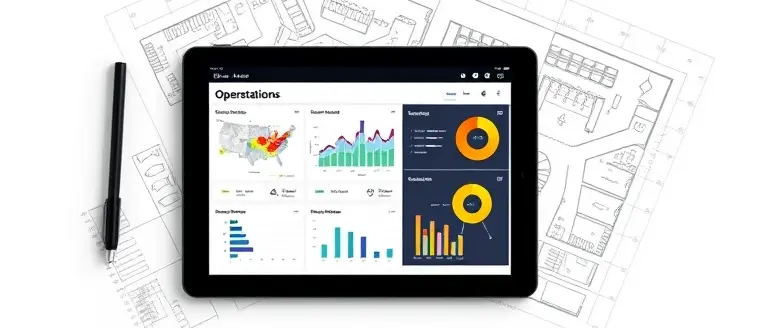
As the US restaurant chain landscape faces a 58 basis point year-on-year margin contraction, franchise owners must move beyond simple menu price adjustments. The current macroeconomic climate, characterized by volatile commodity costs—particularly in beef—and persistent operational inflation, demands a transition toward rigorous operational intelligence. To preserve profitability, operators are increasingly adopting tech-forward frameworks that treat cost-mitigation as a continuous cycle rather than a reactive measure. By leveraging integrated data ecosystems, franchisees can stabilize their bottom lines despite the broader market trend of slower growth and muted consumer sentiment.
Precision Strategies for Margin Stabilization
Effective cost control in 2026 relies on three primary pillars of operational optimization:
- AI-Assisted Demand Forecasting: Modern restaurant management platforms now utilize predictive analytics to align procurement schedules with local consumption patterns. By anticipating demand spikes before they occur, operators can reduce excess inventory carrying costs and minimize spoilage—a critical factor given current food inflation rates.
- Labor Scheduling Optimization: With labor costs remaining a significant headwind, automated scheduling tools now integrate with sales forecasts to ensure staffing levels remain lean without sacrificing service quality. This data-driven approach helps mitigate the “overstaffing penalty” that often drags down quarterly earnings for mid-sized operators.
- Waste Reduction Protocols: Implementing granular, digitized tracking for inventory prep and kitchen waste is no longer optional. Real-time monitoring allows for the immediate identification of process inefficiencies, allowing managers to pivot operations swiftly to align with the value-focused menu strategies currently favored by global giants like Arcos Dorados.
Ultimately, the disconnect between rising menu prices and consumer demand creates a narrow window for error. Franchisees who treat operational efficiency as a core competency will be better positioned to navigate the ongoing shift from aggressive expansion to sustainable profitability. By standardizing these cost-mitigation frameworks, operators can achieve the resilience required to withstand the pressures reflected in recent Q1 2026 sector performance data.
Mastering the Blueprint for Operational Resilience
The core takeaway from the 2026 fiscal climate is undeniable: efficiency is no longer optional; it is your primary competitive advantage. As margin contraction continues to challenge even the most established brands, success rests on your ability to eliminate operational waste and stop relying on trial-and-error management. Just as a master builder relies on a precise, pre-tested blueprint rather than intuition to avoid costly structural failure, the most successful restaurant operators are now turning to rigid, data-backed systems to safeguard their bottom line.
This is where Ted’s Woodworking becomes an essential, albeit unexpected, ally in your business transformation. While it serves as a master library of 16,000+ construction plans, it stands as the ultimate metaphor for the ‘blueprint-driven success’ required in modern franchising. By adopting this precision-first approach to resource management, you eliminate the trial-and-error waste that currently hemorrhages profit from your balance sheet. It provides the exact structural mindset needed to replace vague operational goals with foolproof, tested strategies for every facet of your business.
You have the data; now you need the architecture to act on it. Abandon the guesswork and join the ranks of operators who treat their business with the same meticulous precision required for a high-end build. Stop losing ground to inflation and start engineering your recovery today.
 Adopt the precision-first approach: Explore the comprehensive library of tested plans and start optimizing your operations today.Transform My Operations Now!