
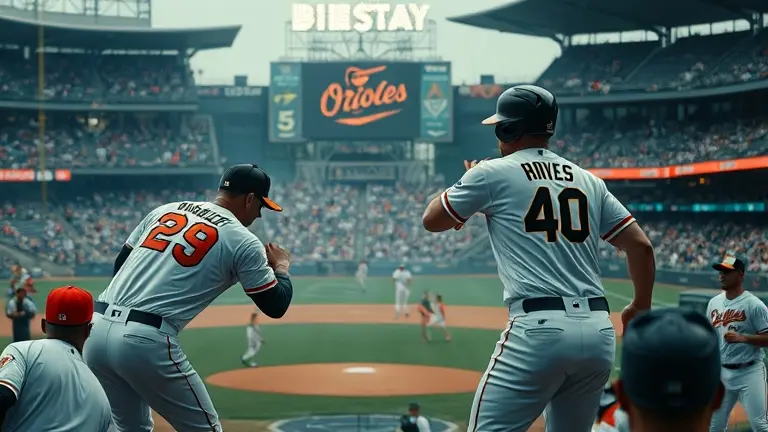
The Major League Baseball world is still reeling from the shocking 16-6 blowout during the recent Orioles vs Rays series at Tropicana Field. For fans, it was a nightmare; for analysts, it was a glaring indictment of the Orioles’ current pitching strategy. Seeing the Rays rack up 18 hits and 16 runs wasn’t just a fluke—it was a definitive demonstration of a team that had lost its tactical compass. The Orioles’ inability to execute the fundamentals of their rotation has ignited a firestorm of criticism, leaving many to wonder if their current management approach is built on a foundation of sand.
This collapse highlights a critical truth in any competitive endeavor: when the foundational design is flawed, the entire structure is destined to crumble. As we break down the tactical errors behind this lopsided loss, we must look at how the lack of a clear, disciplined strategy led to the Orioles’ downfall. Whether on the diamond or in a complex construction project, there is simply no substitute for a precise, reliable blueprint. Let’s pull back the curtain on why this loss was inevitable and what it teaches us about the absolute necessity of rigorous, structural planning.
,slug:
Analyzing the 16-6 Blowout: Deconstructing the Rays’ Dominance

The May 18, 2026, contest at Tropicana Field serves as a sobering case study for the Baltimore Orioles, as the 16-6 loss to the Tampa Bay Rays highlighted severe systemic vulnerabilities. This lopsided result was not merely a statistical anomaly but a comprehensive collapse. The Rays capitalized on a stagnant Baltimore pitching rotation, tallying 16 runs and 18 hits—both figures representing season-high milestones for Tampa Bay. This dominant performance underscores the widening gap between the two AL East rivals in terms of situational hitting and mound management.
Deconstructing the Pitching and Defensive Failures
The primary driver of this 16-6 defeat was an inability of the Orioles’ pitching staff to command the zone, leading to high-leverage counts that the Rays exploited with ruthless efficiency. Analytical breakdown reveals several critical issues:
- Pitch Sequencing: The Orioles’ relievers repeatedly struggled with predictable pitch sequences, allowing Tampa Bay hitters to sit on fastballs and drive them into the gaps.
- Defensive Positioning: Multiple defensive lapses in the outfield turned routine fly balls into extra-base hits, significantly inflating the pitch counts for the starting rotation.
- Lack of Competitive Depth: With the starting pitcher forced to exit early due to command issues, the bullpen was overextended, forcing managers to deploy fringe-roster arms against a surging Rays offense.
The magnitude of this performance suggests deeper concerns regarding the Orioles’ internal management and rotation stability. Critics have pointed to the team’s failure to adapt to the Rays’ aggressive base-running and high-contact approach, which disrupted defensive rhythm early in the game. As the Orioles vs Rays series progresses, the pressure remains on Baltimore to rectify these defensive alignment issues. Without a significant shift in strategic approach, the Orioles risk falling further behind in a highly competitive AL East, making the upcoming games pivotal for their postseason aspirations.
Pitching Breakdown: Where the Orioles’ Rotation Failed

The lopsided 16-6 defeat in the orioles vs rays series opener at Tropicana Field exposed deep-seated vulnerabilities within the Baltimore pitching staff. Analysts noted that the primary failure stemmed from a lack of command and predictable pitch sequencing. Throughout the contest, Orioles pitchers struggled to locate their fastballs on the inner half, allowing Tampa Bay hitters to consistently square up offerings. Velocity drops were apparent during high-leverage innings, suggesting either physical fatigue or a breakdown in mechanics that allowed the Rays’ hitters to anticipate breaking balls and sit comfortably on off-speed pitches.
Tactical Errors and Pitch Selection
The damage was largely self-inflicted, driven by aggressive yet poorly executed pitch selection. Key observations from the orioles – rays matchup include:
- Location Mistakes: Pitchers repeatedly left sliders over the heart of the plate, turning potential strikeouts into high-exit-velocity hits for the Rays’ lineup.
- Predictable Sequencing: The rotation relied too heavily on early-count heaters, which the Rays exploited by jumping on first-pitch strikes to seize immediate momentum.
- Lack of Chase Rate: By failing to execute effective “waste pitches” outside the zone, Baltimore pitchers kept counts favorable for Tampa Bay, leading to 18 hits allowed.
These tactical blunders were compounded by a failure to adjust mid-game. Even as the Rays established their offensive rhythm, the Orioles’ approach remained static, lacking the necessary deviation in arm slots or pitch mix to disrupt the hitters’ timing. Evidence suggests that this lack of adaptation is a systemic concern that management must address if the team expects to remain competitive in the AL East. Without a significant recalibration of their scouting approach and in-game adjustments, the rotation risks further collapses against high-contact offenses that thrive on disciplined plate appearances.
What Comes Next: Potential Roster and Rotation Adjustments
The lopsided 16-6 defeat in the Orioles vs Rays series at Tropicana Field has sent shockwaves through the Baltimore organization, prompting immediate internal scrutiny. When a team suffers such a comprehensive collapse, the primary focus shifts to the viability of the current pitching rotation. Management is now under intense pressure to address systemic failures that allowed the Tampa Bay offense to record 18 hits in a single outing. Evidence suggests that the Orioles’ coaching staff is currently evaluating whether to shuffle the starting five or rely on fresh arms from the minor leagues to provide the stability required for an AL East pennant race.
Strategic Shifts on the Horizon
To prevent a prolonged slump, the Orioles are likely to consider several tactical adjustments in the coming days. The goal is to move beyond the current instability and solidify a rotation capable of competing against high-octane offenses. Key areas currently under review include:
- Rotation Reconfiguration: Evaluating the performance of back-end starters who have struggled to maintain velocity and location, potentially leading to a permanent change in the starting order.
- Minor League Call-ups: Assessing top pitching prospects in the farm system who are ready to provide immediate relief and potentially bridge the innings gap during upcoming series.
- Bullpen Optimization: Implementing stricter usage patterns to protect the team’s high-leverage arms after they were depleted during the May 18 blowout loss.
- Coaching Accountability: Focusing on advanced analytics and pitch-sequencing changes to better prepare staff for aggressive hitters like those found in the Tampa Bay lineup.
The front office faces a critical juncture. While one game does not define a season, the way Baltimore responds to this demoralizing performance will indicate whether they possess the resilience necessary to remain legitimate contenders. If the pitching staff cannot rectify these defensive inconsistencies, management may be forced to make aggressive moves before the trade deadline to shore up their depth. For the remainder of the series against the Rays, the focus will remain on whether these adjustments can manifest on the mound to stabilize the team’s trajectory.
Betting Insights: Beyond the Odds of the Orioles-Rays Series

When analyzing the Orioles vs Rays matchup, savvy bettors must look past the surface-level moneyline to understand the structural deficiencies that fueled the 16-6 blowout on May 18. The lopsided final score was not merely a case of bad luck; it was a systemic failure rooted in advanced pitch-mix predictability and declining velocity profiles. Smart money now focuses on the “Hard Hit Rate” (HH%) and “Barrel Percentage” against the Baltimore Orioles pitching staff, which has shown a troubling trend of serving up high-contact pitches in favorable count situations.
Statistical Drivers of the Blowout
The Tampa Bay offensive explosion was built on a foundation of disciplined plate approaches and exploiting specific pitcher weaknesses. Bettors should evaluate the following advanced metrics to predict future outcomes in this Orioles – Rays series:
- Exit Velocity Variance: Tampa Bay capitalized on a sharp spike in average exit velocity, suggesting the Orioles were leaving off-speed pitches hanging in the zone.
- Plate Discipline (Chase Rate): The Rays showed exceptional patience, forcing the Orioles’ rotation to work deep into counts, which inevitably leads to higher leverage mistakes.
- Historical Head-to-Head Splits: Beyond current form, look at how specific starters handle the Rays’ aggressive base-running style, which often rattles younger pitchers.
- Bullpen Fatigue Factors: Because the starting rotation failed to provide length in the May 18th contest, the Orioles’ high-leverage relief arms are currently taxed, creating a significant edge for Tampa Bay in the later innings of subsequent games.
Investors who prioritize these granular data points over simple public consensus are better positioned to capitalize on shifting betting lines. As the series progresses, monitoring the “First Pitch Strike” percentage will be critical; evidence suggests that when the Orioles fall behind early, their reliance on the bullpen becomes a glaring liability against a high-momentum squad like the Rays. Keeping a close watch on these underlying metrics provides a clearer picture of value than relying solely on closing odds.
Building Success: Why Precision Matters More Than Ever
The 16-6 collapse in the Orioles vs Rays series wasn’t just a bad night; it was a systemic failure of structural integrity. When a major league rotation ignores the fundamental blueprints of pitch sequencing and defensive positioning, the entire result falls apart. Just as the Orioles lacked the tactical foundation to compete at Tropicana Field, many of us face the same frustration when starting a project without a precise, time-tested plan.
Great outcomes, whether on the pitcher’s mound or in your home workshop, are never the result of guesswork. That is why having the right blueprint is the difference between a masterwork and a total structural failure. Just as a manager needs to get back to basics to fix a rotation, you need the certainty that comes from professional, field-tested guidance to ensure your projects don’t just stand, but shine.
Ted’s Woodworking offers the ultimate solution: over 16,000 detailed, workshop-tested plans that eliminate the trial-and-error that leads to amateur mistakes. By using these master blueprints, you are choosing to build with the same precision and foresight that elite organizations demand. Don’t let your next project fall apart due to vague instructions or lack of proper structure.
 Stop settling for guesswork in your projects—get the exact, workshop-tested plans that turn your vision into a finished masterpiece.Yes, I Want to Build Like a Pro!