
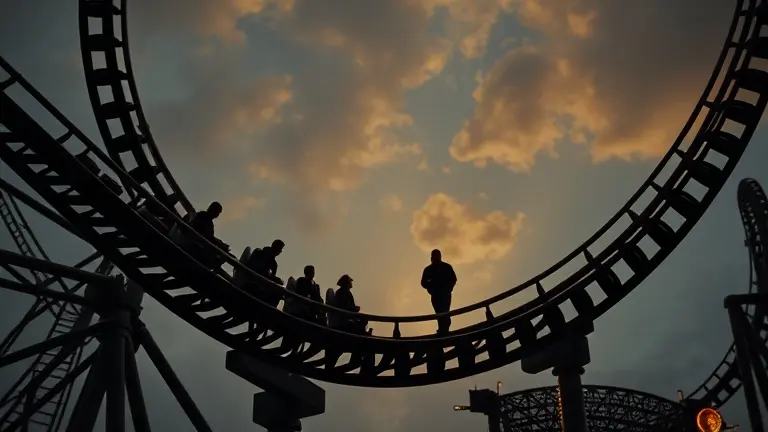
When video footage surfaced of guests performing a controlled evacuation down the lift hill of the Titan at Six Flags Over Texas, the viral reaction was one of visceral alarm. The 245-foot-tall coaster, stalled mid-air following a massive park-wide power outage caused by external construction crews, became the centerpiece of a social media firestorm. However, what appeared to be a terrifying emergency was, in reality, a textbook execution of standard amusement park safety protocols. These systems are designed specifically for such eventualities, ensuring that when external power is lost, passenger safety remains the absolute priority.
Understanding the engineering behind these rides helps clarify the difference between genuine danger and rigorous precautionary procedure. Roller coasters are built with fail-safe mechanisms, including gravity-driven blocks and automated braking systems that engage instantly upon loss of power. By looking past the dramatic headlines, we can see that the controlled descent from the Titan was not a failure of design, but a testament to the meticulous planning and structural integrity required to operate massive, high-speed attractions safely.
Understanding the Six Flags Over Texas Power Outage
On Saturday, May 16, 2026, a significant operational incident occurred at Six Flags Over Texas in Arlington, bringing widespread attention to park safety procedures. The event began when a park-wide power outage abruptly halted several attractions, most notably the park’s signature 245-foot-tall Titan roller coaster. While initial social media speculation suggested a catastrophic mechanical failure, official investigations clarified that the disruption was caused by an external construction crew working outside the park’s immediate control. This crew accidentally struck an underground power line, leading to an immediate loss of electricity that triggered the coaster’s fail-safe systems.
The Reality of Controlled Evacuations
When the power grid failure occurred, the Six Flags Titan safety systems engaged exactly as designed. Roller coasters are engineered with redundant braking systems that lock vehicles into place automatically the moment power is interrupted. Because the ride could not be restarted immediately, park staff initiated a controlled evacuation protocol. This process involves trained personnel guiding guests along the ride’s emergency catwalks to ground level.
Key facts regarding the incident include:
- Safety Protocols: The decision to manually evacuate is a standard procedure intended to minimize guest discomfort and ensure ride integrity, rather than an indication of structural failure.
- External Causation: The root cause was identified as an external utility strike, confirming that the park’s internal maintenance and ride engineering systems were not at fault for the power loss.
- Emergency Response: Park staff followed rigorous safety guidelines to escort guests down from the structure, a process that is practiced frequently by theme park operations teams across the United States.
While viral footage of the Six Flags Titan power outage sparked understandable concern on platforms like TikTok and X, the incident serves as a real-world example of amusement park fail-safes working in tandem with emergency response teams to keep guests secure during unforeseen infrastructure disruptions.
How Roller Coaster Emergency Evacuations Work: Reality vs. Perception
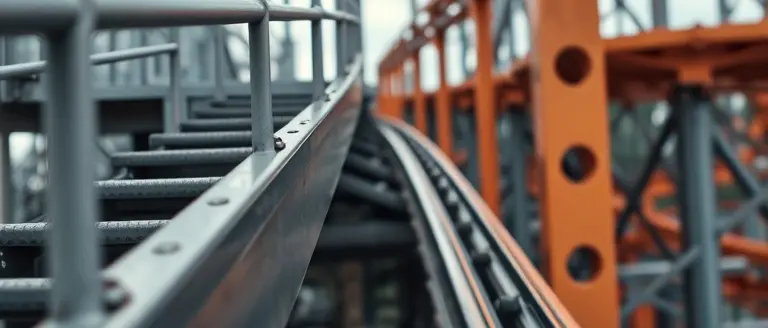
While viral videos of guests walking down the tracks of a roller coaster—such as the recent six flags titan power outage incident—may appear harrowing to the casual observer, they are in fact a testament to the rigorous fail-safe systems inherent in modern amusement park engineering. When a coaster loses power, it does not plummet or drift; rather, the ride’s brakes are designed to engage automatically in the absence of electricity. These magnetic or friction-based braking systems are fail-safe by design, meaning the default state is “locked,” ensuring the vehicle remains securely fastened to the track until technicians can intervene.
Standard Operating Procedures Over Emergency Crises
The perception of a “mid-air crisis” is vastly different from the technical reality of an emergency evacuation. Theme parks maintain strictly codified procedures for these scenarios, which are practiced regularly by ride operators and maintenance teams. When a power disruption occurs—such as the May 2026 incident caused by an external construction crew—staff immediately initiate a controlled evacuation protocol. Key aspects of this process include:
- Communication: Operators remain in constant contact with stranded guests to provide updates and reassurance.
- Safety Harnessing: If the evacuation path requires movement, guests are often secured with safety lanyards or guided by trained personnel along designated emergency catwalks.
- Structural Integrity: Evacuation paths (catwalks) are built with the same safety factors as the track itself, designed to support the weight of multiple guests and staff members simultaneously.
These procedures are not signs of a system failure, but rather the final layer of a redundant safety net. By demystifying the Six Flags evacuation process, it becomes clear that these events are highly controlled, precautionary measures. The focus is always on orderly disembarkation, ensuring guests reach the ground safely, turning a stressful waiting period into a standard, albeit unconventional, park experience.
Understanding External Factors: The Role of Infrastructure Integrity
The recent six flags titan power outage served as a significant point of discussion regarding the complexities of large-scale amusement park operations. While viral footage focused heavily on the visual intensity of guests exiting the 245-foot-tall coaster, technical investigations have clarified that the incident was not the result of a mechanical failure or poor internal maintenance. Instead, the disruption was caused by an external construction crew that accidentally struck an underground power line. This distinction is vital for understanding that the ride’s safety systems functioned exactly as designed, responding to a total loss of electrical power by bringing trains to a secure, controlled stop.
Managing subterranean infrastructure within a massive theme park environment presents unique logistical challenges. Large-scale parks like Six Flags Over Texas rely on a sophisticated, interconnected grid of electrical conduits that power everything from ride lift hills to facility lighting and food service areas. When off-site or third-party construction projects intersect with park utility maps, the vulnerability of these underground lines becomes an operational risk factor. Factors contributing to this infrastructure vulnerability include:
- Utility Congestion: Theme parks house dense networks of fiber optics, high-voltage lines, and water pipes that can be difficult to map with perfect precision during adjacent construction.
- Third-Party Oversight: External contractors, while often experienced, may encounter unexpected site conditions that lead to accidental strikes on critical infrastructure, bypassing the park’s internal safety measures.
- Fail-Safe Protocols: Because parks anticipate potential power disruptions, coasters like the Titan are engineered with gravity-fed or backup braking systems that engage automatically, ensuring that a power loss does not result in a free-fall scenario.
Ultimately, the event highlights that the six flags titan power outage was an infrastructure casualty rather than a structural or safety protocol failure. By shifting the focus from ride mechanical integrity to the broader reality of utility management, it becomes clear that the park’s emergency response—including the controlled evacuation of guests—was a testament to the efficacy of established safety procedures rather than a breakdown of theme park standards. Understanding this context helps to demystify why these incidents, though inconvenient, remain highly controlled and safe.
Safety by the Numbers: Assessing Amusement Park Risk in the US
While viral videos of the Six Flags Titan power outage may trigger alarm, statistical data from the National Safety Council and the International Association of Amusement Parks and Attractions (IAAPA) confirms that fixed-site amusement parks in the United States remain among the safest forms of recreational activity. Millions of guests visit these parks annually, completing billions of safe rides. Injuries requiring more than first aid are exceptionally rare, occurring at a rate of less than one per million attendee visits. When events like a park-wide power outage occur, they are typically the result of external infrastructure failures—such as the construction incident in Arlington—rather than mechanical defects inherent to the ride’s engineering.
The Engineering Behind Controlled Evacuations
The perceived “danger” of a mid-ride stop often stems from a misunderstanding of how modern coaster safety systems function. Roller coasters are designed with fail-safe mechanisms that immediately engage braking systems if power is interrupted or if sensors detect an anomaly. This is not a malfunction; it is the safety system working exactly as intended to prevent collisions and ensure vehicle control.
Key facts regarding emergency protocols include:
- Fail-Safe Redundancy: All major coasters feature multiple, independent braking systems that operate even when primary electricity is lost.
- Standardized Evacuation Procedures: Every ride undergoes rigorous, documented safety testing. Controlled evacuations, while inconvenient, are a planned and rehearsed part of comprehensive ride operation manuals.
- External Oversight: Amusement parks are subject to stringent state-level regulations and regular third-party inspections that prioritize passenger safety above all else.
Ultimately, a roller coaster evacuation—even one at significant height—is a highly controlled process performed by trained staff members. These professionals are equipped to guide guests along dedicated emergency walkways designed specifically for these situations. While social media narratives often frame these moments as high-stakes crises, the evidence indicates that these procedures are a testament to the robust, multi-layered safety culture that defines the modern amusement industry. Park operators prioritize the orderly, secure exit of guests over resuming operations, ensuring that the minor inconvenience of an unexpected stop never compromises the long-term safety record of the facility.
Precision Engineering: The Key to Certainty
The incident at Six Flags serves as a stark reminder that even the most complex mechanical systems rely on precision and redundancy. Just as the structural integrity of a massive roller coaster is anchored in rigorous engineering standards and proven safety protocols, the success of any ambitious project depends on moving away from guesswork and toward technical accuracy. When you have the right blueprints, you eliminate the uncertainty that fuels fear and instability, ensuring that every component functions exactly as it was designed to under any circumstances.
Whether you are managing the structural demands of a world-class theme park or tackling your own intricate DIY workshop projects, the principle remains identical: reliability is built on a foundation of professional-grade plans. We invite you to master the art of structural precision by utilizing the same level of rigorous planning that keeps massive coasters safe and operational. Our comprehensive collection of woodworking plans is designed to provide you with the technical clarity and exact specifications needed to guarantee professional results every time, removing the risk associated with trial and error.
By choosing the gold standard in construction documentation, you are choosing to replace potential failures with absolute technical certainty. Embrace the confidence that comes with following expertly drafted designs, ensuring that your next project is as robust and reliable as the engineering marvels that dominate our skyline.
 Discover how professionals master complex construction and structural integrity with the world’s most reliable collection of woodworking plans.Yes, I Want Access to These Plans Now!