
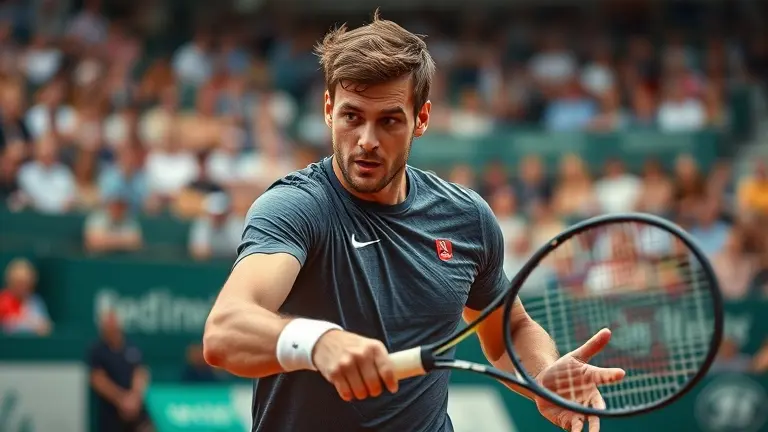
The clay courts of Hamburg are witnessing a transformation. As Ben Shelton, currently ranked a career-high World No. 6, navigated a grueling three-set battle against Marcos Giron, spectators weren’t just watching a match—they were witnessing the evolution of an elite strategist. His recent viral ‘sizzling sidespin’ wasn’t merely a flash of talent; it was a calculated tactical adjustment, proving that Shelton is rapidly shedding his reputation as a hard-court specialist to become a genuine threat on the European clay. As he prepares to face Daniel Altmaier, the tennis world is turning its gaze toward this momentum as a critical indicator for the upcoming French Open.
For fans and analysts alike, the question is no longer whether Shelton can compete on the dirt, but how far his newfound precision can carry him at Roland Garros. By dissecting his ability to outmaneuver underdogs and adapt his shot selection under immense pressure, we uncover a fascinating narrative of growth. This journey through Hamburg is more than a tournament report; it is a tactical breakdown of how one of the game’s brightest stars is fine-tuning his mental and physical arsenal for the ultimate test in Paris.
Hamburg Momentum: Shelton’s Hard-Fought Path to the Second Round

Ben Shelton, currently ranked World No. 6, arrived at the 2026 Hamburg Open with significant expectations, and his opening round performance proved exactly why he is considered a dark horse for the upcoming Roland Garros campaign. His grueling three-set victory over Marcos Giron was a masterclass in resilience, forcing the American to navigate the slower, unpredictable nature of the clay surface. While the match tested his physical conditioning, it also showcased his growing comfort with high-pressure defensive scenarios—a facet of his game that often goes overlooked in favor of his explosive serve.
Tactical Versatility on Clay
The highlight of the match—a viral “sizzling sidespin” shot—perfectly encapsulated the technical adjustments Shelton has made to thrive on European red dirt. By utilizing extreme angles and heavy topspin, Shelton has successfully transformed his high-octane hard-court style into a more measured, tactical approach.
Key takeaways from his Hamburg opener include:
- Defensive Depth: Shelton demonstrated a newfound patience, extending rallies against Giron rather than forcing low-percentage winners early in the exchange.
- Point Construction: The use of varied spin speeds has allowed him to dictate play from the baseline, even when he lacks the natural slide-and-recover rhythm found in long-time clay specialists.
- Mental Toughness: Securing a victory after a difficult three-set struggle provides the necessary psychological validation that he can grind out wins in non-ideal conditions.
As he looks toward his next match against Daniel Altmaier, the stakes could not be higher. This upcoming bout serves as a critical litmus test for his French Open preparations. Analysts are watching closely to see if Shelton can maintain this momentum; a win here would solidify his trajectory as a legitimate threat at the second Grand Slam of the year. For the 23-year-old, Hamburg is more than just a tournament—it is the final laboratory for refining his clay-court credentials before heading to Paris.
The ‘Sizzling Sidespin’: Tactical Evolution on Clay
Ben Shelton’s recent performance at the Hamburg Open has provided the most compelling evidence yet that the American is rapidly refining his game for the slow, unpredictable nature of red clay. Traditionally a surface where his explosive, flat-hitting hard-court style might falter, Shelton’s recent viral “sizzling sidespin” shot demonstrates a sophisticated tactical pivot. By integrating increased rotational velocity and higher net clearance, he is effectively neutralizing the heavy bounce of European clay courts. This shot selection, which forces opponents into uncomfortable lateral movements, suggests that Shelton is no longer just relying on his serve to win points; he is actively constructing them through superior geometry and spin manipulation.
Biomechanical Adjustments and Court Craft
Shelton’s transition to clay dominance is rooted in subtle but impactful technical adjustments that go beyond simple aggression. To excel on this surface, he has clearly prioritized:
- Verticality and Arc: By adding significant topspin to his forehand, he ensures the ball lands deeper in the court, preventing opponents like Marcos Giron from dictating play.
- Defensive Versatility: He is utilizing a more varied defensive sliding technique, allowing him to recover to the baseline faster after hitting wide, high-bouncing balls.
- Shot Selection: His tactical patience has increased; instead of chasing winners from neutral positions, he now employs the “sizzling sidespin” to create angles that open the court for decisive follow-up shots.
As World No. 6, Shelton’s ability to implement these biomechanical shifts under tournament pressure is a strong indicator of his trajectory ahead of the 2026 French Open. His capacity to adapt his aggressive baseline game into a more controlled, spin-heavy weapon set makes him a significant dark horse at Roland Garros. If he maintains this discipline against Daniel Altmaier, it will confirm that his evolution from a surface-specialist to an all-court threat is nearing completion.
Defensive Grittiness: A New Dimension to Shelton’s Game
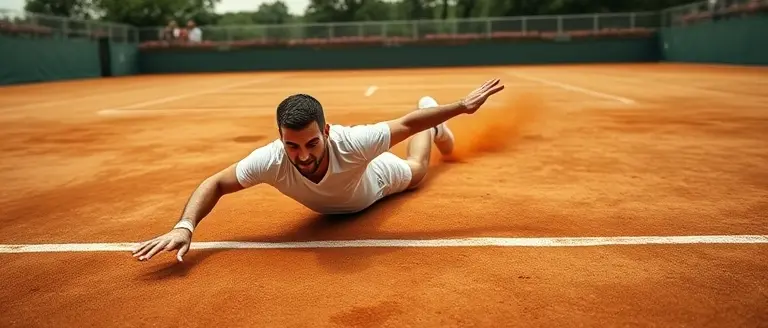
Historically, Ben Shelton has been characterized by his explosive, serve-heavy style of play, often aiming to shorten points to maximize his raw power. However, his recent performance at the Hamburg Open against Marcos Giron revealed a significant tactical evolution. Rather than relying solely on his serve, the World No. 6 showcased a newfound defensive maturity, successfully navigating high-pressure, three-set rallies that would have previously forced him into unforced errors. This shift in playstyle is critical as he prepares for the grueling conditions of the French Open, where the slower surface demands longer baseline exchanges and greater physical endurance.
Tactical Maturity on Clay
The “sizzling sidespin” shot that went viral during his opening match was not merely a highlight-reel moment; it served as evidence of his improved court craft. By integrating more variety into his shot selection, Shelton is effectively neutralizing the aggressive baseline pressure typically exerted by unseeded opponents. His ability to retrieve difficult balls and transition from a defensive position to a neutral or offensive state has become a cornerstone of his current form. Analysts observing his recent movement patterns highlight several key improvements:
- Shot Tolerance: Increased willingness to engage in 10+ shot rallies, prioritizing placement over immediate pace.
- Movement Efficiency: Better lateral coverage, allowing him to slide effectively on clay without sacrificing recovery time.
- Point Construction: smarter tactical usage of the court, utilizing angles to move opponents out of position rather than banking on service winners.
This newfound defensive grittiness suggests that Ben Shelton is transforming into a more complete, well-rounded threat. As he moves forward to face Daniel Altmaier, this balanced approach provides a sustainable blueprint for his success at Roland Garros. By combining his existing power with this emerging technical discipline, he is positioning himself as a formidable contender for the upcoming Grand Slam.
The Road to Roland Garros: Assessing Shelton’s French Open Prospects

As Ben Shelton climbs to a career-high ranking of World No. 6, his performance at the 2026 Hamburg Open serves as a critical barometer for his readiness ahead of the upcoming French Open. Traditionally, clay courts have challenged his aggressive, serve-heavy style, yet his recent three-set victory over Marcos Giron highlights a newfound tactical versatility. By integrating a “sizzling sidespin” that forces opponents into uncomfortable court positions, Shelton is proving that he can neutralize defensive baseliners who previously exploited his lack of clay-court experience. This evolution in his game suggests he is no longer just a hard-court specialist but a legitimate Grand Slam contender who can dictate play even on the slower red dirt of Roland Garros.
Tactical Adjustments for Paris
The shift in Shelton’s playstyle is evident in his increased patience during baseline rallies, a necessity for any deep run in Paris. His ability to navigate high-pressure moments—demonstrated by his comeback against Giron—provides the mental toughness required for five-set endurance. As he prepares to face Daniel Altmaier, analysts are looking for consistent improvements in his movement and defensive shot selection. Key factors that establish Shelton as a ‘dark horse’ threat at the 2026 French Open include:
- Improved Defensive Perimeter: He is successfully extending rallies, forcing unseeded opponents to produce extra winners, which reduces his unforced error count.
- Technical Versatility: The adoption of diverse spin profiles, specifically his viral sidespin, allows him to disrupt the rhythm of clay-court veterans.
- Momentum Management: His current form in Hamburg indicates he is hitting his peak at the optimal time, entering Roland Garros with match-hardened confidence rather than entering cold.
While he still faces stiff competition from the established elite, evidence suggests that Shelton’s tactical trajectory aligns with the demands of the French Open surface. If he continues to balance his explosive power with this refined, analytical approach to point construction, he possesses the technical foundation to make a significant impact in Paris.
Master Your Own Mental Court
Ben Shelton’s tactical shift on clay is a testament to the power of elite cognitive processing. The ability to visualize that viral sidespin, execute it under the pressure of a three-set grind, and adjust to an opponent’s weaknesses in real-time requires a level of mental acuity that separates the good from the great. Just as Shelton’s success hinges on his elite processing speed, your ability to master complex strategies—whether in your career or personal pursuits—relies entirely on the clarity of your focus.
This is where your journey mirrors the professional athlete’s path. To achieve that same precision, you must train your brain to filter out the noise and lock into the task at hand. The Brain Song acts as a mental performance accelerator, utilizing neuroscience-based auditory stimulation to sharpen your cognitive precision and expand your learning capacity. By integrating this tool into your daily routine, you are doing more than just listening; you are systematically upgrading your mental state to handle high-stakes challenges with the same calm intensity observed on the pro tour.
Don’t let your potential remain untapped while you watch others break through their barriers. Experience the mental clarity needed to master your own game and navigate life’s challenges with professional-grade focus. It is time to elevate your cognitive game to championship levels.
 Unlock your own peak performance potential—experience the neuroscience of focus with The Brain Song today.Yes, I Want This Now!