
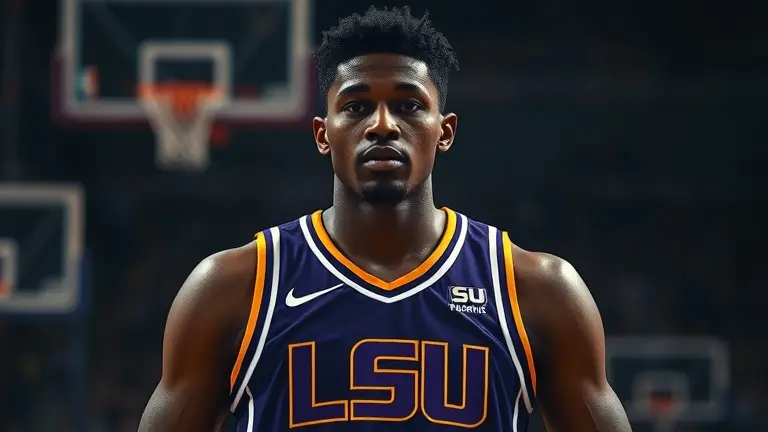
The collegiate basketball landscape is currently caught in the crosshairs of a profound regulatory crisis, epitomized by the high-profile commitment of RJ Luis Jr. to LSU. After testing the waters in the professional leagues, including stints with the Utah Jazz and Boston Celtics, Luis Jr.’s attempt to return to the NCAA has ignited a firestorm of controversy. His case is not merely about talent—it is a flashpoint for a brewing conflict between the outdated definitions of amateurism and the realities of a modern professional pipeline. As fans and analysts look on, the question of whether a player can pivot back to college eligibility after entering the professional ecosystem remains largely unanswered, leaving many to wonder if we are witnessing the complete breakdown of the current NCAA model.
This transition for RJ Luis Jr. is more than a roster change; it is a test case that could force a total rewrite of collegiate sports law. By examining the ‘eligibility pipeline,’ we can see that this isn’t just about one athlete’s path to Baton Rouge, but about the future of how professional players interact with the NCAA. Navigating these murky legal waters requires a discerning eye, as we look past the headlines to understand the strategic, and often high-risk, decisions being made in university boardrooms. To stay ahead of the game, one must be prepared to decipher the complex interplay of litigation, regulation, and elite sports strategy.
The RJ Luis Jr. Saga: A New Frontier in Collegiate Eligibility
The commitment of RJ Luis Jr. to LSU represents a seismic shift in the landscape of college basketball, effectively turning the traditional amateur model on its head. After a standout tenure at St. John’s, Luis Jr. pursued professional opportunities, spending time within the Utah Jazz and Boston Celtics G-League organizations following his 2025 NBA Draft cycle. His attempt to pivot back to the NCAA ranks in 2026 has ignited a firestorm of controversy, primarily because the regulatory framework governing such transitions remains dangerously opaque. This move is no longer just a transfer; it is a direct challenge to the definition of a “student-athlete” in an era where the lines between professional and collegiate play are increasingly blurred.
The Professional-to-NCAA Pipeline
The mechanics of this transition highlight a growing trend where players utilize the NCAA as a fallback or developmental platform after failing to stick in the professional leagues. To understand the gravity of the situation, consider the following timeline and regulatory hurdles:
- Professional Exposure: Having officially entered professional organizations, Luis Jr. triggered specific clauses regarding agent representation and contractual status that typically terminate collegiate eligibility.
- The “Loophole” Debate: Legal analysts are questioning whether the current NCAA bylaws possess the teeth to block a player who has already accepted professional compensation from returning to the hardwood in a college jersey.
- LSU’s Aggressive Stance: Under coach Will Wade, LSU’s recruitment of Luis Jr. is being viewed by industry experts as a strategic test of the NCAA’s enforcement capabilities, effectively “pushing the envelope” regarding the amateurism mandate.
As the sports world watches, this saga has become the central catalyst for a national debate. The controversy centers on whether the NCAA will grant a waiver based on evolving employment laws or if this will result in a landmark legal battle over the rights of athletes to maintain career fluidity. Regardless of the outcome, the RJ Luis Jr. case has exposed significant vulnerabilities in how college sports handle professional re-entry, signaling a definitive change in how rosters will be constructed in the years to come.
The Eligibility Threshold: Decoding NCAA Professionalism Rules
The commitment of RJ Luis Jr. to LSU has thrust the intricate, often opaque, world of NCAA eligibility into the national spotlight. At the heart of the debate is the transition between professional and amateur status in the current NIL-driven landscape. Historically, the NCAA maintained a rigid “amateurism” model; however, the rise of the G-League and professional contracts has blurred these lines. For a player like Luis Jr., who participated in professional organizations like the Utah Jazz and Boston Celtics, the primary hurdle is proving that his professional tenure does not permanently disqualify him from the college basketball circuit under existing bylaws.
The Professional Designation vs. Amateur Status
The regulatory challenge hinges on whether a player was classified as an “employee” of a professional entity versus a high-level “prospect.” Under current NCAA frameworks, the following distinctions remain critical:
- Contractual Obligations: Signing a standard player contract typically triggers an automatic loss of collegiate eligibility.
- Financial Compensation: Accepting payment beyond permissible educational expenses or authorized NIL agreements often creates a barrier to returning to the NCAA.
- Agent Representation: Utilizing professional representation for anything beyond draft evaluation can result in permanent loss of status, though recent legal shifts have offered limited pathways for reinstatement.
The “loophole” currently being tested involves whether an undrafted player who participated in professional team activities—without necessarily executing a long-term binding contract that prohibits future amateur participation—can petition for a return. LSU’s strategy, directed by coach Will Wade, appears to rely on arguing that these professional experiences were exploratory or developmental rather than full-time professional employment. This high-stakes legal interpretation is effectively challenging the NCAA to define the exact boundaries of the “professionalism” threshold in an era where the lines between the NBA and NCAA have never been more porous. As litigation continues to reshape collegiate sports, the outcome for Luis Jr. will likely serve as a landmark precedent for the future of the NCAA-NBA pipeline.
What Precedent Says: The History of Pro-to-College Transitions
Historically, the NCAA maintained an ironclad stance against any athlete who accepted compensation or signed with professional agents, often resulting in permanent ineligibility. However, the landscape of college basketball has shifted dramatically. In the past, athletes like Bruce Pearl (in non-playing capacities) or players who dabbled in minor league baseball faced immediate termination of amateur status. The modern era, however, is defined by the “amateurism” erosion caused by Name, Image, and Likeness (NIL) policies and the integration of professional G-League pathways. RJ Luis Jr. now sits at the center of this tension, testing whether the NCAA will continue to distinguish between a “professional career” and a “professional tryout.”
The Evolving Regulatory Landscape
The primary hurdle for Luis Jr. is that his time in the NBA and G-League organizations—specifically with the Utah Jazz and Boston Celtics—technically aligns him with professional entities. Unlike previous decades, where the distinction was binary, today’s rules are obscured by:
- The G-League Professional Path: A grey zone where athletes receive stipends that often mirror legal NCAA compensation.
- Agent Representation: Recent legal settlements have blurred the lines regarding how athletes interact with professional scouts while maintaining amateur eligibility.
- NCAA Eligibility Committees: These bodies are currently scrutinizing whether a player’s professional stint was a “career” or merely an “exploratory period.”
Evidence suggests the NCAA is currently tightening its grip to avoid a flood of older, experienced players returning to dominate the collegiate level. The recruitment by Will Wade at LSU is perceived as a “brazen” test of these boundaries. If the NCAA permits Luis Jr. to compete, it effectively acknowledges that the NCAA-NBA loophole is wide open, potentially transforming collegiate sports into a secondary professional league for veterans rather than a developmental ground for traditional high school recruits. The legal precedent set here will likely determine whether the NCAA remains an amateur institution or fully transitions into a professionalized collegiate hybrid.
LSU’s Strategy and the Future of Collegiate Athletics

The recruitment of RJ Luis Jr. by LSU represents a seismic shift in how elite programs approach roster construction in the modern era of college basketball. By aggressively pursuing a player with professional experience in the NBA and G-League organizations, head coach Will Wade is moving beyond traditional recruiting methods. This “calculated risk” strategy hinges on the belief that an athlete of Luis Jr.’s caliber provides an immediate, transformative impact on the court that justifies potential regulatory friction. For LSU, the primary objective is securing a championship-level talent, even if that talent arrives with significant eligibility baggage that could trigger prolonged NCAA investigations or sanctions.
The Calculus of High-Stakes Recruiting
Programs operating at the highest levels of the sport are increasingly prioritizing immediate performance over long-term compliance stability. By pushing the “eligibility envelope,” schools like LSU are essentially testing the limits of amateurism in a post-NIL landscape. This approach is driven by several key factors:
- Elite Talent Acquisition: Professionalized players bring advanced skill sets that high school recruits often lack.
- Market Differentiation: Being the program that successfully navigates the “NCAA-NBA loophole” creates a blueprint for future talent acquisition.
- Competitive Urgency: Coaches are under immense pressure to win immediately, making the prospect of a high-ceiling veteran more attractive than the risks associated with NCAA compliance hurdles.
This move signals a fundamental change in the power dynamics between the NCAA and professional leagues. As athletes increasingly view the NCAA as a stopover or a fallback rather than a purely developmental pipeline, the distinction between a “student-athlete” and a professional contractor continues to blur. If LSU successfully integrates Luis Jr. onto their roster, it will likely trigger a wave of similar maneuvers across the country, fundamentally altering the future of collegiate athletics by making professionalized rosters the new standard for perennial contenders.
Navigating the Future of Collegiate Eligibility
The situation surrounding RJ Luis Jr. is more than a mere roster move; it is a bellwether for the future of collegiate athletics. As professional pathways and amateur status continue to blur, institutions like LSU are operating in a legal gray area, pushing the boundaries of what is possible in the NCAA. Understanding these complex shifts requires more than just sports fandom—it demands a high level of mental agility and the capacity to synthesize evolving regulatory frameworks.
Just as athletes and institutions require absolute clarity to navigate the shifting regulatory landscape of the NCAA, fans need their own cognitive edge to keep up with the fast-paced, complex evolution of collegiate athletics. In an era where every roster decision could trigger a lawsuit or a change in policy, your ability to focus and process information is your greatest asset. Whether you are tracking the intricacies of the NCAA-NBA eligibility pipeline or analyzing historical precedents, cognitive fatigue is the enemy of understanding.
This is where The Brain Song becomes essential. By integrating this tool into your routine, you can sharpen your focus and maintain the mental clarity required to decode the toughest sports developments. It provides the cognitive precision necessary to parse convoluted industry news, ensuring you never miss a beat in this high-stakes environment. Elevate your perspective and master the narrative by optimizing your own processing capacity.
 Achieve the mental clarity required to decode the toughest sports developments; integrate The Brain Song into your daily routine to sharpen your focus.Transform My Mental Performance Today