
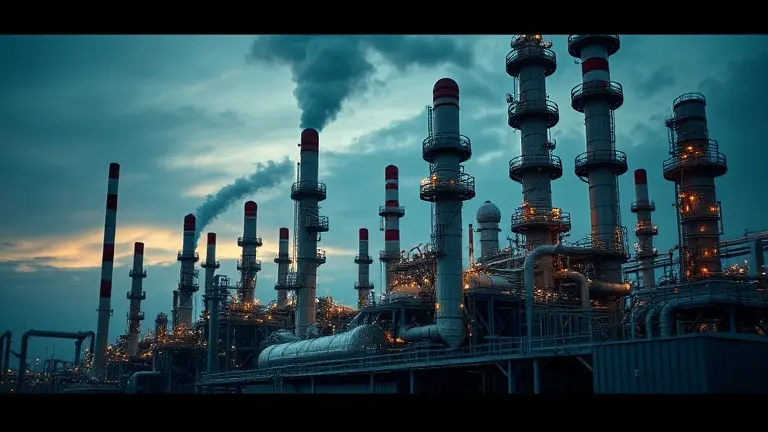
As global energy markets face unprecedented instability, the Strait of Hormuz has become the world’s most precarious choke point. When tankers are delayed or diverted, the immediate ripple effect isn’t just felt by energy traders; it manifests directly at your local gas station. While many observers focus on the raw crude supply, the real crisis lies within the oil refinery infrastructure itself. We are currently witnessing a period where global refinery capacity is struggling to keep pace with demand, leading to a structural deficit that the International Energy Agency projects will persist well into late 2026.
Understanding this crisis requires looking beyond the headlines to the mechanics of fuel production. It is a common misconception that having enough crude oil translates into affordable gasoline; in reality, your local price is determined by the precision, throughput, and operational integrity of the refineries that transform that crude into usable fuel. When these complex systems face bottlenecks, the entire downstream supply chain suffers. In this deep dive, we peel back the layers of this energy infrastructure to help you understand why your wallet feels the sting of these global logistical failures.
The Strait of Hormuz Crisis: Why Global Refinery Throughput is Stalling

As of May 2026, the global energy landscape is facing a precarious supply-demand imbalance, primarily triggered by escalating instability in the Strait of Hormuz. This vital maritime chokepoint serves as a critical artery for global crude oil transport; when transit through this region is compromised, the downstream effects are immediate and severe. According to the latest International Energy Agency (IEA) Oil Market Report, the global market is currently grappling with a staggering 3.9 million barrel-per-day (b/d) supply drop. This deficit has fundamentally altered the operational efficiency of the typical oil refinery, creating a bottleneck that prevents crude from being processed into usable fuels like gasoline, diesel, and jet fuel.
The core of the current crisis is the distinction between crude availability and operational capacity. While geopolitical tensions have tightened the supply of raw crude, the secondary issue is the inability of facilities to maintain consistent refinery throughput. When supply chains are disrupted, refineries often lack the feedstock flexibility to switch crude grades, leading to suboptimal output levels. This creates a feedback loop of price volatility:
- Inventory Depletion: As supply drops, global stocks are hitting record lows, leaving little buffer for downstream market participants.
- Refining Bottlenecks: Many facilities are operating at strained utilization rates, unable to compensate for the sudden loss of steady-state crude imports.
- Consumer Impact: With Brent crude hovering around $112.93/bbl, the inability of refineries to bridge the supply gap directly translates to higher pump prices for the average consumer.
Evidence suggests that until the stability of transit through the Strait of Hormuz is restored, the refining sector will remain under immense pressure. The market is not merely reacting to a lack of oil in the ground, but rather to the failure of the midstream and downstream infrastructure to process existing resources into the finished products that fuel the global economy. This creates a persistent inflationary environment for energy prices, as the logistical cost of securing and refining crude continues to climb amid persistent global uncertainty.
Crude vs. Capacity: Understanding the Refinery Bottleneck
A pervasive misconception in the global energy market is that an abundance of raw crude oil automatically translates to lower prices at the pump. In reality, the price you pay for gasoline is dictated less by the availability of crude and more by the operational efficiency of an oil refinery. Crude oil is essentially a raw commodity that cannot be used in a standard combustion engine until it undergoes complex processing. When geopolitical instability, such as the current crisis in the Strait of Hormuz, constricts supply, the global market doesn’t just lose oil—it loses the essential inputs required to maintain high-volume refinery throughput.
The Conversion Gap
Refining is a highly technical, infrastructure-heavy process. A refinery is not merely a storage facility; it is a specialized industrial plant designed to “crack” crude oil into usable products like gasoline, diesel, and jet fuel. Even if global markets were flooded with oil, prices would remain elevated if there is insufficient refinery capacity to convert that supply into final products. This is the primary driver of current market volatility. When an oil refinery faces technical bottlenecks or supply chain interruptions, the resulting shortage of refined distillates causes prices to spike regardless of how much oil remains in upstream storage.
Key factors that distinguish crude supply from refinery capacity include:
- Conversion Complexity: Not all refineries can process every grade of crude. Heavy, sour crude requires more advanced (and expensive) units than light, sweet crude.
- Infrastructure Lead Times: Building or upgrading an oil refinery takes years, making it impossible to quickly pivot in response to sudden supply drops, such as the 3.9 million b/d deficit reported by the IEA.
- Operational Constraints: Maintenance cycles, regional power issues, and technical failures create localized supply “islands” where refineries cannot keep up with local demand, driving up costs for consumers even when global crude prices stabilize.
Understanding this distinction is vital for investors and consumers alike. While the upstream sector deals with extraction, the downstream oil refinery sector is the actual gatekeeper of consumer fuel prices. As global stocks hit record lows, the bottleneck is rarely the lack of oil in the ground, but rather the finite ability of global infrastructure to turn that oil into the fuel that powers the modern economy.
Regional Disparities: Why Some Markets Suffer More Than Others
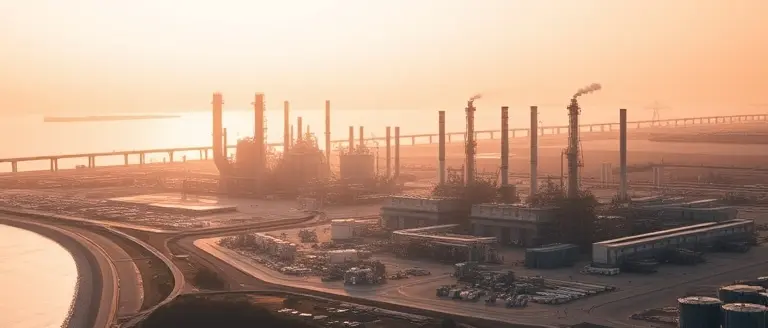
The current global energy crunch reveals a stark divide in how different nations experience fuel scarcity. While the Strait of Hormuz crisis acts as a universal threat to crude oil supply, the impact on an individual oil refinery varies significantly based on regional infrastructure, logistical connectivity, and technological age. In many Western markets, aging infrastructure presents a major bottleneck; these older facilities often lack the flexibility to process various grades of crude, making them highly susceptible to disruptions when specific supply chains are severed. Consequently, even if crude is available, the “nameplate capacity” of these legacy plants often exceeds their actual, operational throughput.
Conversely, emerging economies are seeing a different set of challenges and opportunities. The rapid commissioning of massive projects, such as the Dangote Refinery in Nigeria, represents a shift toward regional energy self-sufficiency. These modern facilities are designed for higher efficiency, yet they remain vulnerable to the localized economic pressures of fluctuating fuel prices. The disparity in suffering is largely driven by these factors:
- Geopolitical Proximity: Countries reliant on tanker routes passing through the Hormuz chokepoint face immediate, exponential price hikes compared to nations with diversified, land-based pipeline networks.
- Refinery Complexity: Facilities capable of processing “sour” or “heavy” crudes have a competitive advantage during supply shocks, as they are not tethered to the high-demand, light-sweet crude streams currently seeing the most acute shortages.
- Import Dependency: Regions lacking significant domestic refinery capacity are forced to import refined petroleum products, leaving them at the mercy of global arbitrage and record-low inventory levels in major storage hubs.
Ultimately, the ability of a region to mitigate price volatility depends on its downstream integration. Markets that have invested in localized, high-capacity refining are better insulated from the shipping lane disruptions currently threatening global markets, whereas those dependent on long-haul imports continue to bear the brunt of the IEA’s reported supply deficit.
Financial Outlook: Refinery Utilization and Stock Market Impacts

For investors monitoring the energy sector, the current global supply deficit—exacerbated by the Strait of Hormuz crisis—has shifted the focus from simple crude extraction to the operational health of the global oil refinery network. Market leaders such as BPCL and IOC are under intense scrutiny as analysts calculate how constrained throughput will impact corporate bottom lines through Q4 2026. While high Brent crude prices, currently hovering around $112.93/bbl, typically suggest high revenues, the reality for refiners is defined by refinery utilization rates. If a facility cannot maintain high utilization due to logistical bottlenecks or feedstock shortages, the company misses the opportunity to capitalize on the widening price gap between raw crude and finished petroleum products.
Key Metrics for Investor Analysis
To forecast the financial trajectory of integrated oil companies, traders are prioritizing specific operational indicators that reveal the strength of refinery margins:
- Crack Spreads: This is the most critical metric for investors, representing the theoretical difference between the price of crude oil and the refined products—such as gasoline and jet fuel—derived from it. A widening spread indicates healthy profitability for the oil refinery operator.
- Utilization Rate: This metric measures how much of a refinery’s total capacity is being used. In an undersupplied market, plants operating at 90% or higher capacity are “cash cows,” whereas those hampered by maintenance or feedstock supply issues face significant valuation risks.
- Inventory Levels: With stocks hitting record lows, investors are watching for “inventory turnover” velocity. Companies that can maintain consistent output despite geopolitical volatility are better positioned to sustain dividends and stock price stability compared to those reliant on unstable import pipelines.
Evidence suggests that the current supply-side contraction of 3.9 million b/d places an unprecedented premium on processing capacity. Investors should remain cautious; while refineries are the essential bridge in the energy supply chain, they are also the most vulnerable to the localized economic impacts of energy inflation, which may lead to government-mandated price caps that compress margins despite high international crude benchmarks.
Mastering Precision in an Unpredictable World
The current turbulence in the energy market underscores a fundamental truth: complex systems are only as reliable as the precision of their blueprints. Whether we are discussing the intricate mechanics of an oil refinery navigating a supply chain crisis or the structure of a personal project in your own garage, success depends entirely on having a clear, accurate, and foolproof guide. The chaos currently disrupting global energy markets is a stark reminder of what happens when infrastructure is pushed to its limits without the benefit of perfect planning.
You may not be able to control global refinery throughput or geopolitical tensions in the Strait of Hormuz, but you can achieve absolute certainty and mastery within your own domain. Just as the modern energy sector demands high-level technical clarity to avoid catastrophic failure, your creative and structural projects deserve the same rigor. By replacing guesswork with proven, professional-grade instructions, you reclaim the control that the unpredictable world currently lacks.
Ted’s Woodworking provides the ultimate infrastructure kit for those who value accuracy and results. By utilizing these 16,000 professional blueprints, you eliminate the trial-and-error frustration that leads to wasted time and costly mistakes, ensuring that every project you undertake is built with the precision of a master. It is time to step away from the ambiguity of broken systems and start building with the confidence that only perfect, detailed information can provide.
 Stop guessing with incomplete information; get the 16,000 professional blueprints you need to build with absolute certainty today.Build With Certainty Now!