
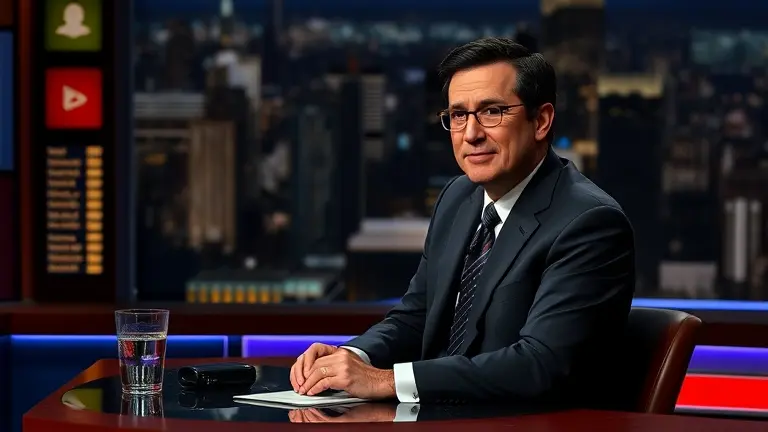
The Late Show with Stephen Colbert is officially signing off, leaving an indelible mark on the landscape of American television. As the final week approaches, featuring legendary guests like Jon Stewart, Steven Spielberg, and David Byrne, the airwaves are thick with nostalgia for the host who redefined political satire for the modern era. After 1,801 episodes, we aren’t just saying goodbye to a talk show; we are witnessing the conclusion of an 11-year intellectual odyssey that challenged our perspectives and forced us to reckon with the complexities of our culture.
While the buzz currently centers on the star-studded farewell lineup, the true legacy of Colbert’s tenure lies in his unparalleled ability to blend biting critique with genuine human curiosity. As we move into a post-Colbert era—with the late-night landscape shifting toward new formats—it is time to look back at how his unique brand of comedy kept us both informed and intellectually agile. Join us as we explore the cultural impact of his departure and reflect on the moments that proved television could be as sharp as it is entertaining.
,slug:
The End of an Era: Stephen Colbert’s Final Bow on CBS

After a transformative 11-season run that redefined the intersection of political satire and late-night television, The Late Show with Stephen Colbert is officially signing off. CBS has confirmed that the series will conclude its impressive 1,801-episode tenure on Thursday, May 21, 2026. This final week marks a significant cultural moment, as the network prepares to bid farewell to a host who became a staple of American discourse since taking the reins in 2015. While the show maintained high viewership, reports from major outlets indicate that shifting financial considerations at CBS necessitated a change in the network’s late-night programming strategy, leading to the decision to sunset the program.
A Star-Studded Departure
In keeping with the show’s legacy of high-profile conversation, the final episodes feature a legendary guest list designed to honor Colbert’s contribution to the medium. The lineup includes:
- Jon Stewart: A long-time collaborator and mentor whose influence is woven into the DNA of the program.
- Steven Spielberg: The iconic filmmaker appearing to reflect on the artistry of modern television.
- David Byrne: The visionary musician providing a celebratory atmosphere for the final send-off.
- Bruce Springsteen: Bringing his signature storytelling to cap off the show’s run.
As the series prepares to vacate its long-standing time slot, CBS has announced that Byron Allen’s “Comics Unleashed” is slated to take over the prestigious position. This transition signals a broader pivot in the late-night landscape, moving away from the traditional, host-led monologue format toward different models of syndication. For loyal fans of Colbert, the upcoming finale serves as both a retrospective of an impactful decade and a poignant acknowledgment that the traditional late-night talk show model is undergoing its most radical transformation in a generation.
A Star-Studded Farewell: Jon Stewart, Spielberg, and More

As the curtain prepares to fall on the final week of The Late Show with Stephen Colbert, the program has curated a guest lineup that serves as a testament to the host’s immense reach across the worlds of comedy, cinema, and music. Scheduled to conclude its 11-season run on May 21, 2026, the show is marking its exit with appearances from figures who have been pivotal in shaping the cultural discourse alongside Colbert.
Defining the Legacy Through Iconic Guests
The inclusion of Jon Stewart is particularly poignant, as it reunites the pair for a conversation that serves as a bookend to their decades-long professional relationship. Their collaborative history—which helped define the modern era of political satire—remains a cornerstone of the late-night television landscape. Beyond the comedic roots, the prestige of the final week is bolstered by the presence of legendary filmmaker Steven Spielberg, whose career trajectory often mirrors the cultural shifts that the show sought to document.
The lineup is rounded out by the eclectic brilliance of David Byrne and the anthemic influence of Bruce Springsteen, highlighting the program’s long-standing dedication to high-level artistic performance. This specific selection of guests underscores why the show’s legacy is so deeply entrenched in American pop culture:
- Jon Stewart: Represents the intellectual lineage of political comedy and the roots of the host’s rise.
- Steven Spielberg: Brings a cinematic gravitas, reflecting the show’s ambition to bridge high-brow commentary with mass entertainment.
- David Byrne & Bruce Springsteen: Embody the show’s commitment to innovative, high-caliber musical performances that often pushed boundaries in the traditional broadcast format.
By bringing these titans to the stage for the final 1,801st episode, the production team is ensuring that the transition into the post-Colbert era is framed by the very figures who helped define his unique style of interviewing and performance. This star-studded departure is not merely a celebration of the show, but a final, definitive statement on the intellectual and artistic breadth that has made the program a staple for over a decade.
Defining the Colbert Era: Top Moments and Comedic Impact

As The Late Show with Stephen Colbert approaches its final curtain call on May 21, 2026, the television landscape prepares to say goodbye to a host who masterfully navigated the transition from traditional broadcast to the digital age. Over 1,801 episodes, Colbert successfully evolved the late-night format, blending hard-hitting political satire with deeply human moments. His tenure was defined by a unique ability to extract profound vulnerability from guests, ranging from A-list icons like Steven Spielberg to visionary performers such as David Byrne. By moving beyond the scripted banter of his predecessors, he prioritized authentic engagement, ensuring his show remained a cultural touchstone during an era of significant political turbulence in the United States.
Iconic Contributions and Digital Evolution
The legacy of this 11-season run is anchored by segments that prioritized intellectual depth without sacrificing comedic timing. The “Colbert Questionert” remains a quintessential example, serving as a masterclass in stripping away celebrity artifice. Whether he was engaged in poignant conversation with Jon Stewart or spotlighting musical legends, his segments were engineered for the viral consumption patterns of the modern era. His impact can be summarized by several key pillars:
- Political Satire: Maintaining a sharp, unapologetic voice that challenged power structures while remaining accessible to a broad, national audience.
- The Power of Conversation: Transforming the interview segment from a promotional tool into a space for genuine connection, often capturing headlines for the depth of his guest interactions.
- Adapting the Format: Seamlessly integrating digital-first content, ensuring that his influence extended far beyond the traditional CBS broadcast time slot.
- Cultural Curation: Elevating a diverse array of musicians and creators, bringing avant-garde artists and industry titans alike into the American living room.
Ultimately, the departure of the show marks more than just a scheduling change; it reflects the conclusion of a decade-long experiment in how late-night television can evolve alongside its audience. By inviting long-time collaborator Jon Stewart back for the finale, Colbert honors the roots of his comedic trajectory while cementing his own, distinct legacy as a titan of late-night television.
The Future of Late Night in a Post-Colbert Landscape

The conclusion of The Late Show with Stephen Colbert after 11 seasons marks more than just the end of a television program; it signals a fundamental restructuring of the traditional broadcast network model. As CBS prepares to transition its primetime late-night slot to alternative programming like Byron Allen’s Comics Unleashed, the industry is grappling with the diminishing returns of the nightly talk show format. Colbert’s exit, influenced by significant financial considerations, highlights the growing difficulty of maintaining high-budget, appointment-based television in an era where audiences prioritize on-demand, algorithmic consumption.
The Shift Toward Digital Fragmentation
The departure of a powerhouse host who frequently welcomed industry titans like Steven Spielberg, David Byrne, and long-time collaborators like Jon Stewart underscores a shift in how celebrity access is mediated. Modern viewers increasingly engage with late-night comedy through fractured, viral clips on social media rather than the full hour-long linear broadcast. The ‘post-Colbert era’ reflects a broader transition where:
- Content Atomization: High-impact interviews are now designed for infinite scroll platforms, making the traditional network monologue less vital for pop-culture relevance.
- Economic Realignment: Networks are prioritizing cost-effective syndication and diverse content portfolios over the high production overhead required for a prestige late-night desk.
- Changing Consumption Habits: The migration of younger demographics to streaming and creator-led platforms has rendered the ‘late-night talk’ format increasingly legacy-bound.
As Colbert bows out, the television landscape faces a paradox: while his tenure defined a specific era of sharp political satire and high-concept cultural critique, the industry is moving toward shorter, more versatile content streams. The transition away from the iconic late-night desk is not merely a sign of changing tastes, but a proactive response to an evolving media ecosystem where the nightly broadcast no longer holds the singular cultural gravity it once commanded during the host’s 1,801-episode run.
Maintaining Mental Agility in a Post-Colbert World
As we prepare to bid farewell to the iconic desk of The Late Show, we aren’t just losing a program; we are losing a masterclass in curiosity. For over a decade, Stephen Colbert challenged us to think faster, laugh harder, and question the status quo. His departure marks the end of an era, but it serves as a powerful reminder of the importance of keeping our own minds as sharp, engaged, and inquisitive as the host we’ve spent 1,801 nights learning from.
Just as we reflect on the intellectual depth of segments like the ‘Colbert Questionert’ and his historic interviews with legends like Steven Spielberg and David Byrne, many viewers are searching for ways to sustain that same level of cognitive focus in their daily lives. It is time to treat your own mental clarity with the same respect Colbert brought to his craft. This is where The Brain Song becomes the natural next step in your personal growth journey.
Designed as a neuroscience-based auditory routine, The Brain Song is the perfect bridge for those who value intelligence and mental stamina. By integrating this 12-minute practice into your day, you are not just reminiscing about the golden age of satire—you are actively investing in the cognitive legacy of clarity, focus, and intellectual vigor that Colbert’s work inspired. Don’t let your mental sharpness fade with the final credits; take control of your focus today.
 Keep your mind sharp in the post-Colbert era; try the 12-minute audio routine that supports cognitive focus and brain health today.Boost My Cognitive Focus Now!