
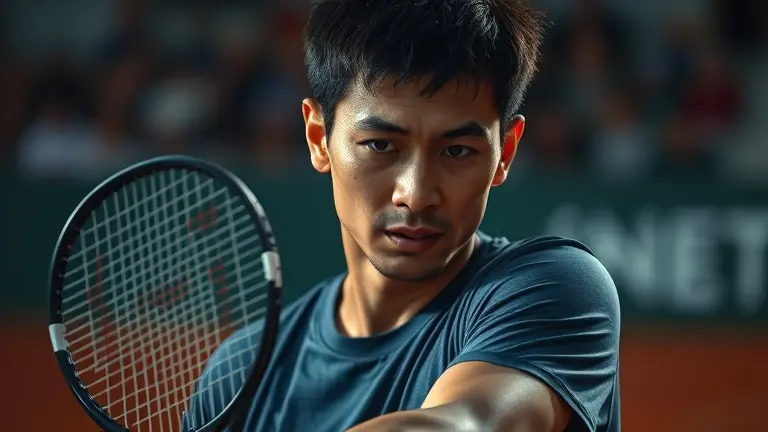
Rinky Hijikata is no longer just a rising star of the Australian circuit; he is a tactical force currently making waves at the Hamburg Open. As he faces off against Henri Squire on the grueling European clay, the sports world is once again reminded that Hijikata’s game is built on meticulous preparation and relentless adaptability. For tennis enthusiasts and bettors alike, tracking his journey through the qualifying rounds today, May 17, 2026, is about more than just checking a live score—it is about witnessing the maturation of a player who refuses to be pigeonholed by surface or style.
Beyond the serve-and-volley statistics and the tactical breakdowns of his clay-court movement, there is a burgeoning curiosity surrounding the man behind the racket. Fans are increasingly digging deeper, seeking to understand the balance between his professional grit and the personal support systems that keep him grounded. While the world analyzes his backhand, savvy observers know that the true secret to Hijikata’s professional consistency lies in the emotional depth and focus he maintains when the cameras are off and the tournament crowds have faded away.
Rinky Hijikata vs. Henri Squire: Hamburg Open Qualifying Preview

The qualifying rounds of the Hamburg Open present a critical juncture for Rinky Hijikata as he navigates the demanding transition to European clay courts. Facing off against Henri Squire, Hijikata must demonstrate the tactical adaptability required to thrive on a surface that historically favors high-spin, patient baseline play over the aggressive, hard-court-centric game that defined his early career. For Hijikata, securing a win today is not merely about progressing in the tournament bracket; it is a vital step in proving his ability to compete consistently against European specialists who are well-versed in the slower, sliding-heavy dynamics of the Hamburg surface.
Tactical Keys to the Matchup
The clash between Hijikata and Squire is expected to be a test of court coverage and service efficiency. While Hijikata often relies on his high-percentage first serve and opportunistic net approaches, the Hamburg clay will force him to extend rallies and contend with Squire’s ability to redirect pace from the baseline. Key factors to watch include:
- Baseline Tenacity: Hijikata’s ability to defend deep in the court will be tested by Squire’s heavy forehand, which often forces opponents into high-risk, unforced errors on dirt surfaces.
- Neutralizing the Serve: With the ball slowing upon contact with the clay, Hijikata must prioritize depth over raw power during his return games to avoid giving Squire the chance to dictate from the first ball.
- Mental Momentum: As a young professional looking to climb the rankings, Hijikata needs this victory to maintain his upward trajectory and build the necessary confidence for upcoming ATP-level clay events.
If Hijikata can successfully blend his aggressive instincts with the patience required for this surface, he stands a strong chance of controlling the tempo. Sports bettors and analysts are watching closely to see if his tactical preparation for the European swing yields immediate dividends, as a deep run in Hamburg could be the catalyst for his mid-season surge.
Tactical Analysis: Hijikata’s Adaptation to European Clay

The transition for Rinky Hijikata from his natural habitat—the fast-paced hard courts of the Australian summer—to the slower, more deliberate surface of European clay represents the most significant tactical evolution of his professional career. Historically, Hijikata has relied on an aggressive, first-strike tennis brand, utilizing a high-intensity serve and flat groundstrokes to shorten rallies. However, competing in events like the Hamburg Open requires a fundamental pivot toward patience and superior movement mechanics. On clay, the ball kicks higher and moves slower, necessitating a higher degree of topspin to keep the ball within the court and deeper penetration to force errors from opponents like Henri Squire.
Mastering Movement and Point Construction
To find success on this surface, Hijikata has focused heavily on his sliding mechanics and recovery. Unlike hard courts, where the surface provides immediate traction, clay rewards players who can initiate a controlled slide to reach wide balls while maintaining core stability. His coaching team has emphasized the following adjustments:
- Footwork Synchronization: Replacing the aggressive “step-in” approach with a more balanced, wider stance to handle the unpredictable surface friction.
- Tactical Patience: Transitioning from “end-the-point” mentalities to building patterns that leverage the heavy spin inherent in European red clay.
- Defensive Resilience: Utilizing the surface to extend points, forcing opponents to play that “extra ball” that often leads to unforced errors in tight qualifying matches.
While his hard-court instincts remain embedded in his game, Hijikata is showing signs of becoming a more versatile competitor. By tempering his aggression with strategic depth, he is proving that his baseline consistency can withstand the grind of the European circuit, even when his explosive power isn’t the primary weapon. This maturation is critical for his trajectory, as climbing the rankings demands the ability to win on slower surfaces where pure pace often meets a wall.
Head-to-Head and Betting Insights
The match-up between Rinky Hijikata and Henri Squire at the Hamburg Open qualifying rounds presents a compelling tactical clash for tennis analysts and sports bettors alike. As Hijikata continues his transition to European clay, his ability to balance his signature high-energy, aggressive baseline play with the patience required for slower surfaces remains the primary performance variable. Betting markets have focused heavily on this encounter, with sharp observers noting that Hijikata’s match-play dynamics are heavily reliant on his first-serve percentage and his capacity to neutralize opponents who utilize depth to push him behind the baseline.
Tactical Breakdown and Statistical Indicators
For those tracking the match for fantasy sports or wagering purposes, several key performance indicators (KPIs) dictate the likely flow of play. In this specific H2H, bettors are prioritizing the following metrics:
- Break Point Conversion Rates: Hijikata’s ability to force errors under pressure is his greatest asset. His effectiveness in converting break points against Squire will be the deciding factor in whether he can dictate the rhythm of the sets.
- Service Hold Percentage: Given the nuances of clay, maintaining a high service hold percentage is critical for Hijikata to avoid chasing the scoreline against an opponent who thrives on long, grueling rallies.
- Court Positioning: Evidence from recent outings suggests that Hijikata is increasingly comfortable stepping into the court to shorten points. If he remains pinned behind the baseline, his win probability decreases significantly against a counter-puncher.
While live-score data provides the “what,” seasoned analysts look at these granular metrics to understand the “how.” For Rinky Hijikata, success on the European clay circuit is a developmental marathon rather than a sprint. Fantasy participants should note that his high-intensity style often leads to variance in output, making him a player who requires careful monitoring of his movement efficiency during the opening games of the match.
Strategic Outlook: Hijikata’s Path Through the European Swing
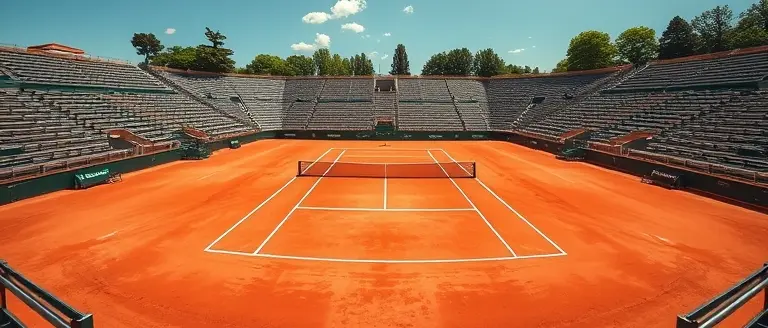
For Rinky Hijikata, the current European swing represents a critical phase in his professional development. While the Australian is often recognized for his success on quicker surfaces, his active participation in events like the Hamburg Open demonstrates a deliberate move to broaden his versatility. Competing in high-stakes qualifying rounds against opponents like Henri Squire is not merely about immediate rankings; it is a tactical investment in match fitness and court craft required to excel on the ATP tour’s more grueling clay-court circuits. By securing these qualifying spots, Hijikata gains invaluable exposure to the varied pace and movement demands that European red clay imposes, which is essential for his transition toward consistent top-tier results.
Scaling the ATP Rankings
The path forward for Hijikata relies heavily on his ability to convert these mid-season qualifying opportunities into main-draw berths. Every victory on the dirt provides more than just prize money; it offers the crucial ranking points necessary to bypass the volatility of qualifying draws later in the season. His strategic approach appears focused on three primary growth pillars:
- Surface Adaptation: Refining his baseline defensive skills and sliding mechanics to stay competitive in extended rallies.
- Consistency under Pressure: Utilizing match scenarios against resilient opponents to bolster his composure during critical service games.
- Tournament Readiness: Building the physical stamina required for deep tournament runs, which directly correlates to his readiness for upcoming Grand Slam schedules.
As Hijikata continues to grind through the European calendar, his performance in secondary tour events serves as a clear indicator of his trajectory. Analysts tracking his progress suggest that this phase of his career is defined by “earning his stripes.” By focusing on high-percentage tennis and smarter shot selection on slower surfaces, he is effectively narrowing the gap between challenger-level success and sustained relevance on the professional tour, setting the stage for a stronger second half of the year.
Mastering the Game Beyond the Court
Rinky Hijikata’s rise in professional tennis is a testament to the power of focus, precision, and the grit required to transition from the hard courts of Australia to the demanding clay of Europe. Yet, as fans watch his tactical brilliance against opponents like Henri Squire, it becomes clear that his performance is fueled by more than just technique—it is supported by the unseen, stabilizing forces of his personal life. Just as a professional athlete needs a strategic playbook to excel under the pressure of the Hamburg Open, our own lives require a similar level of intentionality to thrive.
We often dissect an athlete’s serve-and-volley game, but we rarely discuss the emotional intelligence required to sustain peak performance while maintaining deep, fulfilling personal connections. Whether you are navigating the high-stakes world of sports or the complex landscape of your own romantic future, the principles of commitment and devotion remain the same. This is where the tactics used by elite performers translate perfectly into your personal life.
If you have ever wondered how to cultivate a bond that provides the same level of security and drive that Hijikata brings to his sport, now is the time to apply a professional-grade strategy to your own relationships. Consider this your tactical playbook for building a partnership that stands the test of time, helping you master the psychology of attraction and commitment.
 Discover the ‘Hero Instinct’ signals that can turn any relationship into a powerhouse of commitment and devotion.Yes, I Want This Now!