

As Eli Lilly and Company celebrates a monumental 150th anniversary, the pharmaceutical titan finds itself at a defining crossroads of history and hyper-growth. With Q1 2026 earnings painting a picture of massive international momentum—driven by a $4.4 billion surge in revenue for Mounjaro outside the U.S.—the market is paying close attention. Yet, the story goes far beyond impressive quarterly figures. From the aggressive development of the ‘retatrutide’ obesity pipeline to strategic global collaborations aimed at curbing non-communicable diseases, Lilly is not merely participating in the healthcare market; it is actively rewriting the landscape of chronic disease management for the next century.
For investors and patients alike, the ‘Silver Tsunami’ of aging populations and rising metabolic health concerns creates a complex, high-stakes environment. As clinical data for oral GLP-1 therapies creates new competitive friction against market leaders like Wegovy, the distinction between hype and long-term efficacy has never been more vital. Understanding the intersection of Lilly’s institutional innovation and the broader requirement for sustainable, patient-centric glucose support is the key to navigating this new era of metabolic health.
,slug:
Eli Lilly at 150: A New Era of Growth and Global Impact

As Eli Lilly and Company celebrates its 150th anniversary in Indianapolis, the pharmaceutical giant is doing more than reflecting on its historical legacy; it is aggressively pivoting toward a future defined by high-growth clinical breakthroughs and expansive international reach. This sesquicentennial milestone serves as a backdrop to an era of unprecedented corporate momentum, underscored by robust Q1 2026 financial performance that has captured the attention of institutional investors and healthcare analysts alike.
Scaling Global Frontiers
The company’s growth strategy has moved well beyond domestic success, with international markets emerging as a primary engine for long-term valuation. A pivotal metric in this transformation is the performance of Mounjaro, which generated an impressive $4.4 billion in revenue Outside-the-United-States (OUS) during the first quarter of 2026. This performance marks a significant acceleration from previous reporting, validating the effectiveness of Lilly’s global supply chain and distribution strategies in meeting the surging demand for metabolic disease therapies.
Key factors driving this expansion include:
- Strategic Market Penetration: Enhanced logistics and regulatory clearances that have successfully introduced Mounjaro to broader patient populations globally.
- Economic Resilience: The ability to sustain high demand despite fluctuating regional economic conditions, signaling the essential nature of its product portfolio.
- Strategic Partnerships: A new, high-profile collaboration with UNICEF USA highlights the company’s commitment to addressing non-communicable diseases (NCDs) in underserved regions, effectively positioning Lilly as a leader in global health equity.
By balancing the aggressive pursuit of weight-management market share with humanitarian initiatives, Eli Lilly is effectively diversifying its risk profile. As the company looks toward its next century, the combination of a high-potential R&D pipeline—including promising data on retatrutide—and the scaling of its OUS revenue streams establishes a formidable blueprint for maintaining its status as a cornerstone of the healthcare sector. Investors now view the company not merely as a manufacturer, but as a critical infrastructure player in the evolving landscape of chronic disease management.
Decoding the Financials: Why OUS Revenue is a Key Growth Driver

The Q1 2026 earnings report for Eli Lilly and Company has sent a clear signal to the global markets: the company is no longer just a domestic powerhouse, but a dominant force in international healthcare. A standout metric in the latest filing is the $4.4 billion in revenue generated by Mounjaro Outside-the-United-States (OUS). This figure represents a critical inflection point, demonstrating that Lilly has successfully scaled its manufacturing capabilities and regulatory navigation to meet massive demand in European, Asian, and Latin American markets. For institutional investors, this OUS growth acts as a bullish indicator, suggesting that the company’s supply chain bottlenecks—a historical concern—are being systematically dismantled.
Scaling Global Infrastructure
The acceleration of international revenue is not merely a product of clinical efficacy; it is a testament to sophisticated market penetration strategies. By successfully navigating disparate healthcare systems and pricing models, Eli Lilly and Company has secured a first-mover advantage in regions where obesity management is becoming a public health priority. Key takeaways from the Q1 performance include:
- Diversified Revenue Streams: The reliance on the US market is steadily decreasing as international uptake for GLP-1 therapies reaches record highs.
- Operational Maturity: The ability to move $4.4 billion in Mounjaro revenue OUS confirms that Lilly’s global logistics and distribution networks are functioning at scale.
- Institutional Confidence: Despite concerns regarding high market valuations and “sell in May” seasonality, the sustained growth in overseas markets provides a robust fundamental floor for the stock price.
This shift toward global dominance validates the company’s massive capital expenditure on manufacturing facilities over the past three years. As retatrutide and other candidates in the obesity pipeline move toward regulatory milestones, the infrastructure established by the current Mounjaro rollout will likely act as a force multiplier for future growth. While market skeptics often highlight elevated price-to-earnings ratios, the reality is that Lilly’s international expansion strategy is effectively broadening its total addressable market, positioning the firm for sustained revenue compounding through 2026 and beyond.
Beyond Mounjaro: The Clinical Potential of Retatrutide

While the success of Mounjaro has propelled Eli Lilly and Company into a dominant market position, the firm’s long-term growth strategy hinges on its next-generation pipeline. At the forefront is retatrutide, an investigative “triple agonist” molecule that targets GIP, GLP-1, and glucagon receptors. By acting on three hormonal pathways rather than one or two, retatrutide represents a significant scientific evolution, offering the potential for superior weight loss and metabolic improvement compared to current market standards like Novo Nordisk’s Wegovy.
Advancing Patient-Centric Innovation
The clinical trajectory of retatrutide suggests a transformative impact for patients struggling with chronic obesity and complex metabolic dysfunction. By potentially offering higher efficacy rates in clinical trials, this therapy could address the needs of patients who have plateaued on existing treatments. Furthermore, Lilly is concurrently advancing its portfolio of oral GLP-1 therapy options. These advancements are critical for:
- Improving Adherence: Oral administration may significantly lower the barrier to entry for patients who are hesitant toward injectable regimens.
- Expanding Accessibility: Simplifying delivery mechanisms could broaden the total addressable market, reaching patients in diverse global healthcare settings.
- Targeted Efficacy: The multi-agonist approach aims to address not just weight reduction, but also cardiovascular markers and liver health, positioning these drugs as comprehensive metabolic management tools.
The Competitive Edge in Metabolic Care
As Eli Lilly and Company pushes further into the post-Mounjaro era, the focus shifts toward sustaining this innovation lead. While competitors race to catch up with existing GLP-1 analogues, Lilly’s aggressive R&D spending is aimed at “future-proofing” its leadership in obesity care. Evidence suggests that by diversifying the delivery method—moving from injections to pills—and enhancing the biological potency of its molecules, Lilly is setting a new benchmark. For investors and healthcare providers alike, these clinical milestones represent more than just revenue potential; they signify a fundamental shift in how the pharmaceutical industry approaches the treatment of chronic, systemic metabolic disease on a global scale.
The ‘Silver Tsunami’ Thesis: Positioning for Long-Term Healthcare Shifts

As global demographics shift toward an older population—a phenomenon frequently termed the “Silver Tsunami”—Eli Lilly and Company has strategically pivoted its R&D engine to address the chronic conditions most prevalent among aging adults. While short-term market fluctuations often dominate daily trading news, the company’s long-term value is increasingly tied to its ability to mitigate the systemic burden of obesity, diabetes, and metabolic complications. By evolving from a provider of acute interventions to a facilitator of chronic disease management, Lilly is positioning its drug pipeline as a cornerstone of future healthcare infrastructure.
Strategic Portfolio Evolution
The transition is evident in the company’s clinical pipeline, which prioritizes sustained health outcomes rather than reactive treatments. Eli Lilly and Company is effectively addressing the “Silver Tsunami” through several key strategic pillars:
- Metabolic Dominance: The widespread adoption of Mounjaro and the development of next-generation candidates like retatrutide provide a multi-faceted approach to weight management and glucose control, directly addressing the underlying drivers of cardiovascular issues in seniors.
- Accessibility and Innovation: By investigating oral GLP-1 therapy options, Lilly aims to enhance long-term medication adherence, a critical factor for aging patients who may struggle with complex injection regimens.
- Global Health Integration: Strategic collaborations, such as the partnership with UNICEF USA, demonstrate a commitment to addressing non-communicable diseases (NCDs) on a global scale, ensuring market relevance as aging becomes a worldwide socioeconomic challenge.
This forward-thinking strategy suggests that Lilly’s growth is not merely a product of current sales, but a result of its deep integration into the future of preventative medicine. As the burden of chronic disease continues to stress healthcare systems, the company’s focus on high-efficacy pharmacological solutions positions it as a vital partner for global health stability. For long-term investors, this shift represents a move toward institutional resiliency, moving beyond the volatility of quarterly cycles and toward a future where the management of the aging process becomes a primary driver of sustained pharmaceutical revenue.
Beyond the Clinical Frontier: Empowering Your Metabolic Journey
Eli Lilly and Company is undeniably reshaping the future of healthcare, transforming the management of chronic conditions through aggressive innovation and global expansion. As the company marks its 150th anniversary, its trajectory signals a fundamental shift in how we approach metabolic health on a population scale. However, while pharmaceutical breakthroughs provide a critical safety net, true wellness often begins with individual, proactive management of our own internal systems.
While major pharmaceutical breakthroughs are transforming the clinical management of metabolic health, many individuals are simultaneously exploring how to optimize their own glucose response through natural metabolic support protocols. This is where Gluco6 fits into your personal health narrative. Designed to address the same core physiological mechanisms of insulin sensitivity and glucose management, Gluco6 serves as an essential companion for those who are committed to maintaining balance and vitality in an era of rapid scientific advancement.
By integrating this support into your daily routine, you are doing more than just managing numbers; you are investing in your long-term metabolic efficiency. This isn’t just about following the trends set by industry giants—it’s about taking ownership of your biological potential. Align your daily habits with the same commitment to metabolic excellence that defines modern medicine.
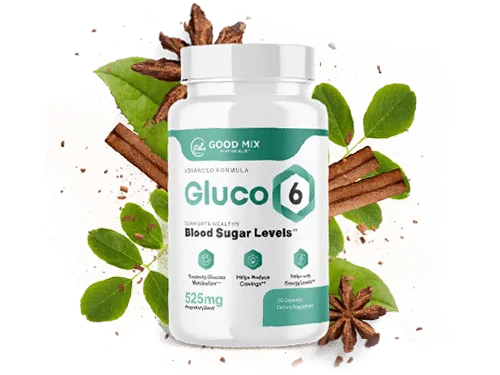 Explore how to support your body’s natural metabolic pathways and glucose balance here.Transform My Metabolic Health Today!