
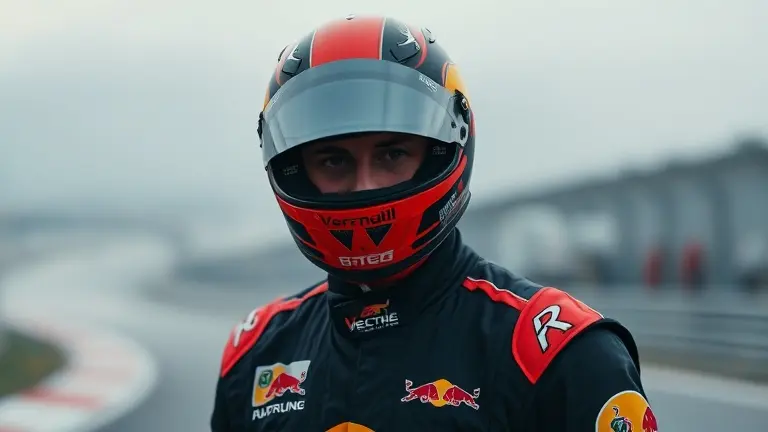
The image of Max Verstappen piloting his machine through the mist of the Nürburgring, leading the pack in his inaugural 24-hour endurance challenge, was supposed to be the coronation of a new era. Yet, as the clock ticked down with less than three hours remaining this past weekend, the dream of a historic debut victory evaporated in a flash of mechanical failure. For the four-time Formula 1 champion, the ADAC RAVENOL 24 Hours of Nürburgring proved that no amount of pure talent can inoculate a driver against the unpredictable, brutal demands of the “Green Hell.”
Beyond the heartbreak of the retirement, Verstappen’s performance offered a compelling glimpse into his potential future in endurance racing. As the motorsport world dissects the ‘Verstappen Racing’ collapse, the conversation has rapidly pivoted from the immediate disappointment to the broader strategic implications: How did the Dutch sensation adapt to the Nordschleife’s unique rhythm, and is he truly signaling a shift toward a future bid at Le Mans 2027? This post-mortem explores the vital intersection of high-speed technical precision and the extreme cognitive endurance required to conquer the world’s most demanding endurance classics.
,slug:
The Nürburgring Heartbreak: A Hard Lesson in Green Hell Endurance
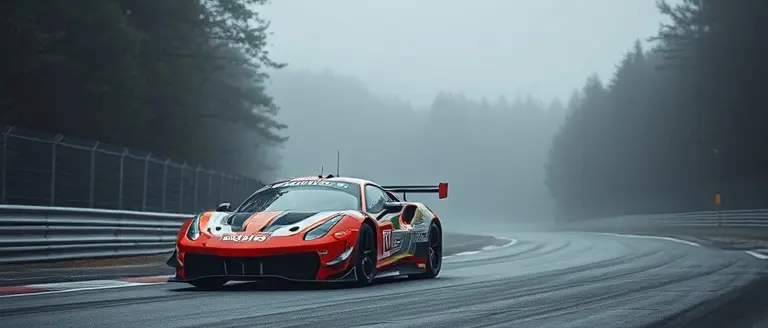
The debut of Max Verstappen at the 2026 ADAC RAVENOL 24 Hours of Nürburgring concluded in a manner as dramatic as the “Green Hell” itself. Representing ‘Verstappen Racing’ in collaboration with Mercedes-AMG, the four-time Formula 1 champion appeared poised for a fairytale victory. For the majority of the race, his entry dominated the leaderboard, showcasing the precise pace and race management that have defined his open-wheel career. However, with less than three hours remaining, the high-stakes endurance challenge took a cruel turn; a sudden mechanical failure forced an immediate retirement, extinguishing the team’s victory hopes in an instant.
The Brutality of the Nordschleife
The Nürburgring Nordschleife is notoriously unforgiving, a track where mechanical reliability is tested far more severely than on the sanitized circuits of F1. The retirement of the Verstappen Nürburgring entry serves as a stark reminder that even the most elite drivers are subject to the unpredictable nature of endurance racing. Technical experts point to several factors that likely contributed to the failure:
- High-Load Stress: The constant undulations and aggressive kerb usage of the Nordschleife place immense, sustained physical stress on suspension and drivetrain components.
- Complex Traffic Management: Navigating hundreds of slower GT3 and lower-class cars creates an erratic rhythm that can force drivers to push machinery beyond its intended safety margins.
- Component Fatigue: Unlike a 90-minute Grand Prix, the 24-hour cycle leaves little room for error regarding part longevity and thermal management.
While fan sentiment on social media reflected profound heartbreak, this experience provides invaluable data for Verstappen’s future endeavors. Far from being a mere disappointment, this stint at the Nürburgring functioned as a high-speed masterclass in the technical nuances of GT racing. By leading the pack, he proved that his raw speed translates perfectly to endurance platforms, even if the “Green Hell” ultimately demanded a steep price for his first foray into this legendary discipline.
Verstappen’s Pace: Why the Performance Matters More Than the Result
While the mechanical failure at the ADAC RAVENOL 24 Hours of Nürburgring will headline the morning reports, the true narrative of the weekend lies in Max Verstappen’s seamless transition to the Nordschleife. Endurance racing requires a drastically different mental architecture than Formula 1, yet the four-time champion demonstrated an almost immediate aptitude for the demands of the “Green Hell.” By leading the race for significant portions, Verstappen proved that his F1-honed precision is not merely limited to short-sprint track layouts but is highly transferable to the chaotic, unpredictable environment of long-distance sports car racing.
Mastering the Nordschleife Variables
The challenge of the Nürburgring is defined by its sheer scale and the necessity of managing massive speed differentials. Verstappen Nürburgring performance data—specifically his ability to navigate dense traffic while maintaining consistent lap times—suggests a driver who has quickly grasped the strategic nuances of endurance competition.
Key technical takeaways from his performance include:
- Adaptive Precision: Verstappen maintained competitive rhythm despite the lack of the extreme downforce levels found in F1, showing an ability to respect the car’s mechanical limits.
- Traffic Management: Managing slower cars on the narrow sections of the Nordschleife is an art form; Verstappen’s ability to minimize time loss while negotiating these sectors was critical to his team’s leading position.
- Systematic Reliability: While the car ultimately failed, the team’s ability to remain at the front for hours indicates that his feedback and pace management were perfectly aligned with the team’s strategy.
Ultimately, this Max Verstappen endurance future debate should no longer be framed as a question of “if” he can succeed, but rather “when” he will look toward other classics. Leading at the Nürburgring on his debut serves as a significant proof-of-concept. Whether the mechanical heartbreak of the No. 3 car serves as a catalyst for a future Le Mans attempt remains to be seen, but the racing world has received clear evidence: Verstappen is a formidable threat in any vehicle, on any track, regardless of the format.
Nordschleife Mechanical Challenges and the Cost of Ambition
The Nürburgring Nordschleife, affectionately dubbed the “Green Hell,” represents the ultimate endurance crucible for both driver and machine. Unlike the surgically precise, flat surfaces of modern Formula 1 circuits, the Nordschleife forces vehicles to endure a violent, non-stop assault. For Max Verstappen, his debut at the ADAC RAVENOL 24 Hours was a masterclass in adapting to these environmental extremes. The circuit’s relentless demand for mechanical durability is defined by several critical factors:
- Extreme Elevation and Compression: The track features dramatic vertical shifts that put immense strain on suspension components and chassis integrity.
- Aggressive Curbing: Frequent heavy contact with curbing, often taken at high speeds to maintain momentum, subjects the transmission and drivetrain to constant, jarring vibrations.
- Weather Volatility: The unique microclimate of the Eifel mountains often forces cars to cycle between extreme temperatures, testing cooling systems and material fatigue limits.
The collaboration between Verstappen Racing and Mercedes-AMG brought high-level engineering resources to the entry, yet the mechanical failure that forced their retirement with less than three hours remaining underscores a fundamental truth about endurance racing: the car is the limiting factor. In sprint racing, like F1, a car is optimized for peak performance over a short distance; in long-form endurance competition, the vehicle must be “over-engineered” for survival.
This verstappen nurburgring experience highlights the disparity between the two disciplines. While Max Verstappen displayed his trademark pace, the race served as a harsh reminder that at the Nordschleife, reliability often trumps raw speed. The failure, while devastating for fans, provides an invaluable data point for his endurance future. As speculation regarding a potential move to Le Mans grows, this debut proves that conquering the classics requires a shift in philosophy—from pushing the limit of the car to protecting it for the duration of the clock. Whether this setback acts as a deterrent or a catalyst for his Le Mans 2027 prospects remains to be seen, but the lessons learned on the Nordschleife are essential for any driver seeking to conquer the world’s most grueling endurance challenges.
Charting the Path: Max Verstappen’s Endurance Future and Le Mans 2027

The unfortunate mechanical retirement of Max Verstappen at the ADAC RAVENOL 24 Hours of Nürburgring serves as a pivotal inflection point rather than a setback in his burgeoning endurance racing career. While the premature end to his run at the Nordschleife was undeniably frustrating for both the driver and his dedicated fanbase, the performance data confirms that Verstappen possesses the race craft required to dominate outside the F1 paddock. His ability to lead for significant portions of the race highlights a seamless transition to the unique demands of endurance, where managing traffic and tire degradation over double-stints is paramount. This experience provides a blueprint for his eventual entry into the Le Mans 2027 prospects, transforming a painful “what-if” into a masterclass on the technical realities of long-distance competition.
Strategic Implications for a Le Mans Debut
The Max Verstappen endurance future now hinges on how he synthesizes the lessons learned from this Nürburgring mechanical failure. Endurance racing at this level is a test of attrition, and the Nordschleife—often called the “Green Hell”—is the ultimate proving ground for vehicle reliability. By experiencing the fragility of even top-tier machinery firsthand, Verstappen gains a sophisticated appreciation for the strategic patience required at Circuit de la Sarthe. Key takeaways from this weekend include:
- Risk Management: Developing the intuition to protect the car during peak performance windows without sacrificing lead time.
- Team Synergy: Navigating the complex dynamics of a collaborative effort involving Mercedes-AMG and ‘Verstappen Racing,’ a precursor to the multi-driver configurations seen at Le Mans.
- Operational Resilience: Learning to process the highs of leading the pack and the lows of a technical retirement, an essential emotional skill for the 24-hour grind.
As he balances his dominant F1 obligations with his long-stated “bucket list” ambitions, this debut confirms that Verstappen is not merely experimenting; he is preparing a calculated assault on the Triple Crown of Motorsport. The path from the verstappen nurburgring experience to a potential podium at Le Mans is clearly illuminated, suggesting that 2027 may be the year he challenges the endurance elite on the global stage.
Beyond the Nordschleife: Mastering Your Own Cognitive Endurance
Max Verstappen’s debut at the ADAC RAVENOL 24 Hours of Nürburgring proved that even the most elite drivers are beholden to the brutal, unforgiving nature of mechanical reliability. While a podium finish was cruelly snatched away by a failure with under three hours to go, the broader narrative remains one of immense promise. Verstappen didn’t just compete; he dictated the pace, proving that the mental fortitude required for Formula 1 translates directly to the high-stakes, multi-layered complexity of endurance racing. The path to Le Mans 2027 is now more than a rumor—it is a logical evolution for a champion who craves the ultimate test of human and machine.
Yet, whether you are navigating the treacherous corners of the Nordschleife at 170 mph or managing the high-pressure demands of a modern career, the common denominator is the need for sustained cognitive precision. Endurance is not merely physical; it is a mental game where fatigue is the silent enemy of success. Just as Verstappen relies on extreme focus to navigate the complexities of his machine, high-performers today require a reliable cognitive reset to stay sharp when the margins for error disappear.
To mirror the mental state of a champion, you need a tool that optimizes your focus and clarifies your decision-making processes under stress. This is where professional-grade mental conditioning becomes your greatest competitive advantage. By integrating a structured auditory routine into your daily regimen, you can cultivate the same level of calm, analytical clarity that separates the winners from the rest of the field, effectively training your mind to handle the metaphorical race of your daily life with ease.
 Train your brain for peak performance—discover the 12-minute audio routine that the world’s most focused professionals are using to stay at the top of their game.Transform My Mental Performance Today!