
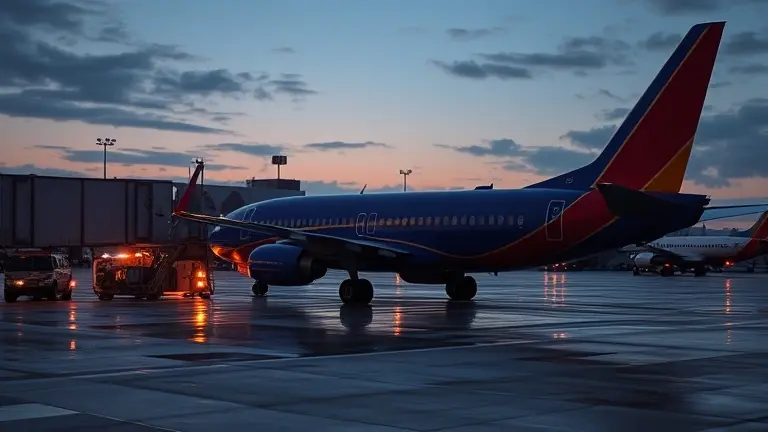
Southwest Airlines has officially confirmed the reduction of approximately 75 staff positions, a move the carrier is framing as a necessary step in its ongoing operational restructuring. However, in the days following the announcement, the reality of this headcount adjustment has been heavily obscured by viral speculation and unverified claims circulating across social media platforms. As professionals attempt to parse what these layoffs mean for the broader aviation sector—especially following a significant board shakeup and recent adjustments to baggage fee structures—the gap between official corporate data and internet-fueled alarmism has created a palpable sense of uncertainty.
Understanding the difference between a targeted operational shift and a mass layoff is critical for investors and industry observers alike. While a 75-person reduction is a statistically minor event for a company of Southwest’s size, the public’s heightened sensitivity to corporate downsizing has turned this event into a focal point for debate. In this article, we peel back the layers of the current Southwest narrative, separating fact from fiction and providing the analytical context necessary to navigate today’s turbulent business environment without falling victim to information overload.
Southwest Airlines Confirms Targeted Operational Restructuring

On May 15, 2026, Southwest Airlines officially confirmed that it has initiated a targeted operational restructuring resulting in the layoff of approximately 75 employees. This adjustment, while significant to those directly impacted, represents a minute fraction of the company’s total workforce. Unlike the widespread, systemic downsizing events often seen in the broader aviation industry, this action is characterized by the carrier as a strategic move to eliminate specific redundant positions. To support affected staff, management has stated that those impacted will be granted priority opportunities to interview for other available roles within the airline, signaling an effort to retain institutional knowledge rather than initiate a mass departure.
Separating Fact from Social Media Speculation
The clarity of this announcement serves as a necessary corrective to the misinformation currently circulating on social media platforms, including TikTok and X (formerly Twitter). In recent days, unverified claims have suggested a much larger scale of job losses, leading to public uncertainty regarding the stability of the Dallas-based airline. It is critical for stakeholders and passengers to distinguish between these viral, baseless rumors and the verified data provided by official corporate reports. By aligning with confirmed news sources such as The Dallas Morning News and The Business Journals, it becomes clear that these Southwest Airlines 75 staff layoffs are a limited administrative pivot rather than evidence of a broad, company-wide collapse.
Understanding the Broader Context
To grasp why these adjustments are occurring, it is essential to view them through the lens of recent corporate shifts. The restructuring follows a period of notable change for the airline, including:
- A recent board shakeup: Significant leadership changes occurred three months prior, signaling a shift in long-term corporate governance.
- Pricing adjustments: The airline modified its baggage fee structures roughly one month ago to bolster revenue streams.
- Industry-wide cost containment: Similar to recent moves by firms like Starbucks, the aviation sector is currently navigating a volatile economic landscape, requiring companies to streamline operations.
By viewing these 75 layoffs as part of a wider, calculated effort to optimize efficiency, industry observers can better understand that Southwest is not engaging in panic-driven downsizing, but rather refining its internal structure to navigate contemporary financial pressures.
Analyzing the Move: The ‘Why’ Behind the 75-Job Cut

The decision by Southwest Airlines to eliminate approximately 75 positions on May 15, 2026, should be viewed as a calculated step in an ongoing operational restructuring rather than a sign of systemic financial distress. By examining the airline’s trajectory over the past quarter, it becomes clear that these cuts are part of a broader corporate recalibration. Three months prior to this announcement, the company underwent a significant board shakeup, a move often designed to introduce fresh oversight and prioritize long-term fiscal efficiency. This governance shift set the stage for a period of intense review regarding how resources—human and financial—are allocated across the organization.
Contextualizing Cost-Containment Strategies
The recent layoffs follow another pivotal change: the adjustment of baggage fees just one month ago. In the competitive landscape of the US aviation sector, airlines frequently balance pricing power with internal overhead management. When viewed together, the fee adjustments and the current staff realignment suggest a strategic pivot toward leaner operations. Key factors driving this corporate logic include:
- Organizational Recalibration: Eliminating redundant roles to streamline reporting lines and improve decision-making speed.
- Market Responsiveness: Aligning labor costs with the current demand for air travel while attempting to protect margins amidst rising industry-wide volatility.
- Redeployment Opportunities: By offering affected employees the chance to interview for other roles within the company, Southwest is attempting to retain institutional knowledge while still achieving the desired reduction in specific, non-essential departments.
While social media speculation has erroneously suggested more widespread turbulence, the reality is a contained, targeted adjustment. This Southwest Airlines 75 staff layoffs event reflects a shift toward operational optimization, aiming to insulate the carrier from broader economic pressures that have forced other major corporations, such as Starbucks, to pursue similar downsizing efforts. Rather than signaling a contraction of services, these measures are intended to fortify the airline’s long-term financial health and operational agility.
Navigating Industry Volatility: The US Aviation Sector Landscape

The recent announcement regarding Southwest Airlines 75 staff layoffs serves as a bellwether for the broader challenges currently gripping the United States aviation sector. While the figure of 75 employees represents a minor fraction of the airline’s massive total workforce, it highlights a growing trend of corporate rightsizing across various industries. Similar to recent headlines regarding Starbucks cutting 300 corporate positions, major US corporations are increasingly scrutinizing their operational overhead to navigate an era of heightened economic uncertainty. This trend is not necessarily indicative of organizational collapse, but rather a strategic pivot toward leaner, more efficient operational models.
Economic Pressures and Operational Efficiency
The aviation industry remains uniquely vulnerable to external macroeconomic forces, including high-frequency fluctuations in global fuel costs, unpredictable consumer travel demand, and a strained labor market. For legacy and low-cost carriers alike, managing these variables requires constant adjustments to organizational structures. When companies like Southwest undergo an operational restructuring, the goal is typically to reduce redundancy and realign resources with long-term financial stability targets.
Key factors currently pressuring airline profit margins include:
- Rising Input Costs: Volatile jet fuel prices continue to squeeze operating margins, forcing airlines to seek efficiencies elsewhere.
- Strategic Realignments: Following recent leadership shifts and changes to ancillary revenue streams—such as adjusted baggage fees—airlines often consolidate administrative roles to streamline internal workflows.
- Market Adaptation: Post-pandemic demand cycles are no longer linear, necessitating more agile workforce management.
By offering affected staff the opportunity to interview for other internal roles, Southwest is signaling that these changes are targeted at specific redundant positions rather than a broad, systemic reduction in headcount. This nuanced approach helps the company maintain institutional knowledge while still addressing the immediate need for cost containment in a competitive, high-stakes market environment.
Support for Affected Staff and Future Outlook

In response to the recent announcement regarding the southwest airlines 75 staff layoffs, the company has implemented a structured transition process designed to prioritize the well-being of its workforce. Unlike broad, systemic downsizings that often characterize corporate distress, these measures are framed as a targeted operational restructuring. Southwest has proactively communicated that those affected are not being permanently severed from the company without recourse; rather, they are being provided with dedicated pathways to remain within the organization. By offering impacted individuals the opportunity to interview for alternative internal roles, Southwest is signaling a commitment to retaining institutional knowledge and minimizing the disruption caused by these specific role redundancies.
For employees navigating these changes, the airline has outlined several key support mechanisms aimed at facilitating career continuity:
- Priority Interviewing: Affected staff are being granted priority access to internal job postings, allowing them to pivot into different departments where their skills may be better aligned with the airline’s current operational needs.
- Targeted Placement Support: The company is focusing on matching the specific expertise of the 75 displaced workers with existing vacancies, emphasizing a strategy of redeployment over total workforce reduction.
- Career Transition Resources: Beyond immediate job interviews, the company is facilitating internal counseling to ensure staff members understand the evolving structure of the organization following the recent board shakeup.
Looking forward, these adjustments appear to be a measured response to the cost-containment pressures currently impacting the broader US aviation sector. While the news of any reduction can cause public concern, the scope of this operational restructuring remains limited. By maintaining a focus on internal mobility, Southwest aims to protect its service standards while streamlining administrative efficiency. As the airline continues to adapt to volatile economic conditions—having recently adjusted baggage fees to sustain profitability—the goal remains to stabilize the business model without sacrificing the core workforce culture that has defined the company for decades. Evidence suggests that this targeted approach is intended to position the airline for long-term resilience in a competitive travel market.
Regain Your Analytical Edge Amidst Corporate Uncertainty
The situation at Southwest Airlines serves as a poignant reminder that in today’s volatile business landscape, distinguishing between strategic operational restructuring and catastrophic failure is essential for any informed professional. By looking past the viral misinformation and examining the 75-person workforce reduction within the context of recent board and fiscal changes, we can see a firm attempting to optimize its trajectory rather than collapsing under pressure. Misinformation is not just a nuisance; it is a catalyst for unnecessary stress that obscures the reality of complex corporate shifts.
In an era where conflicting reports and corporate news can lead to significant cognitive fatigue, maintaining mental clarity is just as important as analyzing the facts. When you are bombarded with sensationalized headlines and data-heavy reports, your ability to think critically is often the first casualty. This is exactly where The Brain Song becomes an indispensable tool for the modern professional. By sharpening your mental focus and helping you cut through the fog of misinformation, it allows you to process complex industry changes with the calm, analytical precision required for effective decision-making.
We designed The Brain Song to act as your cognitive accelerator, ensuring that even when the news cycle becomes turbulent, your mind remains a steady anchor. By incorporating this simple 12-minute daily routine, you are not just consuming information—you are mastering it. Don’t let the noise of the digital age compromise your professional growth. Reclaim your sharpness and position yourself ahead of the curve by stabilizing your cognitive performance today.

Reclaim your mental sharpness and process complex industry changes with clarity—start your 12-minute daily routine today.