

The tension at Aronimink Golf Club during the 2026 PGA Championship reached a boiling point on May 15, as officials placed the group featuring Justin Thomas, Keegan Bradley, and Cameron Young firmly ‘on the clock.’ While the subsequent controversy regarding slow play captured headlines, it highlighted a deeper, more systemic clash between the rigid, pressure-filled regulatory structure of the PGA of America and the grueling reality of ultra-difficult course setups. For Thomas, this isn’t just about a ruling; it is part of a broader, high-stakes journey of redemption. After a series of puzzling results in recent majors, his current performance suggests a genuine technical and psychological breakthrough, forcing him to balance the raw frustration of tournament constraints with the elite-level focus required to contend.
Yet, the challenge of maintaining composure under such scrutiny is not unique to the pros inside the ropes. Whether you are navigating the high-stakes environment of competitive golf or managing the demanding pace of your own professional life, the battle is often fought between the ears. How can one remain sharp and decisive when external pressures threaten to cloud judgment? Understanding this delicate balance between cognitive fatigue and peak performance is the key to thriving when the stakes are at their highest.
Justin Thomas and the ‘Slow Play’ Controversy at Aronimink

The 2026 PGA Championship at Aronimink Golf Club has become a flashpoint for the ongoing debate surrounding pace-of-play enforcement. During the second round on May 15, Justin Thomas, alongside playing partners Keegan Bradley and Cameron Young, found themselves officially “put on the clock” by tournament officials. This officiating decision, which mandates that players must hit their shots within a specific time frame or risk incurring a penalty, ignited a firestorm of controversy. Thomas was notably vocal in his disagreement, challenging the logic of applying rigid time constraints in a major championship environment where the course setup demands extreme deliberation.
The Intersection of Course Difficulty and Regulation
The frustration felt by Thomas is deeply rooted in the structural challenges presented by Aronimink’s setup. With numerous players, including Scottie Scheffler, describing the pin placements as “absurd,” the margin for error was razor-thin. When greens are fast, firm, and positioned in precarious locations, the time required to read putts and calculate approach angles naturally increases. Thomas’s contention highlights a recurring tension in professional golf:
- Strategic Necessity: Elite golfers argue that at the major championship level, the quality of competition necessitates careful decision-making to avoid disastrous scores.
- The “Clock” Mechanic: Critics of the current PGA of America policy note that once a group is put on the clock, the added psychological pressure can often lead to uncharacteristic errors.
- Regulatory Consistency: There is growing evidence that officials must balance the need for broadcast-friendly pacing with the integrity of a high-stakes, difficult course setup.
While the rules are intended to keep the tournament moving, Thomas’s pushback underscores a valid concern: does the clock force players to compromise their tactical precision on the most demanding tracks in the world? As he continues his surge in weekend contention, the incident serves as a reminder that the path to a major championship victory is rarely just about shot-making; it is also about navigating the complex, often frustrating bureaucracy of professional officiating.
The Physics of Pace: Why Aronimink’s Greens Slow the Field

The 2026 PGA Championship at Aronimink Golf Club has evolved into a masterclass in defensive golf course architecture, placing an unprecedented premium on putting accuracy. When players like Justin Thomas express frustration over being “put on the clock,” it isn’t merely a symptom of poor pace; it is a direct collision between official regulation and the extreme physical demands of the venue. The green complexes at Aronimink feature severe undulations and lightning-fast speeds that render traditional green-reading methods insufficient. Under these conditions, every putt becomes a high-stakes calculation involving slope, grain, and wind resistance, forcing elite players to pause longer than usual to mitigate the risk of a three-putt.
The Conflict Between Setup and Speed
The fundamental friction lies in the mismatch between the PGA of America’s desire for a rapid broadcast pace and the technical difficulty inherent in the course setup. As noted by several top contenders, including Scottie Scheffler, the pin placements during the second round pushed the boundaries of tournament fairness. When a green is contoured to be nearly unholdable, the time required to simply stabilize a ball—let alone hole it—increases exponentially.
Consider the following factors that contribute to the inevitable slow play:
- Complex Geometry: The steep slopes require players to account for “break points” that are invisible to the naked eye.
- Risk Management: With the threat of a ball rolling off the green entirely, players must verify their lines multiple times, a necessity that officials often interpret as deliberate stalling.
- Psychological Load: The pressure of a major championship, combined with the difficulty of the layout, creates a cognitive drain that naturally slows decision-making.
Forcing a group to maintain a standard pace while navigating these “absurd” pin locations places professional golfers in an impossible bind. When officials intervene, they ignore the reality that the difficulty of the course is the primary architect of the delay. For Justin Thomas, the ruling highlights a structural flaw in officiating: the failure to adjust pace-of-play expectations based on the objective, measurable difficulty of the day’s specific setup. By failing to account for these variables, the governing bodies risk penalizing the very precision they ask of the world’s best players.
Breaking Down the PGA of America ‘On the Clock’ Protocol
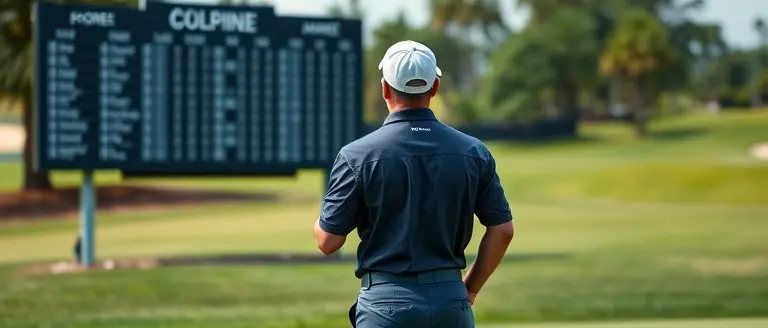
Understanding the mechanics of being “put on the clock” is essential for fans analyzing the recent controversy involving Justin Thomas at the 2026 PGA Championship. When PGA of America officials determine a group has fallen out of position—meaning they have an open hole between them and the group ahead—the Rules Committee initiates formal timing procedures. This objective protocol is designed to expedite play, yet it often creates significant subjective pressure for professionals, especially on high-stakes, setup-heavy courses like Aronimink Golf Club.
The Penalty Progression and Time Limits
The enforcement process follows a strictly tiered structure intended to govern the pace of play for each participant:
- Observation Phase: Officials monitor the group’s progress relative to the “par-based” time allocation. If a group falls behind, they are notified they are being monitored.
- The Clock Starts: Once officially “on the clock,” each player is granted a specific time limit to execute their shot. Generally, a player has 40 seconds to hit their stroke.
- First Bad Time: If a player exceeds this limit, they receive a “bad time.” A first offense usually results in a formal warning.
- Subsequent Penalties: A second “bad time” during the same round incurs a one-stroke penalty, while a third results in a two-stroke penalty, and a fourth results in disqualification.
The tension for players like Justin Thomas arises when these rigid time allotments collide with the extreme difficulty of championship conditions. At the 2026 PGA Championship, the “absurd” pin placements and challenging greens at Aronimink necessitated more deliberation than a standard tour event. While officials rely on the raw, objective data of the 40-second rule, players argue that the strategic complexity of major championships makes such strict enforcement feel disconnected from the reality of the competitive environment. Consequently, even elite athletes struggle to balance the technical demands of the course with the looming, binary threat of a penalty stroke that could derail their entire tournament performance.
A Return to Form: Thomas’ Resurgence in Major Contention

After a period defined by inconsistent results and what many analysts labeled a “puzzling” slump in major championships, Justin Thomas has effectively silenced his critics at the 2026 PGA Championship. Entering the week at Aronimink Golf Club, questions lingered regarding whether the two-time major winner could regain his competitive edge on the sport’s biggest stages. His performance through the first two rounds indicates a definitive technical and psychological breakthrough, proving that his preparation under pressure remains among the best in the game. By navigating the notoriously challenging greens at Aronimink with precision, Thomas has transitioned from a fringe contender back into a primary threat for the Wanamaker Trophy.
Keys to the Breakthrough
Evidence suggests that Thomas’ resurgence is rooted in a refined approach to course management and a renewed commitment to his fundamental ball-striking metrics. Despite the external distraction of the second-round pace-of-play controversy, Thomas maintained his focus, showcasing a level of composure that had been missing in recent seasons. Several factors highlight this newfound consistency:
- Technical Precision: Improvements in his approach play have allowed him to leave shorter, more manageable birdie putts, even when faced with the “absurd” pin placements that have troubled the rest of the field.
- Mental Resilience: By successfully compartmentalizing the frustration of being “put on the clock,” Thomas demonstrated the emotional maturity required to sustain a four-day challenge in a major.
- Course Adaptation: Unlike his recent major outings where he struggled to adapt to varying grass types and green speeds, his ability to read the intricate breaks at Aronimink signals a tactical pivot in his game plan.
This turnaround is more than a momentary spike in performance; it appears to be a systemic shift in how he handles high-stakes environments. If Thomas continues to marry his aggressive shot-making with this newfound level of disciplined patience, his trajectory for the remainder of the 2026 season suggests he is firmly back in the conversation as a perennial favorite.
Mastering Your Mental Edge Under Pressure
As we analyze the trajectory of Justin Thomas, it becomes clear that his return to form is as much about psychological resilience as it is about his swing mechanics. The ability to compartmentalize external frustrations, like strict pace-of-play enforcement, and remain locked in on the task at hand is what separates champions from the rest of the field. This high-stakes environment serves as a mirror for our own daily challenges, where cognitive clarity often dictates our success or failure when the pressure mounts.
Just as elite athletes like Justin Thomas must combat ‘mental fog’ to stay composed under the mounting pressure of tournament officials and difficult course conditions, maintaining cognitive clarity is essential for success in any high-stakes environment. This is precisely why The Brain Song has become an indispensable tool for those who refuse to let fatigue compromise their performance. By leveraging a neuroscience-based approach to cognitive enhancement, it helps you sharpen your focus and reduce mental exhaustion, ensuring you remain as attentive and composed during a crucial business meeting as Thomas is during a major championship.
Whether you are tracking the complex analytics of professional golf or navigating your own competitive arena, you need a tool that supports sustained mental acuity. By integrating this into your daily routine, you can master your focus and ensure that you are always operating at your peak, regardless of the distractions surrounding you. Don’t let your potential be sidelined by the fog of daily stressors; empower your mind to perform at the highest level.
 Unlock your peak cognitive performance and stay sharp under pressure—discover how The Brain Song can help you master your focus.Yes, I Want This Now!