
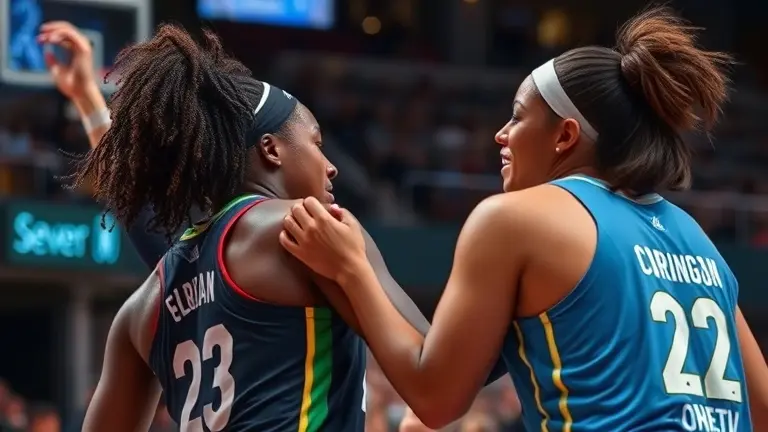
The recent fever vs sky matchup has ignited a firestorm of debate across the sports landscape, transcending the court to dominate social media feeds and fan forums. At the center of the controversy is a high-stakes DiJonai Carrington Sophie Cunningham foul that resulted in a Flagrant 2 ejection, sparking intense scrutiny regarding officiating standards and player conduct. As video replays circulated, the conversation shifted from technical game-play analysis to heated social discussions involving Stephanie White, player statements, and broader cultural implications.
In the wake of this clash, fans are left navigating a maze of conflicting narratives that often prioritize viral outrage over objective reality. By examining the league’s established precedents for flagrant fouls alongside the subsequent public reaction, we can move past the sensationalism. This analysis seeks to provide a neutral, fact-based breakdown of the event, helping you cut through the static of viral commentary to understand exactly what happened during this pivotal WNBA encounter.
The Indiana Fever vs. Chicago Sky Incident: A Breakdown of the August 2026 Controversy

The high-stakes matchup between the Indiana Fever and the Chicago Sky in August 2026 quickly descended into chaos, drawing intense scrutiny from fans and analysts alike. The focal point of this fever vs sky rivalry game was a physical altercation involving Chicago’s DiJonai Carrington and Indiana’s Sophie Cunningham. During a transition play in the heat of the contest, Carrington made contact with Cunningham, leading to an immediate stoppage in play as officials reviewed the incident under the league’s video replay protocol.
Analyzing the Flagrant 2 Ruling
After a thorough examination of the floor play, the officiating crew determined that the Sophie Cunningham foul committed by Carrington met the threshold for a Flagrant 2 penalty. According to WNBA rulebooks, a Flagrant 2 is categorized as unnecessary and excessive contact, resulting in an automatic ejection from the game. The technical breakdown of the call centered on the following factors:
- Excessive Force: Officials evaluated whether the contact deviated from a standard basketball play.
- Point of Contact: The severity of the impact on the opponent was weighed heavily by the referees.
- League Precedent: The officiating team referenced established disciplinary standards to ensure consistency in enforcement.
Following the whistle, the game atmosphere intensified, with the crowd’s reaction signaling the gravity of the call. Carrington was escorted off the court, leaving the Sky to manage the remainder of the game without her presence. The immediate aftermath was defined by the rapid circulation of game footage, which became the primary catalyst for a wider public discourse. While the Carrington basketball WNBA community initially focused on the on-court mechanics of the foul, the situation evolved rapidly when Carrington took to social media to comment on the ruling. This secondary phase of the incident—shifting from a standard sports infraction to a broader cultural conversation—has since dominated headlines, overshadowing the tactical adjustments made by Stephanie White and the coaching staff during the final minutes of the highly contested matchup.
Understanding the Flagrant 2: Official WNBA Rule Interpretations
In the high-stakes matchup between the Indiana Fever and the Chicago Sky, the officiating crew’s decision to assess a Flagrant 2 foul against DiJonai Carrington following the play involving Sophie Cunningham sparked significant debate. To understand the gravity of this ruling, it is essential to look at the official WNBA rulebook definitions. A Flagrant 1 foul is defined as unnecessary contact committed by a player against an opponent, whereas a Flagrant 2 is categorized as contact that is both unnecessary and excessive. The automatic penalty for a Flagrant 2 is an immediate ejection from the game, regardless of whether the contact was intentional or accidental.
Technical Criteria for Ejection
When officials review plays involving Carrington basketball WNBA-level physicality, they analyze specific criteria to determine if the threshold for a Flagrant 2 has been met:
- Severity of Contact: Officials evaluate the force and the potential for injury inflicted on the opponent, in this case, Sophie Cunningham.
- Avoidability: The referees assess whether the player made a legitimate attempt to play the ball or if the defensive action was purely focused on the offensive player’s body.
- Excessive Force: Any contact deemed to be “beyond the scope” of a standard basketball play often triggers the higher designation.
- Follow-Through: The mechanics of the play, including the player’s movement after the initial contact, are scrutinized during a video review to determine the “excessive” nature of the foul.
The decision to escalate the Sophie Cunningham foul to a Flagrant 2 indicates that the officiating team deemed the nature of the contact dangerous, shifting the fever vs sky narrative from a standard competitive intensity to a disciplinary matter. While fans and analysts often debate the subjective nature of “excessive” contact, the WNBA protocol is designed to prioritize player safety and maintain league-wide standards of conduct, regardless of the game’s competitive context or the players involved.
Social Media Backlash and the ‘White Privilege’ Discourse

The fever vs sky matchup reached a boiling point that extended far beyond the hardwood when DiJonai Carrington took to social media following her ejection. After being assessed a Flagrant 2 foul for her contact with Sophie Cunningham, Carrington posted a message referencing “white privilege.” This statement quickly became the focal point of the broader online conversation, transforming a standard disciplinary ruling into a high-stakes cultural debate. The post garnered immediate attention across platforms like X and Reddit, effectively bridging the gap between on-court officiating and complex societal issues.
The ensuing discourse has been sharply divided, mirroring the intensity of the rivalry between the two franchises. To understand the scope of the reaction, it is necessary to examine the two primary narratives dominating the digital space:
- The Procedural Defense: Many analysts and fans argue that the focus should remain strictly on the WNBA rulebook. From this perspective, the Flagrant 2 designation—which requires unnecessary and excessive contact—was the sole justification for the ejection, regardless of the players involved.
- The Sociocultural Commentary: Conversely, supporters of Carrington’s public stance argue that the incident highlights systemic biases within professional sports. This faction contends that the severity of the call against Carrington suggests an unequal standard in how physical plays are adjudicated across the league.
As Stephanie White and the coaching staffs work to manage the team’s focus, the social media fallout continues to test the league’s ability to navigate the intersection of competitive play and athlete advocacy. The volatility of this situation underscores the heightened visibility of the WNBA, where high-intensity games often serve as flashpoints for broader discussions regarding race, fairness, and institutional equality. By decoupling the objective review of the Sophie Cunningham foul from the subjective, polarized commentary, observers can better appreciate why this specific game has become such a lightning rod for contemporary sports discourse.
The Rivalry Context: Fever and Sky’s Competitive Season

The 2026 WNBA season has been defined by a heightened level of competition, and no matchup illustrates this better than the fever vs sky rivalry. As both teams fight for essential playoff seeding, every possession has become high-stakes, transforming standard regular-season games into intense, playoff-caliber battles. This friction, which culminated in the widely discussed DiJonai Carrington and Sophie Cunningham foul incident, is not an isolated event but rather a byproduct of increasing physical play and growing competitive animosity between the two rosters.
Escalation and High-Stakes Environment
The intensity of the fever vs sky rivalry stems from several key factors that have persisted throughout the year:
- Playoff Positioning: With both franchises vying for a top-four seed, the margin for error remains razor-thin, leading to increased defensive aggression.
- Coaching Philosophies: Under the leadership of coaches like Stephanie White, the Indiana Fever have adopted a gritty, defensive-minded identity that often clashes with the Chicago Sky’s tactical approach.
- On-Court Physicality: The league’s broader trend toward more physical play has amplified the friction between these specific lineups, making referees’ decisions regarding a Flagrant 2 or common foul under intense scrutiny.
The discourse surrounding the Carrington basketball WNBA disciplinary action—and the subsequent reaction from players like Sophie Cunningham—highlights how social media amplifies these on-court tensions. What might have been a standard basketball sequence in a less heated environment became a viral moment, fueled by the existing cultural narrative surrounding the teams. Because the rivalry is so deeply entrenched in the current 2026 season’s storylines, the game officials’ decision to eject a key player provided a lightning rod for broader fan debates. By understanding the competitive pressure exerted on these players, it becomes clear why the matchup reached a boiling point that transcends the sport itself.
Finding Clarity Amidst the Noise
The intense discourse surrounding the Fever vs. Sky matchup highlights how quickly sports moments can spiral into polarizing cultural debates. While the technical realities of officiating and league precedents remain the core of the game, the emotional fallout often leaves fans feeling mentally drained. In an era of viral, high-intensity sports debates that cloud our perspective, finding a way to sharpen your focus and clear the mental noise has become essential for maintaining a balanced viewpoint.
If you find yourself stuck in the endless loop of conflicting online narratives, you are experiencing the cognitive drain of information overload. This is where The Brain Song serves as your mental reset button. By dedicating just a few minutes to this auditory routine, you can step back from the heated controversy and regain the cognitive control necessary to process complex information without the lingering fatigue of digital clutter. It is the perfect tool for clearing the mental fog and reclaiming your inner focus after a long day of navigating viral news.
Whether you are a die-hard fan or a casual observer, your peace of mind should always come first. Reclaim your mental clarity today and discover the difference that a focused mind makes.  Reclaim your mental clarity today—discover how a simple 12-minute auditory routine can help you tune out the noise and refocus your mind. Yes, I Want This Now!