
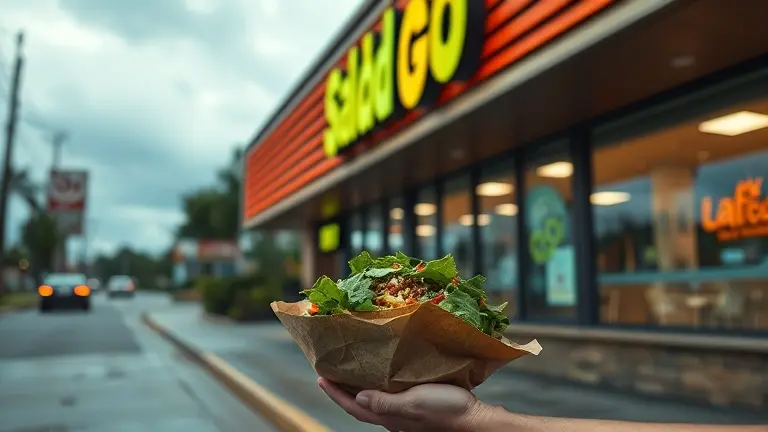
For years, Salad and Go served as a beacon of convenience for the health-conscious commuter, promising that high-quality, nutritious meals could be just as fast as a traditional burger-and-fry drive-thru. However, the landscape of fast-casual dining shifted dramatically on August 5, 2026, when the chain officially filed for Chapter 11 bankruptcy and ceased all operations across the United States. From its heartland in Arizona to its outlets in Nevada, the sudden disappearance of these storefronts has left thousands of loyal customers wondering what went wrong with their favorite healthy habit.
While the headlines highlight the bankruptcy filing, the collapse of Salad and Go was not an overnight tragedy but the culmination of a ‘perfect storm.’ Long-term financial distress, characterized by a steady decline in customer traffic, collided with the crushing weight of rising operational costs. The fatal blow, however, came in the form of a severe health crisis involving a cyclospora outbreak, which shattered the brand’s hard-earned reputation for safety. As we dissect this post-mortem, it is clear that the closure signals a deeper lesson for the fast-casual sector: even the most disruptive business models are vulnerable when consumer trust and financial stability fracture at the same time.
The End of an Era: Salad and Go Files for Bankruptcy
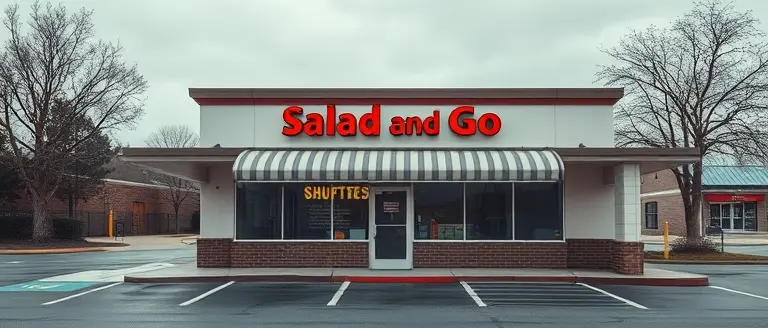
On August 5, 2026, the fast-casual landscape shifted permanently as Salad and Go officially ceased all operations and filed for Chapter 11 bankruptcy. This move marks the definitive end for the chain, which had built its reputation on providing affordable, healthy meals through a streamlined drive-thru model. While rumors had circulated regarding a potential Salad and Go closing, the filing confirmed that the shuttering of the brand is absolute, impacting every remaining location across the United States. Fans of the brand in its founding home state of Arizona, as well as those in Nevada, saw their neighborhood locations darken simultaneously, effectively erasing the company’s presence from the commercial map.
The Scope of the Shutdown
The collapse of the brand is not merely a localized event but a comprehensive withdrawal from the fast-casual market. The bankruptcy process serves as the final step in a trajectory that had been struggling for several years. Key aspects of this transition include:
- Total Market Exit: Operations have ceased at all store sites, leaving no active storefronts remaining in the brand’s network.
- Widespread Impact: The Arizona Salad and Go closing is particularly significant given that the state served as the launchpad for the company’s business model.
- Operational Cessation: Beyond the bankruptcy filing, the company has halted all supply chain and corporate functions, leaving many to wonder if is Salad and Go closing permanently—to which the answer is a definitive yes.
Evidence suggests that while the brand attempted to pivot during recent economic downturns, the accumulation of high operational costs and a recent, severe cyclospora outbreak proved insurmountable. Analysts note that the health crisis served as the terminal blow to consumer confidence, accelerating a downward trend in customer visits that had been observed for more than twenty-four months. With the bankruptcy court now overseeing the liquidation of assets, the brand’s legacy as an innovator in the “healthy drive-thru” segment concludes abruptly, leaving a significant gap in the fast-food ecosystem.
The Anatomy of a Collapse: Health Crisis Meets Financial Distress
The final chapter for Salad and Go was not written overnight. While the brand’s August 5, 2026, Chapter 11 bankruptcy filing and total cessation of operations caught many consumers off guard, business analysts point to a “perfect storm” of systemic failures. For over two years prior to the shutdown, the company grappled with a steady, quiet erosion of its core customer base. Financial reports indicate that declining visitations were the primary symptom of deeper operational struggles, likely stemming from rising overhead costs that pressured the chain’s signature low-cost, healthy drive-thru model.
The Terminal Blow of Food Safety Failures
The situation turned critical with the emergence of a widespread cyclospora outbreak linked to the chain’s produce supply chain. In the restaurant industry, consumer trust is the most fragile asset; once compromised by public health concerns, recovery requires significant capital and time. For a company already operating on thin margins and facing a multi-year decline in foot traffic, the outbreak acted as a terminal accelerant. Evidence suggests that the health crisis did not cause the collapse in isolation, but rather neutralized the brand’s remaining viability, making a financial turnaround impossible.
Key factors that solidified the brand’s exit include:
- Pre-existing Financial Fragility: A multi-year downward trend in customer metrics predating the health crisis.
- Operational Inflexibility: Rising costs of fresh, high-quality ingredients challenged the affordability promised to the Salad and Go audience.
- Irreparable Brand Damage: The cyclospora outbreak shattered the public perception of the brand as a safe, healthy alternative to traditional fast food.
- Market Saturation: Increased competition in the healthy drive-thru space limited the chain’s ability to pivot or absorb losses, particularly across its Arizona and Nevada footprints.
Ultimately, the closure of Salad and Go serves as a stark case study for the fast-casual sector. The incident highlights how thin the margin for error is when a brand’s entire value proposition is anchored to “healthy” food. When public health is questioned, the underlying financial distress—long masked by brand expansion—was laid bare, leading to the permanent shuttering of all remaining locations.
Redefining the ‘Healthy Drive-Thru’ Legacy
Before the news of the Salad and Go closing dominated headlines, the chain was widely viewed as a disruptive pioneer that successfully married the efficiency of a traditional fast-food drive-thru with the consumer demand for nutrient-dense, affordable meals. By stripping away the overhead of traditional dine-in restaurants, the brand initially demonstrated that a high-volume, low-friction model could offer scratch-made salads and breakfast items at a price point previously considered impossible for the healthy fast-casual segment. Its rapid expansion, particularly throughout its home state of Arizona, suggested that the “healthy drive-thru” was not merely a niche trend but a viable, scalable alternative to legacy burger chains.
However, the permanent Salad and Go closing in Arizona and across its national footprint highlights the inherent fragility of this operational model. Analysts have pointed out that while the brand’s concept was innovative, its long-term financial health suffered due to a persistent decline in customer visits that predated recent public health challenges. The intersection of thin margins and rising supply chain costs created a vulnerability that could not withstand a significant reputation shock. When the cyclospora outbreak occurred, it acted as a terminal catalyst rather than an isolated incident, proving that brands operating on high-velocity drive-thru models possess zero margin for error regarding food safety.
Lessons for the Fast-Casual Sector
The collapse of the company serves as a cautionary tale for the industry at large. Future entrants into the healthy fast-casual space must address several critical systemic challenges:
- Operational Resilience: Efficiency is an asset, but it cannot come at the expense of rigorous, fail-safe quality control protocols that protect consumer trust.
- Customer Retention Metrics: As noted by industry experts, declining visit frequency is a “silent killer.” Brands must look beyond growth and prioritize long-term brand loyalty.
- Scale vs. Stability: The rapid expansion seen in states like Nevada and Arizona can mask underlying financial distress if unit-level economics do not remain consistently strong.
Ultimately, while the Salad and Go model proved that consumers crave convenient, healthy options, its legacy underscores that public health and financial sustainability are inextricably linked. For competitors, the challenge remains in replicating that accessibility while building a more robust safety net against both economic shifts and potential operational crises.
Market Shifts: The Future of Asset Liquidation and Competitor Acquisition
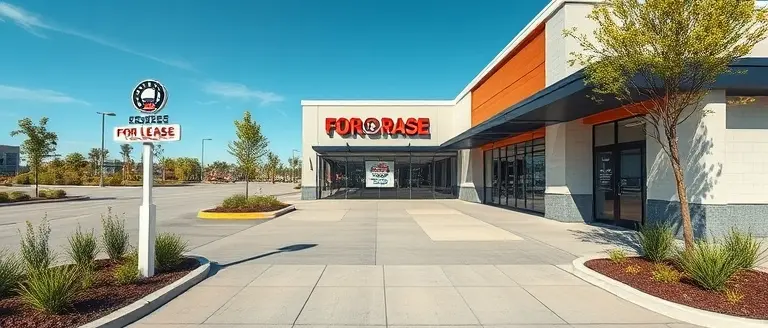
The formal Chapter 11 bankruptcy filing and total cessation of operations on August 5, 2026, have triggered a significant shift in commercial real estate, particularly within the fast-casual dining sector. Because Salad and Go utilized a unique, high-efficiency drive-thru-only footprint, these locations represent highly desirable “plug-and-play” assets. Unlike traditional restaurant conversions that require extensive interior remodeling, the infrastructure at these sites—optimized for high-volume vehicle throughput and rapid order fulfillment—is expected to draw intense interest from major players looking to expand their footprint without the lag time of new construction.
Strategic Acquisition and Industry Consolidation
Industry analysts anticipate that the liquidation of Salad and Go locations, including those in the brand’s primary Arizona and Nevada markets, will serve as a catalyst for sector consolidation. Competitors—specifically those in the coffee, smoothie, and health-conscious fast-casual spaces—are likely to aggressively bid on these prime parcels to capture existing customer traffic patterns. This acquisition trend points toward a broader evolution in the industry:
- Premium Site Scarcity: The specific real estate footprint favored by the brand, typically characterized by high-visibility, small-acreage lots, is increasingly rare, making the current asset liquidation process a high-stakes environment for developers.
- Operational Efficiency Gains: Competitors aiming to adopt “drive-thru-first” models may prioritize these locations to test localized service density without the heavy capital expenditure of ground-up development.
- Market Realignment: The exit of the chain signals that despite the initial success of the concept, the market is favoring larger, diversified legacy chains capable of weathering localized supply chain or health-related volatility.
While the salad and go closing marks a permanent end to the brand, the physical legacy of its stores will likely persist under new banners. As the dust settles on the bankruptcy proceedings, the transition of these sites will be a primary indicator of whether the fast-casual industry continues to prioritize small-footprint, drive-thru-centric expansion or pivots back toward more robust, traditional service models to ensure brand resilience.
Taking Control of Your Metabolic Wellness
The shuttering of Salad and Go marks the end of an era for convenient, healthy dining, leaving many to rethink how they manage their nutrition in a fast-paced world. While the loss of a go-to drive-thru is a blow to many daily routines, maintaining your metabolic health and weight loss goals should not have to suffer simply because your local Salad and Go has closed its doors. True wellness is not found in a restaurant window, but in the sustainable, science-backed habits you cultivate for yourself at home.
Rather than searching for the next chain, this is the perfect opportunity to embrace a more self-reliant approach to your health. CitrusBurn offers a specialized solution to bridge this gap, providing the metabolic support you need to maintain effective fat-burning and weight management independently. By moving away from dependency on fast-casual chains, you reclaim control over your body’s trajectory and ensure your nutritional goals remain on track, regardless of external market fluctuations.
We believe that your health should be a consistent priority, not a victim of industry closures. CitrusBurn empowers you to optimize your metabolism with precision, offering a reliable path to health that lasts long after the final drive-thru light has dimmed. It is time to stop relying on broken systems and start investing in your personal success.
 Discover how to optimize your metabolism and maintain your health goals at home with CitrusBurn today.Transform My Metabolic Health Today!