
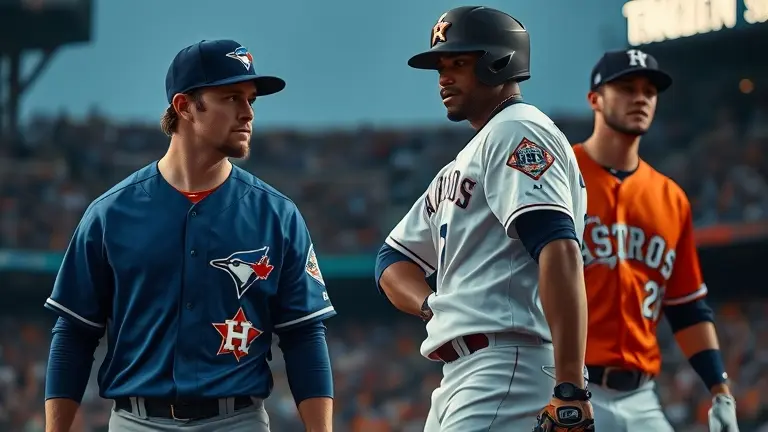
The early August 2026 series between the Toronto Blue Jays and Houston Astros has evolved into much more than a standard regular-season matchup; it has become a defining referendum on organizational strategy. With the MLB trade deadline now in the rearview mirror, the spotlight shifts to Toronto’s aggressive pivot, headlined by the anticipated debut of Jameson Taillon. Meanwhile, the Astros find themselves under the microscope, facing questions regarding their lack of pitching depth and the mounting concern over key injuries to stars like Vladimir Guerrero Jr. and rookie standout Trey Yesavage.
For fans and analysts alike, this series is a high-stakes puzzle that demands a deeper dive than typical, automated betting previews can provide. We are moving beyond the surface-level noise to explore how these two franchises are positioning themselves for the final sprint to the postseason. From the tactical implications of Toronto’s roster overhaul to the precarious nature of Houston’s current health status, this analysis cuts through the anxiety surrounding the blue jays vs astros series to reveal the true trajectory of both teams as they battle for October relevance.
Post-Deadline Reality: Blue Jays vs. Astros in a New Light
The current blue jays vs astros series serves as a critical litmus test for two franchises heading in starkly different directions following the 2026 MLB trade deadline. While the baseball world fixates on daily betting lines, the true narrative lies in Toronto’s aggressive pivot toward future contention contrasted against Houston’s static, high-risk approach. Toronto’s front office signaled a clear intent to reinforce their rotation, notably with the high-stakes debut of Jameson Taillon. Taillon’s presence on the mound for the Blue Jays is more than just a routine start; it represents a tactical upgrade designed to stabilize a pitching staff currently dealing with the anxiety of injury updates surrounding rookie standout Trey Yesavage.
Strategic Divergence: Aggression vs. Stagnation
The divergence between these clubs highlights the tension between immediate necessity and long-term roster health. While Toronto is absorbing the physical toll of a hard-charging season—evidenced by the health concerns facing Vladimir Guerrero Jr. and the aforementioned knee injury to Yesavage—they have actively utilized the trade market to plug gaps. Conversely, the Astros have opted for roster consistency over change, a gamble that faces intense scrutiny as their clutch hitting faces regression. Key observations regarding this matchup include:
- Rotation Reinforcement: The acquisition of Jameson Taillon provides Toronto with a veteran anchor that allows manager John Schneider to manage his bullpen more effectively during this pivotal August stretch.
- Injury Management: With Vladimir Guerrero Jr. operating at less than 100%, the Blue Jays’ post-deadline depth is being tested early, forcing a reliance on the collective rather than the individual.
- Houston’s Roster Ceiling: By standing pat at the deadline, the Astros are betting that their core can overcome recent offensive inconsistencies, though league-wide critiques suggest this lack of depth could prove fatal in a postseason environment.
Ultimately, this series acts as a preview of the high-leverage baseball expected in October. For the Blue Jays, success hinges on whether their mid-season additions can compensate for the lingering health issues of their star core. For the Astros, every loss against a motivated Toronto side intensifies questions regarding their decision to forgo significant roster upgrades. The optics of this series go beyond the box score, revealing the blueprints of two organizations trying to navigate the grueling final stretch of the regular season.
Injury Updates: Navigating the Uncertainty of Guerrero Jr. and Yesavage

The current blue jays vs astros series has been defined as much by medical reports as by diamond performance. For Toronto fans, the atmosphere is heavy with apprehension regarding the status of Vladimir Guerrero Jr. and the highly touted rookie pitcher Trey Yesavage. Manager John Schneider has been transparent about the volatility of these situations, noting that the team is prioritizing long-term health over immediate game-day desperation. The anxiety surrounding these two players is palpable, as their absence creates a significant void in both the offensive engine and the developmental promise of the pitching staff.
Tactical Implications of Key Absences
The potential loss of Guerrero Jr. disrupts the heart of the lineup, forcing Toronto to reconfigure its run-production strategy against the Astros’ seasoned, albeit depth-strained, rotation. Without his stabilizing presence at first base, the team loses its primary offensive threat, placing immense pressure on the remaining core to perform under postseason-like intensity. Regarding the rookie sensation, the updates on Trey Yesavage’s knee injury have created a ripple effect through the clubhouse. His emergence as a reliable arm was a cornerstone of the Blue Jays’ second-half strategy; his absence forces a reliance on a bullpen that has already been stretched thin.
- Clubhouse Chemistry: The uncertainty surrounding star players can sap morale; however, veterans are being looked upon to maintain focus despite the injury-marred narrative.
- Rotational Strain: With Yesavage sidelined, the acquisition of Jameson Taillon becomes even more critical for managing innings and providing a veteran anchor for the rotation.
- Offensive Pivot: If Guerrero Jr. remains sidelined, the Blue Jays must adopt a “small-ball” approach, relying on situational hitting and disciplined plate appearances rather than relying on power surges.
Ultimately, these injuries are not merely statistical footnotes; they are tests of the Blue Jays’ organizational depth. While the team remains resilient, the uncertainty surrounding these key personnel makes the remaining games against Houston a defining litmus test for their 2026 trajectory. Fans are rightfully anxious, but the tactical shift required to cover these absences may inadvertently build the situational versatility needed for a deep playoff run.
The Astros’ Standing: Is Their Lack of Pitching Reinforcement a Fatal Flaw?
As the blue jays vs astros series unfolds in early August 2026, the contrast between the two organizations’ trade deadline strategies has become starkly apparent. While Toronto aggressively bolstered its rotation with the acquisition of Jameson Taillon, the Houston Astros opted for relative inactivity regarding their pitching staff. This decision has sparked intense debate among analysts, as the Astros’ reliance on their existing arms may prove to be a structural vulnerability. In the high-stakes environment of a deep postseason run, depth is often the primary factor that separates championship contenders from early exits. By failing to secure additional high-leverage arms, the Astros appear to be betting heavily on the durability of their current rotation—a risky gamble given the late-season fatigue that typically plagues veteran staffs.
Analyzing the Depth Deficit
The internal data suggests that the Astros’ current pitching metrics lack the necessary margin for error required in October. When contrasting this with the Blue Jays’ proactive movement, the disparity in philosophy is clear. The Astros’ roster depth issues are manifesting in specific ways that could derail their 2026 trajectory:
- Inning Consumption Risks: Without fresh reinforcements, the front office is placing undue pressure on a bullpen that has already shown signs of volatility in late-inning situations.
- Lack of Playoff Insurance: Recent performance critiques highlight a reliance on “clutch hitting” to mask pitching inconsistencies, which is rarely a sustainable strategy against elite league rotations.
- Comparative Vulnerability: Unlike teams like the Blue Jays that have strategically mitigated injury risks—such as the recent roster adjustments following the status updates for Vladimir Guerrero Jr. and Trey Yesavage—the Astros lack the personnel redundancy to survive similar late-season attrition.
Evidence suggests that if the Astros’ starters falter or succumb to the natural wear and tear of a full season, the front office’s decision to stand pat may be viewed as the definitive “fatal flaw” of their 2026 campaign. While their offense remains potent, the absence of a reliable secondary or tertiary pitching option limits their tactical flexibility, potentially handing a significant advantage to more balanced opponents throughout the final stretch of the season.
Toronto’s Aggressive Pivot: Assessing the Taillon Acquisition

The acquisition of Jameson Taillon signals a definitive shift in the Toronto Blue Jays’ front-office philosophy. After a period of organizational hesitancy, the decision to bolster the rotation heading into this high-stakes series against the Houston Astros demonstrates an “all-in” mentality aimed at salvaging their 2026 postseason aspirations. By integrating a veteran presence like Taillon, Toronto is attempting to stabilize a rotation currently grappling with significant personnel concerns, most notably the injury status of rookie standout Trey Yesavage.
Strategic Implications for the Postseason Push
This aggressive maneuver contrasts sharply with the conservative, status-quo approach adopted by several other contenders—most notably the Astros, who have faced mounting criticism for failing to shore up their own pitching depth. The Blue Jays vs. Astros dynamic has shifted from a standard regular-season encounter to a fascinating case study in roster management:
- Rotation Stability: Taillon provides immediate, high-leverage innings, acting as a crucial insurance policy while the team monitors the recovery of their younger arms.
- Psychological Edge: Beyond the box score, the front office’s willingness to trade for immediate impact signals to the clubhouse that management remains committed to competing, even as they navigate the health updates surrounding Vladimir Guerrero Jr. and the bullpen.
- Competitive Ceiling: While the Astros rely on legacy performance, Toronto is betting that their late-season adjustments provide the necessary ceiling to leapfrog rivals in the wildcard hunt.
Evidence suggests that Toronto’s move was calculated to maximize the remaining value of their current roster window. By addressing their most glaring vulnerability—starting depth—the Blue Jays are positioning themselves as a spoiler in the American League. Fans watching the August 5th debut will be looking for more than just a win; they are evaluating whether this tactical pivot is enough to overcome the internal volatility that has defined the Blue Jays’ season thus far. If Taillon succeeds, Toronto may serve as the blueprint for how a mid-season acquisition can reset a team’s trajectory.
Elevating Your Analytical Edge in the Post-Deadline Race
As the Blue Jays and Astros clash in this pivotal August series, the path to the postseason is being paved not just by talent, but by the ability to adapt to sudden changes. The roster overhaul in Toronto, marked by Jameson Taillon’s debut, stands in stark contrast to the tactical stagnation in Houston. While the game-day outcomes remain uncertain, the structural advantages—or flaws—of these franchises are now laid bare for the observant fan to see.
Just as these teams must maintain peak cognitive clarity to navigate injuries and manage high-pressure rosters, you require a heightened mental state to decipher the complexities of modern sports data. You are tired of the noise from generic betting models; you deserve the precision to analyze the shifting tides of the MLB standings yourself. This is where your own performance becomes as critical as the players on the field.
By integrating The Brain Song into your daily routine, you move beyond the static fog of routine updates. Our neuroscience-based approach provides the cognitive clarity required to process advanced analytics, injury implications, and long-term roster projections with unprecedented focus. It is the essential tool for the fan who demands more from their game-day experience than just watching the scoreboard—it is the bridge between being a spectator and becoming a true expert analyst.
 Unlock your analytical potential and stay sharp during the playoff push—start your 12-minute daily routine with The Brain Song today.Transform My Mental Focus Today!