
The air in Baltimore this July 31st carries more than just the mid-summer heat; it is thick with the mounting pressure of the MLB trade deadline. As the Philadelphia Phillies limp into town, stuck in a demoralizing downward spiral, the spotlight falls squarely on the unexpected recall of phenom Andrew Painter. Is this the spark needed to ignite a struggling roster, or a desperate gamble before the market closes? On the other side, the Baltimore Orioles stand as the picture of consistency, poised to exploit every inconsistency in their visitors’ armor.
For the analytical fan, this series is a masterclass in high-stakes volatility. Beyond the standard preview lies a complex web of trade implications, performance metrics, and front-office desperation that defines this critical window. Navigating these narratives requires more than just passive watching; it demands an ability to synthesize deep data and tactical trends. As the countdown to the deadline begins, the ability to clearly distinguish between a passing slump and a franchise-altering decline has never been more important for those following the league’s most consequential series.
Phillies vs. Orioles: A High-Stakes Collision Before the Trade Deadline

The Phillies vs. Orioles series scheduled for July 31, 2026, at Camden Yards represents far more than a standard mid-summer interleague matchup. Arriving just hours before the MLB trade deadline, this series serves as a definitive “gut check” for two franchises trending in opposite directions. The Philadelphia Phillies enter Baltimore mired in a troubling downward spiral, struggling to maintain the consistency that once defined their season. As noted by the Philadelphia Baseball Review, the Phillies are not merely playing for a win; they are desperate for tangible evidence that their roster remains a legitimate championship contender rather than a team in need of a radical deadline rebuild.
Converging Paths at the Trade Deadline
The stakes for this series are magnified by the contrasting atmospheres surrounding the dugouts. While the Orioles are focused on fortifying their roster for a deep postseason run, the Phillies’ front office is facing immense pressure to pivot. Key factors driving the intensity include:
- The Andrew Painter Effect: The highly anticipated recall of Andrew Painter adds a layer of intrigue, as the organization looks to the young arm to stabilize a wavering pitching staff during this high-leverage series.
- Strategic Pivot Points: For Philadelphia, a poor performance against Baltimore could force the hand of general management to become aggressive sellers or high-cost buyers in the final hours of the market.
- Momentum Metrics: While the Orioles look to solidify their divisional positioning, the Phillies must prove their recent losses were an anomaly.
This series functions as a final audition for several players whose futures are currently being debated in trade rumors. If the Phillies cannot find a way to halt their slide against one of the league’s most balanced lineups, the looming August 1st reality will be unavoidable. Conversely, a successful series could provide the Phillies with the necessary leverage to approach the deadline with renewed confidence, effectively altering the narrative of their entire 2026 campaign.
The Andrew Painter Factor: Evaluating the Phillies’ Internal Reinforcements
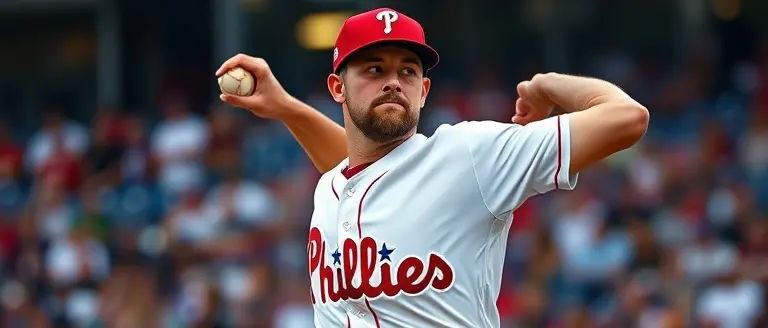
The decision to recall Andrew Painter ahead of the critical Phillies vs Orioles series is more than a routine roster move; it is a desperate attempt to inject high-ceiling potential into a struggling rotation. As the Philadelphia front office monitors a concerning “downward spiral,” Painter’s debut acts as a litmus test for the team’s internal health. By promoting their top pitching prospect during this pivotal pre-trade deadline window, the organization is signaling that they prefer to exhaust internal solutions before potentially overpaying for veteran arms on the open market.
Strategic Implications of the Call-Up
Whether Painter can effectively stabilize the rotation remains the central question for the coaching staff. Evidence suggests that the Phillies are balancing two distinct goals: mitigating the current slide and assessing whether Painter is a legitimate piece for a postseason push. Key considerations regarding this move include:
- Financial Leverage: Relying on Painter allows the front office to gauge the market’s temperature without immediate desperation, possibly cooling the asking prices from sellers before the deadline expires.
- Performance Metrics: Painter’s velocity and command under the pressure of a high-stakes series against a potent Baltimore Orioles lineup will provide the front office with tangible data to inform their final trade deadline strategy.
- Psychological Shift: A successful outing from the young prospect could provide the team with the much-needed emotional spark required to snap their recent losing streak.
If Painter struggles, the Phillies may find their hand forced to engage in aggressive, high-cost acquisitions. However, if he proves he can handle the rigors of an MLB starting rotation, it provides the team with the internal reinforcement needed to survive the current season slump without sacrificing future assets. Ultimately, this series in Baltimore serves as the ultimate proving ground for both Painter and the Phillies’ management philosophy.
Metrics of a Slump: Comparing Recent Performance Data
The current Phillies vs Orioles series serves as a harsh statistical mirror for two franchises trending in opposite directions. Philadelphia enters this matchup mired in a pronounced downward spiral, characterized by a recent slide in win-loss ratios and an inflated team ERA that has strained their bullpen depth. Conversely, the Baltimore Orioles have demonstrated remarkable consistency, maintaining a disciplined approach at the plate and a stable rotation that keeps them in contention for divisional dominance. As the July 31, 2026, MLB trade deadline approaches, these performance metrics are no longer just box score footnotes; they are the primary drivers for front-office decision-making.
Analyzing the Statistical Divide
To understand why the Phillies find themselves at a crossroads, we must look at the diverging metrics between the two clubs:
- ERA Disparity: While the Orioles’ pitching staff has maintained a sub-4.00 team ERA over the last 30 games, the Phillies have seen their defensive metrics balloon, largely due to high-leverage failures and inconsistent starting performances.
- Run Production: Baltimore’s offensive efficiency, measured by their ability to drive in runners from scoring position, significantly outpaces Philadelphia’s recent struggles to capitalize on base runners.
- Pitching Depth: The recall of Andrew Painter represents a desperate attempt to stabilize the Phillies’ rotation, though relying on a young arm during such a volatile stretch carries immense risk.
Evidence suggests that if the Phillies’ recent performance trends continue, they may be forced into a “soft-sell” strategy rather than aggressively buying at the deadline. While a win in Baltimore could provide a much-needed morale boost, the underlying data indicates that the Phillies are currently outmatched by the Orioles’ operational consistency. For the Philadelphia front office, the metrics prioritize fixing long-term systemic issues rather than banking on a single mid-season acquisition. Whether they pivot to become sellers depends heavily on their ability to neutralize the Orioles in this critical pre-deadline series.
Deadline Implications: What’s at Stake for Both Front Offices

The Phillies vs Orioles series serves as the ultimate litmus test for two organizations at divergent crossroads. For the Philadelphia front office, the current “downward spiral” has transformed this visit to Baltimore into a high-stakes referendum on their championship window. With the trade deadline looming just hours after the final out, management must decide whether the recall of pitching prospect Andrew Painter represents a genuine internal solution or a desperate measure that fails to address deeper offensive stagnation. If Philadelphia falters against the Orioles, evidence suggests the front office will be forced into an aggressive, albeit expensive, pursuit of veteran bats to stabilize their lineup before the clock strikes zero.
In contrast, the Baltimore Orioles enter this matchup from a position of strength, viewing the series as an opportunity to solidify their standing as a legitimate World Series contender. Their strategic focus for the trade deadline is less about emergency repair and more about surgical refinement. The Orioles are widely expected to target high-leverage bullpen arms and perhaps a depth starter to ensure durability during a deep October run. Key considerations for both front offices include:
- Philadelphia’s Roster Pivot: Determining if the current core can sustain a playoff push or if a major salary-dump trade is required to replenish the farm system.
- Baltimore’s Championship Depth: Evaluating if the current rotation can survive the rigors of the American League East without further acquisition.
- The Painter Factor: Assessing if the promotion of a top prospect can provide the psychological and tactical boost necessary to reverse the Phillies’ recent decline.
Ultimately, how these teams perform in Baltimore will dictate their aggressiveness in the final hours of the trade market. A dominant showing by the Orioles could signal a “go-for-broke” approach, while a poor showing by the Phillies may force a sobering realization that this specific championship window may finally be closing.
Deciphering the Deadline: Your Strategic Edge
As the July 31st Phillies vs Orioles clash approaches, the outcome is far more than just a box score; it is a barometer for the postseason trajectory of two franchises heading in starkly different directions. Whether the Phillies can halt their downward spiral through the injection of Andrew Painter’s raw talent or if the Orioles continue their march of dominance, the real winner will be the front office that demonstrates the most cognitive clarity during this high-stakes trade deadline window.
Analyzing these complex roster shifts and performance metrics requires a level of mental acuity that standard fandom simply doesn’t demand. Just as the Phillies’ management needs absolute, clutter-free focus to make season-defining decisions, you need the same sharpness to cut through the noise of trade rumors and statistical data. This is where The Brain Song becomes your most vital asset, acting as a cognitive performance tool that empowers you to process intricate MLB analytics with the speed and precision of a professional scout.
By integrating The Brain Song into your daily routine, you aren’t just following the game—you are mastering it. It’s the ultimate mental advantage for the fan who refuses to be overwhelmed by the complexity of the trade deadline, providing the sustained focus and learning capacity required to stay ahead of every roster move and tactical adjustment. Don’t let mental fog cloud your analysis during this critical stretch of the season.
 Sharpen your analytical edge for the trade deadline—click here to integrate The Brain Song into your daily routine.Unlock My Cognitive Edge Now!