
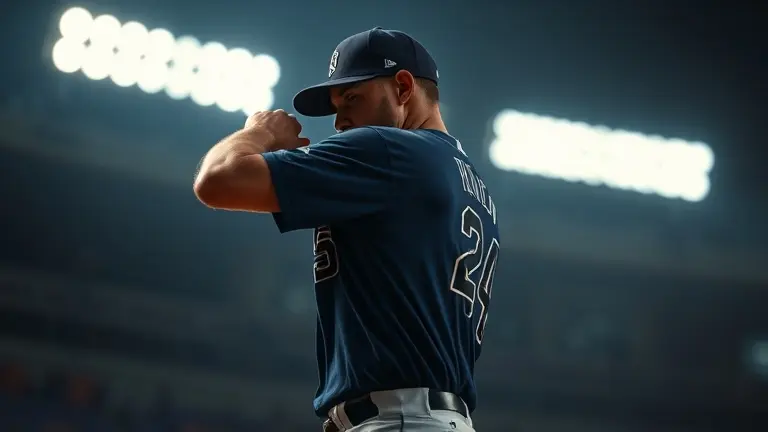
When Shane McClanahan walked off the mound at the bottom of the fourth inning against the Texas Rangers on July 30, 2026, the silence in the Tampa Bay Rays’ front office was deafening. The official report of ‘left-mid back tightness’ might sound like a routine injury update, but the raw data paints a more alarming picture. Witnessing a primary ace drop his velocity from a dominant 97 mph in the opening frame to a concerning 93 mph just innings later has sent shockwaves through the league. With the August 3rd trade deadline looming, this isn’t just a medical concern—it is a high-stakes analytical crisis.
For Rays executives and prospective trade partners, the clock is now the primary opponent. The gap between ‘minor setback’ and ‘damaged asset’ is razor-thin, and the decision-making process required to navigate this uncertainty requires more than just standard scouting reports. It requires cold, calculated cognitive precision to determine if the reward of acquiring a talent like McClanahan outweighs the profound risk of a velocity-depleted pitching arm.
Shane McClanahan Exits Early: A Critical Development Before the Trade Deadline
The landscape of the 2026 MLB trade market shifted dramatically on July 30, when Shane McClanahan was forced to exit his start against the Texas Rangers in the fourth inning. Citing left-mid back tightness, the Tampa Bay Rays’ ace left the mound amid immediate concerns regarding both his physical health and his status as a high-profile trade asset. The departure was not merely a tactical move; it was accompanied by a concerning and measurable decline in performance metrics that has sent front offices across the league into a state of heightened caution.
The Velocity Concern and Trade Implications
Data provided by the Tampa Bay Times underscores the severity of the situation. McClanahan began the game touching 97 mph, but by the time he was removed in the fourth frame, his velocity had dipped to 93 mph. This four-mph drop, paired with an identified physical ailment, creates a significant hurdle for the Tampa Bay Rays as they approach the August 3, 2026, trade deadline. Prospective contenders evaluating McClanahan as a potential “difference-maker” for a postseason push now face a high-stakes calculation regarding the risk of acquiring an injured arm versus the reward of his established elite ceiling.
Key takeaways from this development include:
- Market Volatility: The proximity to the August 3 deadline leaves little time for medical evaluation, potentially forcing the Rays to choose between holding their asset or accepting a diminished return.
- Performance Indicators: The drop from 97 mph to 93 mph is a major red flag for scouts who prioritize consistent high-velocity output in trade evaluations.
- Contender Strategy: Teams interested in pitching depth must now weigh the medical uncertainty against the potential cost, likely cooling the immediate bidding process until further diagnostics are released.
With the trade deadline rapidly approaching, the status of Shane McClanahan remains the most critical variable for the Rays’ front office, as they determine whether to proceed with negotiations or prioritize the long-term health of their star pitcher.
The Velocity Dip: Data-Driven Analysis of the Fourth Inning

The incident involving Shane McClanahan during his July 30, 2026, start against the Texas Rangers has sent shockwaves through the league, primarily due to the stark drop in his physical output. Pitch tracking data from the game reveals a concerning trend: McClanahan opened the first inning firing fastballs at a steady 97 mph, a velocity consistent with his career norms. However, as the game progressed into the fourth inning, observers noted a significant decline, with his fastball velocity plateauing at 93 mph. This four-mile-per-hour drop is not merely a statistical anomaly; it serves as a critical red flag for MLB front offices and scouting departments currently evaluating his viability as a trade deadline acquisition.
Metrics That Concern Front Offices
For talent evaluators, a rapid decline in velocity mid-start is often the most reliable “tell” for an underlying physical ailment. While the official diagnosis remains left-mid back tightness, the data suggests the issue may have compromised his mechanics earlier than the Rays coaching staff realized. Key reasons why this drop is alarming include:
- Predictive Value: A sustained decrease in peak velocity often correlates with a pitcher’s inability to properly utilize their kinetic chain, which places compensatory stress on other areas of the body.
- Scouting Optics: Potential trade suitors prioritize pitchers who demonstrate “durable stuff.” Seeing an elite asset like Shane McClanahan lose significant velocity on national television creates immediate skepticism regarding his immediate health status.
- Trade Leverage: The proximity to the August 3 deadline means that front offices have minimal time to conduct independent medical deep dives, forcing them to rely on these real-time in-game performance metrics to determine if a trade is worth the risk.
Ultimately, this velocity trend acts as a high-stakes barometer for injury severity. While the Rays maintain a cautious stance, the drop from 97 mph to 93 mph suggests a performance floor that is far too unstable for contenders seeking a high-leverage starter for a postseason push. Any team now considering an acquisition must weigh whether this dip is a temporary symptom of back tightness or a precursor to more significant, long-term regression.
Impact on Trade Market Dynamics and Valuations

The sudden departure of Shane McClanahan during his July 30, 2026, start against the Texas Rangers has introduced significant volatility into an already frantic MLB trade market. With the August 3 deadline looming, the optics of a left-mid back injury—compounded by a measurable velocity dip from 97 mph to 93 mph—fundamentally shift the leverage dynamic between the Tampa Bay Rays and prospective contenders. General managers prioritize durability and “clean” medical reports; consequently, this development likely forces front offices to pause negotiations while their respective medical staffs demand access to imaging and clinical diagnostics.
Reassessing Risk for Potential Suitors
For contending teams, the risk-reward calculation has tilted heavily toward caution. A starting pitcher of McClanahan’s caliber is typically the centerpiece of a blockbuster deal, but his current status creates a “damaged asset” scenario that complicates valuations:
- Valuation Dilution: Teams previously willing to part with top-tier prospects are likely to pivot, insisting on “protection clauses” or contingent draft capital in the event of a prolonged absence.
- Medical Transparency: The Rays now face a difficult decision: provide full transparency that could tank his market value, or attempt to downplay the severity, which risks accusations of bad faith and could lead to voided trades post-physical.
- Opportunity Cost: Contenders with a narrow window to win may decide that a player dealing with back tightness is too high a liability, potentially causing them to look toward healthier, albeit less talented, arms to fill their rotation needs.
The velocity drop serves as the most concerning data point for analysts. While back tightness is often categorized as minor, a rapid decline in pitch speed is frequently a precursor to structural issues. For the Rays, the timeline is brutal; they have less than 96 hours to provide enough medical assurance to convince a partner that Shane McClanahan remains an elite-level ace. If the medical feedback is ambiguous, expect the trade market for him to effectively freeze, as the cost of acquiring an injured premium pitcher outweighs the potential competitive advantage in the final stretch of the season.
Ripple Effects for the Tampa Bay Rays’ Playoff Push

The sudden exit of Shane McClanahan during his July 30, 2026, start against the Texas Rangers has introduced significant volatility into the Tampa Bay Rays’ front-office calculus. With the MLB trade deadline arriving on August 3, the organization is now forced to weigh the immediate medical uncertainty of their ace against the long-term roster construction goals of the franchise. The observed velocity drop—with McClanahan’s fastball regressing from 97 mph in the opening frame to 93 mph before his removal—serves as a red flag for front offices league-wide. For the Rays, this incident complicates their strategy as they determine whether to leverage their existing assets for a deep postseason run or pivot toward a more conservative acquisition strategy.
Navigating Deadline Volatility
If medical evaluations suggest that McClanahan’s left-mid back tightness is more than a short-term issue, the Rays face a difficult strategic crossroads. Potential suitors are likely to demand significant discounts or risk-mitigation clauses, effectively chilling the market for one of the game’s premier starters. The Rays’ front office must now assess several critical path options:
- Hold Firm: Retaining McClanahan to wait for a full recovery, assuming he remains the anchor of the 2026 starting rotation.
- Discounted Trade: Accepting a diminished prospect return if suitors view the back issue as a long-term liability rather than an acute, temporary ailment.
- Strategic Pivot: Shifting deadline resources toward bolstering bullpen depth or acquiring secondary rotation insurance to offset the potential loss of McClanahan’s innings.
The timing of this injury creates a compressed window for Tampa Bay to gather diagnostic data. With only days until the deadline, the Rays must decide if the trade value of their star pitcher remains viable or if the uncertainty makes him an untradable asset for the immediate future. Consequently, the team’s ability to maintain their playoff push now hinges on their internal medical prognosis and their willingness to gamble on McClanahan’s health against a high-stakes, closing market.
Navigating the Front-Office Pressure Cooker
The sudden injury of a cornerstone player like McClanahan mid-trade-week acts as a stress test for every front office involved. As scouts scramble to assess health risks and general managers weigh the impact of a potential velocity regression on their post-season rotations, the margin for error effectively vanishes. Making a multi-million dollar acquisition under these conditions requires elite mental clarity; a single miscalculation driven by deadline-induced fatigue can derail a franchise’s championship window for years to come.
Just as a front office relies on advanced biometrics to monitor a pitcher’s physical health, today’s high-performing decision-makers are turning to cognitive optimization to maintain an edge. In the high-pressure environment of the trade deadline, where every second counts and information overload is constant, executive mental fatigue is the silent killer of sound judgment. The Brain Song is designed specifically to help high-achievers cut through the ‘brain fog’ of intense, round-the-clock negotiations, providing the cognitive stability needed to analyze complex data sets and make split-second, high-impact decisions with total confidence.
By integrating The Brain Song into your daily routine, you aren’t just managing stress—you are optimizing your analytical output to ensure your most important decisions are backed by sustained focus and mental agility. Whether you are navigating the complexities of professional sports management or managing your own high-stakes career, now is the time to eliminate doubt and sharpen your competitive edge.
 Optimize your analytical focus during this high-stakes deadline and beyond with The Brain Song.Yes, I Want This Now!