
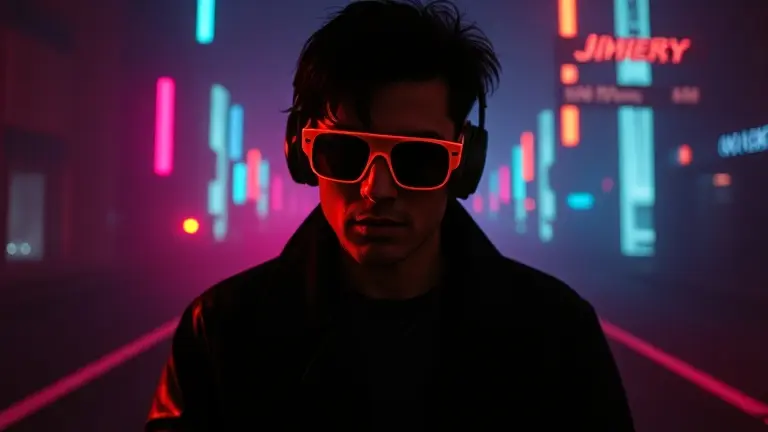
The electronic music community is in mourning following the tragic news of the death of Vincent Belorgey, the visionary French artist known globally as Kavinsky. Found in his Paris home at the age of 50, his passing has sent ripples through the culture he helped define. While investigators continue their work regarding the exact cause, reports suggest a sudden stroke, cutting short the career of a man who transformed synthwave from a niche experiment into a cinematic powerhouse. For many, his name is inseparable from the neon-soaked, retro-futuristic atmosphere of the 2011 cult film Drive, where his anthem ‘Nightcall’ became the definitive soundtrack of a generation.
Yet, to remember Kavinsky solely for one hit is to overlook the profound architectural impact he had on the French electronic scene. By blending the dark, pulsating energy of 80s nostalgia with high-fidelity production, dj Kavinsky paved the way for a sonic revolution. His work did more than entertain; it commanded a specific mental state, pulling listeners into a hypnotic, productive flow that was both immersive and hauntingly precise. As we reflect on his legacy, we explore how his mastery of frequency and atmosphere didn’t just shape cinema—it changed how we understand the relationship between sound and human cognitive focus.
Remembering Vincent Belorgey: The Sudden Passing of Kavinsky
The electronic music community is in mourning following the tragic news of the death of Vincent Belorgey, the visionary French musician and producer globally recognized as Kavinsky. At just 50 years old, the artist was discovered in his Paris home this past Tuesday, a loss that has sent shockwaves through the industry. While official investigations are currently being conducted by the Paris prosecutor’s office, initial reports from French media outlets, including Le Figaro, have suggested a potential stroke as the cause of death. Out of respect for his family and the ongoing investigation, the music world has focused its collective attention on honoring his profound creative legacy.
As a pioneer of the synthwave genre, Kavinsky carved out a unique sonic space that bridged the gap between retro-futuristic nostalgia and modern electronic production. He achieved monumental global success with his 2010 anthem, “Nightcall,” a track that became the defining sound of the 2011 cult film Drive. The song’s inclusion in the film’s opening credits transformed it into an instant classic, effectively cementing dj kavinsky as a cornerstone of modern pop culture and the “Drive aesthetic.”
A Legacy Defined by Sound
Beyond his most famous track, the impact of Kavinsky on the global electronic scene remains substantial. His approach to storytelling through music helped normalize the revival of 1980s textures within contemporary dance music, influencing a generation of producers. To understand the gravity of this loss, consider the following contributions:
- Genre Architecture: He was instrumental in building the foundation of the modern synthwave subgenre.
- Cultural Crossover: His ability to pair dark, cinematic synths with catchy melodies redefined the sound of independent cinema soundtracks.
- Artistic Persona: By adopting the “Kavinsky” character—a zombie-like figure who returned from the dead—he merged performance art with music, creating an immersive experience for his fans.
The death of the French dj Kavinsky represents the silencing of a truly singular voice. Whether through his studio albums or his dynamic live performances, he pushed the boundaries of electronic music, ensuring his place in history remains secure as a master of mood, atmosphere, and rhythmic tension.
The ‘Nightcall’ Legacy: Defining the ‘Drive’ Aesthetic

Few compositions have captured the zeitgeist of a decade as effectively as Kavinsky’s 2010 masterpiece, “Nightcall.” While the French DJ Kavinsky had already established a niche following in the underground electronic scene, his collaboration with Lovefoxxx on this track propelled him into the global spotlight. The song’s inclusion in the opening credits of the 2011 cult film Drive did more than just provide a soundtrack; it provided an identity. As Ryan Gosling’s character cruised through the neon-drenched streets of Los Angeles, the haunting, vocoder-drenched synthesizers defined the very essence of the “cool” aesthetic that would dominate early 2010s pop culture.
Beyond the Silver Screen
“Nightcall” transcended its association with the Drive movie to become a definitive anthem of the synthwave genre. By blending 1980s retro-futurism with modern production techniques, the track helped ignite a massive revival in analog synthesizer aesthetics. Its influence on modern music is profound, having set a blueprint for artists attempting to balance melancholy lyrics with driving, pulse-like beats.
The lasting impact of the track is evident in several key areas:
- Genre Solidification: It acted as a gateway for listeners to discover the broader synthwave subgenre, cementing Kavinsky’s status as a pioneer.
- Atmospheric Storytelling: The song’s production quality taught a generation of electronic producers how to use texture and minimalism to build cinematic tension.
- Cultural Longevity: Decades after its release, it remains a staple in late-night driving playlists and has been sampled and remixed countless times, proving its status as a timeless piece of electronic art.
Even as the community mourns the sudden passing of the artist, the legacy of dj kavinsky nightcall remains untouchable. He didn’t just write a song for a film; he crafted a sonic landscape that allowed audiences to inhabit a specific, idealized version of the night. This contribution to music history ensures that his influence will persist long after his untimely departure.
Architect of Synthwave: How Kavinsky Shaped Modern Electronic Music
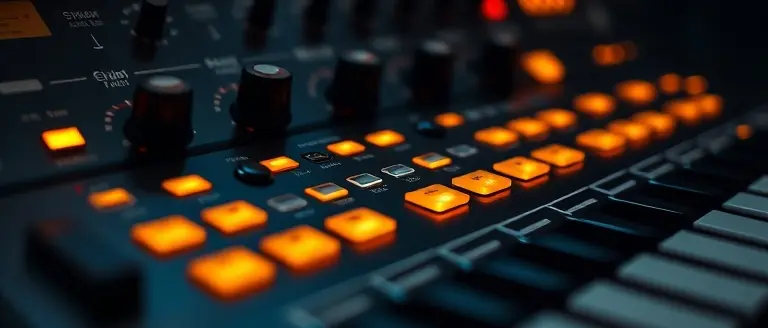
Before the sudden news regarding Kavinsky’s death emerged, the artist—born Vincent Belorgey—had already solidified his position as a foundational architect of modern synthwave. While many electronic artists flirted with retro aesthetics, French DJ Kavinsky fully committed to a cinematic, 1980s-inflected persona that felt less like a musical project and more like a narrative film waiting to be scored. His production technique relied on punchy, gated-reverb drums and nostalgic arpeggios that paid homage to the horror and action soundtracks of the VHS era. By bridging the gap between niche underground electronic music and mainstream cinema, he created a sonic blueprint that modern producers continue to emulate.
The Legacy of Nightcall and Cinematic Sound
The cultural footprint left by the DJ Kavinsky Nightcall track is arguably the most significant contribution to the resurgence of synth-heavy pop in the last two decades. After its prominent inclusion in the 2011 Drive movie, the song transcended the electronic underground to become a global phenomenon. Its influence can be felt across the following areas:
- Aesthetic Cohesion: He proved that electronic music could function as a cohesive storytelling device, merging high-fashion sensibilities with gritty, urban synth-pop.
- Production Standards: His meticulous attention to analog-style sound design pushed contemporary electronic producers to embrace vintage synthesizers and “outrun” aesthetics.
- Mainstream Integration: By successfully pairing his music with visual media, he paved the way for subsequent electronic artists to gain licensing success in major Hollywood projects.
Beyond his signature anthem, Kavinsky’s career trajectory demonstrated a sophisticated understanding of French house culture and its relationship to the retro-futuristic subgenre. He did not simply mimic the past; he modernized it with a dark, brooding intensity that resonated with listeners globally. As the music community reflects on his life, it is clear that his influence extends far beyond a single track. He fundamentally altered the trajectory of synthwave, ensuring that the neon-drenched, melancholic sounds of the 1980s would remain a permanent fixture in the modern musical landscape.
A Musical Comparison: Analyzing the Sound Design of a Pioneer

To understand the enduring legacy of Kavinsky, one must deconstruct the sonic architecture that defined his work. Unlike many contemporaries in the French electronic scene who pushed for maximalist, aggressive sounds, dj kavinsky opted for a cinematic, melancholic minimalism. His seminal track, “nightcall,” serves as a masterclass in atmospheric tension. While peers like Daft Punk often experimented with house-driven sampling and disco-funk, Kavinsky utilized a specific blend of 1980s nostalgia and modern digital precision. The track relies on a distinct, pulsating arpeggiated bassline—a hallmark of the synthwave genre—that creates a sense of perpetual motion, mirroring the neon-drenched atmosphere of the drive movie soundtrack.
Deconstructing the Signature Synthwave Sound
Kavinsky’s production style was characterized by a meticulous layering of vintage textures. When compared to other quintessential synth-pop tracks, his work stands out for its restraint and “space.” Key components of his production signature include:
- Drum Machine Patterns: He frequently employed gated-reverb snare hits that echoed the stark, processed percussion of 1980s pop production, providing a heavy, grounded anchor for his airy synths.
- Arpeggiated Basslines: By utilizing polyphonic synthesizers with long, sweeping filters, he created a “floating” effect that allowed the melody to evolve without becoming cluttered.
- Filtered Vocals: The use of heavily processed, low-register vocals added a layer of mystery and detachment, which became synonymous with the french dj kavinsky brand.
This specific production palette did more than just create a song; it defined an entire aesthetic movement. By stripping away unnecessary elements, Kavinsky allowed the narrative elements of his soundscapes—what fans often refer to as the “Drive aesthetic”—to take center stage. His ability to balance synthetic coldness with raw, human emotional resonance is precisely why his influence remains woven into the fabric of modern electronic music. Even as the synthwave genre has evolved, the foundational blueprints left behind by Kavinsky continue to serve as a benchmark for producers seeking to capture that elusive, timeless night-drive feeling.
Harnessing the Sonic Blueprint of Focus
The sudden passing of Kavinsky is more than just the loss of a pioneer; it marks the silencing of a visionary whose synthwave textures fundamentally altered the landscape of modern electronic music. Beyond the global success of ‘Nightcall,’ his ability to manipulate atmosphere and rhythm created a lasting legacy that continues to influence how we perceive the intersection of audio and emotion. He proved that music is not just background noise—it is a structure that can define an entire aesthetic experience.
Much like the meticulously crafted soundscapes of Kavinsky that defined an era of focus and atmosphere, recent advancements in neuroscience show that specific auditory patterns can fundamentally reshape our own cognitive performance. Your brain functions like a high-end instrument, and just as the French dj Kavinsky fine-tuned his synths to create the ‘Drive’ aesthetic, you can calibrate your own mental state using precision-engineered sound. By utilizing the same scientific principles of frequency and rhythm found in top-tier electronic production, you can sharpen your focus and silence the noise of a chaotic world.
We invite you to experience this sonic evolution firsthand, treating your mind as the ultimate instrument waiting for its perfect frequency. If you are ready to transition from passive listening to active cognitive optimization, your journey begins with a proven 12-minute auditory routine designed to eliminate brain fog and unlock deep mental clarity. Embrace the power of sound to master your focus today.
 Discover how to calibrate your own cognitive rhythm with The Brain Song’s 12-minute auditory routine.Transform My Mental Focus Today!