
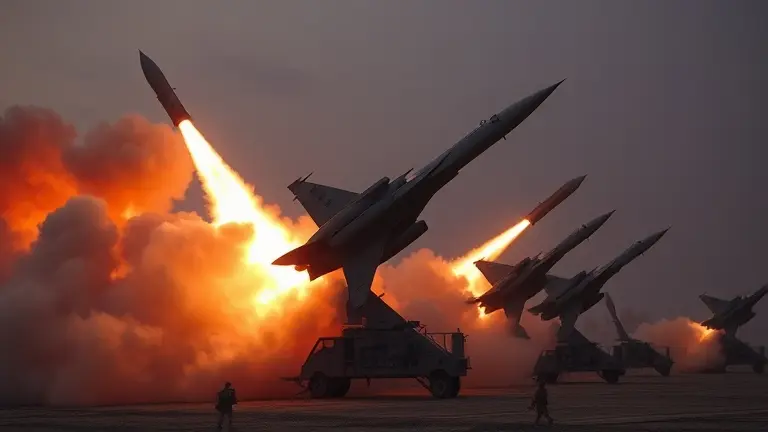
The geopolitical landscape of the Middle East shifted violently on July 28-29, 2026, marking a definitive end to the fragile pause in direct hostilities between Iran and regional powers. Following coordinated U.S.-Saudi airstrikes against Iran-aligned proxies in Iraq, Tehran launched a sophisticated ballistic missile barrage targeting U.S. military assets. While CENTCOM has confirmed a 100% interception rate—validated by successful engagements over Jordan—the incident has ignited immediate market volatility, causing a 5% surge in oil prices and unsettling crypto markets. This is no longer merely a regional flare-up; it is an active, unfolding conflict that places the critical transit lanes of the Strait of Hormuz at the center of global strategic focus.
For observers and investors alike, the temptation to succumb to speculative ‘war talk’ is high, yet navigating this crisis requires a commitment to raw, verifiable intelligence. Distinguishing between established military reality and tactical misinformation is paramount to maintaining situational awareness. In this situation report, we bypass the noise of fragmented news cycles to provide a high-level strategic analysis of the interception capabilities involved, the evolving U.S. posture, and the underlying economic triggers that will dictate the next phase of this escalation.
Situation Report: Escalation and Missile Intercepts (July 28-29, 2026)
The regional security landscape in the Middle East shifted dramatically on July 28-29, 2026, marking a definitive end to the period of de-escalation that had previously characterized the standoff between Tehran and Western-aligned forces. This resurgence in hostilities began when the United States and Saudi Arabia conducted coordinated, joint airstrikes targeting several Iran-aligned proxies embedded within Iraq. These strikes were framed by coalition officials as a preemptive measure to neutralize threats against regional stability and military personnel.
In a rapid retaliatory move, Iran launched a series of Iranian ballistic missiles directly targeting key US military positions. Unlike previous localized exchanges, this deployment signaled a significant shift in operational strategy, moving from proxy engagement to direct state-level confrontation. Despite the high-velocity nature of these projectiles, the United States Central Command (CENTCOM) confirmed that all incoming threats were successfully neutralized before reaching their intended targets.
Technical Performance and Regional Defense
The effectiveness of the multi-layered air defense architecture proved vital during this engagement. Intelligence assessments highlight several critical components of the response:
- Coordinated Interceptions: Allied air defense batteries, including significant assets positioned within Jordan, played a decisive role in the interception sequence, successfully identifying and destroying incoming missiles in flight.
- System Reliability: CENTCOM’s official statements confirm that the defensive umbrella—composed of sophisticated US-operated radar and interceptor batteries—functioned at full capacity, ensuring zero damage to US military installations.
- Tactical Shift: The reliance on ballistic weaponry by Iran highlights an effort to overwhelm regional defenses, yet the successful interception rate serves as a stark demonstration of current coalition military readiness.
This escalation has effectively dismantled the previous “pause” in direct strikes, placing regional security forces on high alert. Markets have responded sharply to the uncertainty, with energy sectors bracing for further volatility as geopolitical tensions shift toward the strategic choke points of the Strait of Hormuz.
Strategic Shifts in US Military Positioning
The July 2026 escalation marks a definitive end to the period of relative restraint, forcing an immediate pivot in US military positioning across the Middle East. The “surprise” launch of Iranian ballistic missiles targeting US personnel serves as a stress test for regional security architecture. Because CENTCOM successfully intercepted all inbound projectiles, including those detected within Jordanian airspace, the tactical narrative has shifted from deterrence through containment to a posture of high-readiness active defense. This failure of the Iranian strike package demonstrates the efficacy of the integrated air and missile defense (IAMD) systems shared between the US, Saudi Arabia, and regional partners, effectively neutralizing Iran’s primary power-projection tool.
Tactical Implications for Regional Defense
The demonstrated coordination between coalition forces suggests a move toward a more unified regional security framework. For US forces stationed in Iraq and at forward operating bases throughout the Gulf, the current reality necessitates several strategic adjustments:
- Heightened Alert Cycles: Command structures have moved to sustained high-readiness states, reducing response times for interceptor batteries.
- Asset Hardening: Increased scrutiny on vulnerability profiles for smaller, mobile bases that previously relied on a “low-profile” presence.
- Interoperability Focus: The successful integration of Saudi, US, and regional detection data during the July 28-29 incident proves that technical interoperability is no longer theoretical but operational.
Evidence suggests that the Pentagon will likely prioritize the deployment of additional theater missile defense assets to counter future saturation-style attacks. By moving away from a policy of managed containment toward a reinforced, proactive defensive stance, the US is signaling that it will no longer tolerate the “gray zone” tactics utilized by Iran-aligned proxies. These shifts in deployment are intended to stabilize the theater, but they simultaneously increase the risk of rapid horizontal escalation, particularly regarding the security of the Strait of Hormuz and global energy transit routes.
Economic Impact: Oil Markets and Global Volatility

The recent escalation involving Iranian ballistic missiles has triggered an immediate and sharp response in global financial markets, underscoring the deep sensitivity of the energy sector to Middle Eastern geopolitical instability. Within hours of the strike on US military positions, global oil prices surged by approximately 5%, reflecting a sudden “risk premium” injected into energy trading. This price adjustment is not merely a reaction to the physical volume of oil flows but a preemptive hedge against the threat of widespread conflict that could jeopardize transit through the Strait of Hormuz. Given that a significant percentage of the world’s seaborne crude oil passes through this critical maritime chokepoint, any credible threat to regional security forces investors to recalibrate their outlook on supply chain continuity.
Market Volatility and Asset Correlation
Beyond traditional energy commodities, the conflict has exacerbated volatility across broader asset classes, including cryptocurrency. Investors often view Bitcoin and other digital assets as proxies for risk-on sentiment; consequently, the sudden heightening of tensions has seen significant fluctuations as capital rotates toward safer, defensive positions. The analytical framework for this behavior lies in the market’s attempt to price in the “end of the pause” regarding direct strikes between Iranian forces and the US-Saudi alliance. Key market drivers currently include:
- Geopolitical Risk Premiums: Traders are pricing in a heightened probability of regional supply disruptions, forcing oil futures higher to account for potential shipment delays or insurance surcharges.
- Flight to Safety: Heightened uncertainty typically triggers a movement away from volatile speculative assets toward gold, bonds, or the US dollar.
- Supply Chain Fears: The potential for further Iranian activity near the Strait of Hormuz remains the primary variable in long-term commodity pricing.
The current instability necessitates a disciplined observation of the US-Saudi joint strategic response. As markets digest the effectiveness of the interceptions confirmed by CENTCOM, the degree of volatility will likely depend on whether this escalation stabilizes or leads to further retaliatory cycles. For investors, the primary concern remains the duration of this heightened tension and whether the diplomatic “off-ramps” that previously contained the conflict are still viable in this new, more aggressive phase.
The Strait of Hormuz: Monitoring the Next Escalation Vector
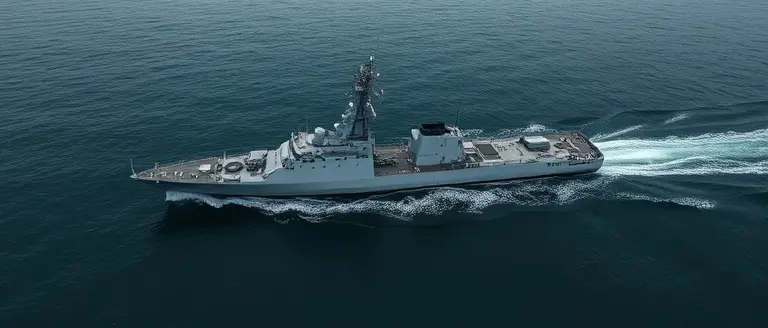
As tensions escalate following the recent exchange of Iranian ballistic missiles and joint US-Saudi counter-strikes, the focus of geopolitical analysts has shifted toward the Strait of Hormuz. This narrow maritime chokepoint is arguably the most critical energy artery in the world, with roughly 20% of global petroleum consumption flowing through its waters daily. Any move by Iran to leverage its naval capabilities in this region would signify a massive leap in the current conflict, transitioning from a localized exchange of munitions to a direct threat to global economic security.
Indicators of Maritime Escalation
Defense experts and intelligence agencies are closely monitoring several specific indicators that could signal an attempt to disrupt passage through the Strait. Investors and policymakers should watch for the following developments, which would suggest a tactical shift toward maritime asymmetric warfare:
- Naval Mobilization: Unscheduled surges of Iranian Revolutionary Guard Corps (IRGC) fast-attack craft and minelaying vessels moving into narrow shipping channels.
- Maritime Warnings: The issuance of new “Notice to Mariners” or closure of transit zones, which Iran has previously utilized as a signaling tool to assert territorial control.
- Communication Gaps: Any unauthorized radio interference or harassment of commercial tankers, which serves as a precursor to broader intervention.
- Asset Repositioning: Increased activity of Iranian missiles specifically configured for anti-ship roles being moved to coastal batteries overlooking the waterway.
The current instability, exacerbated by the recent missile attacks on US positions, has already triggered a 5% surge in oil prices. Should the conflict widen to include the Strait of Hormuz, market volatility is expected to intensify, potentially impacting global supply chains far beyond the Middle East. While current CENTCOM assessments prioritize the defense of US military assets, the strategic importance of this corridor ensures it remains the primary focal point for monitoring the next phase of this unfolding geopolitical crisis.
Mastering Certainty in an Uncertain World
As the regional landscape undergoes this dramatic pivot, the core lesson is clear: volatility thrives in the absence of verified, structural data. Just as our geopolitical analysis relies on rigorous verification to strip away the noise of speculative war talk, your personal endeavors require a similarly disciplined framework to avoid the costly errors born of guesswork. We have navigated the complexities of the current crisis, from interception capabilities to economic impact, demonstrating that structural integrity—whether in national defense or individual projects—is the only defense against chaos.
In an era defined by global instability, precision is your most valuable asset. The difference between an amateur approach and a professional outcome lies entirely in the quality of your blueprints. If you appreciate the analytical rigor applied here to understand the complexities of Iranian missiles and the unfolding regional conflict, you possess the mindset required to master your own domain with the same level of strategic certainty.
We invite you to move beyond fragmented, trial-and-error methods and adopt a proven, master-level methodology for your personal projects. By utilizing verified, step-by-step blueprints, you eliminate the guesswork and ensure that every action you take is built upon a foundation of absolute technical clarity.
 Build your personal projects with the same strategic certainty required by global analysts—access the complete library of verified blueprints here.Get My Master Blueprint Library Now!