
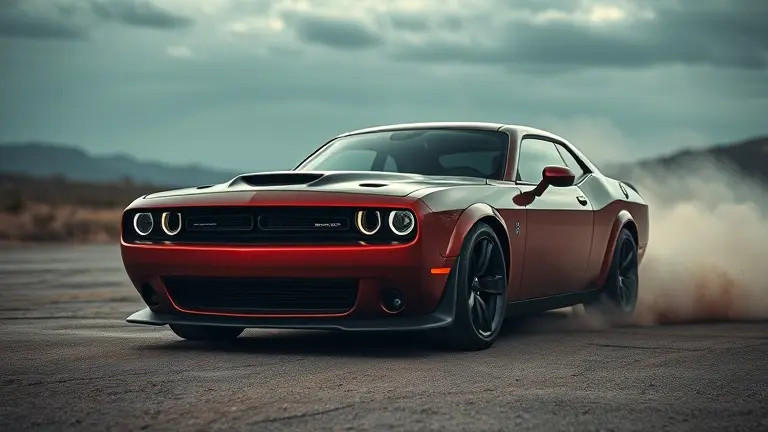
The automotive landscape is shifting, and at the heart of this transformation lies the 2029 Dodge Copperhead—a nameplate resurrected from 1997 to spearhead a new era of “hyper-muscle.” As Stellantis invests $70 billion into its bold turnaround plan, the Copperhead has emerged not merely as a retro-revival, but as the crowning halo model for a rejuvenated SRT performance division. This is a deliberate move away from the traditional, raw power of the past toward a high-tech, precision-engineered future that promises to redefine American performance on both the street and the track.
But what does it truly take to evolve a nostalgic concept into a next-generation machine? Bridging the gap between the original 1997 vision and the 2029 production reality requires more than raw horsepower; it demands a radical overhaul of the design blueprint and a deep-dive analysis of modern engineering standards. In this article, we dissect how the Copperhead serves as the ultimate litmus test for the future of muscle, examining the technical specifications, the integration of cutting-edge SRT technology, and the uncompromising precision required to bring such a monumental project to life.
The Return of the Legend: Dodge Copperhead’s Role in the Stellantis Turnaround

The announcement of the 2029 Dodge Copperhead marks a pivotal shift in the automotive landscape, serving as the definitive “halo” vehicle for the brand’s high-performance resurgence. Officially positioned as the flagship for the revitalized SRT performance division, the Copperhead is far more than a simple nostalgia play. It represents the spearhead of a massive $70 billion business turnaround plan for Stellantis, initially unveiled in May 2026 under the leadership of CEO Antonio Filosa. By leveraging this historic nameplate, Dodge is signaling a transition from traditional combustion-only muscle cars to a new era of “hyper-muscle” engineering that prioritizes both raw power and cutting-edge, next-generation performance technology.
A Strategic Pillar for the Future
The decision to revive the Copperhead nameplate is a calculated move to anchor the brand’s identity post-2026. As Stellantis seeks to stabilize its market position and sharpen the focus of its various portfolios, the Copperhead serves as a technical showcase for what the future of American performance will look like. Its development is critical for several strategic reasons:
- Brand Rejuvenation: It solidifies the SRT division as a premier engineering house, capable of delivering hyper-muscle cars that rival high-end European supercars.
- Capitalizing on Heritage: Utilizing the “Copperhead” moniker taps into deep consumer emotional equity, bridging the gap between the 1997 concept and the modern production requirements of the late 2020s.
- Turnaround Catalyst: As a central pillar of the $70 billion strategy, the vehicle acts as a psychological and financial anchor, proving to stakeholders that the automaker is committed to high-margin, high-desirability halo products.
Evidence suggests that the Copperhead will be the ultimate testing ground for new powertrain architectures, signaling how Dodge intends to survive and thrive in an increasingly electrified, high-tech industry. By blending the aggressive, “fire-breathing” spirit of classic muscle with modern hyper-performance metrics, the 2029 Dodge Copperhead is not merely a car; it is a declaration of intent for the next decade of American automotive performance.
From 1997 Concept to 2029 Reality: A Tale of Two Copperheads

The revival of the Dodge Copperhead nameplate represents one of the most intriguing pivots in automotive history. To understand the magnitude of the 2029 production model, one must contrast it with the original 1997 concept car. While the 1997 version was an exercise in minimalist design—a compact, rear-wheel-drive roadster powered by a modest 2.7-liter V6—the upcoming 2029 iteration is being engineered as a “fire-breathing” hyper-muscle car. The transition from a nimble, enthusiast-focused two-seater to a flagship performance beast signals Dodge’s broader strategy to redefine the American grand tourer for a new, high-tech era.
Evolution of the Copperhead Philosophy
Where the original concept aimed to capture the essence of a raw, analog driving experience, the 2029 Dodge Copperhead serves as the spearhead of the SRT performance division’s renaissance. Following the $70 billion business turnaround plan for Stellantis, Dodge has clearly shifted its focus from entry-level roadsters to dominant, high-output powerplants. This evolution reflects a necessary adaptation to the post-EV-transition landscape, blending traditional muscle car aesthetics with advanced aerodynamics and high-performance hybrid or forced-induction powertrain systems.
Key differences between the two eras include:
- Segment Positioning: The 1997 model was a compact roadster competing for niche sports car buyers; the 2029 model is a halo vehicle designed to lead the brand’s entire performance portfolio.
- Powertrain Strategy: The move from the 1990s-era V6 to the expected high-output, turbocharged or hybrid-assisted “hyper-muscle” setup represents a massive leap in horsepower and torque capability.
- Technological Integration: While the 1997 concept prioritized mechanical simplicity, the 2029 version utilizes the latest in electronic chassis control, active aero, and electrification to bridge the gap between classic American muscle and modern hypercar performance.
By resurrecting the Copperhead moniker, Dodge is effectively honoring its heritage while simultaneously signaling that its performance future will be far more aggressive than the concept ever envisioned. This synthesis of history and cutting-edge engineering ensures that the new Copperhead remains a definitive statement of the brand’s resilience and ambition.
Defining the ‘Hyper-Muscle’ Era: Performance Expectations

The classification of the 2029 Dodge Copperhead as a “hyper-muscle” car represents a deliberate shift in the brand’s performance philosophy. As Stellantis executes its $70 billion turnaround strategy, the SRT performance division is tasked with synthesizing the raw, visceral character of traditional American iron with the sophisticated speed requirements of the modern era. Unlike the historical concept that relied purely on a compact, high-revving naturally aspirated engine, the production-intent 2029 model is expected to bridge the gap between traditional combustion and electrified acceleration. This “hyper-muscle” designation signals a departure from entry-level speed, moving instead toward a hypercar-adjacent tier that prioritizes power-to-weight optimization and advanced thermal management.
Technical Expectations and Powertrain Integration
Industry analysts anticipate that the Copperhead will serve as the flagship testbed for high-output hybrid integration. While official specifications remain under wraps, evidence suggests the following technical directions for this flagship model:
- Hybrid-Electric Synergy: The integration of an advanced electric motor array mated to a high-displacement turbocharged engine to eliminate turbo lag and provide immediate, violent torque delivery.
- Weight Reduction Architecture: A focus on lightweight carbon-fiber and alloy composites to ensure that the increased weight of battery cells does not hinder the vehicle’s cornering agility, a notable departure from the heavy “land yacht” muscle cars of the past.
- SRT-Tuned Dynamics: The inclusion of active aerodynamic profiles and specialized torque-vectoring systems developed by the SRT team to handle the sheer force of a hyper-muscle power plant.
By blending these high-tech systems, Dodge aims to offer a driving experience that retains the “fire-breathing” personality enthusiasts demand, while achieving the lap times necessary to compete on a global stage. The Copperhead is essentially designed to be the ultimate statement of intent for the brand’s future, balancing the legacy of the nameplate with the brutal efficiency of 21st-century engineering.
The Post-EV Transition: Where the Copperhead Fits

The emergence of the 2029 Dodge Copperhead signals a pivotal pivot in the automotive landscape, marking what industry analysts are calling a “third way” for American performance manufacturing. As the industry recalibrates from an aggressive, short-term push toward pure battery-electric vehicles (BEVs), the Copperhead arrives as a sophisticated synthesis of high-output internal combustion and advanced hybrid electrification. By leveraging the SRT performance division’s engineering prowess, Dodge is positioning this halo model to recapture the visceral, sensory-driven experience that traditional muscle car enthusiasts have long feared would be lost to the quiet efficiency of modern electric motors.
Defining the Hyper-Muscle Paradigm
The Copperhead serves as the vanguard for a new era of “hyper-muscle” where power density and thermal efficiency take center stage. Rather than abandoning the heritage of the original 1997 concept car, the production model updates the philosophy for a post-EV-transition market. Evidence suggests that the vehicle will prioritize mechanical engagement while utilizing electrification to bridge the performance gap between legacy V8 power and the instant torque of modern platforms.
Key competitive differentiators for the Copperhead include:
- Hybrid Integration: Utilizing electrified assist to optimize power delivery across the entire rev range, effectively eliminating turbo lag and torque troughs.
- Chassis Dynamics: Incorporating lightweight materials and active aerodynamics to redefine the handling capabilities typically associated with the brand.
- Brand Identity: Re-establishing Dodge’s position as a leader in high-performance innovation within the broader Stellantis $70 billion business turnaround plan.
By occupying this specific niche, the Copperhead addresses the massive demand for vehicles that honor the internal combustion legacy while meeting increasingly stringent emissions and efficiency standards. It is not merely a nostalgia play, but a calculated response to the reality that the future of performance is neither strictly gasoline-powered nor purely electric—it is a synergistic combination of both. As it prepares for its release, the Copperhead effectively resets the benchmark for what a high-performance American sports car must achieve to remain relevant in a rapidly evolving global market.
Engineering the Future: Your Blueprint for Mastery
The 2029 Dodge Copperhead represents more than just a return to a legendary nameplate; it marks a pivotal shift toward a hyper-muscle era defined by obsessive precision and technical excellence. As we’ve explored, the journey from a design sketch to a asphalt-shredding reality is paved with thousands of critical engineering decisions, where even the smallest detail determines the difference between a prototype and a legend.
Just as the engineers at the rejuvenated SRT division rely on perfect schematics to turn a bold hyper-muscle vision into a street-legal reality, every great builder understands that the quality of your output is dictated by the precision of your plans. You don’t leave performance to chance, and you shouldn’t leave your projects to guesswork either.
This is where Ted’s Woodworking becomes your ultimate partner in craftsmanship. By providing access to a massive library of verified, professional-grade blueprints, we help you eliminate the trial-and-error frustration that often stalls progress. Whether you are tackling intricate furniture or specialized structural designs, these plans offer the technical certainty required to execute your vision with the same rigor that Dodge engineers apply to the Copperhead. Stop improvising and start building with the confidence of a master.
 Ready to master the details of your own next project? Explore the same level of technical precision found in the world’s most anticipated hyper-muscle cars by visiting Ted’s Woodworking today.Get Instant Access to My Professional Blueprints!