
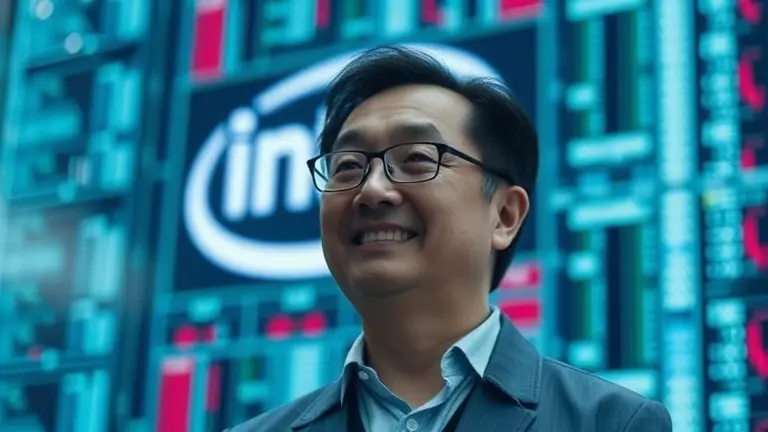
When Intel (INTC) posted its Q2 2026 earnings, Wall Street witnessed more than just a beat; it witnessed a paradigm shift. With the stock surging 172% year-to-date, skeptics who dismissed the company as a legacy relic have been forced to confront a reality that is fundamentally different. Under the rigorous, surgical leadership of CEO Lip-Bu Tan, Intel is no longer just chasing the semiconductor industry—it is reclaiming its throne. By crushing revenue expectations with a 25% quarterly leap, the company has effectively silenced the noise surrounding its previous operational inefficiencies, signaling that the ‘high-NA EUV’ foundry strategy is not merely a blueprint, but a functional engine of hyper-growth.
However, beneath the euphoria of record-breaking stock price movements lies a complex, data-intensive reality. Investors trying to decipher how Intel’s foundry output will reshape the global supply chain face a deluge of technical specifications, macroeconomic variables, and shifting AI market demands. The scale of this financial transformation requires a rare level of cognitive clarity, as the difference between a long-term position and a short-term gamble now hinges on the ability to synthesize dense technical data with strategic business foresight.
The Intel Earnings Surge: Analyzing the Q2 2026 Momentum

The Q2 2026 earnings report has solidified intel stock as the definitive comeback story of the year, with a staggering 172% YTD rally that has reshaped market expectations. Intel reported an impressive 25% year-over-year revenue growth, soundly beating Wall Street estimates and signaling that the firm’s strategic pivot is no longer theoretical but operational. This surge in intc stock reflects a fundamental shift in investor sentiment, moving away from skepticism regarding the company’s manufacturing delays toward a firm belief in its renewed execution capabilities. The market’s volatile yet positive response highlights the massive scale of the AI-driven demand for Intel CPUs, which has provided a critical tailwind for the firm’s bottom line.
Key Drivers Behind the Q2 Beat
The momentum behind intel is supported by several quantitative and qualitative factors that suggest the current growth trajectory is sustainable rather than a temporary spike. Financial analysts point to three primary drivers:
- Foundry Efficiency: Increased throughput in high-NA EUV production has improved margins significantly, lowering the cost per wafer for core clients.
- Upgraded Financial Guidance: Leadership has raised profit outlooks for the remainder of the fiscal year, citing consistent demand from enterprise AI infrastructure.
- Strategic Leadership: The management style of CEO Lip-Bu Tan has successfully streamlined the supply chain, fostering a lean organizational structure that Wall Street has rewarded.
While some retail investors on platforms like r/stocks question if the intel stock price has become overbought after such a rapid ascent, the underlying technical evidence suggests a deep-rooted recovery. Unlike previous quarters characterized by operational uncertainty, this report provides clear visibility into future earnings potential. By prioritizing core competency and aggressive foundry scaling, intc is positioning itself to capture a larger share of the burgeoning semiconductor market, effectively silencing critics who previously deemed the company’s legacy model obsolete in an AI-first economy.
The Lip-Bu Tan Effect: Architecting Intel’s Turnaround

The meteoric 172% year-to-date rise in intel stock is widely attributed to the transformative leadership of CEO Lip-Bu Tan. Since taking the helm, Tan has dismantled the bureaucratic inertia that plagued the company for years, replacing it with a laser-focused strategy centered on execution and technical excellence. Unlike previous leadership regimes that often struggled with conflicting priorities, Tan’s tenure is defined by a ruthless commitment to restoring Intel’s position in the global semiconductor landscape. By prioritizing core CPU profitability and aggressively accelerating the foundry business, he has fundamentally altered the trajectory of INTC.
Strategic Pillars of the Turnaround
Tan’s management style is often cited by financial analysts as the “miracle” behind the current recovery. His strategy rests on three distinct pillars that have restored institutional investor confidence:
- Cultural Realignment: Tan fostered a high-performance culture that emphasizes accountability, forcing a shift away from bloated internal projects toward market-ready, competitive silicon.
- Foundry Rationalization: He successfully navigated the transition toward high-NA EUV production, effectively closing the technical gap between Intel and its primary competitors in the foundry space.
- Capital Discipline: Under his guidance, intel earnings have benefited from a smarter allocation of R&D budgets, focusing exclusively on nodes and architectures that drive the highest margins for AI-driven infrastructure.
This strategic overhaul has transformed intc stock from a value trap into a high-growth asset. By fostering deep industry relationships—leveraging his long-standing reputation in venture capital—Tan has stabilized the supply chain and ensured that Intel is no longer just a legacy chipmaker, but a foundational pillar of the modern AI economy. Evidence suggests that this shift is not merely a short-term reaction to market trends, but a sustainable evolution that positions Intel to capture massive upside as the semiconductor demand cycle continues to expand globally.
The 3 Pillars of Intel’s Recovery: Foundry, CPUs, and AI
Intel’s remarkable 172% year-to-date rally is not merely a result of market sentiment; it is the direct outcome of a fundamental structural realignment. Under CEO Lip-Bu Tan, the company has successfully transitioned from a legacy hardware player into a diversified semiconductor powerhouse. This resurgence rests on three critical pillars that have transformed INTC from a struggling giant into a high-growth investment.
1. Foundry Excellence and High-NA EUV Integration
The crown jewel of Intel’s recovery is its aggressive expansion of Intel Foundry. By successfully deploying high-NA EUV (Extreme Ultraviolet) lithography, Intel has effectively closed the technological gap with industry competitors. This manufacturing prowess allows for smaller, more efficient transistors, making Intel the primary vendor for high-end chip designers who require domestic manufacturing security. Evidence suggests that this foundry success is the main driver behind the company’s recent 25% quarterly revenue growth.
2. The Resurgence of High-Performance CPUs
While the market focused heavily on AI, Intel stock experienced a massive boost due to the resurgence of their core CPU business. The latest generation of processors has reclaimed significant market share in both the data center and enterprise sectors. By optimizing architecture for power efficiency and throughput, Intel has effectively defended its territory against fierce competition, ensuring that the intel earnings report reflects stable, recurring cash flow that supports further R&D.
3. AI-Optimized Silicon
Intel has successfully pivoted its product roadmap to integrate AI-optimized silicon directly into its consumer and server chipsets. By embedding dedicated neural processing units (NPUs), Intel ensures its hardware is “AI-ready” out of the box, capturing demand from both retail consumers and cloud service providers. This strategic shift has turned a potential liability into a massive tailwind for the INTC stock price, as the AI infrastructure boom continues to drive demand for the compute power Intel is uniquely positioned to deliver.
Is Intel Stock Overbought? Navigating the 172% Rally

With intel stock climbing an impressive 172% year-to-date, retail investors and institutional analysts alike are grappling with a single, critical question: is the recent valuation growth fundamentally grounded, or are we witnessing an overextended rally primed for a sharp correction? While a triple-digit gain within a single calendar year often signals an “overbought” condition in technical trading circles, the current INTC trajectory differs significantly from past speculative spikes. The fundamental catalyst for this momentum is not mere market sentiment, but a tangible shift in execution quality following the recent Q2 2026 earnings release, which showcased a 25% revenue surge—the company’s strongest performance in over 15 years.
Understanding the Valuation Shift
Rather than viewing the price action as a volatile bubble, market observers should consider the “turnaround premium” now being priced into the stock. Under the leadership of CEO Lip-Bu Tan, the company has transitioned from a legacy chipmaker to a cornerstone of the global AI infrastructure supply chain. Key factors suggesting that the current intel stock price may still hold long-term value despite the rally include:
- Foundry Scalability: Unlike previous years where manufacturing delays stifled growth, the successful deployment of high-NA EUV production represents a structural competitive advantage that creates a high barrier to entry for rivals.
- Earnings Consistency: The recent intel earnings report confirmed that revenue growth is outpacing expectations, suggesting that the “miracle turnaround” is sustainable rather than a one-time cyclical win.
- Margin Expansion: Improved operational efficiency has led to upgraded guidance, which historically supports higher valuation multiples even after a significant rally.
While a consolidation period is mathematically likely—and perhaps healthy—after such an aggressive ascent, analysts suggest that investors should focus on the multi-year thesis rather than day-to-day volatility. If the foundry business continues to secure high-value contracts, the current valuation may represent a new floor rather than a peak. Investors concerned about being “overbought” should look for signs of stability in the next fiscal quarter rather than viewing the 172% rally as a signal to exit, as the underlying business fundamentals indicate a robust, long-term growth trajectory for intc.
Mastering the Complexities of the New Intel
Intel’s recovery is not a fluke; it is the result of a calculated, multi-pillar strategy that successfully bridges the gap between legacy manufacturing and next-generation AI silicon. While the market continues to debate whether the stock is overbought, the long-term reality is anchored in the verifiable progress of Intel’s high-NA EUV production capabilities. Successfully navigating this next chapter requires more than just tracking ticker symbols—it requires the ability to distill complex semiconductor supply chain data into high-conviction investment decisions.
As you dive deeper into these technical reports and leadership case studies, the mental load can quickly shift from analytical rigor to pure exhaustion. This is where your cognitive edge becomes your most valuable asset. While understanding Lip-Bu Tan’s management pivots is critical for your portfolio, the sheer volume of information can trigger significant mental fog, hindering your ability to see the bigger picture. Maintaining your mental acuity is as essential as the research itself.
To ensure you process these complex financial signals with precision, you need a tool designed for the modern, data-driven investor. The Brain Song utilizes neuroscience-based auditory stimulation to clear the haze of intense research, allowing you to synthesize technical foundry data with unmatched speed and endurance. Don’t let mental fatigue cloud your judgment in a volatile market—elevate your analytical potential today.
 Optimize your analytical capacity to better process the complexities of Intel’s growth—try The Brain Song today to sharpen your edge.Sharpen My Cognitive Edge Now!