
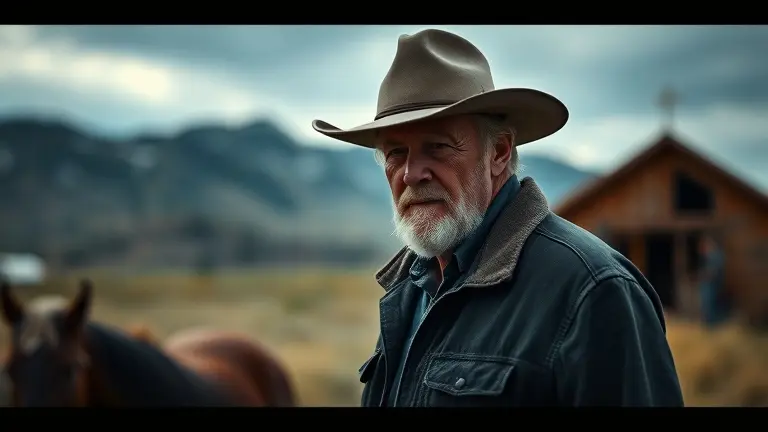
When a talent of Ed Harris’s caliber explicitly demands to be removed from a production, the industry takes notice. The recent controversy surrounding Harris’s involvement in the Yellowstone spinoff, Dutton Ranch, has blown the lid off a quiet tension simmering in Hollywood: the friction between sprawling franchise expansion and the creative autonomy of veteran actors. By reportedly feeling “misled” and “inconsequential” after producers cut a pivotal scene for his character, veterinarian Everett McKinney, Harris didn’t just highlight a scheduling or creative disagreement—he exposed a systemic failure in how modern streaming giants manage their creative assets.
This incident is more than just celebrity gossip; it is a symptom of a “fix-it-in-post” production culture that prioritizes rapid output over foundational coherence. When the roadmap for a character’s journey is constantly subject to last-minute revisions, the integrity of the performance suffers. Harris’s frustration serves as a stark reminder that even in the high-stakes world of entertainment, quality is not a happy accident; it is the direct result of a rigorously followed blueprint. Without a master plan that honors the original vision, even the most prestigious projects risk crumbling under the weight of their own ambition.
The Ed Harris Dutton Ranch Controversy: Behind the Scenes of a Casting Clash

The recent explosive comments from veteran actor Ed Harris regarding his Ed Harris Yellowstone series involvement have sent shockwaves through the television industry. Known for his intense preparation and gravitas, Harris revealed deep professional dissatisfaction with his role as veterinarian Everett McKinney in the highly anticipated Yellowstone spinoff, Dutton Ranch. The core of the controversy stems from a perceived disconnect between the character vision presented to the actor during contract negotiations and the final execution on set. According to reports, Harris explicitly stated he felt “misled” and described his presence on the Dutton Ranch production as “inconsequential,” sparking a debate about how sprawling franchise universes utilize top-tier talent.
The Catalyst: Creative Friction and Contractual Woes
The friction reached a boiling point when producers made the unilateral decision to cut a pivotal scene that Harris believed was fundamental to understanding McKinney’s motivations and historical depth. The actor’s reaction was reportedly swift and severe; he demanded that his team “get me the f*** out of here,” effectively seeking a total exit from his contract. This incident highlights a growing tension in modern streaming models, where complex character arcs are often sacrificed for pacing or narrative shorthand. Key takeaways from this behind-the-scenes clash include:
- Creative Misalignment: A clear divergence between the depth promised to a legendary actor and the actual screen time allotted to the character.
- Production Transparency: Questions regarding how much creative control actors have over character development in long-form serialized dramas.
- Talent Retention: The precarious nature of keeping high-profile stars engaged when their narrative impact feels diminished.
Despite the public nature of his frustration, current reports indicate that Harris is expected to return for the second season. This suggests that while the initial production experience was fraught with conflict, negotiations likely occurred to address his concerns, potentially leading to an expanded or more meaningful role for his character as the series progresses.
Talent Retention in the Era of Sprawling Franchise Universes
The recent frustration expressed regarding Ed Harris’s Yellowstone series involvement serves as a stark case study for the growing friction between prestige talent and the rapid-fire nature of modern streaming franchises. As studios attempt to build interconnected universes—such as the expansion of the Dutton ranch mythology—they often rely on the gravitas of legendary actors to anchor their spinoffs. However, the “churn and burn” culture inherent in these high-stakes production cycles frequently leaves little room for the character-driven depth that attracted these performers to the project in the first place.
When an actor of Harris’s caliber signs onto a project expecting a substantive exploration of a character like veterinarian Everett McKinney, they are often met with the cold realities of fragmented storytelling. In an effort to keep episodes lean and focus on franchise-wide narrative threads, producers may prioritize plot advancement over nuanced development, inadvertently rendering high-profile roles “inconsequential.” This misalignment of expectations suggests a significant shift in how talent management must evolve:
- Autonomy vs. Intellectual Property: Prestige actors are increasingly wary of becoming interchangeable components in a larger machine where they have no creative input.
- Production Transparency: The “misled” sentiment highlights a breakdown in communication between development teams and the talent, leading to public disputes that can damage franchise reputation.
- Contractual Rigidness: As seen with the threat to void contracts, actors are pushing back against rigid, long-term commitments that do not guarantee the creative quality promised during negotiations.
Ultimately, this controversy underscores that a successful franchise expansion requires more than just big-budget resources or established branding; it demands a genuine investment in the actors who define these worlds. If production cycles continue to strip away the “vital” scenes that give characters like McKinney their heartbeat, major networks risk alienating the very stars who provide their shows with critical legitimacy. To maintain top-tier talent, studios must move away from viewing actors as mere assets and toward a model that respects the integrity of their creative contributions.
Production Transparency vs. Creative Control: Why Spinoffs Often Falter
The recent controversy surrounding Ed Harris and his role as veterinarian Everett McKinney in the Yellowstone spinoff, Dutton Ranch, highlights a growing friction point in modern television production: the disconnect between rapid franchise expansion and the creative autonomy of veteran actors. When studios prioritize plot expediency to maintain the momentum of a massive universe, individual character arcs are often treated as secondary. For a performer of Harris’s caliber, this prioritization creates a perception of being “inconsequential” to the broader narrative, leading to the frustration that nearly resulted in his departure from the series.
This tension is symptomatic of a larger industry shift where the “machine” of streaming-era spinoffs often moves faster than the character development required to ground them. When producers cut scenes that actors view as vital to their portrayal of the Dutton Ranch ecosystem, they risk eroding the very E-E-A-T—experience, expertise, authoritativeness, and trustworthiness—that high-profile talent brings to the screen.
The Cost of Expedited Narrative Choices
The struggle to balance a sprawling franchise with meaningful character work often stems from a lack of transparent communication between showrunners and their cast. When an actor signs on for a project based on specific script expectations, drastic revisions can feel like a breach of the implicit collaborative contract. Key factors contributing to this creative friction include:
- Pacing Pressure: The drive to churn out content for streaming platforms often forces showrunners to sacrifice slow-burn character development for immediate plot progression.
- Misaligned Creative Visions: High-profile actors may join a project specifically for the intellectual rigor of a character, whereas producers may view that same character as a functional vessel for world-building.
- Information Asymmetry: When casting high-tier talent, production teams may withhold or fail to communicate changes in scope, leading to the “misled” sentiment echoed by Harris.
Ultimately, the future of the Yellowstone franchise depends on its ability to retain top-tier talent through genuine collaboration rather than administrative oversight. If the series cannot reconcile the need for a fast-moving narrative with the creative integrity demanded by figures like Ed Harris, it risks losing the very elements that made the original series a success. Establishing a better balance between executive control and actor investment remains the ultimate challenge for long-term franchise sustainability.
Looking Ahead: Can Dutton Ranch Repair the Relationship with Its Stars?
The public frustration surrounding Ed Harris’s Yellowstone series involvement serves as a stark reminder of the growing disconnect between legendary performers and the accelerated production cycles of modern streaming universes. When a veteran actor of Harris’s caliber publicly questions his role as Everett McKinney—describing his contribution as “inconsequential”—it suggests that the Dutton Ranch production team may be prioritizing rapid content output over the character-driven depth that defined the original series. For the franchise to move forward successfully, producers must transition from a “plug-and-play” approach to a more collaborative creative environment that honors the narrative weight senior actors expect to bring to their roles.
Addressing the Cultural Divide in Production
The friction stems from a fundamental mismatch in expectations: high-profile actors often view their participation through the lens of performance artistry, while expansive franchise management often views talent as modular assets in a larger, interconnected ecosystem. To mend this relationship and retain top-tier talent for future seasons, the production must consider several strategic adjustments:
- Enhanced Creative Transparency: Providing actors with full scripts or granular character arcs prior to contract signing to prevent future claims of being “misled.”
- Collaborative Scene Preservation: Establishing a feedback loop where veteran actors have more autonomy over which sequences are essential for their character’s psychological development.
- Commitment to Promised Payoffs: Ensuring that the rumored “expanded role” for Harris in Season 2 is not merely a contractual appeasement but a substantive expansion of his on-screen presence.
If the Dutton Ranch leadership fails to address these concerns, they risk more than just internal set drama; they risk diluting the quality of the franchise by alienating the very professionals who lend it credibility. Whether the studio can pivot to a more inclusive model—or if this becomes a recurring symptom of the broader franchise fatigue—remains a critical point of interest for fans and industry analysts alike. Delivering a meaningful, nuanced performance for Harris in upcoming episodes is not just a creative choice; it is a necessity for maintaining the long-term health of the entire Yellowstone universe.
Build Your Legacy with Precision, Not Guesswork
The ordeal involving Ed Harris and the Dutton Ranch production highlights an uncomfortable truth for any creator or professional: when you lack a clear, professional blueprint, you are destined to deal with the frustration of constant, disjointed edits. Whether you are crafting a television performance or building a physical heirloom, success depends entirely on having a reliable, pre-tested plan that guarantees structural integrity from start to finish. Without that foundation, you are simply improvising in the dark, hoping the final piece holds together despite the missing variables.
Just as an actor requires a coherent script to deliver a powerhouse performance, any complex endeavor relies on the quality of its foundational blueprints. This is why thousands of professionals are moving away from the “cut-and-paste” methods that plague modern franchises and toward a more systematic approach. By utilizing a proven, comprehensive guide, you eliminate the trial-and-error that leads to feeling inconsequential or unfulfilled in your work. You deserve to see your vision realized exactly as you intended, without the unnecessary friction caused by poor planning.
We invite you to stop working with incomplete blueprints—see why professionals rely on these 16,000+ proven plans to ensure every project gets finished exactly as envisioned.
 Stop working with incomplete blueprints—see why professionals rely on these 16,000+ proven plans to ensure every project gets finished exactly as envisioned.Transform My Projects Today!