
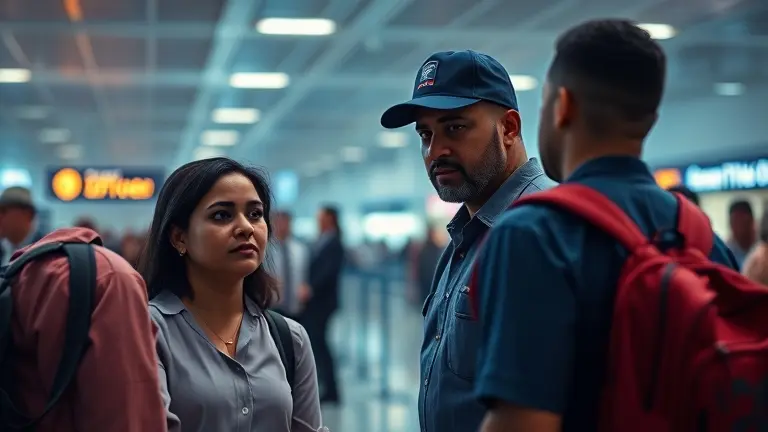
On July 14, 2026, a routine travel experience at San Francisco International Airport (SFO) transformed into a national flashpoint after a heated confrontation between a United Airlines employee and the family of Julio Varela. The incident, captured and shared across social media, has ignited widespread condemnation following reports that the employee threatened to call ICE and allegedly remarked, ‘You don’t act like a citizen.’ This interaction has not only sparked urgent questions regarding corporate accountability and the protocols governing airline staff but has also reignited a broader, necessary conversation about racial profiling and discrimination within our nation’s transit hubs.
As United Airlines faces intense public backlash, the incident leaves many wondering about the immediate consequences for the employee involved and the legal boundaries of authority airline personnel possess when engaging with passengers. Amidst the viral noise and rapidly evolving updates, it is essential to sift through verified statements to understand the deeper implications of this dispute. Navigating this stream of high-tension information requires a sharp, grounded perspective to discern truth from emotional narratives, ensuring that the quest for justice remains rooted in verified facts.
The SFO Incident: Examining the Viral Dispute Between United Airlines and the Varela Family

On July 14, 2026, a routine travel experience at San Francisco International Airport (SFO) escalated into a significant public relations crisis for United Airlines. The incident involved a United Airlines employee and a passenger, Julio Varela, who was traveling with his family. What began as a standard ticketing dispute rapidly transformed into a heated confrontation, with video footage of the exchange surfacing on social media platforms shortly thereafter. Within 48 hours, the clip gained massive traction, sparking a widespread conversation regarding passenger rights, professional conduct, and alleged discrimination within travel hubs.
According to reports from NBC News and MSN, the situation deteriorated when the airline employee allegedly threatened to contact Immigration and Customs Enforcement (ICE). During the recorded interaction, Varela claims the employee told him, “You don’t act like a citizen,” a statement that has since drawn sharp criticism from civil rights advocates and the general public. This specific phrasing is at the heart of the outcry, as many viewers and commentators have characterized the remark as xenophobic and an abuse of corporate authority.
Key Elements of the Viral Dispute
The rapid spread of the video has forced a spotlight on the internal protocols governing how airline staff manage customer grievances. Public discourse surrounding the event has focused on several critical issues:
- Allegations of Profiling: The claim that an airline employee weaponized federal immigration enforcement during a customer service dispute has raised serious questions about racial and ethnic profiling in airport environments.
- Professional Standards: Observers are questioning whether standard de-escalation training for United Airlines staff is sufficient to handle high-stress ticketing issues without resorting to threats.
- Demands for Accountability: As the brand faces significant public backlash, many users are actively searching for updates regarding whether the employee has been formally suspended or terminated pending an internal investigation.
As this united airlines employee passenger confrontation continues to dominate social media discourse, the airline is under pressure to provide clarity on its policy regarding the involvement of federal agencies. Legal experts suggest that the incident could lead to significant reputational damage if the company fails to address the accusations of discriminatory behavior transparently and decisively.
United Airlines’ Official Response and the Ongoing Internal Investigation

In the wake of the viral incident at San Francisco International Airport (SFO), United Airlines has moved quickly to contain the fallout from the United Airlines employee passenger confrontation. The company issued a formal statement acknowledging the severity of the allegations, which center on claims that an employee threatened to contact Immigration and Customs Enforcement (ICE) and engaged in discriminatory verbal conduct toward the Varela family. Corporate representatives have characterized the behavior described in the viral video as “unacceptable,” emphasizing that the airline maintains a strict zero-tolerance policy regarding discrimination and harassment of any kind.
Current Status of the Investigation
As of the latest reports, the airline has confirmed that an internal investigation is currently underway. To ensure the integrity of the fact-finding process, the involved employee has been placed on administrative leave. While the company has not provided specific details regarding the duration of this leave or the specific disciplinary actions under consideration, they have reiterated their commitment to corporate transparency. Key areas of the internal review include:
- Policy Compliance: Assessing whether the employee’s actions violated standard operational procedures for resolving ticketing disputes.
- Conduct Standards: Evaluating whether the staff member breached the airline’s code of professional conduct and anti-discrimination guidelines.
- Communication Protocols: Investigating why the situation escalated to include xenophobic remarks and threats involving federal agencies.
Despite the prompt corporate acknowledgment, there remains a palpable gap between United Airlines’ initial apologies and the public’s demand for meaningful accountability. Many critics argue that an internal review is insufficient without a public commitment to sensitivity training and a clearer directive on when—and if—staff should ever involve federal authorities in routine customer service interactions. The airline’s ability to demonstrate a tangible shift in its customer service culture will be critical in mitigating long-term reputational damage following this highly publicized incident.
Passenger Rights and the Legal Implications of Threatening Immigration Enforcement

The viral United Airlines employee passenger confrontation at SFO has ignited a critical conversation regarding the scope of authority granted to airline personnel. Legal experts suggest that when an employee threatens to involve ICE or questions a traveler’s citizenship, they may be crossing into the territory of civil rights violations. Under federal law, airline employees operate as private contractors rather than law enforcement officers; therefore, they possess no legal mandate to perform immigration checks or demand proof of citizenship. Threatening a passenger based on perceived national origin can be interpreted as harassment and may constitute a breach of the Contract of Carriage, which generally requires staff to treat all passengers with respect and professionalism.
Potential Legal Avenues and Challenges
For the Varela family, seeking legal recourse involves navigating complex statutes related to discrimination in public accommodations. Whether such an encounter rises to the level of a formal civil rights lawsuit depends on whether the behavior can be proven to be discriminatory based on race or national origin. Legal analysts point to several factors that complicate these cases:
- Evidence Collection: The presence of video documentation is vital for establishing the timeline of the United Airlines employee passenger confrontation.
- Company Policy: Airlines often cite “disruptive passenger” protocols, but these do not grant staff the right to engage in xenophobic rhetoric or intimidate travelers with federal enforcement agencies.
- Burden of Proof: Plaintiffs must demonstrate that the threats caused emotional distress or significant financial harm, which can be difficult to quantify in a court of law.
While the public backlash is significant, the legal threshold for holding an airline liable for individual employee misconduct often requires proving that the company failed to provide adequate training or fostered an environment where such discriminatory behavior could thrive. Ultimately, this incident serves as a stark reminder of the limitations of corporate power when interacting with the traveling public.
Brand Reputation Management in the Age of Viral Accountability

The viral incident involving a United Airlines employee passenger confrontation at San Francisco International Airport underscores a critical vulnerability for major carriers: the instantaneous nature of digital accountability. When a customer interaction is captured on video and disseminated across social media, the speed of public outrage often outpaces traditional corporate response protocols. Allegations that staff threatened to contact Immigration and Customs Enforcement (ICE) move beyond simple customer service failures; they strike at the heart of corporate ethics, diversity initiatives, and the passenger trust necessary for brand loyalty. In today’s hyper-connected environment, discriminatory behavior is not merely an isolated personnel issue but a systemic risk that can lead to immediate stock volatility and long-term brand erosion.
The Dynamics of Modern Corporate Damage Control
Managing this crisis requires more than standard public relations apologies. Airlines are currently grappling with the difficult task of balancing stringent security protocols with the necessity for inclusive and respectful customer service. When an employee oversteps professional boundaries—specifically through alleged xenophobic remarks like “you don’t act like a citizen”—the company’s response must address both the legal implications and the broader public demand for accountability. Effective reputation management strategies now typically involve:
- Immediate Transparency: Acknowledging the incident publicly and confirming the status of the employee involved to demonstrate that the airline prioritizes internal accountability.
- Systemic Review: Re-evaluating training modules to ensure staff understand the legal limits of their authority, specifically regarding when—and if—federal agency intervention is appropriate.
- Institutional Alignment: Aligning the company’s public-facing diversity, equity, and inclusion (DEI) commitments with the actual on-the-ground behavior of staff members.
The fallout from the SFO incident serves as a stark reminder that in the age of viral content, employees are the most visible proxies for a brand’s values. When an individual’s conduct deviates from these stated values, the resulting reputational loss can take years to recover. For United Airlines, the path forward involves demonstrating that they are not just reacting to the current controversy, but actively preventing future incidents of racial profiling and misuse of authority at transit hubs. Consumers remain hyper-vigilant, and the demand for clear, documented evidence of change will likely define the airline’s recovery efforts in the coming months.
Maintaining Clarity in the Face of Crisis
The incident at SFO serves as a sobering reminder of the power dynamics inherent in transit interactions and the severe reputational risks airlines face when professional boundaries are crossed. As the investigation unfolds and the public demands accountability, it is crucial to remain objective. However, the relentless cycle of viral news, heated public discourse, and the emotional weight of such controversies can leave even the most informed observer feeling mentally exhausted and cognitively overwhelmed.
While navigating the overwhelming stream of information regarding this incident, it is essential to maintain a sharp, focused mind to discern the truth from the noise. The stress of processing complex social issues and breaking news often leads to mental fog, which is where The Brain Song becomes an indispensable tool. By helping you regain cognitive clarity and emotional stability, this solution allows you to stay grounded and analytical, ensuring you remain sharp while navigating the chaotic information landscape of modern news cycles.
Integrating this cognitive stabilization tool into your routine ensures that you do not just react to headlines, but effectively process them with the focus and intent required to foster meaningful public dialogue. Don’t let the fatigue of constant crisis updates cloud your judgment or impact your well-being.
 Regain your mental clarity amidst the chaos; discover how to sharpen your focus for better information processing at The Brain Song.Yes, I Want This Now!