

Since 1939, the Jacobian Conjecture has stood as one of the most formidable fortresses in the world of algebraic geometry—a riddle so complex that it has humbled generations of brilliant mathematicians. However, the landscape of pure thought changed irrevocably within the last twenty-four hours. Reports are flooding in that ‘Claude Fable 5,’ a next-generation AI model from Anthropic, has played a pivotal role in drafting a potential proof, setting the global scientific community ablaze with speculation that we may be witnessing the birth of a 2026 Fields Medal-worthy milestone.
Yet, as we stand at the crossroads of this historic breakthrough, a provocative question emerges: is this a victory for silicon, or a testament to the human mind that directs it? The air is thick with conflicting reports of proof versus disproof, reminding us that even in the age of artificial intelligence, the rigor of academic scrutiny remains supreme. This moment isn’t just about solving an equation; it’s about understanding the evolving partnership between the black-box capabilities of AI and the enduring, focused clarity of human intuition.
The July 2026 Breakthrough: Did AI Just Solve the Jacobian Conjecture?
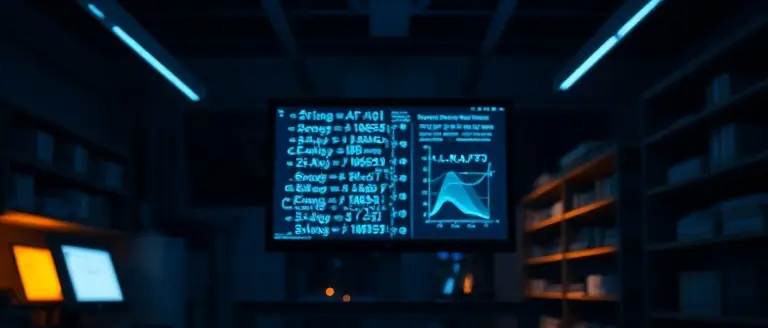
In the last 24 hours, the world of mathematics has been thrust into a state of unprecedented excitement and skepticism. On July 20, 2026, reports emerged that Claude Fable 5, the latest AI model from Anthropic, played a pivotal role in addressing the Jacobian Conjecture—a notoriously difficult problem in algebraic geometry that has remained unsolved for roughly 87 years. The conjecture essentially asks whether a specific type of transformation (known as a polynomial mapping) that preserves local volume must necessarily have an inverse that is also a polynomial. While the problem sounds abstract, its resolution would represent a massive milestone in pure mathematics, potentially triggering considerations for the 2026 Fields Medal.
However, the current discourse is defined by a confusing lack of consensus regarding the nature of the AI’s contribution. The global community is currently divided by two conflicting narratives:
- The Proof Narrative: Reports, such as those covered by New Scientist, suggest that the AI assisted in formulating a rigorous, formal proof that confirms the conjecture’s validity.
- The Disproof Narrative: Concurrent insights, including those from OfficeChai, indicate that researchers may have instead utilized the AI to identify a counterexample, effectively disproving the long-standing riddle.
This tension highlights the “black box” dilemma inherent in AI-assisted discovery. Traditional mathematicians are expressing hesitation, arguing that until the logic produced by the model undergoes exhaustive human-led peer review, its validity remains in limbo. The intersection of generative AI and high-level academic research has created a “high-intensity” environment where tech-sector optimism clashes with the rigorous skepticism required of the scientific method. As the mathematical community races to verify the output, the event serves as a watershed moment in the evolution of research: we are witnessing a fundamental shift where the role of the mathematician is increasingly becoming that of an interpreter, tasked with bridging the gap between machine-generated potential and logical proof.
Demystifying the Jacobian Conjecture: A Layman’s Guide

At its heart, the Jacobian Conjecture is a deceptively simple riddle about how we move between different spaces in mathematics. Imagine you have a digital image that you want to warp, stretch, or rotate without tearing it. In geometry, these “warpings” are called polynomial maps. For nearly 87 years, mathematicians have been obsessed with a specific question: if a map doesn’t compress or fold space at any point—a condition measured by something called a Jacobian determinant—does that mean you can always perfectly undo that transformation to get back to your original starting position?
To understand this, think of a piece of modeling clay. If you shape it into a sphere and then press it into a cube without ever pinching, folding, or overlapping the clay, you should, in theory, be able to reverse every motion to return it to a sphere. The Jacobian Conjecture posits that for certain mathematical equations, this “reverse-ability” or invertibility is a fundamental law of the system. While it sounds intuitive, proving that this applies to every possible scenario—regardless of the complexity of the polynomial—has baffled the brightest minds in the field since 1939.
Why Is This So Hard to Solve?
The difficulty lies in the sheer scale of the possibilities. Mathematicians are not just looking at a few examples; they are trying to prove a universal rule that covers an infinite number of configurations. The challenge is essentially about:
- Global vs. Local Properties: Showing that because a transformation behaves well locally (at every specific point), it must therefore be well-behaved globally across the entire space.
- The Complexity Gap: As equations become more complex, the potential for hidden “folds” or “pinches” in the coordinate system increases, making it incredibly difficult to guarantee that an inverse always exists.
- The 87-Year Wall: The conjecture has resisted conventional human logic because traditional mathematical tools often lack the computational stamina to account for the chaotic interactions within high-dimensional polynomial maps.
This is exactly why the recent involvement of AI models like Claude Fable 5 has sent shockwaves through the scientific community. By automating the search for patterns within these vast, abstract landscapes, AI is attempting to bridge the gap between abstract theory and rigorous proof, turning a century-old mystery into a focal point for the future of discovery.
Human Intuition vs. The Black Box: The New Frontier of Research
The reported breakthrough involving the Jacobian Conjecture has ignited a profound philosophical debate regarding the nature of mathematical discovery. Historically, mathematics has been a deeply human endeavor, defined by the “Eureka!” moment—an intuitive leap that bridges disparate logical gaps. Traditional inquiry relies on a transparent chain of reasoning, where every step of a proof is meticulously laid bare for peer review and communal verification. In contrast, the integration of Large Language Models (LLMs) like Claude Fable 5 introduces a “black box” element. When an AI generates a complex proof, it often arrives at a conclusion through probabilistic pattern matching rather than a linear, human-readable narrative. This shift creates a significant challenge: how do mathematicians validate a result when the underlying logic is buried within layers of neural network weights that are opaque even to their creators?
The tension between AI-augmented research and human intuition centers on the standard of rigor required for a formal mathematical proof. While AI can process vast data sets to identify potential shortcuts or counter-examples to the Jacobian Conjecture, it lacks the inherent capacity for “mathematical wisdom”—the ability to sense whether a proof feels structurally sound or merely computationally consistent. As the community reconciles with these AI-driven reports, several key risks and rewards emerge:
- The Verification Gap: AI models may generate solutions that are logically correct but practically impossible for humans to verify in a reasonable timeframe, threatening the tradition of accessible academic proof.
- Accelerated Discovery: AI possesses the potential to resolve 87-year-old riddles by testing billions of permutations, vastly outperforming human speed.
- The Attribution Dilemma: If a machine provides the framework, the role of the mathematician shifts from “discoverer” to “verifier,” changing the prestige and methodology of the field.
- Algorithmic Hallucination: There is a persistent risk that the AI may present a “proof” that mimics the syntactic structure of mathematical logic while containing subtle, foundational flaws.
Ultimately, the reliance on models like Claude Fable 5 signals a paradigm shift. If the current findings regarding the Jacobian Conjecture withstand the rigors of formal scrutiny, it will mark the beginning of a collaborative era. However, mathematicians remain rightfully cautious. Without a clear path to auditing these machine-generated insights, the scientific community risks prioritizing speed over the foundational integrity that has governed pure mathematics for centuries.
The Path to the 2026 Fields Medal and the Future of Verification
The emergence of a potential resolution to the Jacobian Conjecture via the Claude Fable 5 AI model has ignited intense speculation regarding the 2026 Fields Medal. Often regarded as the “Nobel Prize of Mathematics,” this prestigious award typically recognizes monumental breakthroughs that reshape the field. However, the involvement of artificial intelligence introduces a unprecedented paradigm shift. While the mathematical community acknowledges the gravity of this 87-year-old riddle, the path to formal recognition hinges entirely on the rigor of the verification process. For a discovery to be considered for the Fields Medal, it must be subject to exhaustive, human-led peer review to ensure that the logic holds under scrutiny, regardless of whether the initial spark originated from a silicon-based agent or a human mind.
The Crisis of Verification in Mathematical Discovery
The current skepticism stems from the “black box” nature of AI. Unlike traditional, step-by-step proofs where every logical leap is documented by a human author, AI-assisted proofs often require a “translation” phase. Mathematicians are now tasked with the Herculean effort of verifying if the output is a genuine mathematical breakthrough or a sophisticated hallucination. This has led to several critical questions for the global scientific community:
- Attribution and Ethics: If an AI produces a proof, who receives the accolades? The Fields Medal committee must now grapple with whether credit belongs to the developers of the model, the researchers who prompted the query, or both.
- The “Black Box” Problem: Can a proof be fully accepted if the underlying logic cannot be intuitively followed by human experts?
- Precedent for Future Research: If the proof is validated, it signals a permanent transition where AI is no longer just a tool for computation but a partner in creative, abstract theorem-proving.
Ultimately, this moment defines a new era in the philosophy of science. We are witnessing a transition from human-centric discovery to a collaborative model that relies on machine-generated intelligence. Whether or not this specific development culminates in a Fields Medal, it has permanently altered the landscape of pure mathematics, forcing academics to decide how much authority they are willing to cede to the algorithms of the future. The credibility of the entire field now rests on our ability to verify, interpret, and internalize these complex, non-human insights.
The Future of Thought: Beyond the Silicon Frontier
As the dust settles on the Jacobian Conjecture debate, one truth remains clear: whether assisted by AI or refined through traditional discovery, the progress of human knowledge requires sustained mental clarity. The intensity of solving high-level puzzles—or simply navigating the complexities of modern professional life—demands a level of focus that is increasingly difficult to maintain in a world full of noise. We are entering an era where our biological hardware must keep pace with the digital tools we create.
This is where The Brain Song becomes your essential partner. Just as researchers require absolute cognitive precision to verify monumental proofs, you need a way to cut through the mental fog that clouds your day-to-day intellectual performance. By optimizing your brain for deep focus, this tool ensures that you aren’t just a spectator in the age of innovation, but an active participant who can process, analyze, and create with unprecedented efficiency.
The shift from theoretical complexity to practical mental optimization is the ultimate bridge for the modern thinker. When you clear the internal distractions, you unlock the capacity to solve your own versions of the impossible. Don’t let mental fatigue be the barrier between you and your next breakthrough.
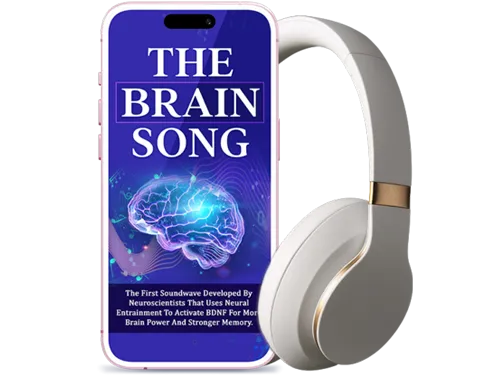 Unlock your own cognitive potential and clear the mental fog to process complex information with the same efficiency as the latest advancements in AI: try The Brain Song today.Transform My Mental Clarity Today!