
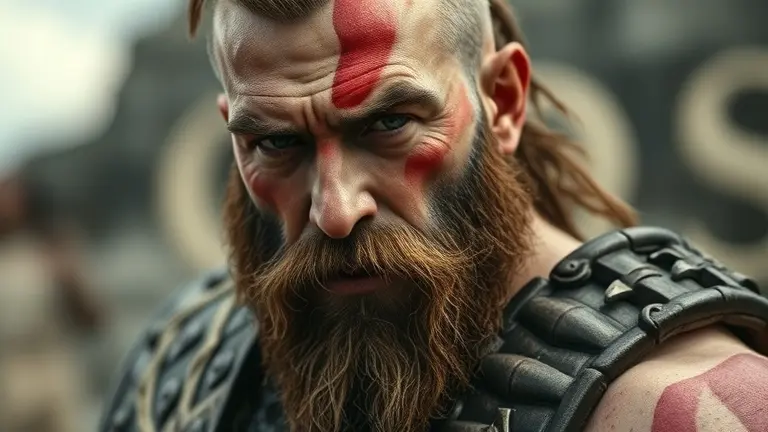
The highly anticipated Prime Video adaptation of God of War has hit a major roadblock that threatens to upend its entire production schedule. Fans who were eager to see Ryan Hurst step into the iconic, battle-worn boots of Kratos were met with shocking news this week: the actor has officially withdrawn from the project. This departure follows a severe on-set injury—a torn bicep sustained during an intensive stunt sequence—which has forced the studio to halt filming immediately.
The logistical fallout is immense. With four full episodes already in the can, Amazon is now facing the daunting prospect of a total recast and a costly, time-consuming reshoot. As industry analysts scramble to identify who might take on the mantle of the Ghost of Sparta, the production delay highlights the brutal physical and mental toll required to embody a character as demanding as Kratos. This situation serves as a stark reminder of the fragile balance between high-octane entertainment and the human cost behind the lens.
Ryan Hurst Departs Prime Video’s God of War: The Official Word on His Injury
In a major development for the highly anticipated Prime Video God of War series, it has been officially confirmed that Ryan Hurst will no longer portray the iconic lead character, Kratos. The production has faced an unfortunate and significant setback following a severe on-set injury sustained by the actor during the filming of a complex action sequence. Reports indicate that Hurst suffered a torn bicep muscle while performing strenuous stunt work, an injury that has rendered him unable to continue the physically demanding role of the Ghost of Sparta.
The implications for the production are extensive. To ensure the highest level of narrative continuity and to maintain the visual standards expected of such a high-profile adaptation, Amazon has made the difficult decision to pause filming indefinitely. Management has confirmed that approximately four episodes that had already been completed with Hurst in the lead role will be scrapped. These segments are slated for a complete reshoot once a new actor is secured, representing a massive logistical and financial undertaking for the studio.
Production Impact and Recasting Challenges
The departure of Ryan Hurst creates a significant void in the production timeline, raising questions about the future of the series. Industry experts are already analyzing the ripple effects of this Prime Video God of War delay, which will undoubtedly push back the series’ premiere date. The decision to reshoot existing footage underscores the commitment of the production team to maintaining the show’s integrity rather than relying on visual effects or double-stand-ins to mask the casting change.
Key takeaways from this announcement include:
- The Injury: A verified torn bicep sustained during stunt training, necessitating a long recovery period that conflicts with the show’s rigorous production schedule.
- The Scope: Four full episodes are currently being discarded to facilitate a seamless transition to a new Kratos actor.
- The Next Steps: A formal casting search is underway to find a successor capable of meeting the immense physical requirements of the God of War protagonist.
While fans are understandably disappointed by the news of the recast, the priority remains the safety of the cast and the delivery of a faithful, high-quality adaptation of the beloved gaming franchise.
The Physicality of Kratos: Understanding the Toll on Lead Actors
Embodying a figure as physically imposing as Kratos requires more than just acting ability; it demands an elite level of athletic conditioning that pushes the human body to its absolute limits. The recent departure of Ryan Hurst from the Prime Video God of War series due to a severe torn bicep highlights the harsh reality of high-budget action productions. When an actor is tasked with portraying the “Ghost of Sparta,” the role involves months of rigorous stunt training, heavy lifting, and complex choreography designed to replicate the god-like strength seen in the source material.
Occupational Hazards in Action-Heavy Adaptations
In the film and television industry, the transition from motion capture or animation to live-action brings significant physical risks. Stunt training for major God of War action sequences often necessitates repetitive, high-impact movements that put immense strain on muscle groups and joints. Major injuries, such as bicep tears or ligament damage, are an unfortunate but common occupational hazard in these demanding roles. Key factors contributing to these on-set risks include:
- Rigorous Physical Transformation: Actors must often undergo rapid muscle gain to match the silhouette of a titan, which can inadvertently increase the risk of tendon and muscle fatigue.
- Intense Choreography: The fight sequences in a project like God of War are highly stylized, requiring actors to perform multiple takes of physically taxing maneuvers that push the body beyond natural limits.
- Cumulative Stress: Long production schedules exacerbate the risk of injury, as fatigue sets in and the margin for error during complex stunts decreases.
The industry standard for mitigating these dangers typically involves comprehensive safety protocols, including dedicated stunt doubles and recovery professionals. However, as evidenced by the Ryan Hurst injury and the subsequent God of War Kratos recast, even the most robust safety nets cannot entirely eliminate the possibility of a catastrophic setback. The physical toll required to bring a legendary character to life serves as a stark reminder of the immense pressure placed on performers in modern fantasy adaptations.
God of War Kratos Recast: Navigating a Massive Production Reset
The departure of Ryan Hurst from the God of War series due to a severe torn bicep injury has triggered a logistical nightmare for Prime Video. When a lead actor leaves a project of this magnitude mid-production, the studio is forced to weigh the immense financial costs of a “hard reset” against the creative risks of digital alternatives. While some productions might attempt to utilize body doubles or advanced CGI de-aging and face-replacement technology, the physical intensity of Kratos—a character defined by his hulking stature and specific movement patterns—makes these shortcuts insufficient for a flagship series. Amazon’s decision to discard four completed episodes and initiate a full God of War Kratos recast underscores a commitment to narrative integrity and long-term visual consistency that digital trickery simply cannot replicate.
Logistical Challenges and Production Delays
Reshooting nearly a quarter of a high-budget season is an unprecedented setback, impacting not just the immediate budget but the entire release timeline for the franchise. The logistical requirements of this reset include:
- Contractual Renegotiations: Securing a new lead performer requires navigating existing casting agreements and aligning the new actor’s schedule with the rest of the ensemble cast.
- Set and Asset Continuity: Ensuring that costumes, prosthetics, and physical sets remain identical after a prolonged pause to avoid continuity errors in the footage.
- Budgetary Reallocation: The financial burden of reshooting four episodes is substantial, likely necessitating a shift in resources from other production departments, including post-production and marketing.
By opting to reshoot rather than patch the existing footage, the studio is effectively “future-proofing” the Prime Video God of War delay, ensuring the final product avoids the uncanny valley effect that often plagues heavy CGI usage. While this decision pushes the expected premiere date significantly further into the future, it is a necessary tactical move to ensure that the portrayal of Kratos meets the high expectations of both the source material’s fanbase and the high standards of Amazon’s streaming library.
Breaking the Adaptation Curse: The High Stakes of Prime Video’s God of War Delay
The recent production halt of the Prime Video God of War series has reignited industry discussions regarding the so-called “adaptation curse.” For years, translating high-fidelity interactive media into live-action formats has proven to be a logistical and creative minefield. The departure of Ryan Hurst from the role of Kratos due to a severe injury—a torn bicep sustained during stunt work—serves as a sobering reminder of the extreme physical demands placed on actors tasked with embodying larger-than-life gaming icons. When a production is forced to scrap four completed episodes to accommodate a recasting, it highlights the immense financial and creative risks inherent in these prestige projects.
Prioritizing Quality Over Timeline
While fans are understandably anxious regarding the Prime Video God of War delay, industry analysts argue that the studio’s decision to reset reflects a shift in production philosophy. Rather than forcing a substandard performance or risking the integrity of the narrative, major streamers are increasingly prioritizing:
- Performance Authenticity: Ensuring the actor portraying Ryan Hurst’s successor can physically and emotionally anchor the role of Kratos.
- Visual Continuity: Discarding footage to ensure the final product maintains a consistent aesthetic and tonal quality across all episodes.
- Long-Term Brand Equity: Protecting the God of War franchise legacy, which remains a cornerstone of PlayStation’s intellectual property portfolio.
This strategic pause suggests that Amazon is committed to delivering a product that resonates with both die-hard enthusiasts and general audiences. By choosing to recast and reshoot rather than “powering through” a flawed production, the studio is signaling that the quality of the God of War adaptation is non-negotiable. While the immediate setback is significant, the decision to maintain high production standards may ultimately be the catalyst that finally breaks the stigma surrounding video game-to-TV adaptations.
The Price of Peak Performance
The departure of Ryan Hurst underscores the extreme pressures inherent in bringing video game legends to life. Beyond the immediate physical risks, actors playing such intense roles face significant cognitive strain. The necessity of maintaining focus, emotional depth, and razor-sharp concentration during grueling production cycles is a challenge few truly grasp. It is in these high-stakes environments that professionals often seek science-backed tools to maintain their mental clarity and avoid the burnout that leads to lapses in judgment and physical mishaps.
This is where The Brain Song enters the picture. Just as athletes and stunt performers optimize their physical state, high-performance individuals rely on neuroscience-based auditory stimulation to sharpen their focus and cognitive resilience. By integrating this tool into a daily regimen, professionals can better manage the mental fog that accompanies high-stress work, ensuring that they remain at the peak of their potential even when facing the most demanding projects in the industry.
Whether you are tackling a high-pressure role or navigating the challenges of your own career, optimizing your cognitive health is the most critical investment you can make. Discover the methodology that high-performing professionals are using to stay ahead of the curve.
 Discover how professionals in high-pressure industries are using neuro-stimulation to sharpen their focus and reach their full potential.Transform My Focus Today!