

On July 16, 2024, the tranquil town of Hillsborough, New Jersey, was forever changed when a celestial visitor punched through the roof of a local residence. While the initial event sparked widespread headlines, the true scientific transformation has unfolded quietly over the past two years. Recent peer-reviewed studies published in Science Advances have moved past the sensationalism, revealing that the Hillsborough meteorite is far more than a mere rock; it is a pristine courier of cosmic chemistry.
Scientists have identified ‘brine-like’ fluids trapped within the fragment, containing complex organic amino acids that serve as the fundamental building blocks of life. By analyzing these tiny samples, researchers are gaining unprecedented insight into how water and organic precursors may have been delivered to our early planet. This discovery forces us to reconsider the origins of our own biology, positioning this New Jersey home-impact not just as a freak accident, but as a crucial piece of the puzzle in the cosmic search for life’s origins.
The Hillsborough Meteorite: A Two-Year Scientific Retrospective
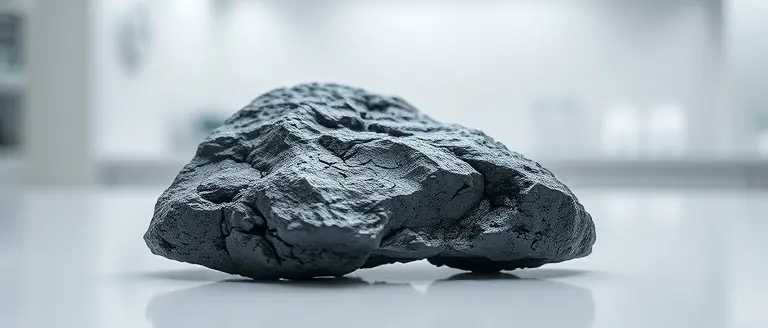
On July 16, 2024, a quiet residential street in Hillsborough, New Jersey, became the site of a rare geological event when new jersey home meteorite fragments were recovered following a high-velocity impact. Initially reported as a local curiosity involving property damage, the incident quickly drew the attention of planetary scientists. While the immediate aftermath focused on the shock of a space rock piercing a private roof, the subsequent two years were marked by meticulous laboratory analysis. By July 16, 2026, the scientific community officially validated the significance of these fragments through a landmark study published in Science Advances, shifting the narrative from a freak accident to a monumental discovery in the study of exobiology.
From Local Incident to Global Research
The transition of the Hillsborough specimen from a house-strike victim to a research subject highlights the rigorous process of modern meteorite classification. Laboratory experts spent 24 months documenting the chemical composition of the rock, eventually uncovering evidence that challenges our understanding of early planetary development. The breakthrough findings include:
- Brine-like fluids: The discovery of trapped, saline-rich liquids within the mineral matrix suggests that water was chemically active within the meteorite’s parent body.
- Organic building blocks: Advanced mass spectrometry identified complex amino acids, providing crucial evidence that the essential ingredients for life can be transported through the solar system via rocky debris.
- Alien world chemistry: The unique isotopic signature found in the fragments indicates the meteorite originated from an environment distinct from standard asteroid-belt rocks, offering a window into early solar system conditions.
Rather than relying on sensationalized “alien” narratives, researchers emphasize that these new jersey home meteorite fragments serve as a “time capsule.” The presence of brine-formed components indicates that hydrothermal activity was present in the early solar system, potentially delivering the water and carbon-based materials necessary for life to emerge on Earth. This retrospective confirms that the Hillsborough event was not merely a random impact, but a scientifically invaluable contribution to our broader quest to understand the origins of biological life.
Decoding the Chemistry: Brine Fluids and Organic Compounds
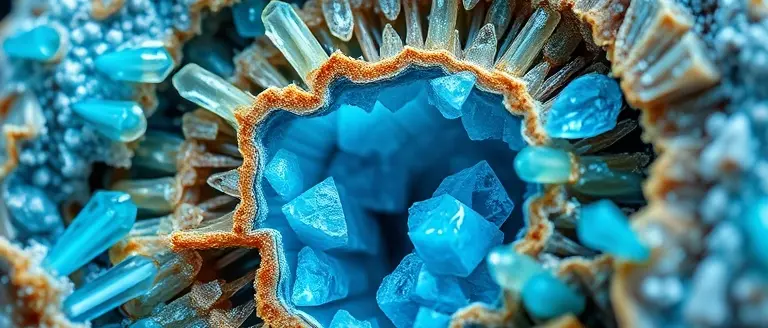
The scientific analysis of the new jersey home meteorite fragments has revealed a chemical profile that challenges our previous understanding of solar system history. Two years after the 2024 impact, peer-reviewed studies confirm the presence of brine-like fluids trapped within the crystalline structure of the specimen. These are not merely traces of moisture; they are complex chemical reservoirs that provide a time capsule into the formation of early planetary bodies. Scientists hypothesize that these fluids existed in a liquid state on the meteorite’s parent body, interacting with mineral grains to create a stable environment for prebiotic chemistry.
The Role of Amino Acids and ‘Alien’ Ingredients
The excitement surrounding these findings stems from the discovery of amino acids—the fundamental building blocks of proteins—within the brine deposits. By analyzing these samples, researchers are uncovering how organic compounds survived the extreme thermal and mechanical stresses of a high-speed transit through Earth’s atmosphere. Key takeaways regarding the chemical composition include:
- Prebiotic Delivery: The brine-like fluids suggest that meteorites could have acted as delivery vehicles, transporting the necessary “ingredients of life” to a young, barren Earth.
- Brine Formation: Evidence suggests these fluids were formed in an aqueous environment on a parent asteroid, potentially indicating that liquid water was far more widespread in the early solar system than previously assumed.
- Missing Link: These findings serve as a critical bridge between simple interstellar dust and the complex chemistry required for biological evolution.
By studying these specific new jersey home meteorite fragments, exobiologists are moving beyond speculative headlines to a concrete model of planetary evolution. The interaction between internal brine and organic minerals provides compelling evidence that the components for life are cosmically abundant, waiting to be delivered to planetary surfaces capable of supporting them.
Life’s Building Blocks: The Role of Amino Acids in Panspermia Theories
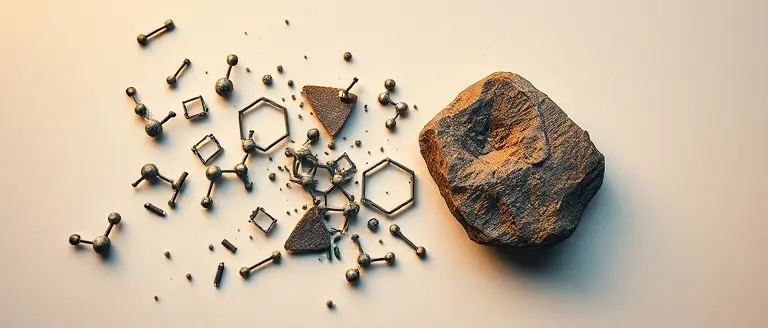
The scientific analysis of new jersey home meteorite fragments recovered two years after the 2024 impact has provided researchers with a unique window into the chemical history of our solar system. Central to these findings is the discovery of amino acids and complex, brine-like fluids trapped within the mineral matrix of the rock. While tabloid media often sensationalizes these discoveries with “alien” narratives, the reality is far more grounded in the field of astrobiology. Scientists are not looking for extraterrestrial life forms; rather, they are hunting for the prebiotic chemical precursors that serve as the fundamental building blocks of proteins and, ultimately, cellular life as we understand it.
Understanding Panspermia and Chemical Delivery
These findings lend significant weight to the panspermia hypothesis, which posits that the essential ingredients for life were not spontaneously generated on Earth alone but were delivered via constant bombardment from meteorites and comets during the solar system’s chaotic formative years. The presence of these specific organic compounds suggests a complex history of aqueous alteration within the meteorite’s parent body. Key takeaways regarding the importance of these fragments include:
- Aqueous History: The “brine-formed” components indicate that the parent asteroid once hosted liquid water, confirming that the conditions necessary for organic synthesis existed in deep space.
- Molecular Preservation: Because the New Jersey specimen was recovered shortly after impact, it remained relatively uncontaminated, allowing for a pristine analysis of its chemical signature.
- Origin Context: These organic ingredients demonstrate that the raw materials required for biological complexity are widespread throughout the cosmos, rather than being unique to Earth.
By distinguishing between the chemical precursors of life and the unscientific, popularized notion of “alien biology,” researchers can maintain a rigorous standard of evidence. The study of this meteorite serves as a vital case study in how water and organic molecules may have been seeded across the early Earth, bridging the gap between inorganic geology and the rise of biological organisms.
Why Hillsborough Matters: Advancing Planetary Science

The arrival of new jersey home meteorite fragments in 2024 served as more than just a startling residential incident; it became a critical milestone for the US scientific community. Two years post-impact, peer-reviewed analysis—most notably published in Science Advances—has transformed this Hillsborough specimen into a cornerstone for understanding early solar system evolution. Unlike typical stony meteorites, this fragment contained trapped brine-like fluids and complex amino acids, providing researchers with a preserved “time capsule” of conditions present during the formation of our planet. These chemical signatures suggest that the building blocks of life were potentially distributed across the solar system by such celestial bodies, refining existing models regarding how Earth acquired its essential water and organic inventory.
Defining Scientific Significance
The ongoing interest in this discovery stems from the rarity of recovering such pristine extraterrestrial material shortly after atmospheric entry. By avoiding long-term terrestrial contamination, scientists were able to conduct high-resolution mass spectrometry on the internal brine inclusions. This has allowed for several major research breakthroughs:
- Refinement of Delivery Models: Evidence suggests that hydrated minerals within the meteorite could mimic the delivery of volatile compounds to a young, arid Earth.
- Organic Chemistry Benchmarks: The detection of specific organic molecules provides a direct laboratory comparison for samples returned from asteroid missions like OSIRIS-REx.
- Bridging the Gap: It bridges the divide between theoretical exobiology and tangible geologic evidence, offering a concrete data set for planetary formation theories.
While viral headlines often leaned toward “alien” narratives, the true value lies in the data-driven rigor of the study. Peer-reviewed findings consistently demonstrate that while we have not discovered extraterrestrial life, we have significantly narrowed the scope of how life’s precursors survive the harsh conditions of space. This shift from speculation to empirical analysis underscores the importance of the Hillsborough event, marking it as a triumph for modern planetary science and the systematic investigation of our cosmic neighborhood.
Unlock Your Potential to Decode the Universe
The Hillsborough meteorite serves as a profound reminder that the most significant breakthroughs are often hidden in plain sight, requiring only the right focus to interpret them. Understanding the origins of life and the intricate chemistry of distant worlds is not merely a task for researchers; it is an exercise in expanding our own cognitive horizons. Just as scientists require high-level mental clarity to decode these complex molecular structures, we too must sharpen our cognitive faculties to grasp the profound implications of such discoveries without falling into the trap of superficial observation.
To truly master and process the depths of scientific knowledge, you need more than just information—you need the mental agility to synthesize it. The Brain Song is designed specifically for the intellectually curious, acting as a neuroscience-backed tool that helps you achieve the laser-like focus necessary to navigate complex topics with ease. By integrating this advanced audio routine into your daily life, you aren’t just reading about the mysteries of the universe; you are actively optimizing your mind to comprehend them more deeply, eliminating the mental fatigue that often accompanies intense intellectual pursuits.
Ready to deepen your focus and master complex topics with ease? Experience the neuroscience-backed audio routine that sharpens your mind for the next great discovery.
 Ready to deepen your focus and master complex topics with ease? Experience the neuroscience-backed audio routine that sharpens your mind for the next great discovery.Sharpen My Cognitive Focus Now!