
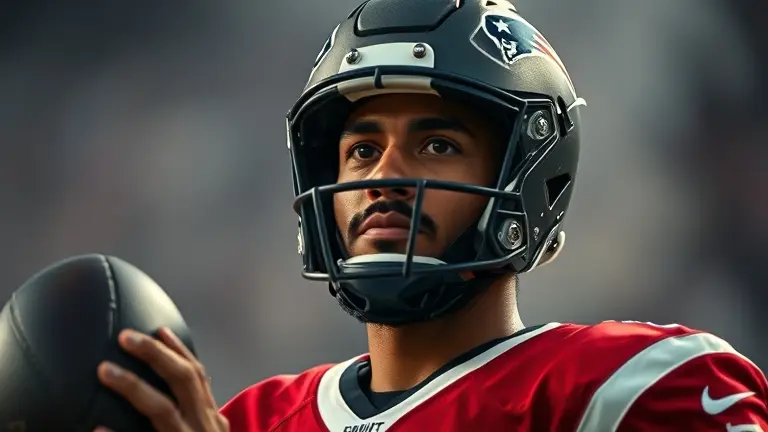
As the New England Patriots gear up for the 2026 training camp, the national conversation has predictably swarmed around Drake Maye’s physical mechanics and arm talent. While analysts spend their airtime dissecting his footwork and release point, the true hurdle for the young signal-caller lies in the mental theater of the NFL. The upcoming season is not just a test of Maye’s ability to throw into tight windows; it is a high-stakes exam on his capacity to process complex, shifting defensive coverage in real-time. In this analytical landscape, moving past general media hype requires us to look closer at the neurological demands placed on a starting quarterback tasked with commanding a modern, fluid offensive scheme.
Success at the highest level is rarely defined solely by talent; it is defined by the speed of cognition under extreme duress. As Maye prepares to take the field, he faces the same reality as every elite leader: the physical work is only half the battle. To truly transcend the typical ‘developmental’ phase and secure his status as a franchise cornerstone, he must achieve a level of mental clarity that allows the game to slow down. For the analytical fan, understanding this cognitive requirement is the missing link in projecting Maye’s trajectory this season.
Drake Maye and the 2026 Training Camp Hype: The Pre-Season Narrative

As the NFL calendar reaches the mid-July “information void,” the focus on Drake Maye has intensified, positioning the young signal-caller at the epicenter of the New England Patriots‘ 2026 aspirations. With training camp imminent, media outlets ranging from Sports Illustrated to Heavy have pivoted from speculative offseason narratives to intensive scrutiny of his developmental trajectory. This surge in coverage is not merely routine; it reflects the immense pressure currently placed on Maye to evolve from a high-upside prospect into a reliable QB1 candidate capable of spearheading the Patriots’ offensive resurgence. Analysts are now moving past general praise, instead dissecting specific mechanical adjustments and leadership milestones that will dictate his success when pads finally come on.
The Shift Toward Analytical Projections
The current media landscape is defined by a transition toward granular, data-driven forecasting. While fans remain eager for any update, the substance of reporting has shifted to address the tangible “development markers” necessary for Maye’s growth. This evolution in the narrative serves several key purposes for the Patriots organization and the analytical community:
- Technical Refinement: Experts are identifying specific mechanical tweaks, such as footwork consistency and pocket navigation, as primary KPIs for his camp performance.
- Offensive Scheme Integration: There is a heightened focus on how Maye translates the 2026 offensive playbook into live-action situational drills.
- Performance Benchmarks: Projections now prioritize actionable goals rather than abstract potential, reflecting a maturing discourse around his role in the team’s hierarchy.
This heightened scrutiny underscores a critical reality: the patience typically afforded to developing quarterbacks is thinning as the season draws near. For Maye, the upcoming training camp represents more than just a preparation period; it is the definitive proving ground where he must demonstrate the command and consistency required to lead. By moving beyond surface-level hype, the current discourse captures a fanbase and media corps hungry for evidence of progress, setting the stage for one of the most monitored training camp seasons in recent Patriots history.
Technical Refinements: Under the Microscope

As Drake Maye enters the critical 2026 training camp phase, the New England Patriots coaching staff has prioritized granular adjustments to his mechanical foundation. Following an offseason of intensive film study and individualized drills, the focus has shifted toward translating technical corrections into live-game efficiency. Analysts suggest that the primary objective for Maye is to achieve total synchronicity between his lower-body mechanics and his passing release, ensuring he remains accurate even when pressured within the pocket.
Refining Footwork and Release Mechanics
The transition from college-style high-octane schemes to the Patriots’ 2026 offensive system requires a more disciplined approach to pocket presence. Reports indicate that Maye has been working extensively on:
- Footwork Efficiency: Shortening his initial drop steps to minimize wasted movement, allowing him to reset his base more rapidly against the pass rush.
- Release Point Consistency: Utilizing a more compact high-elbow release to prevent the “winding up” motion observed in his earlier developmental stages, thereby increasing the velocity on short-to-intermediate routes.
- Timing and Anticipation: Syncing his drop timing with the breaking points of his receivers to capitalize on tighter passing windows.
These mechanical improvements are designed to bolster Maye’s decision-making process. By stabilizing his base, the young quarterback is better equipped to identify secondary reads without sacrificing his throwing accuracy. Coaching staff feedback suggests that while his arm talent remains elite, the consistency of his platform under duress is the final hurdle to becoming a high-level NFL starter. Evidence suggests that if Maye maintains this trajectory during upcoming camp drills, his transition into a primary signal-caller will be significantly expedited, providing the Patriots’ offense with the structural reliability necessary to compete in a demanding AFC East landscape.
The Training Camp Watch: Key Battles and On-Field Projections
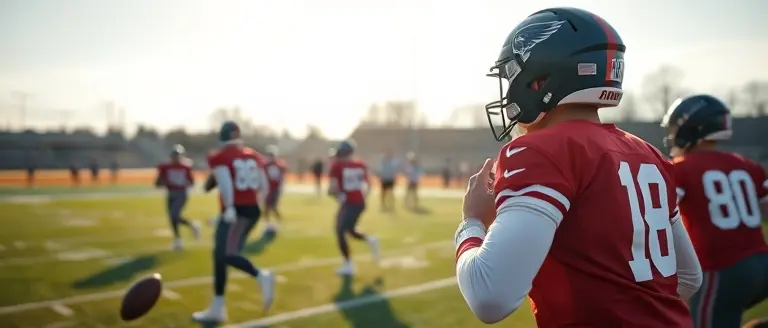
As Drake Maye enters his pivotal 2026 training camp, the narrative surrounding the New England Patriots signal-caller has shifted from abstract potential to granular mechanical development. Analysts are closely monitoring his footwork and timing within the new offensive scheme, which emphasizes quick-read progressions and high-velocity window passing. During these opening sessions, the focus remains on how Maye processes complex defensive looks—specifically the disguised blitz packages favored by the Patriots’ secondary. His ability to identify safety rotations post-snap will be the primary indicator of his readiness to manage the offense at an elite level.
Critical Development Markers for 2026
To gauge Maye’s trajectory, observers should prioritize tracking these specific performance metrics during the initial week of camp:
- Chemistry with the Wide Receiver Corps: Watch for the consistency of timing routes between Maye and his primary targets. Developing a baseline rapport is essential to minimize mid-field turnovers during live, 11-on-11 scrimmage periods.
- Mechanical Refinements: Evidence suggests the coaching staff is prioritizing a shortened throwing motion to combat edge pressure. Look for improvements in his release speed when facing interior defensive line penetration.
- Offensive Scheme Integration: Pay attention to the frequency of play-action bootlegs, a staple of the new system designed to utilize Maye’s mobility. His comfort level executing these rollouts while keeping his eyes downfield will demonstrate his grasp of the playbook’s more intricate nuances.
Ultimately, the goal for Maye is to demonstrate mastery over the transition from individual drills to situational game-speed reps. By prioritizing accuracy in short-to-intermediate zones, he can establish the foundational confidence required for a successful sophomore campaign. As training camp unfolds, expect these developmental markers to define the narrative for the remainder of the preseason, distinguishing meaningful growth from standard offseason repetition.
Projecting the 2026 Trajectory: From Rookie Potential to Pro-Bowl Ceiling

As Drake Maye enters the critical 2026 training camp phase, the discourse surrounding his development has shifted from raw potential to specific, high-ceiling expectations. Analysts are moving beyond the typical rookie-to-starter transition, instead focusing on his mechanical refinement and processing speed. When comparing Maye’s current growth markers against historical prototypes of successful NFL quarterbacks, the consensus suggests he is following an accelerated trajectory similar to elite signal-callers who refined their lower-body mechanics during their sophomore campaigns. His ability to anchor his throws while under pressure remains a primary metric for coaching staff, who are looking for increased consistency in his lateral movement before he commits to deep-field progressions.
Strategic Growth Markers for 2026
The expectations for Drake Maye this season are tied directly to how effectively he translates classroom study into the Patriots’ evolving offensive scheme. Evidence suggests that the coaching staff has prioritized three technical areas to elevate his floor:
- Pre-snap Recognition: Reducing the time spent in identifying blitz packages to allow for faster decision-making under center.
- Footwork Synchronization: Improving base stability to ensure torque distribution is consistent, regardless of the pocket’s integrity.
- Red Zone Efficiency: Leveraging his physical frame to create favorable matchups against tighter coverage in high-leverage situations.
From a team perspective, the projected win-loss forecast for the New England Patriots is intrinsically linked to this developmental leap. While a Pro-Bowl ceiling remains a lofty goal, the immediate requirement for Maye is to demonstrate “game manager” stability that evolves into “playmaker” status by mid-season. If the training camp data reflects even a moderate increase in completion percentage on intermediate routes, the Patriots are positioned to improve their offensive standing significantly. By focusing on these granular mechanical improvements rather than general hype, Maye is effectively narrowing the gap between his perceived talent and the high-level output required to lead the Patriots toward a competitive standing in a demanding AFC landscape.
Mastering the Mental Game
Ultimately, Drake Maye’s potential breakout in the 2026 season hinges on more than just training camp drills. While he refines his mechanics on the practice field, his ability to process information at an elite speed will be the true differentiator. The difference between a prospect and a legendary performer is often measured in milliseconds of cognitive reaction time—a domain where science now meets elite athletics to unlock hidden potential.
Just as the highest-performing athletes are turning to advanced tools to sharpen their mental acuity, you can also optimize your own cognitive workflow. Whether you are navigating professional challenges or looking to maintain peak focus during high-pressure environments, the tools used by elite performers are now within your reach. The Brain Song is designed to help you eliminate mental fatigue and maximize your learning capacity, ensuring you stay as sharp as the stars you watch on the field.
Don’t let mental noise hold you back from your best performance. Bridge the gap between potential and execution by integrating professional-grade cognitive support into your daily routine. Take control of your focus and experience the clarity required to excel in any competitive arena.
 Optimize your own cognitive workflow and sharpen your mental edge during training camp season by trying The Brain Song today.Transform My Focus Now!