

If you found yourself staring at a sea of gray boxes today, you are certainly not alone. The Wordle hint for July 15 centers around an exceptionally elusive term that has stumped thousands of players. Today’s solution, pshaw, is a classic, albeit archaic, interjection used to express impatience or disdain. Because of its rare ‘ps’ consonant cluster and unconventional structure, it represents one of those rare puzzles that challenges even the most seasoned word enthusiasts.
Instead of merely rushing to the answer, successful strategy often lies in understanding the linguistic architecture of the word. When you hit a wall with obscure vocabulary, the real victory isn’t just about finishing the game—it is about sharpening your cognitive agility to recognize these patterns faster. Today, we will break down why ‘pshaw’ was so difficult to pin down and how you can cultivate the mental sharpness needed to conquer even the most cryptic puzzles in the future.
Wordle #1852: Today’s Challenge Explained

The solution for Wordle #1852 on Wednesday, July 15, 2026, is the archaic interjection “pshaw.” This particular puzzle has generated significant search traffic and frustration among the daily player base, as the word deviates sharply from the standard vocabulary typically featured in the New York Times game. While many players rely on common vowel-heavy starters, the unique consonant cluster at the beginning of this word—specifically the “ps” combination—presents a tactical hurdle that disrupts standard elimination strategies.
Why “Pshaw” Caused Widespread Frustration
The difficulty of today’s word lies in its unconventional construction and its status as an antiquated expression. Defined as an exclamation used to express contempt, impatience, or dismissal, “pshaw” is rarely utilized in modern conversation, making it a “blind spot” for many casual gamers. Unlike common five-letter words that rely on standard linguistic patterns, this solution forces players to step outside their usual logic:
- Uncommon Phonics: Starting a word with a “ps” blend is rare in the English language, often leading players to prematurely rule out valid consonant combinations.
- The “H” Factor: The trailing “haw” sequence is frequently overlooked, as players often prioritize more common suffixes like “-ing,” “-ed,” or “-er.”
- Strategy Gap: Many players rely on “answer-first” spoiler sites, but the high volume of search queries for a Wordle hint for July 15 suggests that even seasoned strategists struggled to navigate the grid without outside assistance.
While some outlets noted that the word is a clever choice for those with a flair for the dramatic, the general consensus across gaming forums indicates that this is one of the more challenging entries in recent memory. If your winning streak is on the line, recognizing these rare letter clusters is essential for future rounds, as the game continues to rotate between common vernacular and challenging, classic English terms.
Need a Nudge? Non-Spoiler Hints for July 15

If you are staring at your grid for Wordle hint July 15 and feeling stumped, you are not alone. Today’s solution is an unconventional interjection that many players find challenging due to its unique linguistic structure. Before revealing the answer to puzzle #1852, consider these strategic nudges to help you maintain your winning streak without spoiling the fun entirely.
Linguistic Strategies for Success
When approaching a puzzle as tricky as this one, it is helpful to step back and look at common patterns in five-letter words. Today’s word follows a pattern that often trips up players who rely solely on common vowels like ‘E’ or ‘A’. Instead, focus on these tactical elements:
- The Starting Digraph: The word begins with a rare consonant cluster—a ‘ps’ combination—that is uncommon in the start of most standard English vocabulary. If your first guess yielded a green ‘P’, prioritize testing other consonants in the second position rather than assuming a vowel follows.
- The Closing Sound: The word concludes with a ‘w’ as part of a vowel-consonant combination. In many English interjections, the ‘w’ often acts as a soft anchor.
- Definition Clue: Think of an expression used to show mild annoyance, disbelief, or impatient dismissal. It is the kind of word a character in a classic novel might use to wave away a trivial suggestion.
Breaking Down the ‘Pshaw’ Pattern
If you have already identified the ‘P’ and ‘S’ in the first two slots, you are halfway to victory. The challenge for many on this July 15 puzzle is the inclusion of the ‘H’ and the specific vowel placement. If you are struggling with the pshaw Wordle solution, remind yourself that older, idiomatic interjections are becoming a more frequent feature in recent puzzles. Focusing on words that prioritize consonants over typical vowel-heavy structures will drastically improve your performance in future games. Keep these tips in mind as you input your final guess!
The Meaning and Usage of ‘Pshaw’

For many players tackling the Wordle hint July 15 puzzle, the solution pshaw likely presented a significant hurdle due to its rare letter combination and archaic nature. Linguistically, pshaw is classified as an onomatopoeic interjection, specifically designed to mimic the sound of air being forcefully expelled through the lips and teeth. This sound represents a vocalization of irritation, contempt, or dismissiveness toward a suggestion or idea. While it is rarely used in modern digital communication, its presence in literature—particularly in 19th and early 20th-century novels—solidifies its place in the English lexicon as a hallmark of high-brow exasperation.
Etymology and Linguistic Characteristics
The term traces its origins back to the late 17th century, evolving from a simple aspirated sound into a recognized word meant to brush off nonsense. In the context of games like Wordle, the ps consonant cluster at the start of the word is notoriously difficult for standard guessing strategies, as most players prioritize common prefixes like “st” or “pr.”
To better understand how to identify such words in the future, consider these characteristics of challenging Wordle solutions:
- Aspiration-based phonetics: Words that mimic sounds (like “shh” or “pshaw”) often contain silent or atypical letter pairings.
- Archaic influence: Older, less common interjections are frequently selected by puzzle creators to increase difficulty.
- Vowel scarcity: Pshaw contains only one standard vowel, forcing players to rely on their knowledge of unconventional consonant clusters.
Using this term in casual conversation is often perceived as dramatic or intentionally old-fashioned. For instance, if someone proposes an absurdly complex plan, one might respond, “Pshaw, that will never work in practice.” Understanding the nuance behind such vocabulary not only aids in your daily puzzle performance but also enriches your appreciation for the eccentricities of the English language. Keep this in mind when you encounter similarly tricky words; thinking beyond common vocabulary is your greatest asset.
Daily Wordle Strategy: Mastering Tricky Solutions

Mastering the daily puzzle requires more than luck; it demands a tactical approach to linguistic patterns, especially when encountering an unconventional solution like the pshaw Wordle answer for July 15. When faced with an archaic term or an unusual consonant cluster, your standard opening strategy may fall short. To maintain your winning streak, consider pivoting to a more defensive guessing model when common vowel-heavy words fail to yield results. By identifying “dead zones” in your grid—rows where you have eliminated high-frequency letters like ‘A’, ‘E’, or ‘R’—you can systematically isolate rare patterns like the ‘PS’ start found in today’s puzzle.
Tactical Tips for Unusual Patterns
- Prioritize Consonant Clusters: When standard vowels are ruled out, look for distinct digraphs. Words starting with ‘PS’ or ‘TH’ often baffle players who prioritize common suffixes like ‘-ING’ or ‘-ED.’
- Analyze Your “Elimination Path”: If you have exhausted common letters by your third guess, do not force a conventional word. Instead, treat the remaining slots as a blank canvas to test uncommon letter placements, such as ‘W’ or ‘H’ at the end of a word.
- Contextual Clues: If you are seeking a Wordle hint for July 15, remember that the dictionary often includes older interjections. If your grid displays a ‘P’ and an ‘S’ in the first two slots, pivot your focus toward expressions of emotion or dismissal rather than concrete nouns.
Transitioning from a casual guesser to a strategic player involves recognizing that the New York Times occasionally selects obscure vocabulary to challenge frequent users. By diversifying your opening words to include more varied consonants, you build a foundation that supports these “tricky” solutions. If a word like “pshaw” catches you off guard, don’t view it as a failure of logic, but rather an opportunity to refine your vocabulary and expand your internal database of five-letter words. Consistently applying these analytical methods ensures you stay ahead, regardless of how obscure the daily target word may be.
Sharpen Your Linguistic Edge for Future Wins
Mastering games like Wordle requires more than just a wide vocabulary; it demands a high level of mental clarity and rapid pattern recognition. When you encounter words as unconventional as ‘pshaw,’ it is a clear signal that your brain is being tested on its ability to bypass standard expectations. To consistently maintain your winning streak, you need your cognitive functions firing at their absolute peak.
Solving these complex linguistic puzzles is essentially a test of your cognitive processing speed. Sometimes, all your brain needs is a little extra help to clear the mental fog before the solution becomes obvious. This is where The Brain Song becomes an essential companion for any serious puzzle player. By incorporating this 12-minute audio routine into your daily schedule, you are not just playing a game—you are training your mind for improved focus and enhanced linguistic intuition.
The Brain Song acts as a cognitive engine, providing the mental warm-up necessary to approach every grid with renewed clarity and efficiency. Rather than relying on spoilers or becoming frustrated by difficult words, you can equip yourself with the cognitive agility to decode them naturally. It is the ultimate tool for those who refuse to let a ‘pshaw’ moment break their streak.
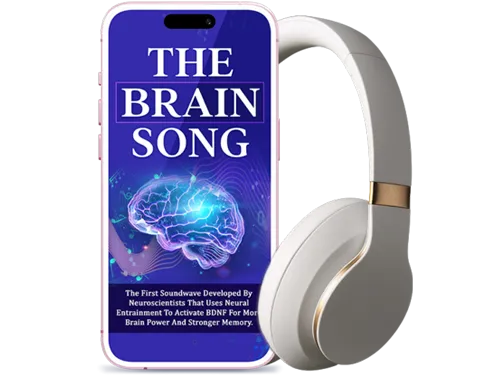 Prepare your brain for the next challenge—try the 12-minute audio routine that gives you the edge to solve today’s puzzle faster.Sharpen My Mind Now!