

JPMorgan Chase’s Q2 2026 earnings report should have been a victory lap. With a record-shattering $16.9 billion in profit, a 30% surge in investment banking fees, and an 86% jump in equity trading revenue, the bank delivered on nearly every key performance metric. Yet, as the market opened on July 14, JPM stock faced immediate downward pressure, leaving investors to grapple with a puzzling disconnect: why is the market punishing record-breaking growth?
The answer lies in the friction between operational reality and macro-geopolitical anxiety. While the headline figures were undeniably strong, management’s increased expense guidance has spooked a market already on edge due to the intensifying US-Iran blockade and the threat of broader supply-chain volatility. As the sector faces a delicate balancing act, the message from traders is clear: in an era of high-inflation and geopolitical uncertainty, operational efficiency is now valued just as highly as top-line revenue. This deep dive examines why this ‘expense reality’ is causing a fundamental reassessment of bank stocks like JPM and Goldman Sachs, and what it signals for investors who refuse to settle for speculation in an increasingly volatile financial landscape.
Q2 2026 Earnings Paradox: Why Record Profits Aren’t Boosting JPM Stock

The market’s immediate response to JPMorgan Chase’s Q2 2026 results reveals a classic “sell the news” scenario, driven by a sharp disconnect between operational performance and forward-looking risk assessment. While the bank delivered an impressive $16.9 billion in profit, marking a significant achievement in a high-interest environment, investors have redirected their focus toward rising expense guidance. Despite a massive 86% surge in equities trading revenue and a 30% climb in investment banking fees, the JPM stock price has faced immediate downward pressure. This reaction underscores a growing skepticism regarding the sustainability of such margins as the firm grapples with the escalating costs of technological investment and regulatory compliance.
The Geopolitical Weigh-In
The bearish sentiment is further exacerbated by the volatile backdrop of U.S.-Iran geopolitical tensions. As regional blockades threaten global supply chains and energy stability, institutional investors are prioritizing capital preservation over strong earnings beats. The paradox for JPM stock holders lies in the fact that while high market volatility often drives trading volume—benefiting the bank’s top-line revenue—it simultaneously increases the cost of risk management and systemic exposure. The market is essentially discounting the “record growth” in favor of the following macroeconomic realities:
- Expense Inflation: Investors are penalizing the bank for rising operating expenses, signaling that future profit margins may be squeezed despite robust revenue streams.
- Macro-Risk Discounting: Geopolitical instability in the Middle East is forcing a “flight to quality,” where traders prefer cash or safer yield alternatives over bank equities.
- Sector-Wide Contagion: The negative reaction to JPM’s guidance has rippled across the financial sector, influencing how the market interprets concurrent reports from peers like Goldman Sachs.
Ultimately, the market is signaling that even record-breaking growth is not enough to offset concerns about long-term profitability in an era of unpredictable geopolitical shocks and sustained inflationary pressure. Investors are shifting from a growth-oriented mindset to one defined by fiscal caution and defensive positioning.
The Expense Reality: Revenue Growth vs. Rising Operating Costs

JPMorgan Chase’s record-breaking Q2 2026 performance, characterized by a massive $16.9 billion profit, highlights a complex dichotomy for JPM stock. While the 30% surge in investment banking fees and a staggering 86% spike in equity trading revenue demonstrate powerful operational momentum, the market has pivoted its focus toward the bank’s revised expense guidance. For institutional investors, the current narrative is no longer just about top-line growth; it is about the sustainability of margins in a period of escalating operational overhead.
Drivers of Elevated Spending
The upward revision in expense guidance suggests that JPMorgan is aggressively reinvesting into its infrastructure. Several factors are likely inflating these costs:
- Strategic Technological Overhaul: Increased spending on AI-driven trading algorithms and cybersecurity measures to combat systemic threats.
- Talent Acquisition: Rising compensation packages required to retain top-tier talent in a hyper-competitive, high-volatility financial market.
- Compliance and Regulatory Hurdles: Heightened monitoring costs associated with navigating the complex geopolitical landscape, particularly regarding the U.S.-Iran blockades and associated sanctions compliance.
Margin Pressure and Investor Sentiment
The primary reason for the downward pressure on JPM stock is the fear of long-term margin erosion. Investors are concerned that these elevated costs are not merely transitory “catch-up” investments but a new baseline for operating efficiency. When revenue growth is heavily reliant on volatile segments like trading—which saw an 86% gain—but operating expenses are fixed or rising, the risk of a “margin squeeze” becomes a valid analytical concern.
Institutional skepticism suggests that while JPM is currently thriving, the market is discounting the stock in anticipation of a potential softening in net interest margins. By prioritizing long-term strategic resilience over short-term earnings beats, JPMorgan is attempting to “future-proof” its balance sheet. However, until management provides further clarity on whether these costs will stabilize in the coming quarters, traders remain wary of the potential impact on future profitability, leading to the current disconnect between strong historical performance and tepid price action.
Geopolitical Volatility: Managing Risk Amid U.S.-Iran Blockades

The record-breaking 86% surge in equity trading revenue reported in the Q2 2026 results highlights JPMorgan Chase’s dominant position as a global liquidity provider, yet it simultaneously underscores the bank’s deep exposure to the current U.S.-Iran blockades. While high trading volumes typically act as a tailwind for institutional revenue, the present geopolitical climate transforms this success into a double-edged sword. As market participants scramble to hedge against potential oil supply shocks and shipping disruptions, the trading desk at JPM has become a primary nerve center for volatility, processing massive shifts in sentiment that could rapidly transition from profitable transaction fees to systemic risk.
Navigating Market Turbulence
The tension in the Middle East has created an environment where price discovery is increasingly erratic. For JPM stock investors, the primary concern is not just current revenue, but the potential for these macro-tensions to trigger a wider market correction. Key considerations include:
- Increased Risk Exposure: While high activity drives short-term fees, it mandates that JPMorgan hold more capital against potential counterparty defaults should the geopolitical situation escalate into a full-scale regional conflict.
- Liquidity Provision Demands: As a systemically important financial institution, JPMorgan is often the “buyer of last resort” during liquidity crunches, forcing the bank to balance client-driven trading volumes with conservative balance sheet management.
- Volatility Pricing: The 86% revenue spike suggests that institutional clients are aggressively repositioning portfolios, signaling a deep-seated fear that current regional blockades are not transitory events but rather a structural shift in global trade stability.
Ultimately, while the bank’s ability to capture this revenue stream proves its operational resilience, the market is currently discounting JPM stock due to the uncertainty surrounding these external pressures. Investors are weighing the strength of the bank’s core businesses against the risk that prolonged instability in the Middle East could force higher credit loss provisions and more stringent operational overhead in the coming quarters.
Sector Divergence: JPM vs. Peers in a Volatile Market
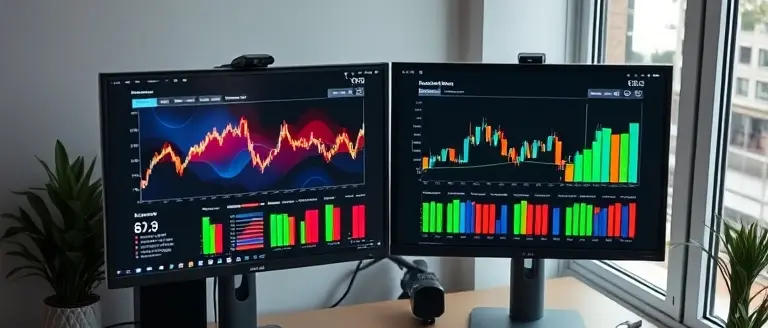
The July 14, 2026, earnings cycle offers a critical case study in how the broader banking sector is navigating a landscape of record-breaking performance shadowed by persistent macroeconomic anxiety. While JPM stock initially saw downward pressure following the release of $16.9 billion in record quarterly profits, peers like Goldman Sachs experienced distinct market reactions. The divergence highlights a shift in investor priorities; while revenue growth—specifically in investment banking and equities trading—remains robust across the board, the market is no longer awarding premiums solely for top-line beats. Instead, the focus has pivoted sharply toward operational efficiency and the sustainability of margins in a high-inflation, high-tension environment.
Understanding the ‘Sell-the-News’ Sentiment
The current “sell-the-news” phenomenon affecting JPM stock is not necessarily a reflection of the bank’s fundamental health, but rather an industry-wide reassessment of risk. Analysts note that while JPMorgan Chase outperformed on fees, its updated expense guidance served as a catalyst for defensive positioning. In contrast, peers with leaner cost structures or less exposure to the specific operational bloat cited by JPMorgan are navigating the session with different volatility profiles.
Key factors influencing this sector-wide divergence include:
- Expense Sensitivity: Investors are aggressively punishing banks that signal rising operating costs, viewing them as vulnerable to potential margin compression if the U.S.-Iran geopolitical blockade triggers a broader economic slowdown.
- Trading Revenue Volatility: Although equity trading revenue surged by 86% for JPMorgan, market participants are questioning if such outperformance is sustainable or merely a peak triggered by short-term market panic.
- Analyst Sentiment Shift: While the consensus ‘Buy’ rating for JPM stock remains largely intact due to its balance sheet strength, institutional sentiment is shifting toward ‘Hold’ as traders wait for greater clarity on how the bank plans to reconcile record earnings with rising operational outflows.
Ultimately, the market is distinguishing between banks that demonstrate “operational resilience” and those that merely show “cyclical performance.” While JPMorgan remains a bellwether for the U.S. banking sector, the current price action serves as a warning that in a volatile climate, even record profits are insufficient to offset concerns regarding long-term cost containment.
Navigating Market Volatility with Precision
The divergence between JPMorgan’s record-breaking $16.9 billion profit and its recent stock slump reveals a critical truth about modern finance: excellence in performance is no longer enough when macro-geopolitical pressures and rising operational expenses loom large. Investors are clearly signaling that they have zero tolerance for ambiguity, punishing even the most successful giants when the roadmap for managing future costs remains unclear. In an environment defined by the US-Iran blockade and sector-wide turbulence, guessing is not a strategy—it is a liability.
This shift toward granular precision in finance mirrors a fundamental truth in personal achievement: whether you are managing a massive portfolio or building a lasting legacy, success relies on moving away from trial-and-error toward a verified, structural blueprint. Just as traders are demanding more certainty regarding JPM’s operational expenses, you deserve the same level of technical mastery in your own endeavors. Trying to build something of value—be it wealth or a master-level woodworking project—without a proven framework is the fastest way to invite costly, avoidable errors.
By abandoning the amateur approach of ‘figuring it out as you go,’ you align yourself with the professional-grade methodology that separates the masters from the speculators. Ted’s Woodworking offers that exact precision, providing a comprehensive, structured system that eliminates the guesswork from your projects, much like a well-managed financial plan clears the path to long-term profitability. It is time to stop reacting to the volatility of life and start building with the certainty that only a professional-grade plan can provide.
 Stop relying on incomplete, high-risk strategies—build your future with the same technical certainty as a master craftsman, starting with these 16,000 professional-grade blueprints.Yes, I Want This Now!